

Winter Hair Colors for Olive Skin: 33 Espresso to Copper Looks for 2027
Winter hair colors for olive skin in 2027, from glossy espresso to copper balayage and cool ash blonde. Save your favorites before your next salon visit.
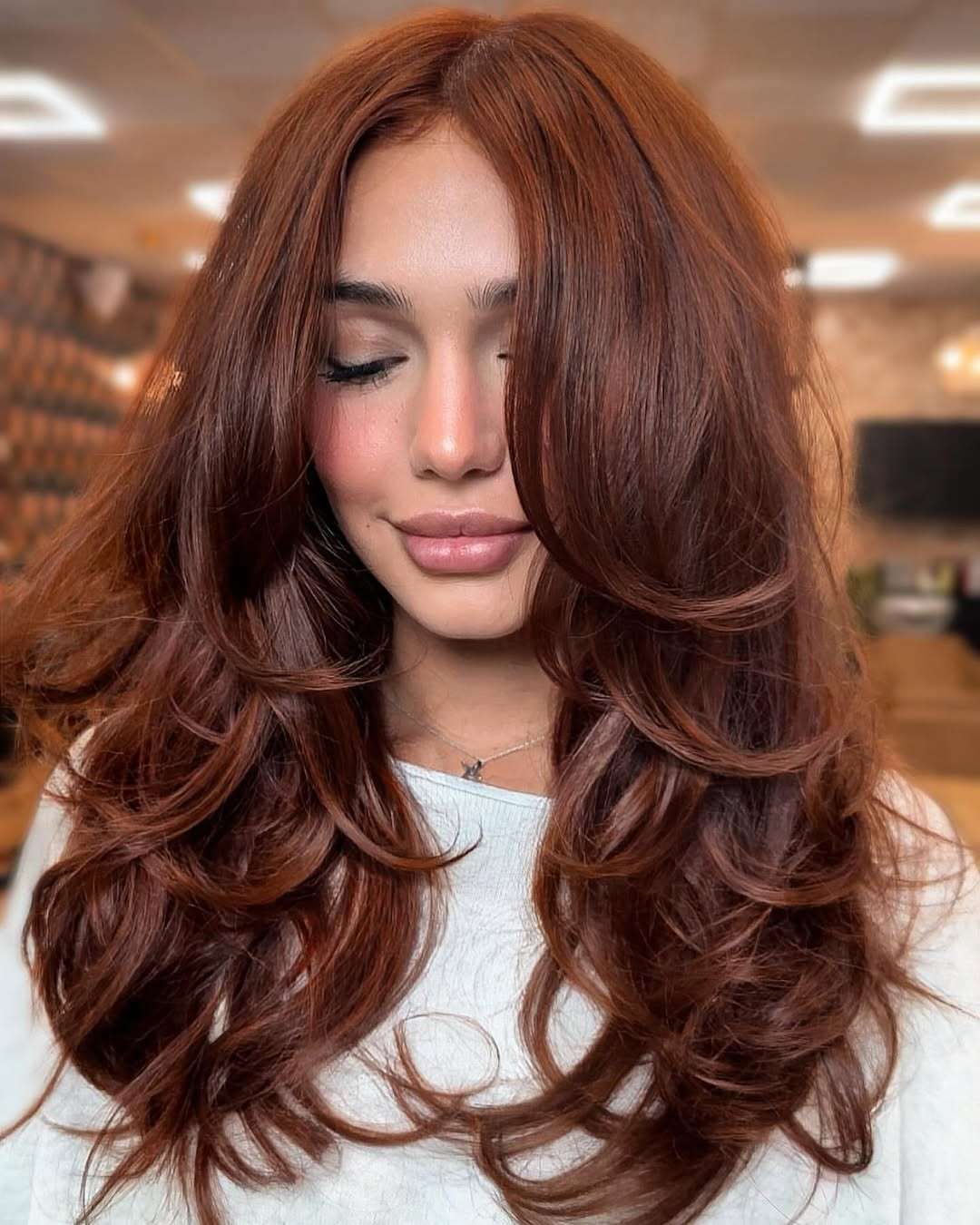
Lately, a lot of my clients want something darker. Espresso, cherry, deep copper. I think winter is the reason: the light fades early, and the sun-warmed blonde that felt right all summer suddenly looks like it belongs to someone else. For 2027, I get the impulse completely.
So I put together 33 winter hair colors for olive skin, sorted from low upkeep to high, short to mid-back, and salon-only to realistic DIY. If your hair looks flat by 4 pm or your grow-out shows up around week five, I noted which shades hold up in real life. I have sat in some of these chairs myself, and I watched the rest from the next station over.
Mid-Back Deep Plum With Violet
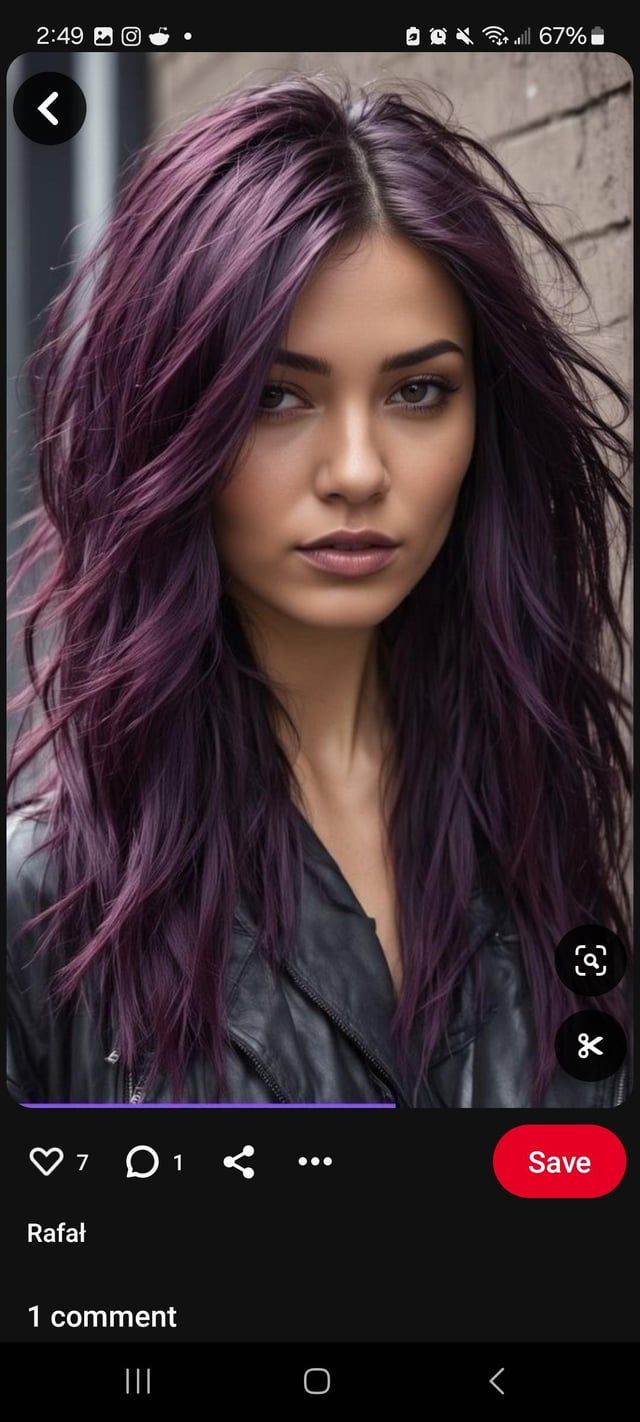
Can a deep plum with violet undertones really belong in winter? On olive skin, yes. The violet undertones neutralize the green cast that some cool reds leave behind. Mid-back length with long layers and loose waves keeps the color from feeling heavy, and medium-thick hair holds the wave without high-heat curling. The shade fits winter because it’s dark enough to look serious, and the violet catches indoor light in a way plain browns can’t. A touch-up every 4 to 6 weeks stops the violet from fading into a murky maroon. Trim every 10 to 12 weeks.
Layers Collarbone Copper Red With Gold
This technique works: copper red with golden highlights woven through the layers, not painted on top. The gold catches light and gives collarbone-length waves dimension, so the color doesn’t look like a flat block. The honest downside is brassiness. On olive skin, the golden tones can turn orange if you skip toning. I learned that the hard way. Plan on a purple shampoo in your rotation, plus a salon toner about every eight weeks to keep the gold bright rather than brassy. Medium-density wavy hair helps, because it lets the highlights show without looking striped. Ask your stylist for fine, scattered highlights instead of chunky pieces.
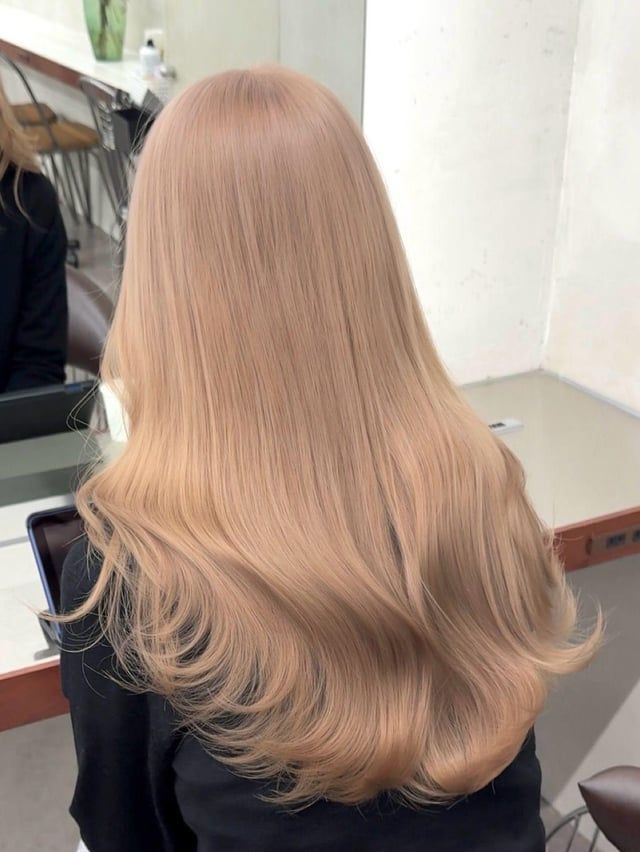
Mid-Back Dark Blonde With Creamy Blonde
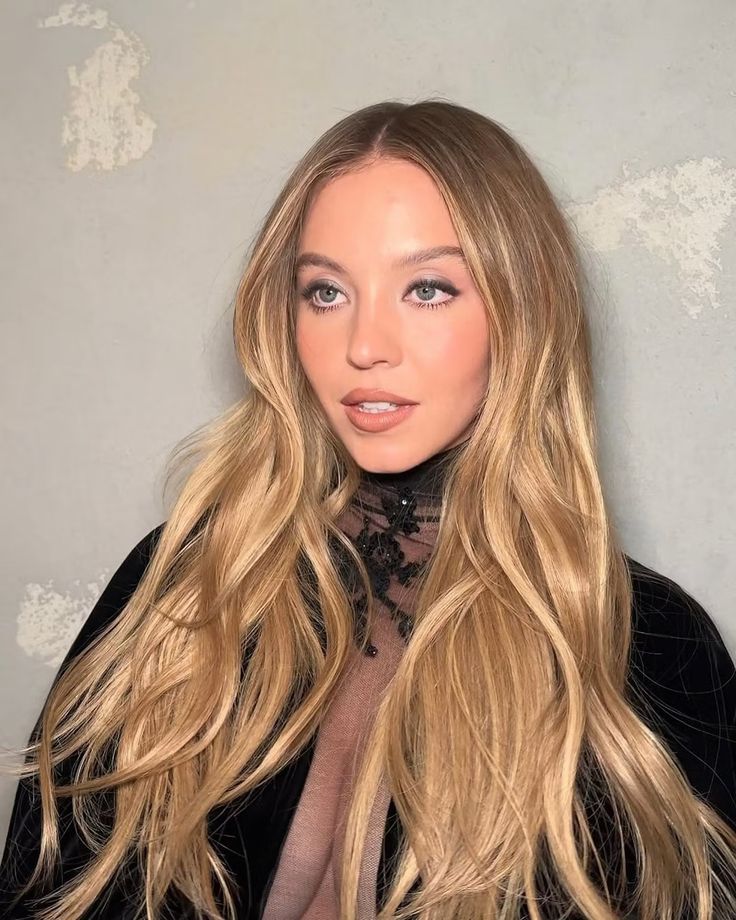
Monday morning, gray winter light, and this color still looks dimensional. Dark blonde with a creamy blonde base gets a root shadow at the crown, then creamy blonde highlights that sweep through the mid-lengths and ends with no harsh line, just a soft lift. Thick, wavy hair helps the blend look natural. On fine hair, you’d want more saturation.
This is a salon job. The root shadow alone calls for a stylist who understands depth placement, and the creamy blonde highlights need a toner that won’t pull yellow against olive skin. I’ve seen this go ashy in less experienced hands, and that isn’t the look. Budget for a gloss every second visit, and don’t skip the consultation.
Collarbone Dark Brown With Copper/Auburn
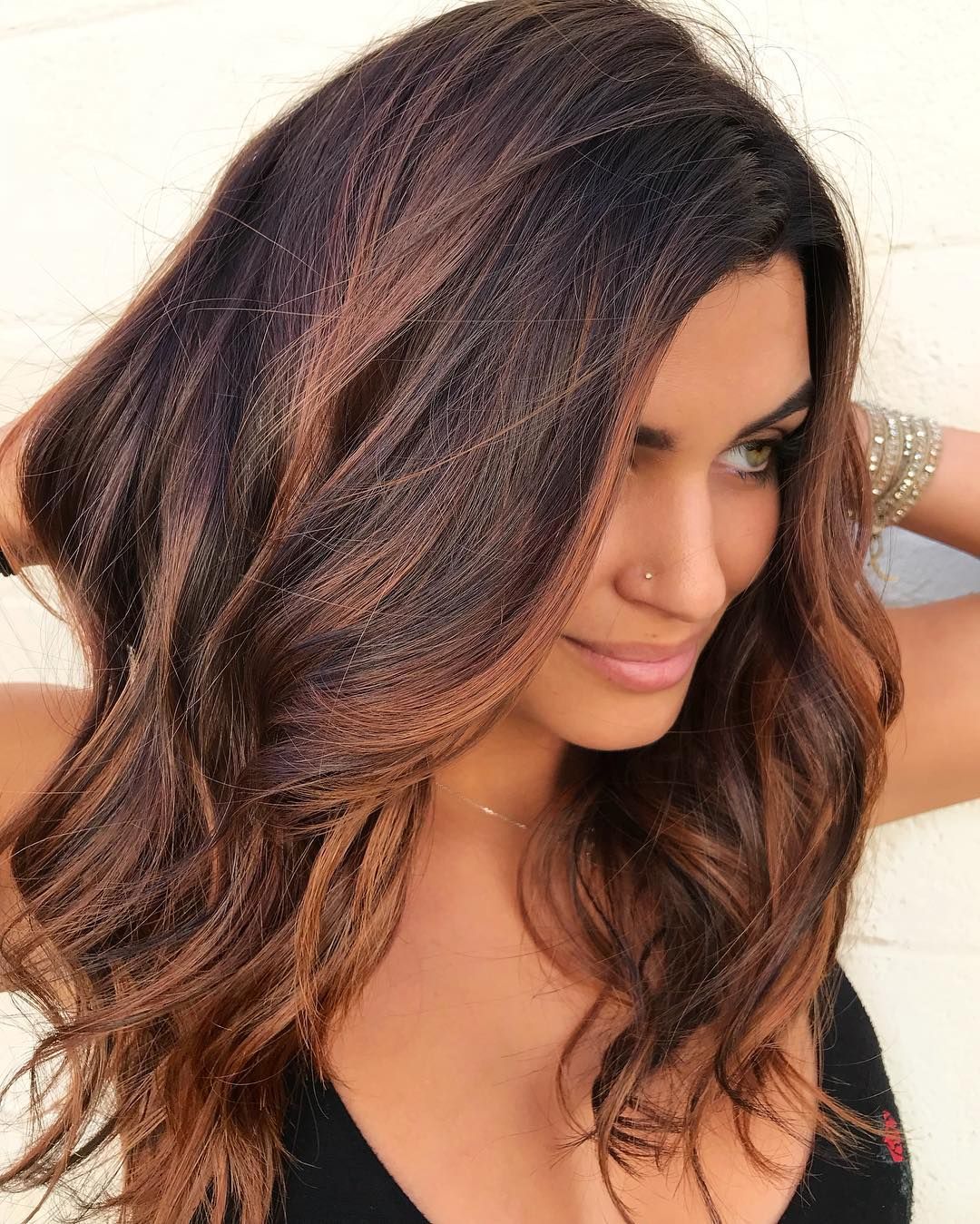
Can you get dark brown with copper auburn highlights at home without a disaster? Technically, yes, if you use a warm copper demi-permanent gloss on pre-lightened sections. The real challenge is placement. Copper and auburn pieces need to sit in the mid-lengths and ends, not at the root, or the grow-out looks like a stripe. A side part helps the warm tones fall forward. Thick, wavy hair hides uneven sections better than straight hair. My honest advice: book a salon for the first round, then maintain with a tinted gloss at home.
Mid-Back Dark Brown With Golden Blonde
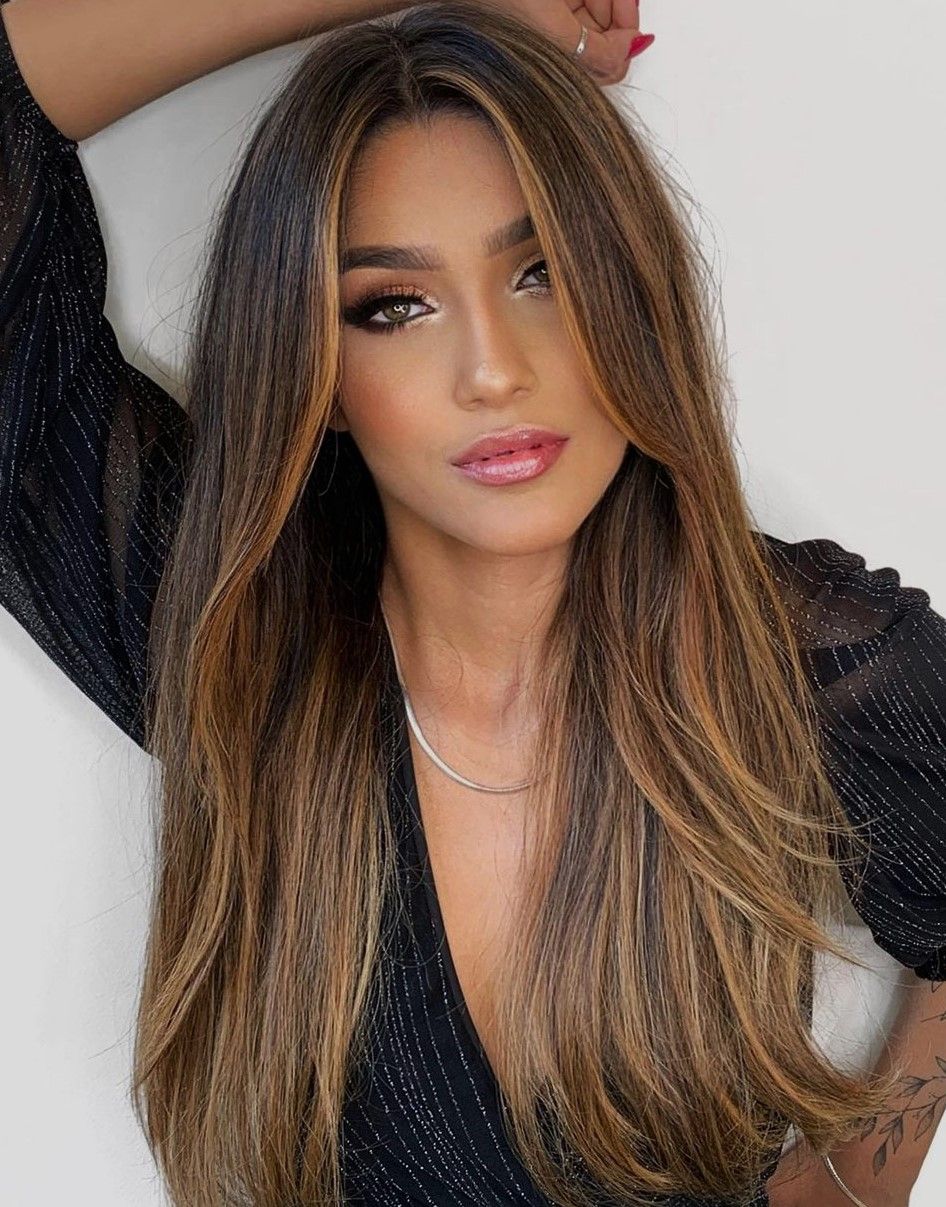
Can a change in highlight placement alter how your whole face reads? Yes, and this is a good example. Dark brown with a golden blonde base gets lifted by golden blonde and caramel highlights on the top layers and face frame, while the underneath stays dark. That depth keeps olive skin from looking washed out, because the contrast does the work. Wispy bangs soften the mid-back length, and the straight-to-wavy texture shows off every dimension.
Upkeep is the trade-off. The highlights need a toner refresh every eight to twelve weeks, and the root line starts to show around week six. A root shadow would buy you a couple more weeks, but that’s a separate conversation. It’s worth it for the brightness, but book the appointment before you actually need it.
Collarbone Dark Brown With Caramel
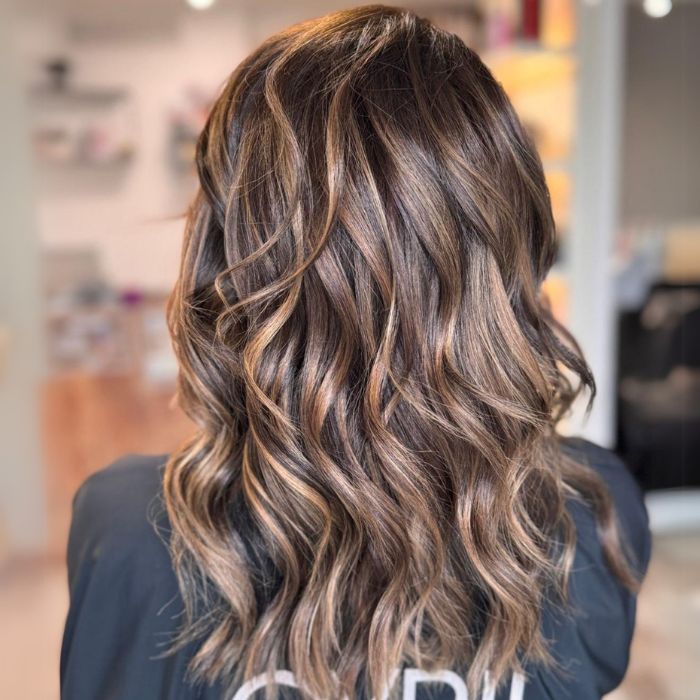
Picture walking into a dimly lit restaurant, where the caramel highlights catch the warm light before you even sit down. That’s the appeal of dark brown with caramel highlights on collarbone-length wavy hair. The technique is partial highlighting, painted freehand so the caramel falls around your face and through the mid-lengths. The tone is warm and almost buttery, which reads golden against olive skin without clashing. Medium density shows the dimension best. Fine hair does better with a gloss overlay than full foils.
Mid-Back Dark Brown With Caramel Balayage
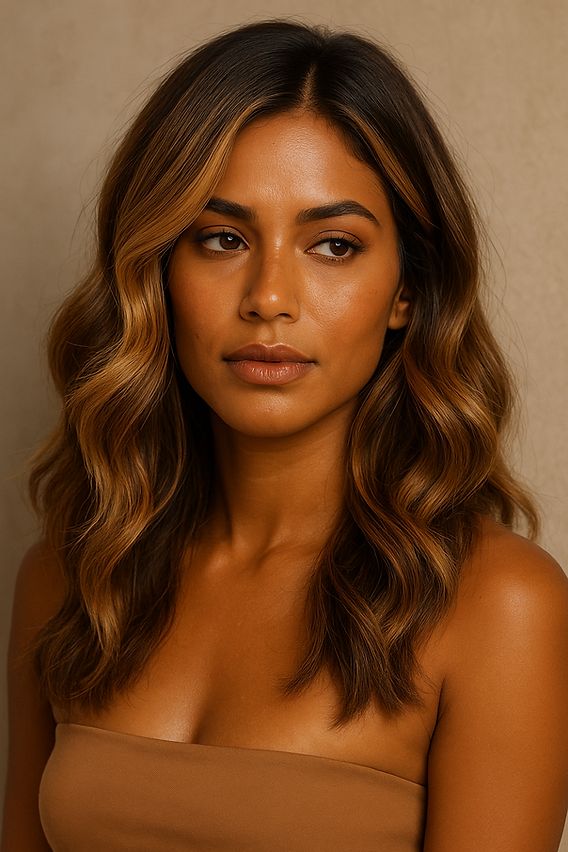
I wanted to like micro-foil highlights more, but warm caramel balayage on dark brown wins every time. Hand-painted placement keeps the caramel looking sun-kissed rather than striped, and mid-back length gives the color room to breathe. Thick, wavy hair helps the blend, but the honest downside is brassiness. Around week five, the caramel starts pulling orange if you skip a purple shampoo wash. It takes vigilance, but the grow-out is genuinely graceful.
Deep Auburn With Copper
Late October light is low and golden, and this color was made for it. Deep auburn with copper undertones on olive skin feels seasonal without looking like a costume. A middle part and loose waves keep things relaxed, which is the right approach for a shade this rich. Thick, wavy hair shows off the copper well because the texture catches light from different angles. The trade-off is fading: copper fades faster than auburn, and by week five you’ll notice the change. A color-safe shampoo isn’t optional here. It’s the difference between color that lasts and color that disappears by Thanksgiving.
Mid-Back Rich Burgundy With Violet
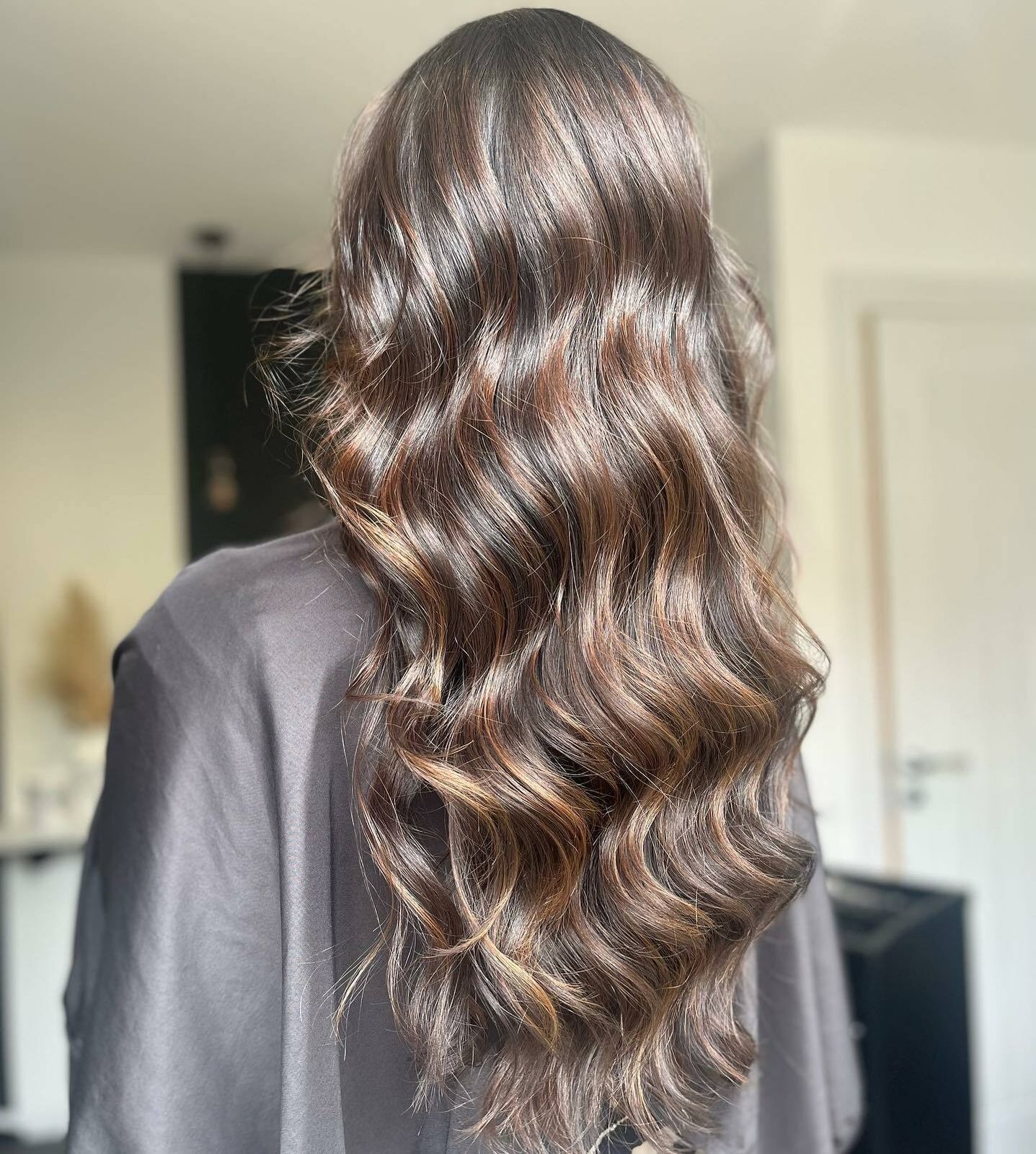
My first reaction, seeing this on thick wavy hair, was relief: finally, a winter red that doesn’t wash out olive skin. The rich burgundy with violet undertones sits close to the root and deepens toward the ends, which keeps it from turning brassy or muddy. A side part, loose waves, and mid-back length finish the look. It works best on olive skin with neutral or warm undertones, because the violet picks up the warmth without fighting it. If your undertone is cool, the burgundy can skew too brown. For upkeep, use a toning gloss every 4 to 6 weeks, since violet fades quickly in hard water. Trim every 10 to 12 weeks, and there are no bangs to worry about.
Dark Brown With Warm Auburn
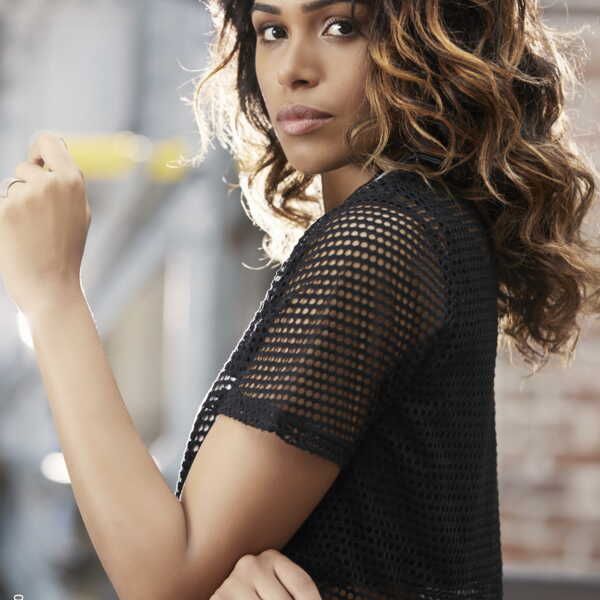
How is this different from the shade before it? The base is one level lighter, dark brown with warm auburn undertones instead of espresso, so the warmth sits closer to the surface. On olive skin, that extra warmth reads as a healthy glow, not a flush, and that’s the main appeal. The side part and loose curls also give it a different feel from the middle-parted gloss above.
The downside is that this shade fades faster than the espresso version. The auburn undertones usually disappear first, often around week four, and leave a flat brown behind. A color-depositing conditioner used every other wash can add about two more weeks. The loose curls take roughly 25 minutes to style, and you can switch the side part from day to day to change the look without restyling. Trim every 8 to 10 weeks so the shape doesn’t collapse.
Mid-Back Ash Brown With Ash Blonde
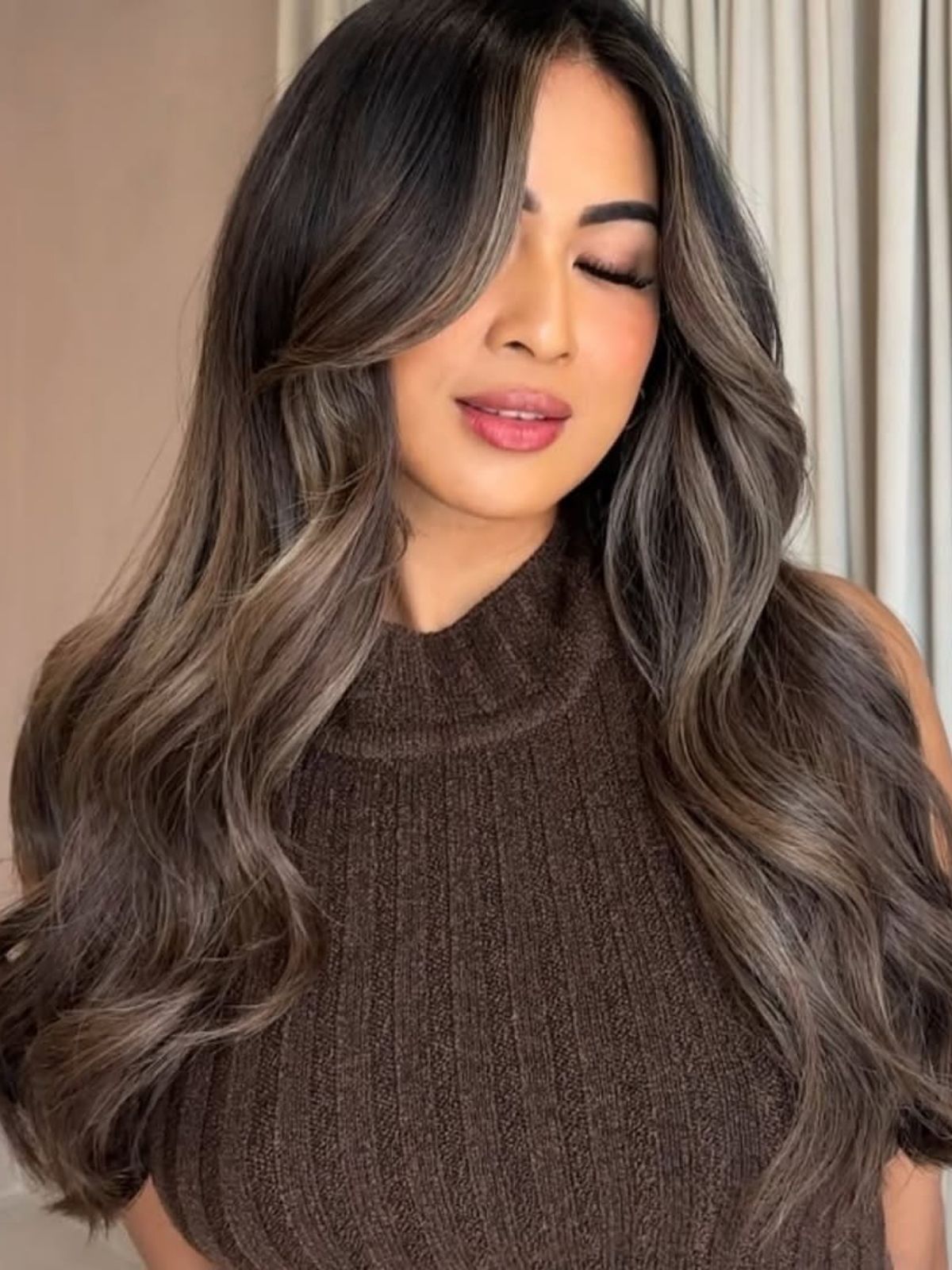
The first thing you notice is the contrast, but it isn’t loud. The ash brown base sits deep, and cool ash highlights are woven through the long layers as if they’ve always been there. It’s a technique thing: the highlights are placed to catch light, not to demand attention. On thick, wavy hair, this combination reads as expensive, not brassy. Mid-back length means you’re committed to upkeep: trims every ten to twelve weeks and a toner every four to six weeks to keep the cool tone from going greenish. If you have the patience, this is the color that makes olive skin look lit from within.
I’ve seen this done badly, with the highlights turning into gray stripes. The fix is asking for a shadow root and keeping the blonde pieces fine rather than chunky. That’s the difference between a color that looks intentional and one you’ll regret.
Mid-Back Deep Auburn With Copper
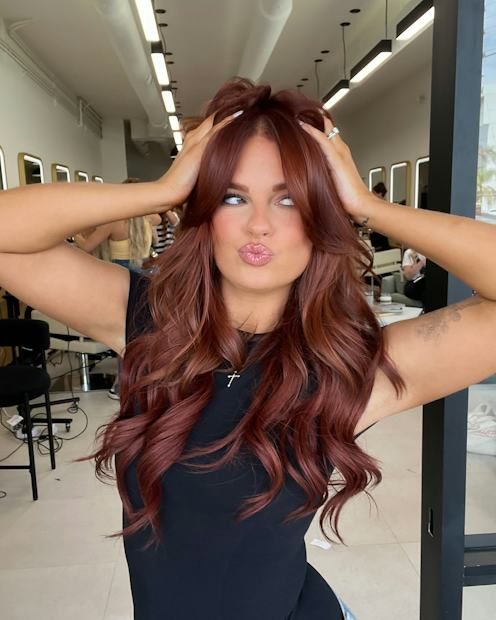
Honestly, this is the best bang for your winter appointment. Deep auburn with copper highlights works because the stylist paints copper in thin ribbons through the mid-lengths and ends, leaving the root area deep and dense. Mid-back length on thick wavy hair gives the copper room to catch light without overpowering the base. A middle part and curtain bangs that feather past the brow complete the look. The copper is the accent, not the main story. A voluminous blowout takes about 20 minutes and makes the dimension pop. Tell your stylist: deep auburn base, soft copper face-framing, and no solid line where the color begins.
Layers Collarbone Dark Brown With Honey/Caramel
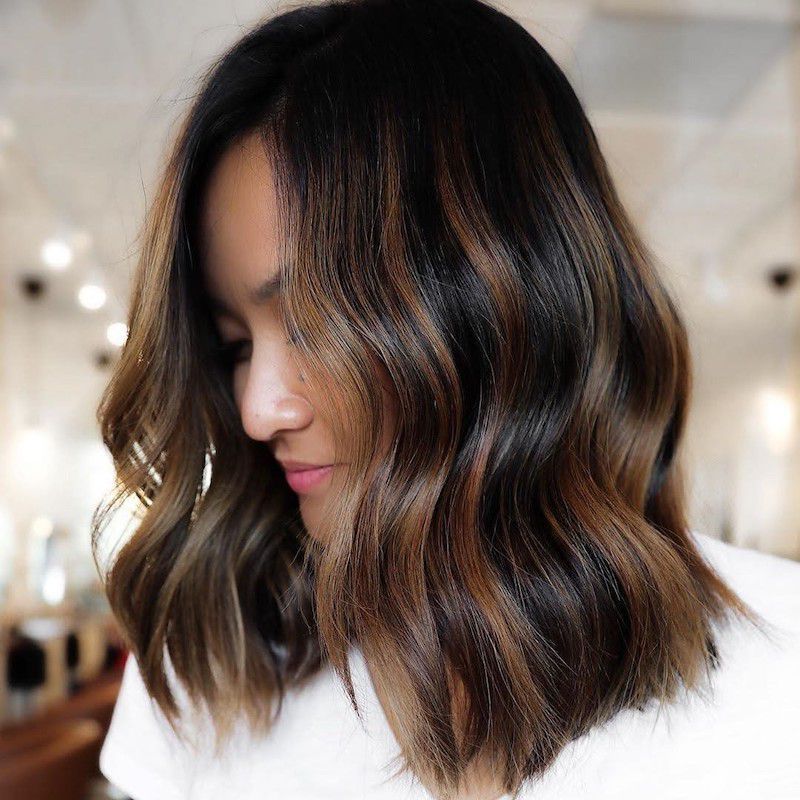
I’ll confess that I once asked my stylist for more honey, then panicked when the toner rinsed out. Still, dark brown with honey caramel, done well, is the warmest shade I’ve worn that didn’t go brassy by week three. The method is a babylight weave: fine slices painted with a honey-toned lightener, then a caramel gloss over the top. The result sits between amber and warm brown, never yellow. Thick, wavy hair lets the honey and caramel stack and catch light from every direction. Collarbone layers stop the color from pooling at the ends. Styling is simple: rough-dry, wrap sections around a one-inch iron for about eight seconds, then loosen the curls with your fingers. It takes fifteen minutes and no round brush.
Collarbone Grey Silver With Darker Grey
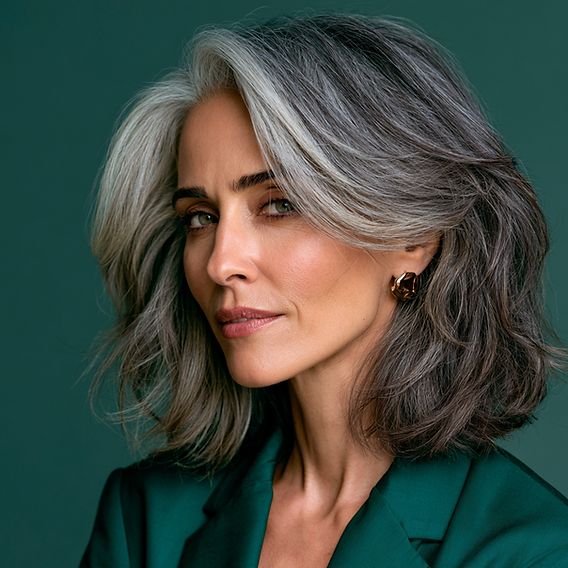
I was sure grey and silver would wash out my olive skin, and I was wrong. The trick is the darker grey undertone in the base. The color is built on a charcoal base, with silver highlights painted through the mid-lengths and a dark grey shadow root that keeps the line soft. The technique is a full balayage, not foils, so the silver blends into the grey instead of sitting on top. Wavy, thick texture gives the silver something to catch light. Side-swept bangs soften the cool tones near the face. The catch is upkeep: a purple shampoo once a week, a toner every four to six weeks, or the silver shifts green. Trim every eight weeks to keep the shag shape. It’s work, but it won’t wash you out.
Collarbone Warm Copper With Blonde Balayage
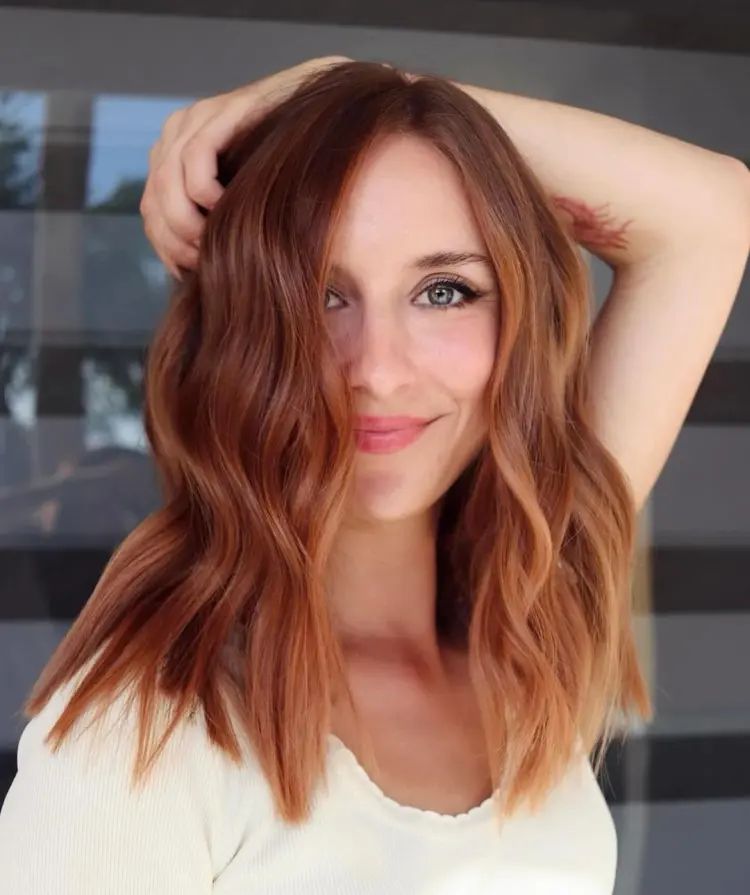
I’ll be honest: I booked this warm copper with blonde balayage partly because the photo looked like a cozy sweater in hair form. The reality is just as inviting, but it comes with ongoing maintenance. The blonde balayage needs the most watching. Lightened strands on olive skin can drift brassy by week five if you skip the purple shampoo, so keep one on hand from the start. The copper base keeps the overall look warm and grounded, and the wispy bangs soften the edges. On my medium-density waves, the loose texture held its shape until evening, which is more than I can say for most lobs.
Chin Bob Dark Brown With Warm Blonde
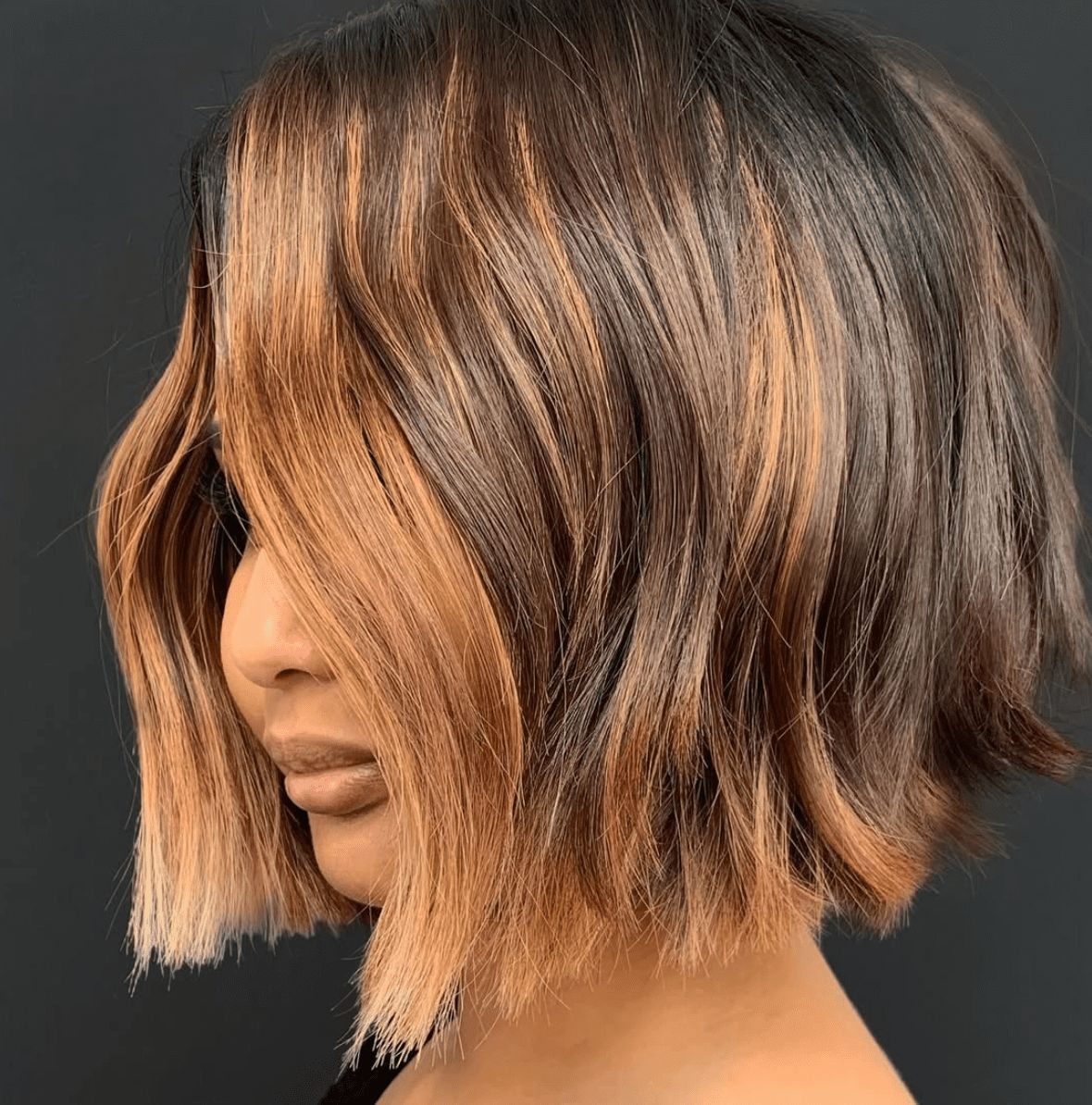
This chin-length bob shows how dark brown with warm blonde highlights creates a winter contrast without shouting. The deep base anchors the look, and the warm highlights catch indoor light like a fireplace glow, which is exactly what you want when daylight is scarce. A side part and wavy texture soften the blunt chin line, so the cut reads polished rather than severe. For olive skin, this dark-to-warm contrast hits the sweet spot: it warms without tipping into orange. The bob’s shape is the real commitment, since a chin-length cut shows every millimeter of growth, so trims every six to eight weeks are essential. The highlights need a refresh every eight to twelve weeks, which is easy to plan around the holidays.
Chin Bob Vibrant Orange
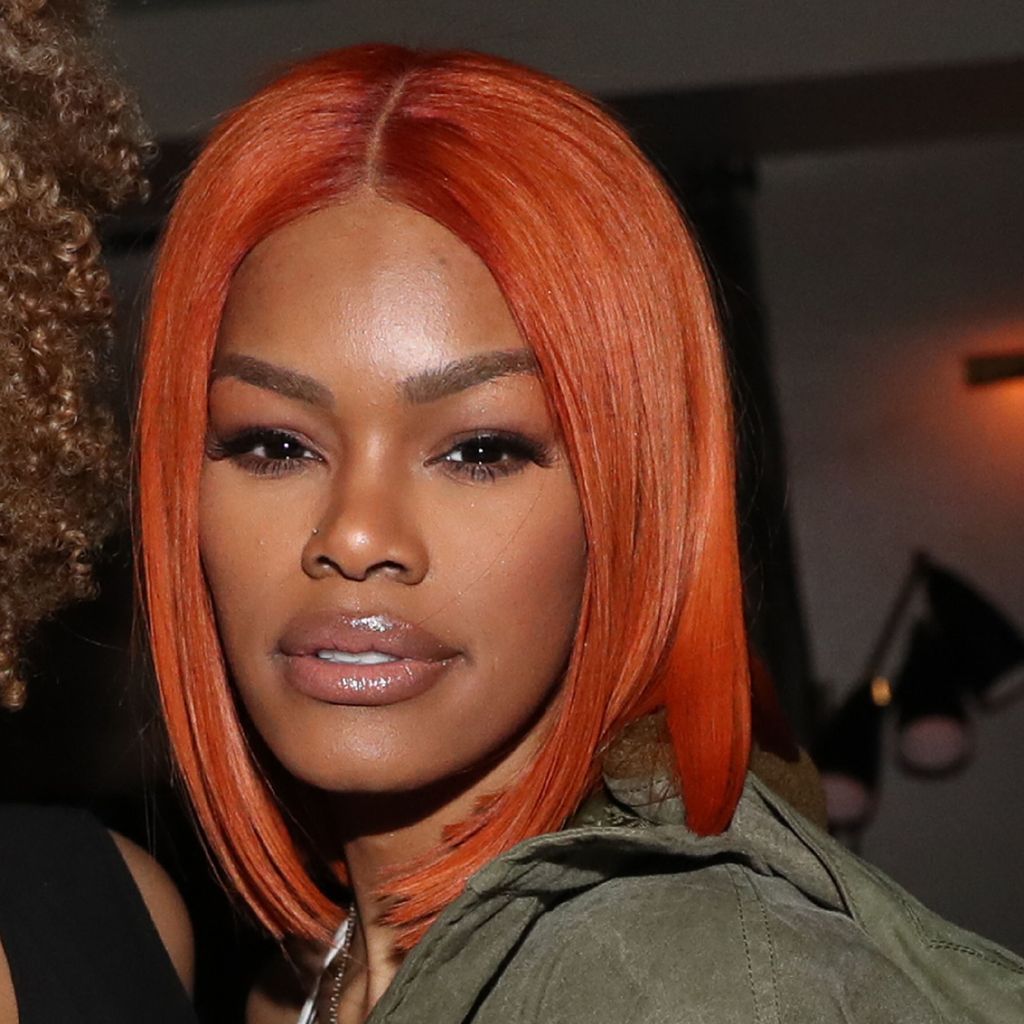
Vibrant orange hair in winter feels like a bold statement against the gray days. The color is a uniform orange with no copper or red mixed in, applied as a single-process dye on a chin-length straight bob. The tone is pure orange, warm enough to glow against olive skin without clashing. The downside is fading: orange washes out fast, especially in hard water. Dry shampoo between washes can stretch the color by three or four days. Medium density holds saturation better than fine hair, which lets the pigment slip out. Trim every six weeks to keep the bob sharp. It’s a statement, not a low-maintenance choice.
Collarbone Cool Medium Brown With Ash

I’ll admit I was skeptical about ash on olive skin. This cool medium brown ash doesn’t wash me out. It just sits quietly. The lob with side-swept bangs frames the face without demanding much styling, and a blowout takes about fifteen minutes. By day three, the waves still hold their shape, which is more than I can say for most colors I’ve tried. The ash tone keeps brassiness away, but it needs a toner every six to eight weeks or it starts to look muddy.
Collarbone Dark Blonde With Lighter Balayage

I’ll admit I booked this dark blonde with lighter blonde combo out of boredom, not planning. The lighter blonde balayage starts below the ear, so the dark blonde base stays rich at the roots, with no harsh grow-out line. A side part and wavy blowout make the collarbone length look longer than it is. Medium-density hair holds the wave well, while fine hair would need a texture spray. Trim every eight weeks to keep the shape, and refresh the balayage around week twelve. It’s simple, dimensional, and it held up through a quick trip to the grocery store without looking flat.
Medium Brown With Caramel Highlights Collarbone Medium Brown With Caramel
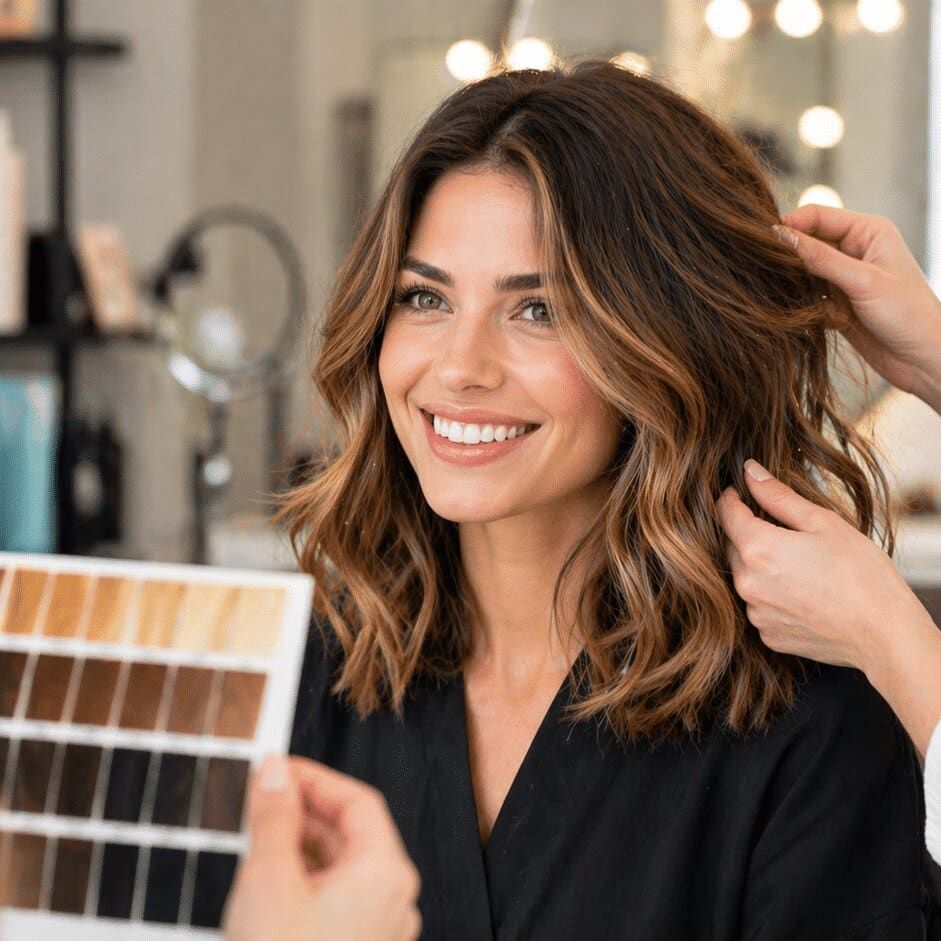
Who can wear medium brown with caramel highlights without the caramel looking like an accident? Olive skin with golden undertones, specifically. A side part and wavy blowout give this collarbone-length cut movement, and the caramel sits close enough to medium brown to read as depth rather than streaks. Medium-texture hair takes about 15 minutes to blow out. Caramel highlights need a refresh every 8 to 12 weeks, and a trim every 8 weeks keeps the shape from falling flat. If your olive skin leans cool, the caramel can look separate instead of sun-kissed. If it leans warm, this shade is basically your neutral.
Vibrant Auburn Red With Wispy Bangs
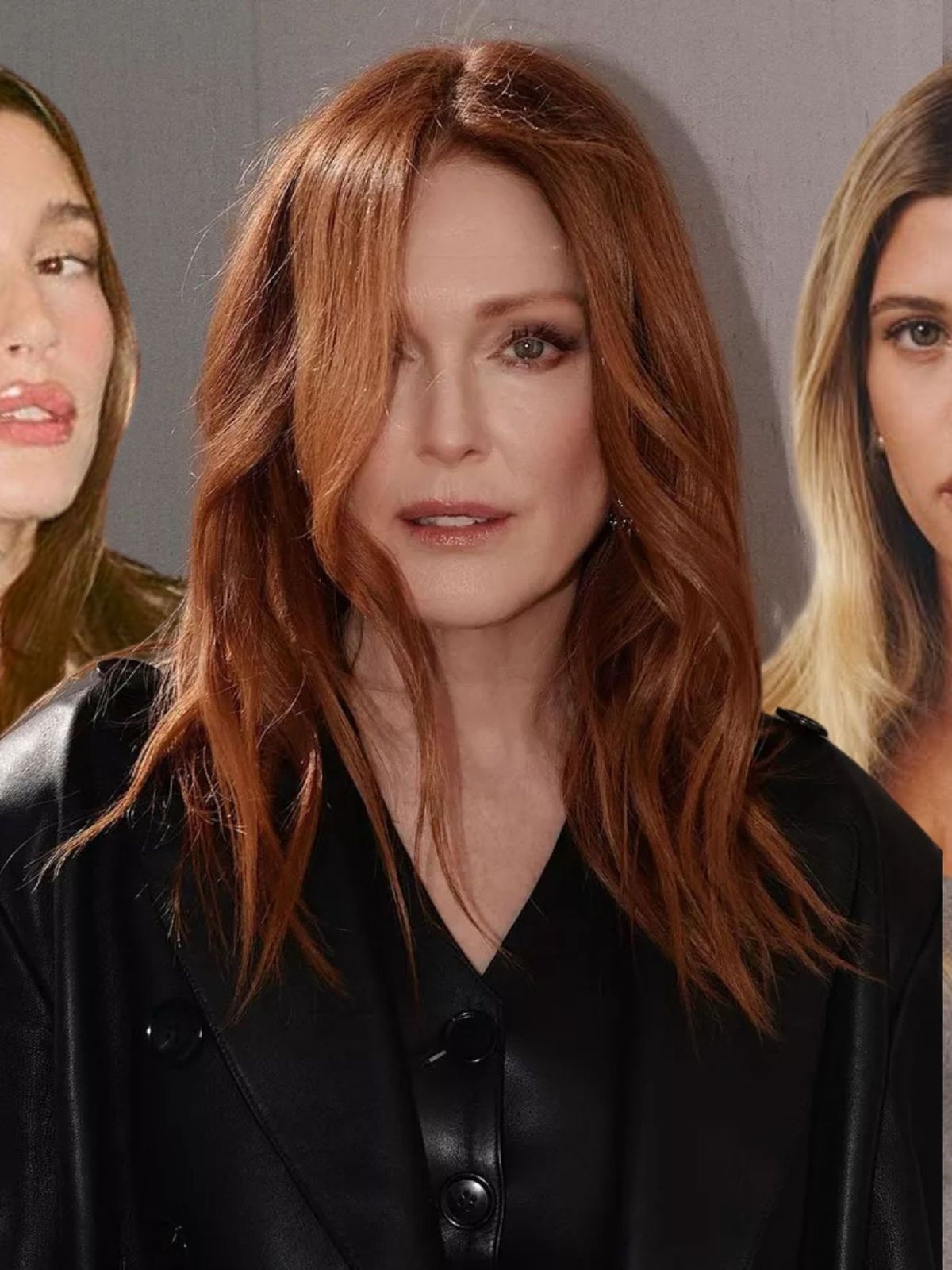
I didn’t plan to recommend bangs in a color roundup, but this combination deserves it. Vibrant auburn red with wispy bangs works because the fringe softens the intensity of the red. On olive skin, the red looks warm instead of harsh, and the feathered edges blur the whole effect. Medium-thick hair is the sweet spot: fine hair lets the bangs go limp, and very thick hair makes them look heavy. Loose waves take about 20 to 25 minutes, and the bangs need a quick blow-dry each morning. Ask your stylist for a long face-framing layer that blends into the bangs instead of a blunt cut. That keeps the grow-out soft, and you can push the bangs aside on days you want a lower commitment.
Mid-Back Vibrant Copper With Red/Magenta
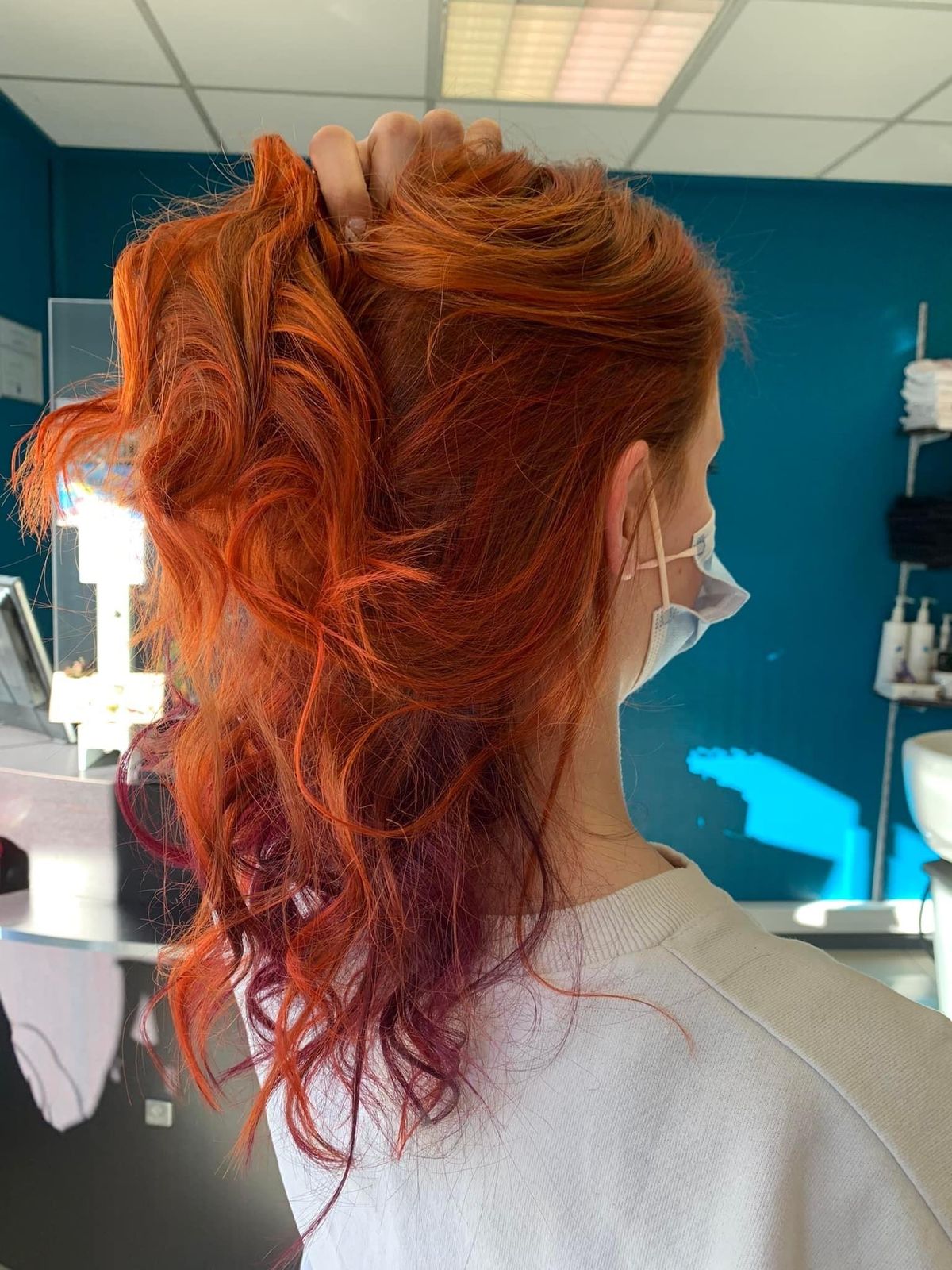
Do multi-tonal colors work on olive skin, or are they a gamble? I used to assume they were, until I tried a vibrant copper with red undertones and saw how the magenta notes worked with my complexion. The red and magenta don’t clash with olive skin. They echo the warmth already there, so the color looks like it belongs to you. On mid-back length with thick, wavy texture, the layers catch light and show the different tones as you move. I expected a muddy result, but the depth of the red kept everything grounded. The magenta is the key: it keeps the copper from turning orange and adds a cool, almost berry edge. It’s a bold choice, but olive skin can carry it.
Mid-Back Medium Brown With Lighter Highlights
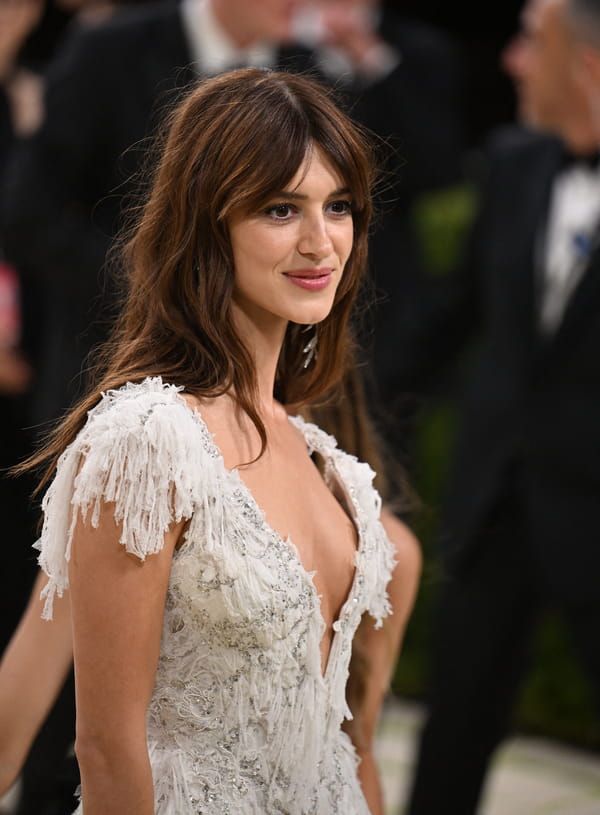
Curtain bangs sit right at the cheekbone, while medium brown with lighter highlights fans out from mid-length down. Air-dried loose waves take maybe 10 minutes, since fine-to-medium hair holds a bend without much product. The honest downside is maintenance: the curtain bangs need a trim every 4 to 6 weeks, and the mid-back length means highlights need 8 to 12 weeks between touch-ups. If the bang section gets greasy by noon, a dry shampoo will save you. The lighter brown highlights are subtle, so the grow-out stays forgiving for about a month. By week 10, the contrast starts to flatten.
Sleek Mid-Back Espresso
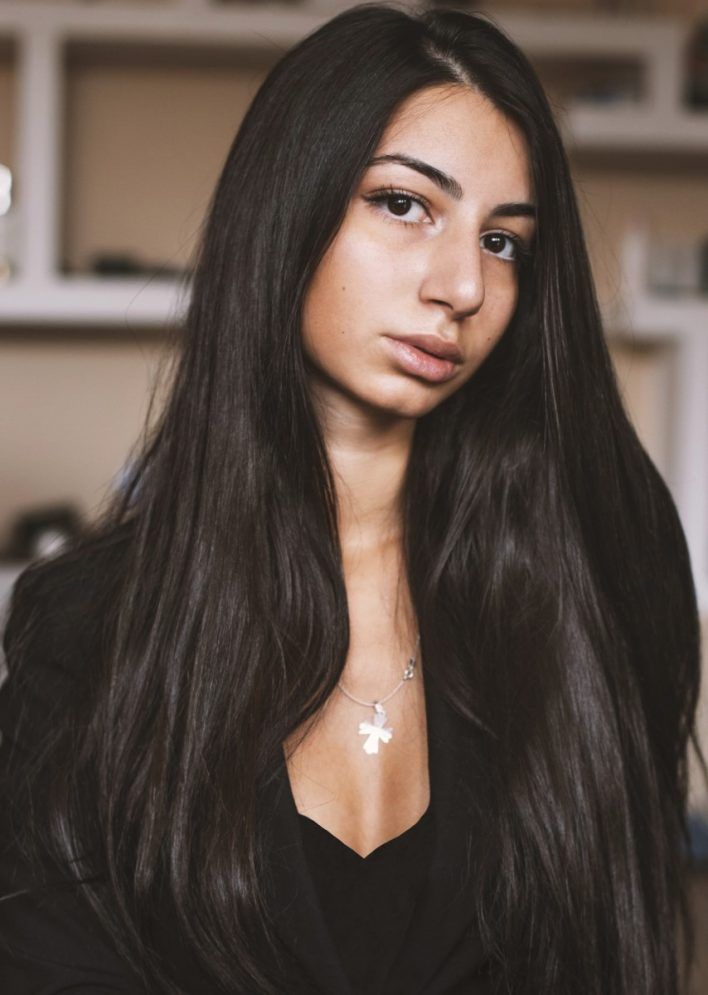
Uniform dark color looks expensive in a way that has nothing to do with the price tag. Deep espresso brown on olive skin creates a contrast that makes thick, straight hair look fuller, and you don’t need a single highlight to get there. A center part and sleek styling keep the lines clean, which matters because heavy straight hair can look flat without some structure. Long layers add just enough movement so the hair doesn’t fall like a curtain. Maintenance is simple: there’s no root line to manage, so the grow-out stays soft for months. A trim every 10 to 12 weeks keeps the ends healthy, and that’s the whole plan.
Glossy Cherry Red
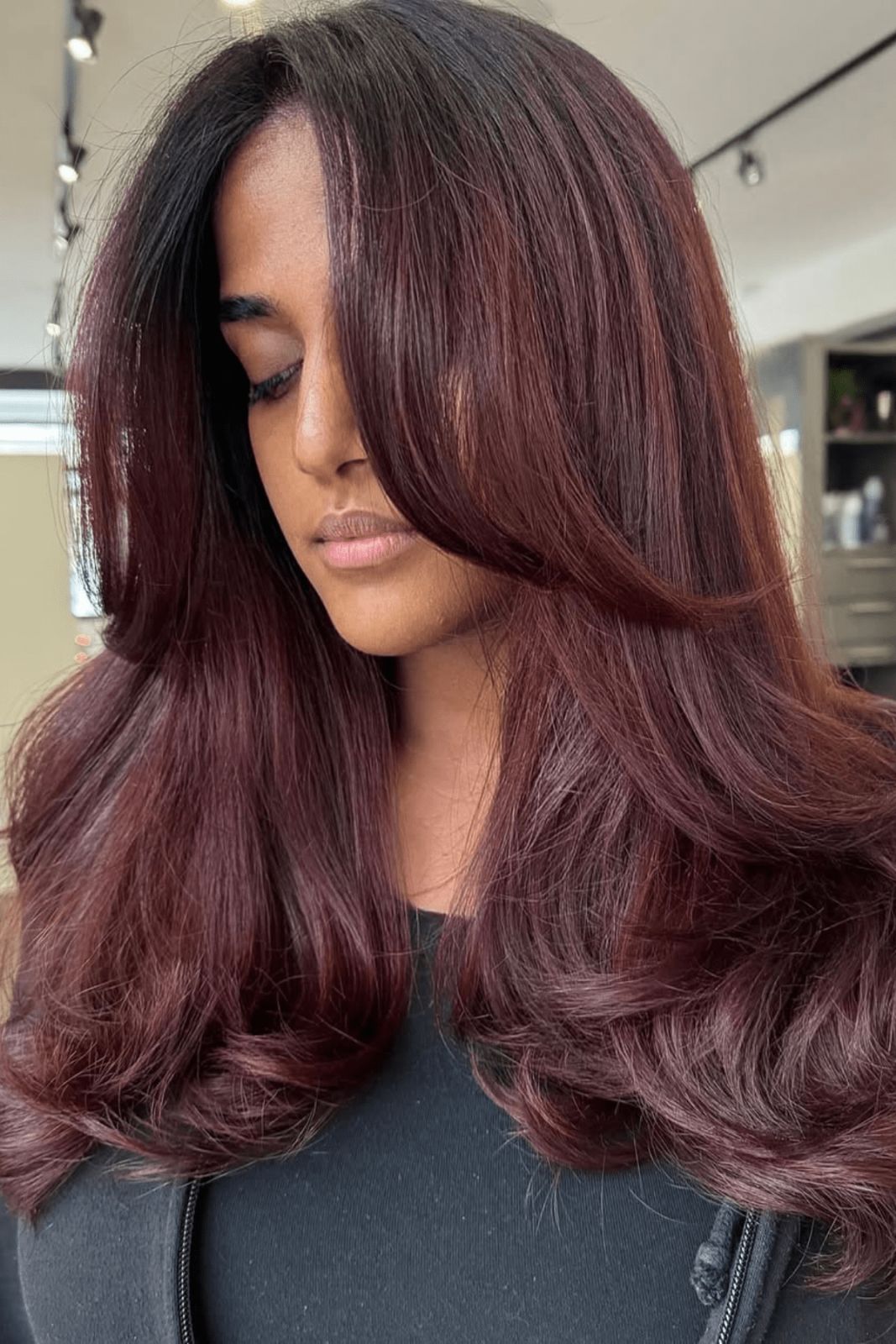
I’ll admit it: I tried cherry red on a whim in my twenties, and my olive skin responded in a way I didn’t expect. It seemed to glow, as if the warmth in the red matched the warmth under my skin. The glossy finish on these mid-back loose waves does most of the work, because the high shine catches light and makes the color look almost liquid. With warm undertones, this shade doesn’t go muddy against olive skin. My medium-density waves held the color well, but the upkeep is real. I was back in the chair every five weeks for a gloss, and my roots showed by week four no matter what I did. It’s worth it for the glow, but plan your calendar around it.
Shoulder Ash Blonde With Dark Roots
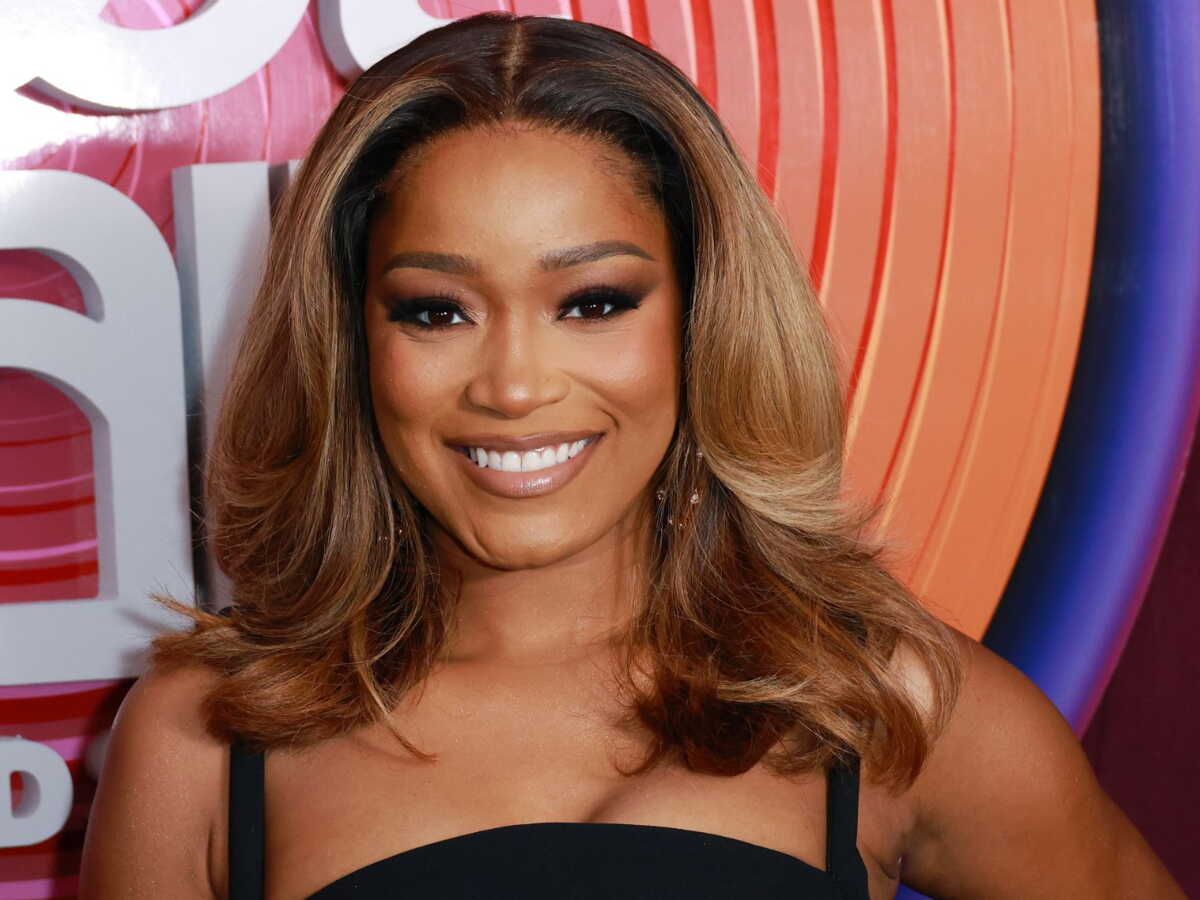
My instinct says ash blonde with dark roots is the cool-toned answer for olive skin, and I’m sticking with that. Cool blonde reads icy next to warm undertones, and that contrast can make olive skin look clearer. Here’s the honest comparison: warmer blondes glow, while this one glints. The dark roots are a deliberate part of the design, so you can stretch touch-ups, but the blonde itself needs toning every six to eight weeks or it turns yellow. The initial lift belongs in a salon, no question. Root touch-ups are doable at home with a matching dye. On my fine, straight hair, the layered blowout added body that lasted a full workday.
Collarbone Cool Dark Brown With Blonde
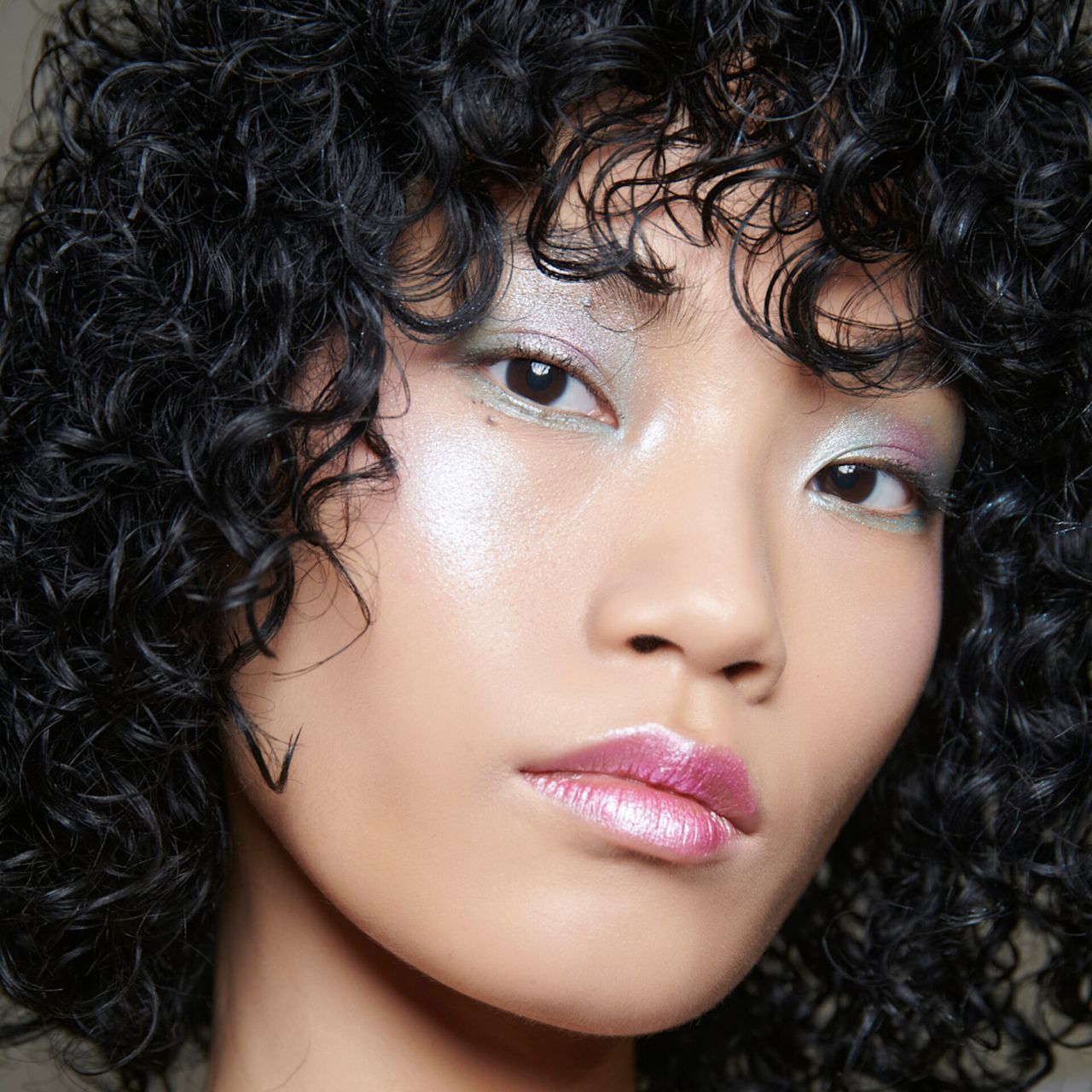
There’s a fine line between cool and ashy, and this cool-toned dark brown blonde walks it well. On olive skin, warm tones glow, but cool blonde highlights cut through the yellow in a way that looks deliberate. Collarbone layers keep thick, wavy hair from turning into a triangle. I’d book this one rather than DIY it. Keeping the highlights subtle enough to read as dimension instead of stripes takes real salon skill. The honest downside is that cool blonde turns brassy in about eight weeks, so you’ll be either toning or living with it.
Shoulder Warm Blonde With Wavy Blowout
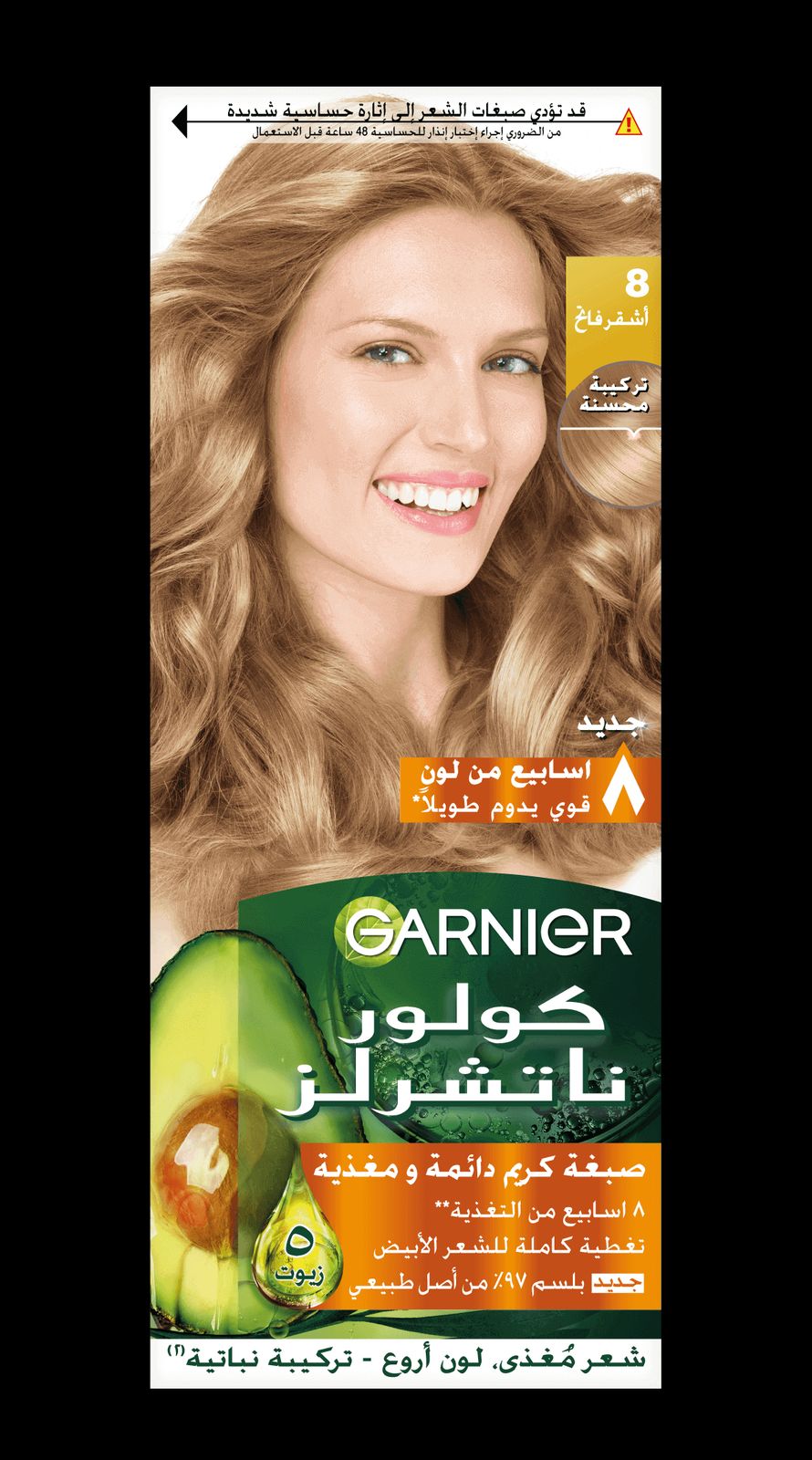
Does your olive skin look sallow in winter, or does it stay golden? If it stays golden, this warm blonde could be your shade. Light blonde with warm undertones suits olive skin that has some yellow in it, since it doesn’t fight the undertone the way ash does. If your skin reads more neutral or pink, though, this will wash you out, so skip it. A wavy blowout on medium-density hair takes about fifteen minutes with a round brush, and the waves keep their bend without turning frizzy. The upkeep is real: toning every six to eight weeks keeps the warmth from tipping into brass, and a trim every eight weeks keeps the shoulder length from looking ragged. It isn’t low-maintenance, but it’s a bright shade.
Dark Brown With Subtle Auburn Highlights Collarbone Dark Brown With Auburn
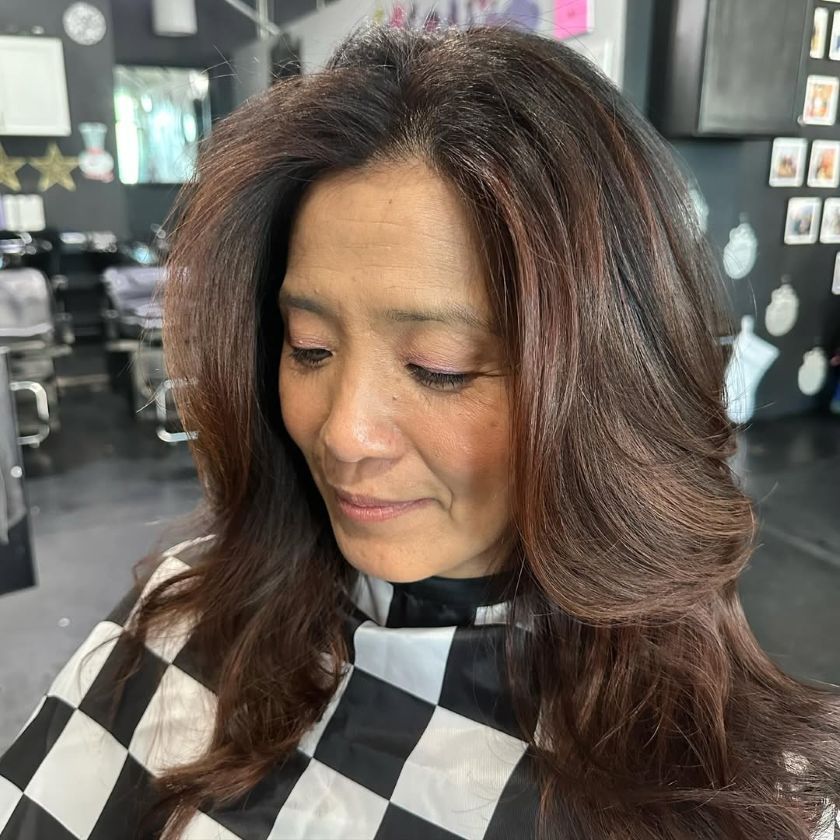
The verdict: this is the most understated way to warm up dark brown, and it works. The key is restraint. The auburn highlights are woven sparingly through the mid-lengths and ends rather than painted on thickly. That keeps the dark brown with auburn highlights looking like natural dimension, not a costume. Collarbone length with layers gives thick, wavy hair room to move, and a blowout with root volume makes the whole look feel polished without effort.
The honest downside is fading. The auburn highlights go first, especially if you wash in hot water, and by week 33 they can look more brown than red. A color-depositing conditioner helps stretch the time between touch-ups, which should happen every eight to twelve weeks. On olive skin, the warm undertones in the auburn read as a glow, not a flush, which is exactly what you want in January.
Collarbone Copper Brown With Highlights
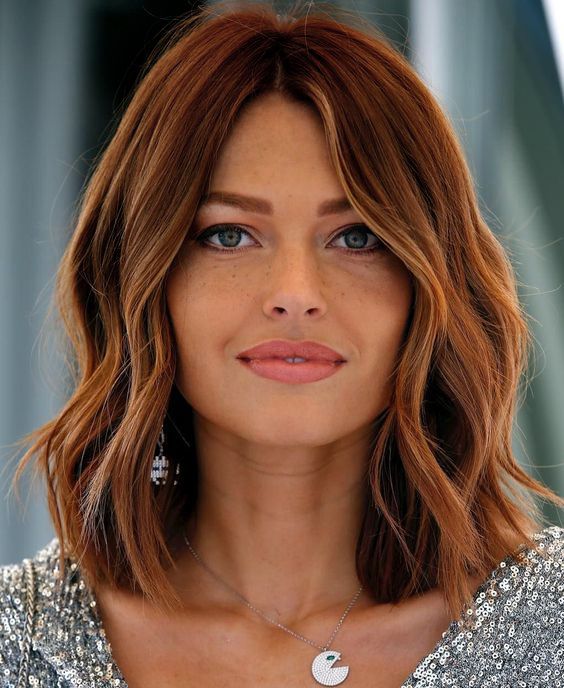
Copper brown with highlights flatters olive skin because it’s warm without being loud. Subtle highlights add dimension to the collarbone lob and catch light in a way that makes the hair look healthy, not just colored. For olive skin, this is the sweet spot. It’s less intense than full copper, so it won’t wash you out, and it isn’t as flat as plain brown, so it won’t look dull. A wavy blowout takes about 15 minutes, and the highlights need a touch-up every 8 to 12 weeks, which is manageable. Trim every 8 weeks to keep the lob sharp. If you have medium-density wavy hair, this is a low-effort way to get warmth without drama.
Collarbone Deep Red With Copper
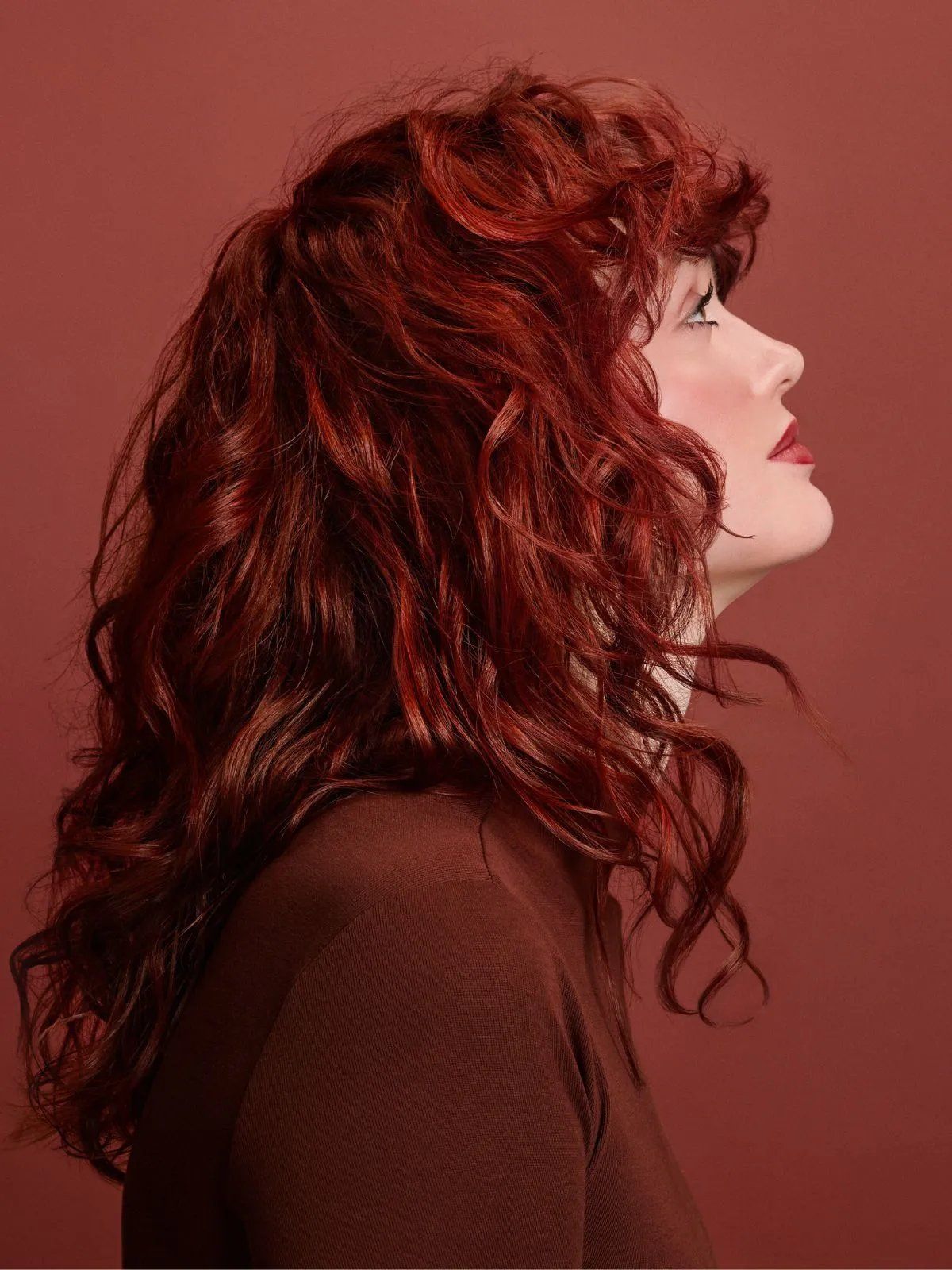
Is a deep red with copper undertones something you can only get at the salon? I’ve tried both, and here’s my honest breakdown. Collarbone length with voluminous waves suits thick hair, since the weight of the texture helps the waves keep their shape. Salon color gives a more even, dimensional result, especially with copper undertones that need to be placed carefully, not just brushed on. Box kits tend to turn flat and brassy by week three, and you’ll end up fighting the fade with a color-depositing conditioner every wash. If you have the patience for that, fine. For a red this vibrant, though, I’d book the appointment and skip the regret.
Glossy Espresso With Auburn Undertones
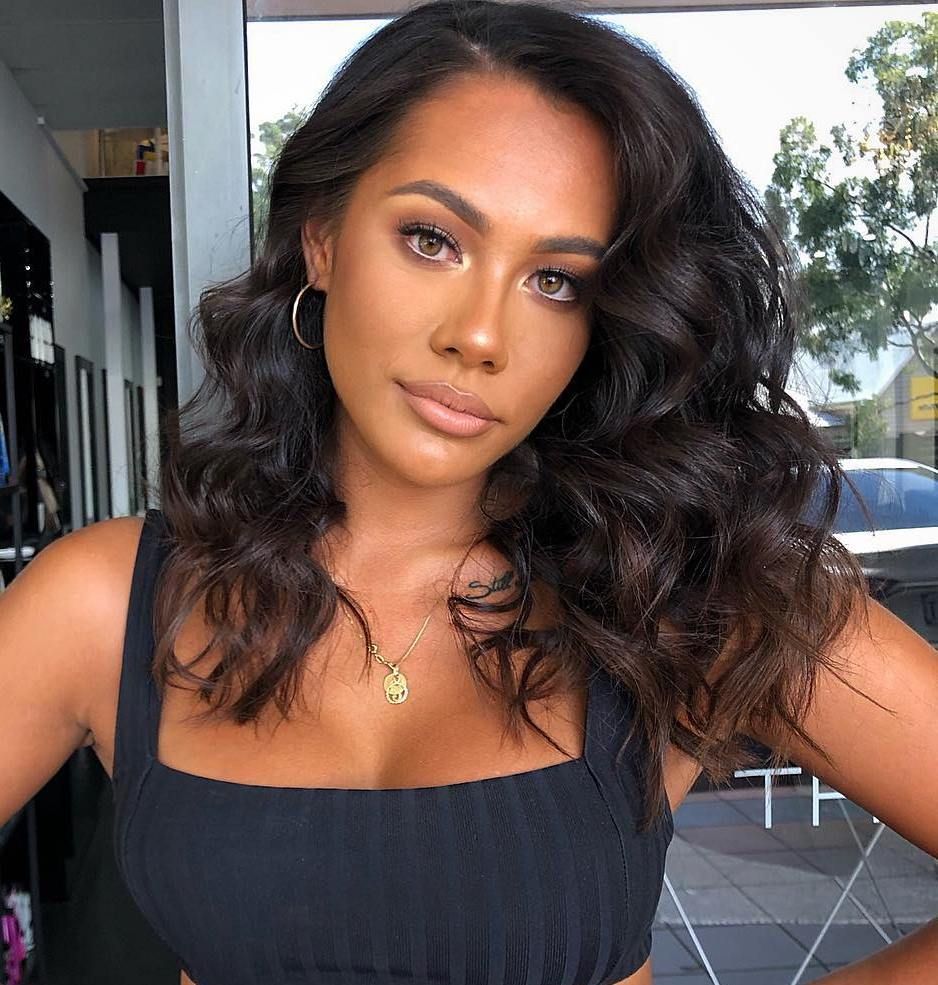
This is the shade people ask about, wondering if you just left the salon. Rich espresso brown with subtle auburn undertones picks up light differently than flat brown does. On olive skin, that warmth looks intentional rather than accidental. The color is applied as a gloss or a demi-permanent tone over the base instead of a full lift, so the auburn glows in daylight and fades back under office lights.
Loose, voluminous waves take about 20 minutes with a curling wand and a finishing spray. Thick, wavy hair holds its shape well during the day, but the waves usually need a refresh by the next morning. Trim every 8 to 10 weeks so split ends don’t break up the gloss.
Collarbone Dark Brown With Caramel/Copper Balayage
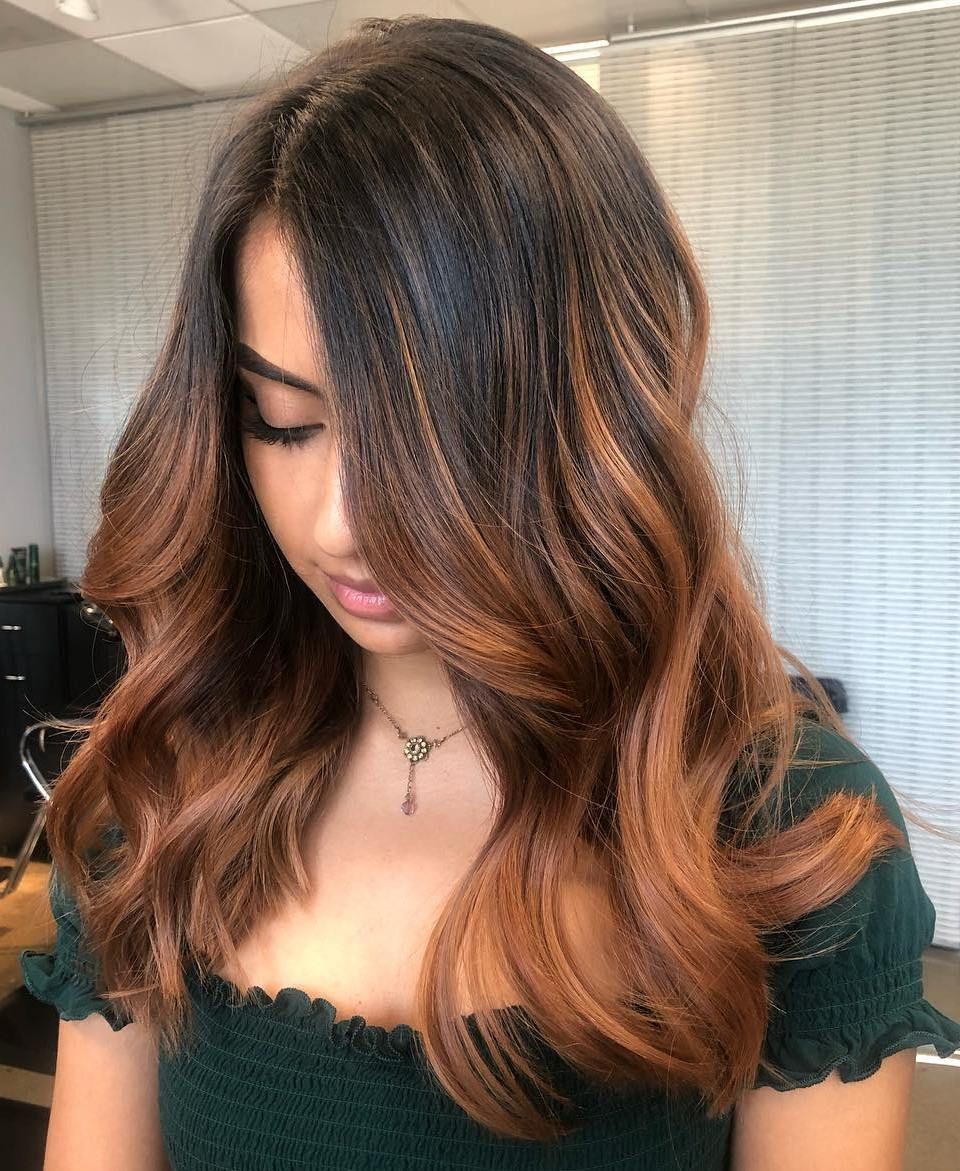
This balayage blend is the olive skin trick people rarely mention. Warm caramel and copper balayage sits on a dark brown base, so it reads rich rather than brassy against green or golden undertones. Long layers keep the collarbone length from feeling heavy, and the face-framing pieces catch light right where you want it. A middle part, loose waves, and medium density combine into a look that falls between intentional and effortless, which is the sweet spot.
Final Thoughts
Writing all of these made me see one thing: olive skin takes almost any shade, but it rewards the ones with heat. The cool ash tones work, the reds and caramels glow.
- Tone glosses at week six, not week ten.
- Trim the baseline every eight weeks.
- Root shadow buys six calm weeks, max.
- Purple shampoo once weekly, not daily.
I am booking the glossy cherry red next. It is the one I kept coming back to.
