

29 Simple Slick Back Ponytails 2027 for a Sleek Look
Simple Slick Back Ponytail 2027 styles, including high ponytails with baby hairs and dark blonde options with highlights. Find the one that fits your style.
You have the gel, the brush, and a decent mirror. The trick is knowing where to place the elastic so the ponytail sits high without pulling your scalp into the next room. That placement changes with your hair’s length and texture, which is why Simple Slick Back Ponytail 2027 fill so many saved boards: it solves the angle for every density.
29 versions here. Some take five minutes and a hair tie, others need a flat brush and a steady hand. All of them avoid the flat-by-noon problem. For straight, wavy, fine, or thick hair, this collection gives you a reason to book the chair or skip it and do it yourself.
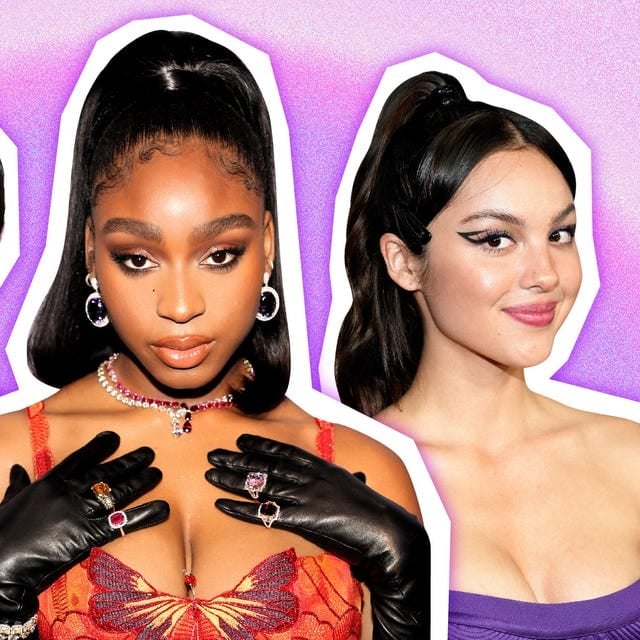
Sleek high ponytail with wispy baby hairs and black fine straight hair
Fine, straight black hair pulled smooth from the front, then broken by a few deliberately coaxed baby hairs at the temples. That contrast, neat scalp, wispy edges, stops the whole thing from looking severe. You need hair starting at the collarbone to get enough weight for the tail to hang straight. The baby hairs soften round and heart face shapes. Ask your stylist for a high ponytail with wispy baby hairs. Use a fine-tooth comb and hairspray to sculpt those pieces into place; expect ten seconds of precision that makes the difference between sloppy and deliberate.
Slicked back high ponytail for fine dark blonde hair
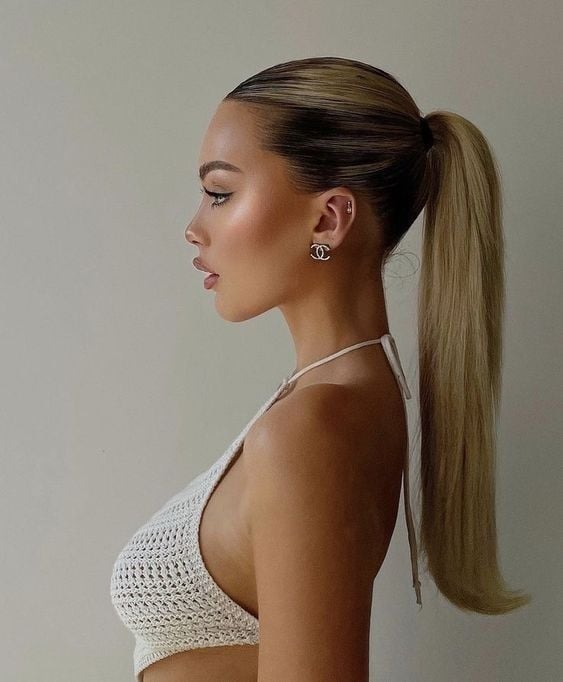
Can you get a slicked-back ponytail to hold without a salon visit? Yes, when the hair is fine and straight. Dark blonde base with lighter highlights running through the tail gives the style depth where density is low. The key is the parting: slicked straight back, no zigzag, no side-swept distraction. Fine hair starting at the collarbone works best. Thick hair that resists smoothing is not ideal for this look. A smoothing serum on the front sections before brushing back cuts down flyaways instantly.
Sharp black ponytail with a slicked-back finish
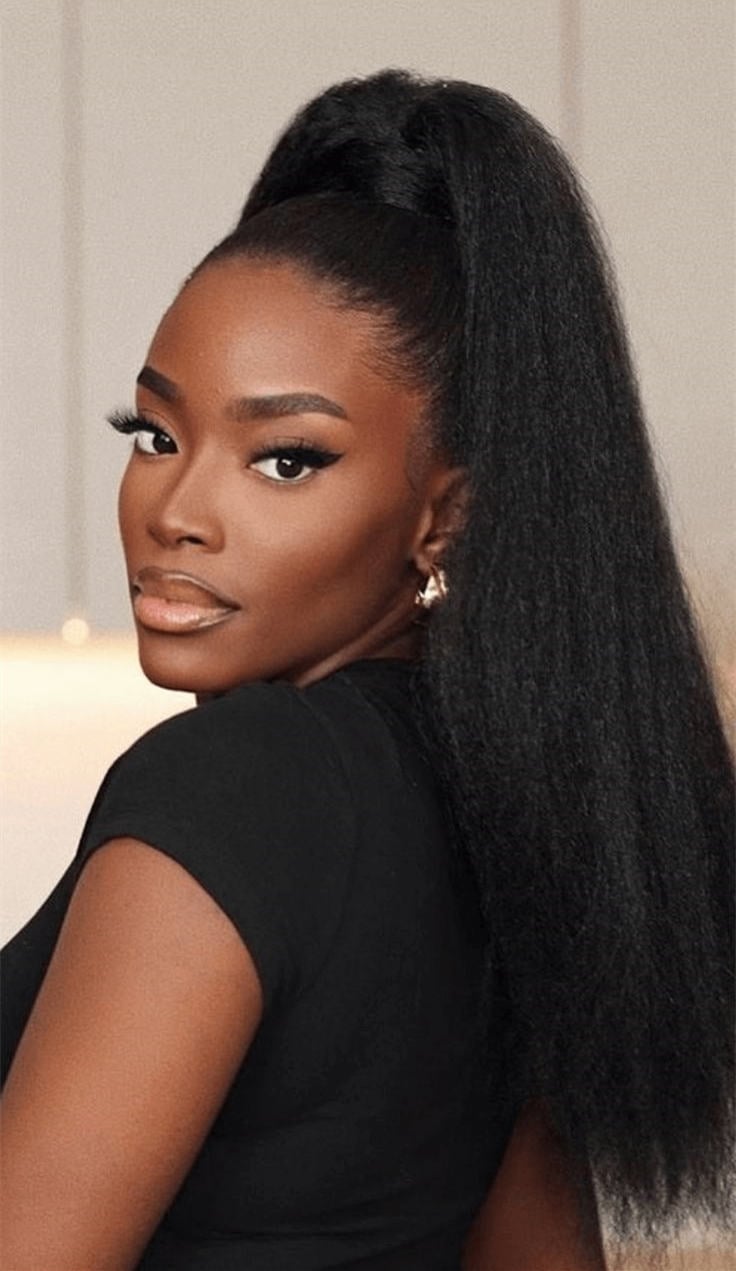
A high, sleek ponytail like this one sits in the same category as a tight bun, but it reads differently. The bun is deliberate restraint; this is speed and sharpness. Black hair pulled straight back, no parting visible, the tail falling long with fine, even layers. It suits oval and heart face shapes because the pulled-back scalp lengthens the visual line.
The catch: the same tension that creates the smooth finish can pull at the hairline over time. Fine, straight texture holds the shape best without product buildup. Ask your stylist for a high ponytail, slicked back, long. Use a boar bristle brush on dry hair before securing. It distributes natural oils and reduces the need for spray.
Mid-back blonde ponytail secured with a claw clip
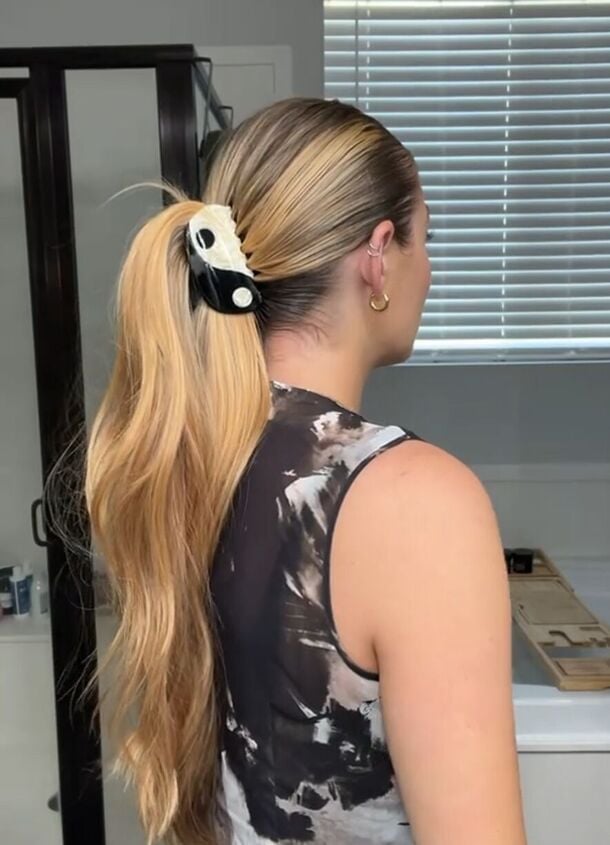
A yin yang claw clip is doing the holding here, which changes the whole silhouette. Instead of a tight elastic dent, the top of the ponytail stays smooth and the tail releases with a slight curve. Blonde hair with a few lighter highlights lands mid-back, thick enough to fill the clip. The straight texture keeps the surface clean. Thick hair starting at collarbone length works best. A smoothing product on damp hair before pulling back prevents the clip from catching on dry strands.
Dark brown hair pulled back high and smooth
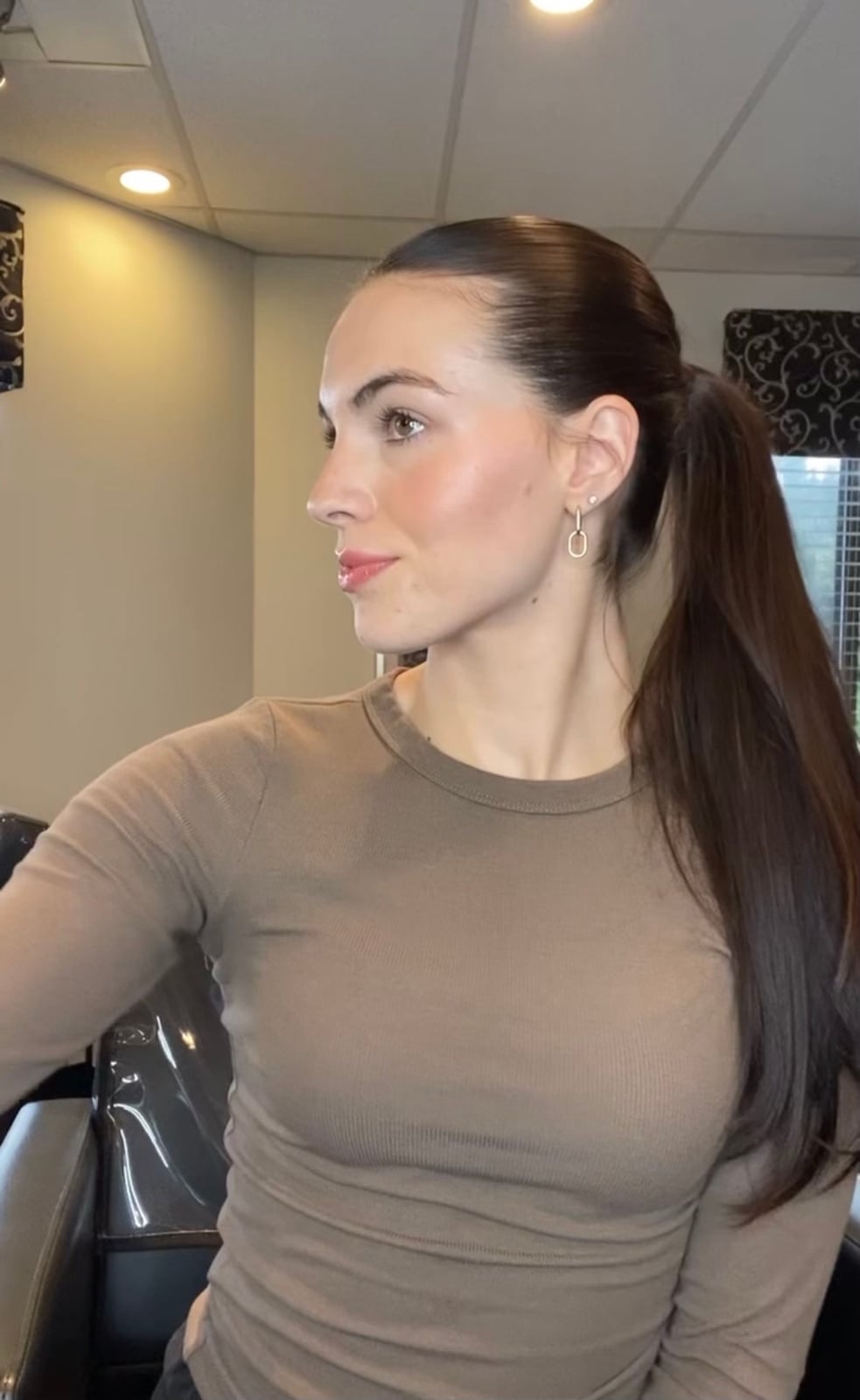
High placement, dark brown color, thick straight texture. That combination creates a ponytail that looks neat without visible product. The hair is pulled back from the face with no part breaking the surface, which makes the shape look one solid form. It suits most face shapes because the height balances the width. Skip it if you have fine hair that cannot achieve this density without extensions. Ask your stylist for a high ponytail, slicked back, in dark brown. A strong-hold hairspray brushed through the front section after pulling back keeps the smooth finish intact for hours.
Thick ash blonde braided ponytail with lighter highlights
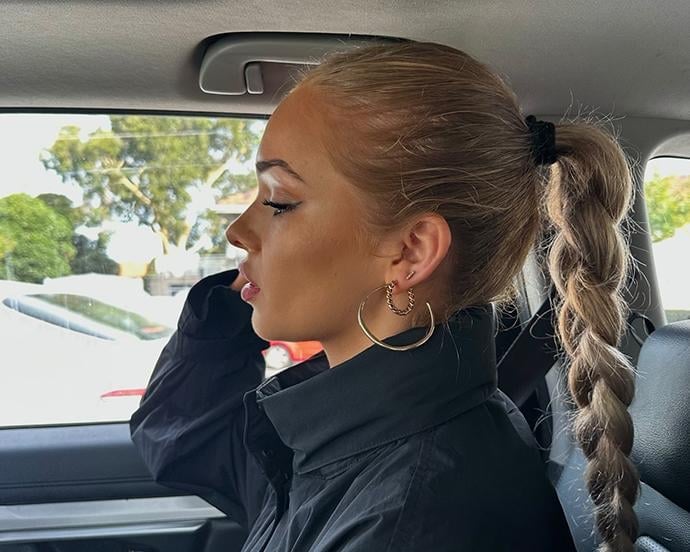
Braiding a thick tail changes its whole silhouette, and this one keeps the braid chunky rather than tight. The ash blonde base carries subtle lighter highlights, so the plait looks textured even from across the room. A black scrunchie holds the end, which is a practical choice for thick, straight hair that tends to slip out of thinner ties. Slick the top back with a bit of gel, then braid firmly to keep the definition from frizzing by midday. It holds best on hair that is collarbone length or longer.
Classic dark brown ponytail for fine straight hair
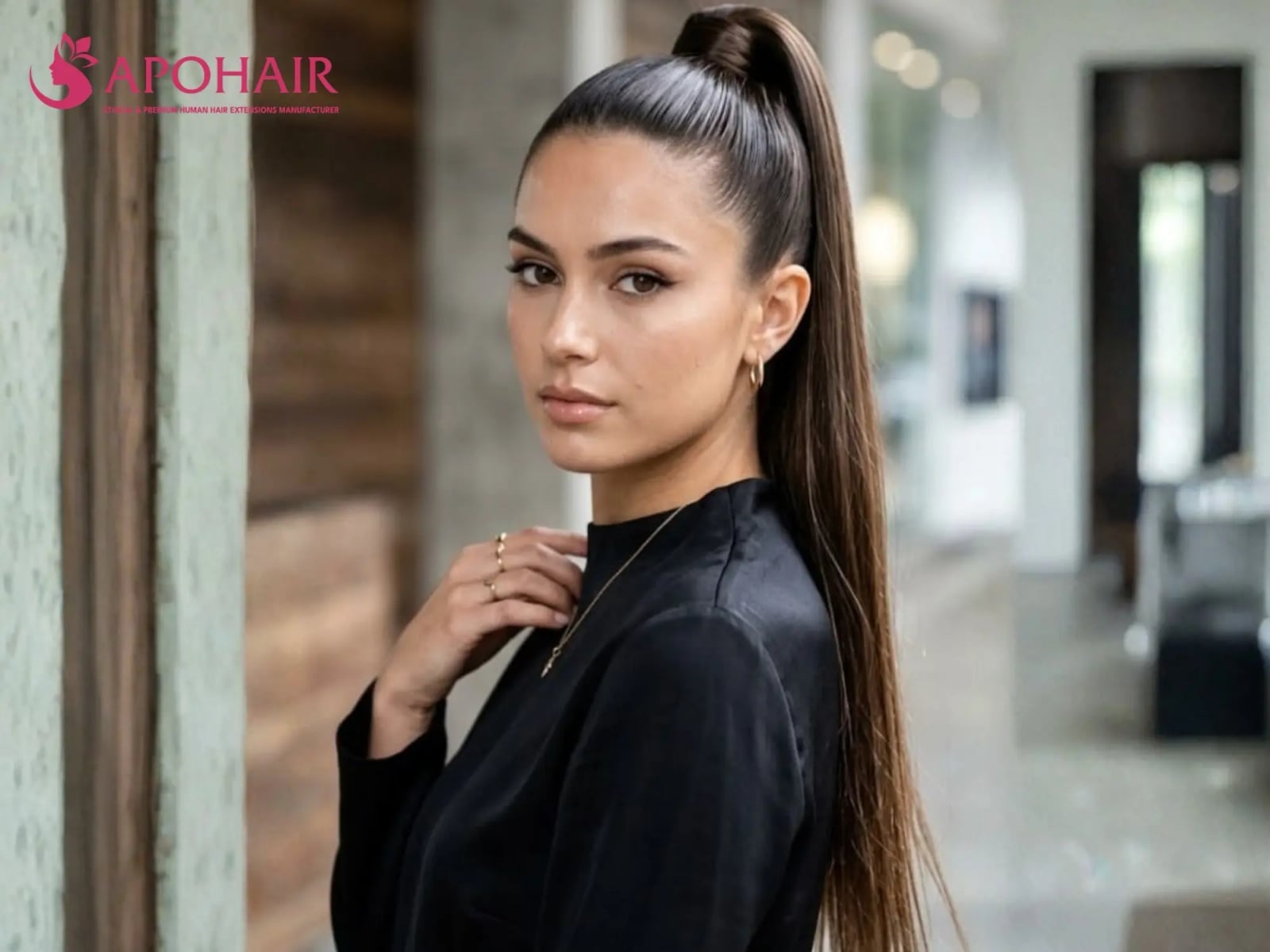
This is the ponytail that needs no introduction, but it does need a little help. Fine, straight dark brown hair is pulled up high and slicked back, with long layers giving the tail a soft, tapered fall. The trick is in the prep: a volumizing spray at the roots before you smooth everything back keeps the crown from looking flat. Skip it if you have very thick hair, which will fight the sleek line and look sparse at the ends. Ask your stylist for: high ponytail, slicked back. A trim every six to eight weeks keeps the ends clean so the tail swings rather than strays.
Wet-look dark brown ponytail with loose waves
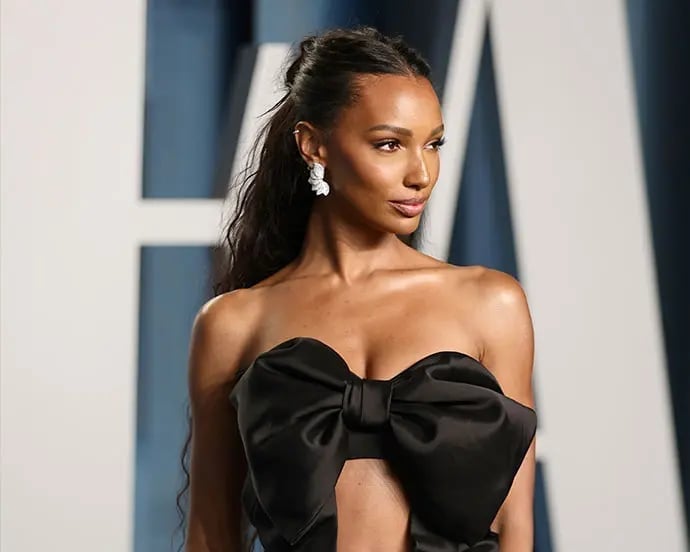
Set this against a matte finish and you will see the difference immediately. The wet-look high ponytail in dark brown relies on a slicked-back crown, but the tail is where it gets interesting: loose waves that cascade down the back. It is a salon-leaning style, because the contrast between the glossy top and the soft waves takes a steady hand with gel and a curling iron. The catch: if you have very straight hair, the waves will drop out within the hour, so you are better off with a smooth tail instead. Apply gel or mousse while the hair is damp, then style the waves once the top is set. The ends need trimming every eight to ten weeks to keep the waves from looking ragged.
Voluminous top section on a medium brown ponytail
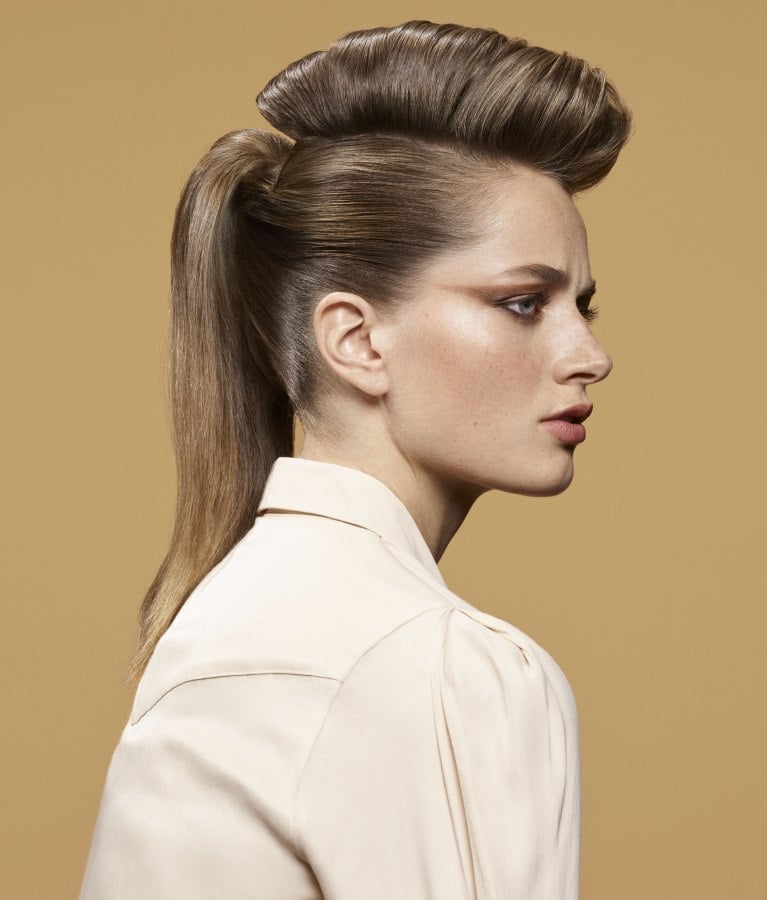
Does your crown need a little drama? This high ponytail gives it exactly that. The top section is teased and lifted into a voluminous dome, while the rest slick back smooth, and the medium brown base carries subtle highlights for depth. It suits fine-textured hair starting at collarbone length, because the volume adds weight to a silhouette that can go flat. Choose this style only if you want noticeable height at the crown. Ask your stylist for: high ponytail, voluminous crown. Tease the crown section before you slick, and expect to use a firm-hold spray to keep it standing.
Low ponytail with large uniform waves
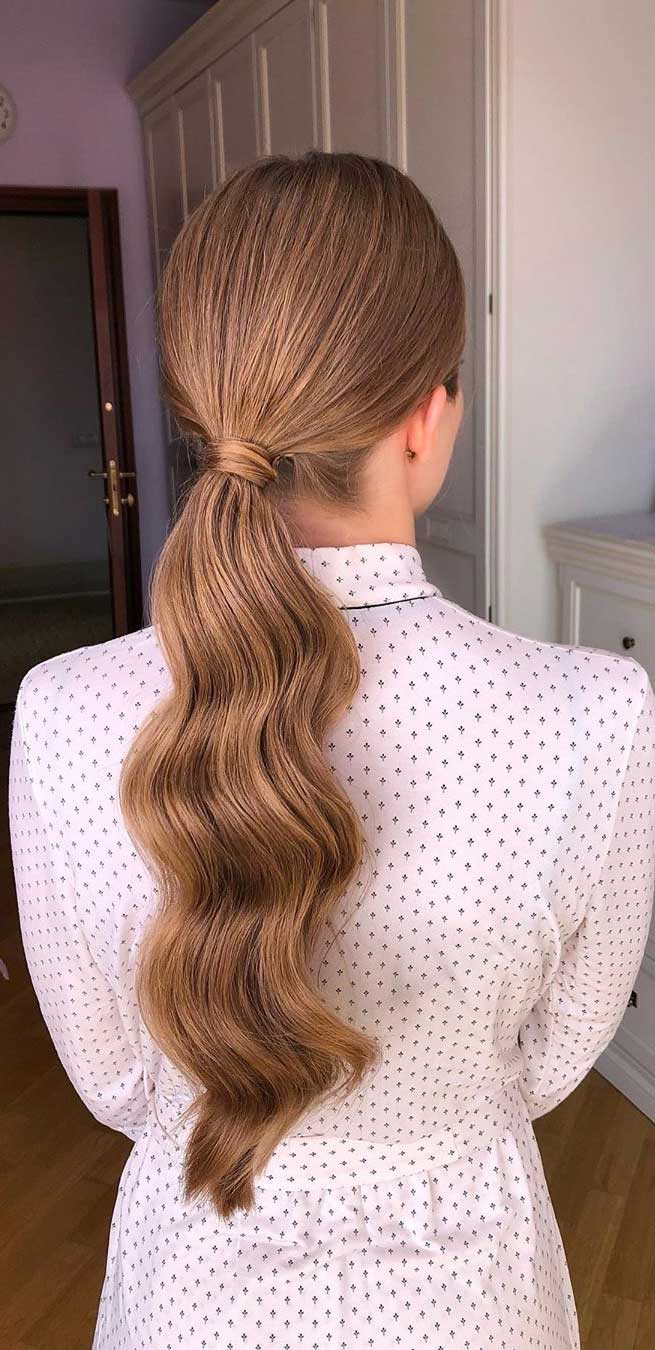
A low ponytail usually looks quiet, but the waves here change the conversation. The warm brown base is pulled back sleek, with subtle blonde highlights catching the curve of each large, uniform wave. Fine-density hair works well because the waves add body without weighing the tail down. The part is slicked back, which keeps the look tidy even when the waves soften it. Use a large barrel curling iron to get that even S-shape, and let the hair cool completely before you brush it out. A trim every eight to ten weeks keeps the ends from splitting and the wave pattern clean.
Thick dark brown braided ponytail with ornate clip, close-up take
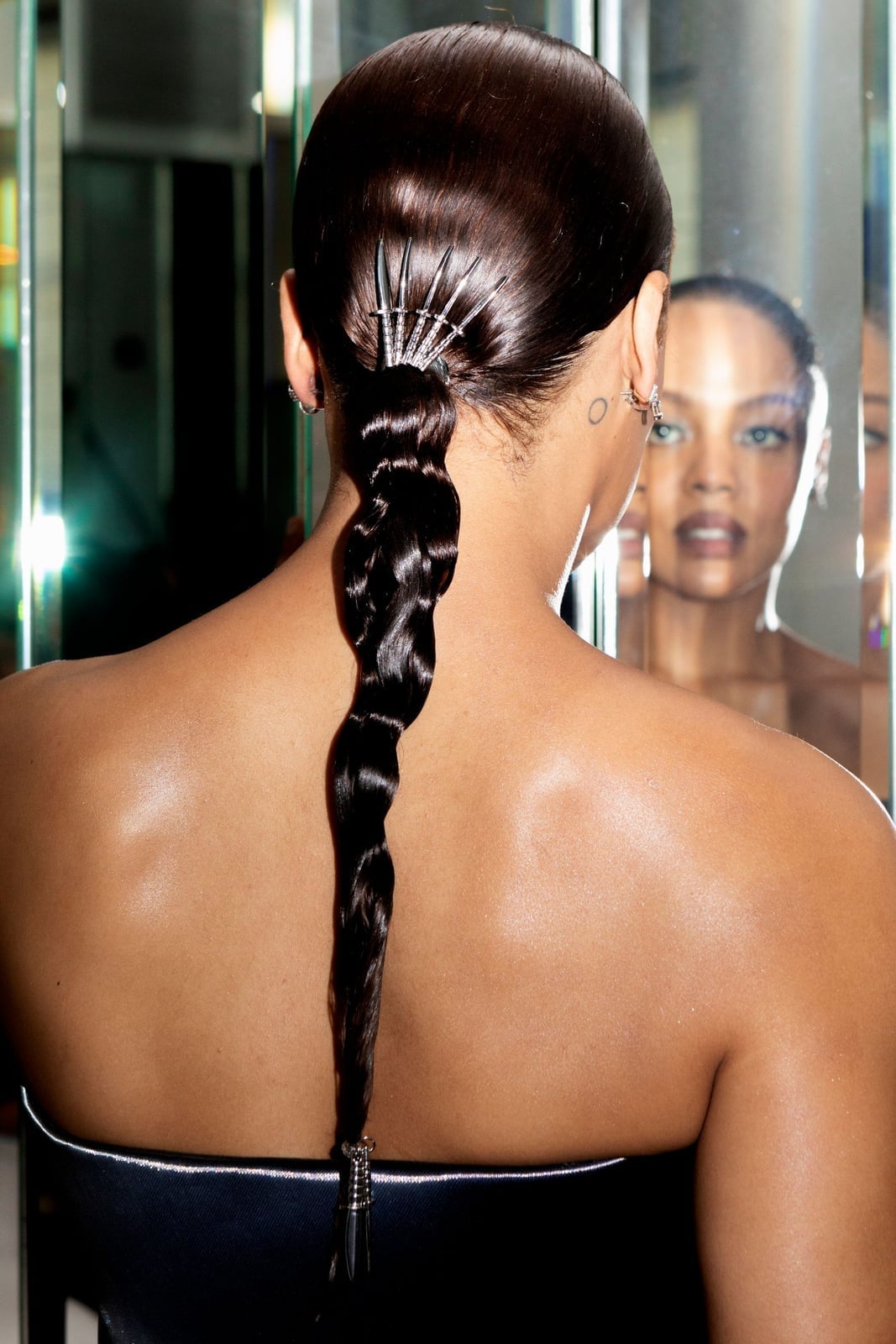
Two accessories change the whole read. The thick dark brown braid starts from a slicked-back crown, then runs straight down into a single plait. An ornate spiky silver clip sits at the crown, and a decorative charm hangs at the braid’s end. You need thick, straight hair starting at collarbone length for the braid to hold its shape. Ask your stylist for: thick dark brown braided ponytail, ornate clip. The braid must be tight to keep the neat line; loose sections will make the clip look misplaced. A plain ponytail without accessories is a simpler option.
Blunt ends on a sleek high black ponytail
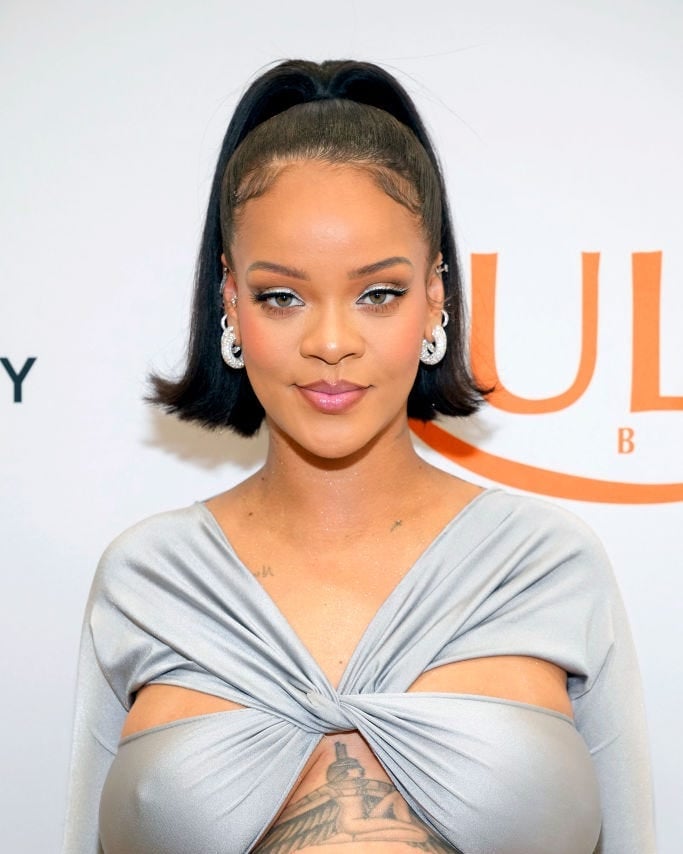
This is the ponytail for minimalists. Black, fine, straight hair is pulled back high and tight, then left with a clean blunt end. No taper, no texture, no fuss. The blunt cut adds structure to a round face by creating a sharp horizontal line. Skip it if your ends are split or uneven, the whole effect depends on that single clean cut. A flat iron seals the bluntness in about two minutes.
Face framing braids on a thick center braid
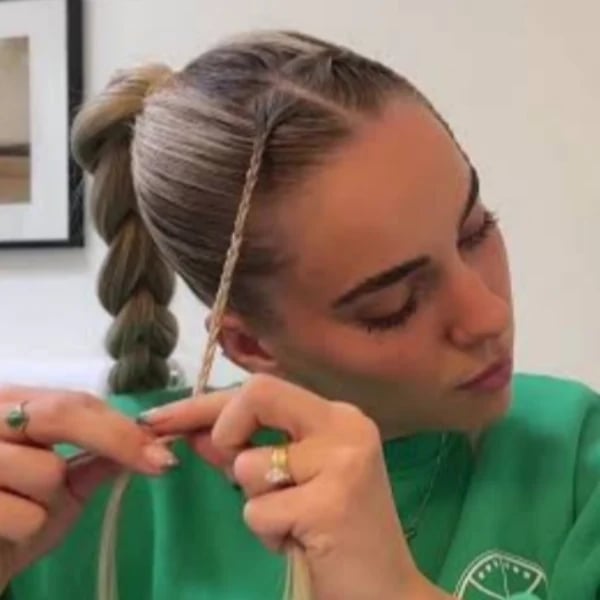
A single thick center braid is the main event, but the two thin braids framing the face change the conversation. Instead of a plain ponytail, you get a braided design with a front detail that draws the eye forward. The dark blonde base with lighter highlights shows in each braid section. Ask your stylist for: thick braided ponytail, face-framing braids. This suits thick, straight hair of collarbone length or longer. Pass when you want a simple, unadorned ponytail. The face-framing braids are the whole point.
Glossy sculpted waves in a dark brown wet-look ponytail
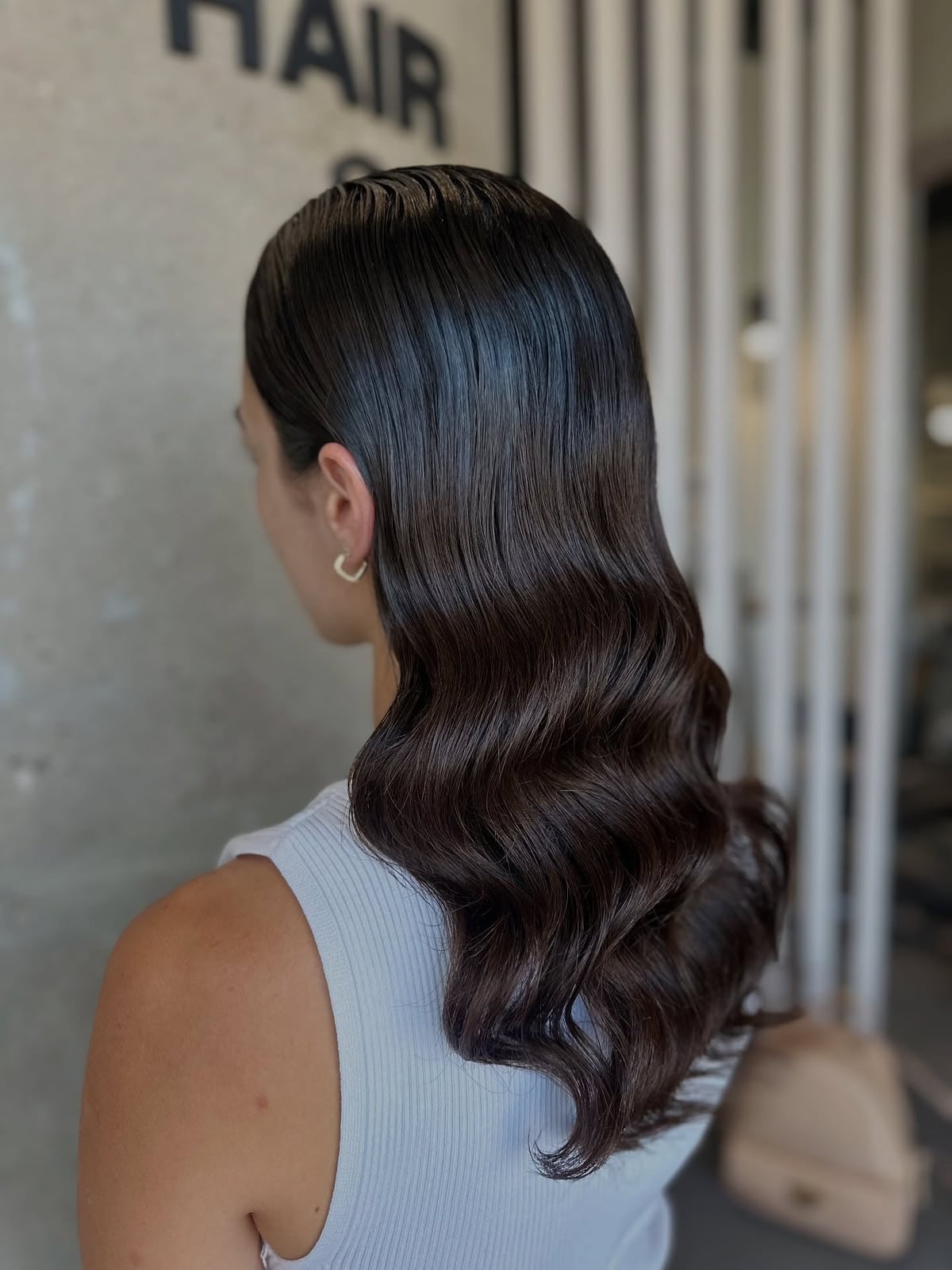
Wet-look styling usually means flat, but here the hair is slicked back into a high ponytail and then shaped into large, glossy waves that cascade down the back. The dark brown color appears as one solid gloss from root to wave tip. This works on thick, wavy hair starting at collarbone length. A matte finish is not the goal here. The shine is the entire visual trick. A strong-hold styling cream keeps the waves defined for the evening.
High sleek ponytail for thick wavy dark brown hair
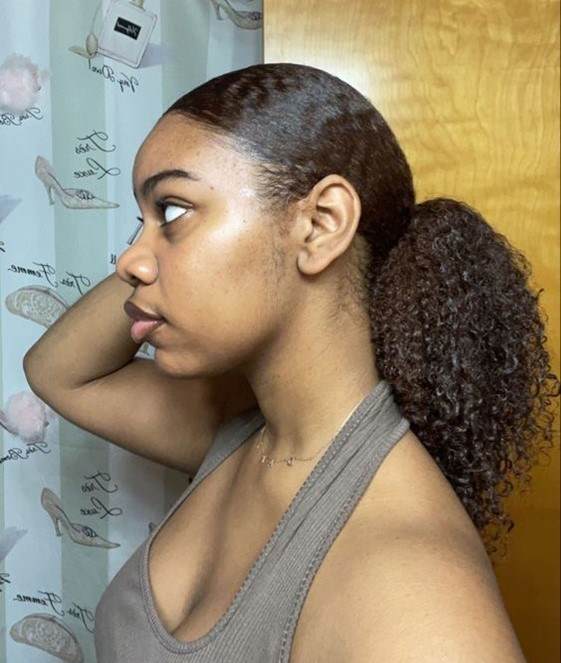
Thick, wavy dark brown hair gives a high ponytail natural volume and movement. The front is slicked back smooth, while the ponytail keeps its wave pattern. This style is sleek at the base and textured in the tail. Ask your stylist for: high ponytail, slicked back, thick wavy. It suits most face shapes and works for everyday wear. A wide-tooth comb smooths the top without flattening the waves below.
Sculpted baby hairs framing a long thick straight ponytail
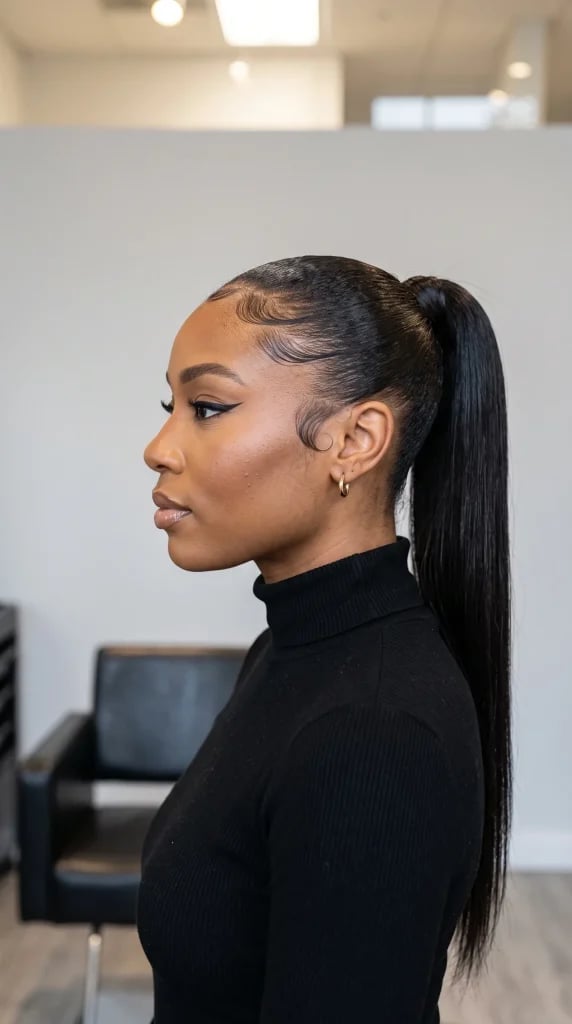
Between a smooth finish and a soft hairline, this one chooses both. The high ponytail is pulled tight from a slicked-back crown, then the baby hairs along the hairline get their own treatment, shaped into small arcs that land deliberately against the skin. You need thick, straight hair starting at collarbone length for the ponytail to carry weight. Dark black at this density looks glossy and solid. Skip it if a clean hairline with no wisps is your preference; the sculpted pieces are the point here, not a mistake to smooth down.
The catch is in the precision. Those arcs take a steady hand and a styling wax with enough tack to hold them through an evening. A pomade works. At home, expect to re-smooth the edges before you walk out.
Chunky braid on a sleek high black ponytail
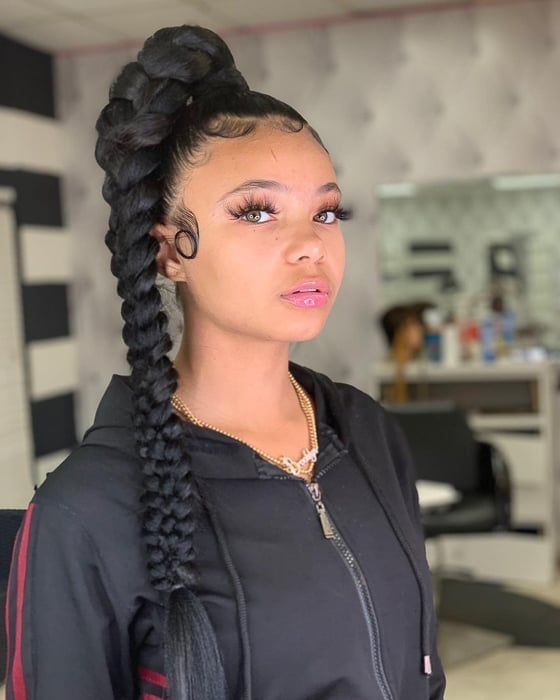
A braid this thick needs a ponytail base with enough hair to split into three equal sections. The crown is pulled smooth, hairline edges defined, and then the length drops into one chunky braid that runs straight down the back. Black hair against a tight braid pattern shows every turn of the strand. You need collarbone length or more to let the braid show its structure. This is a section-and-weave situation that benefits from a second mirror. Ask your stylist for: high ponytail, chunky braid, slicked back.
Middle parting and loose waves in a light brown ponytail
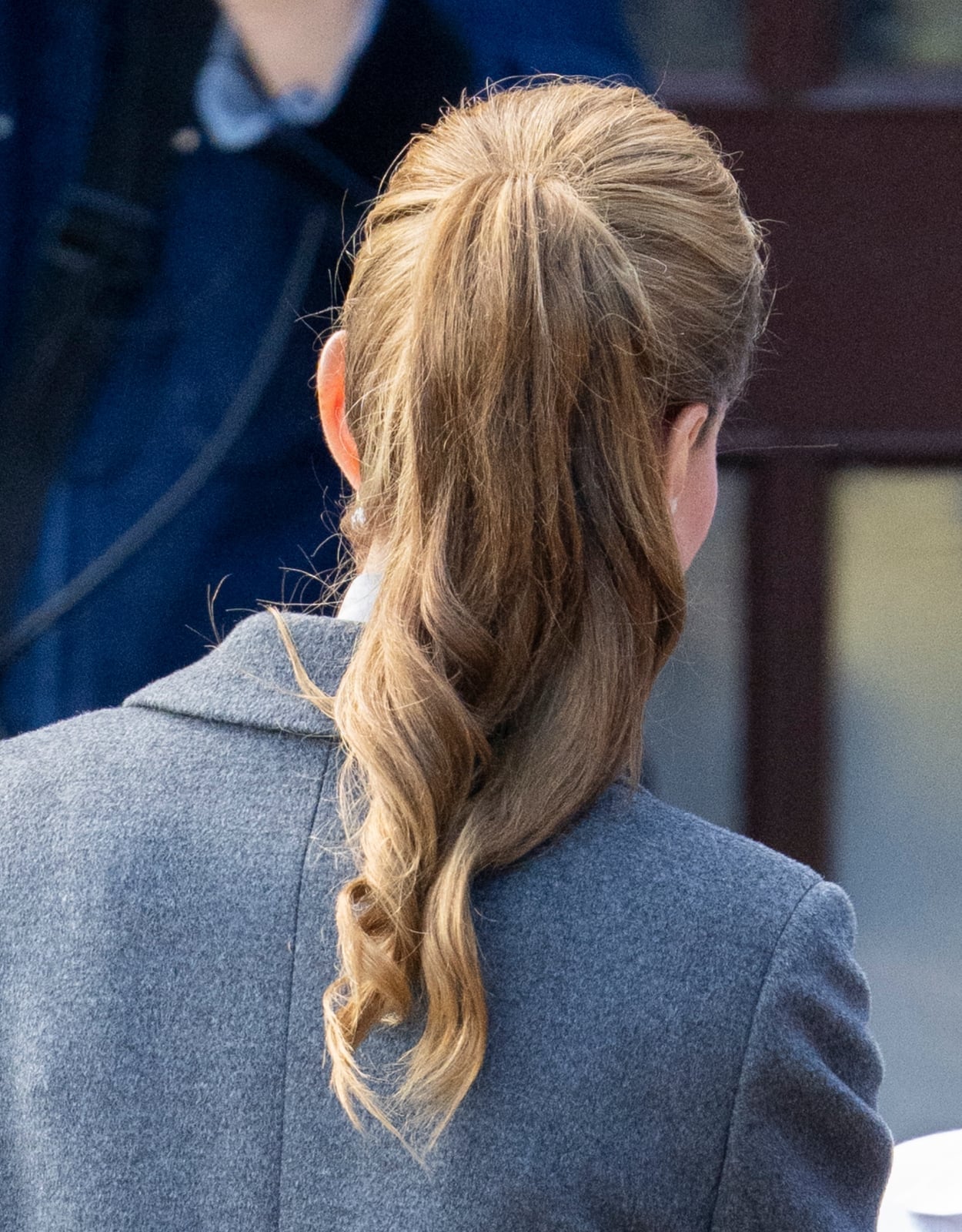
A middle part changes the geometry of a ponytail. Here the hair splits cleanly at the center, then pulls back into a high gather. The ponytail itself is thick and wavy, with strands curled into loose, uniform waves that fall down the back. Light brown hair with blonde highlights creates a soft contrast between the slicked crown and the textured length. Thick, wavy hair starting at collarbone gives the waves enough weight to hold their shape. The middle part works best on oval or longer face shapes; it draws the eye down. Pass when a side part feels more natural to your hairline. A large-barrel iron set on low heat builds the curl without fighting the wave pattern you already have.
Straight dark brown hair pulled back for polish
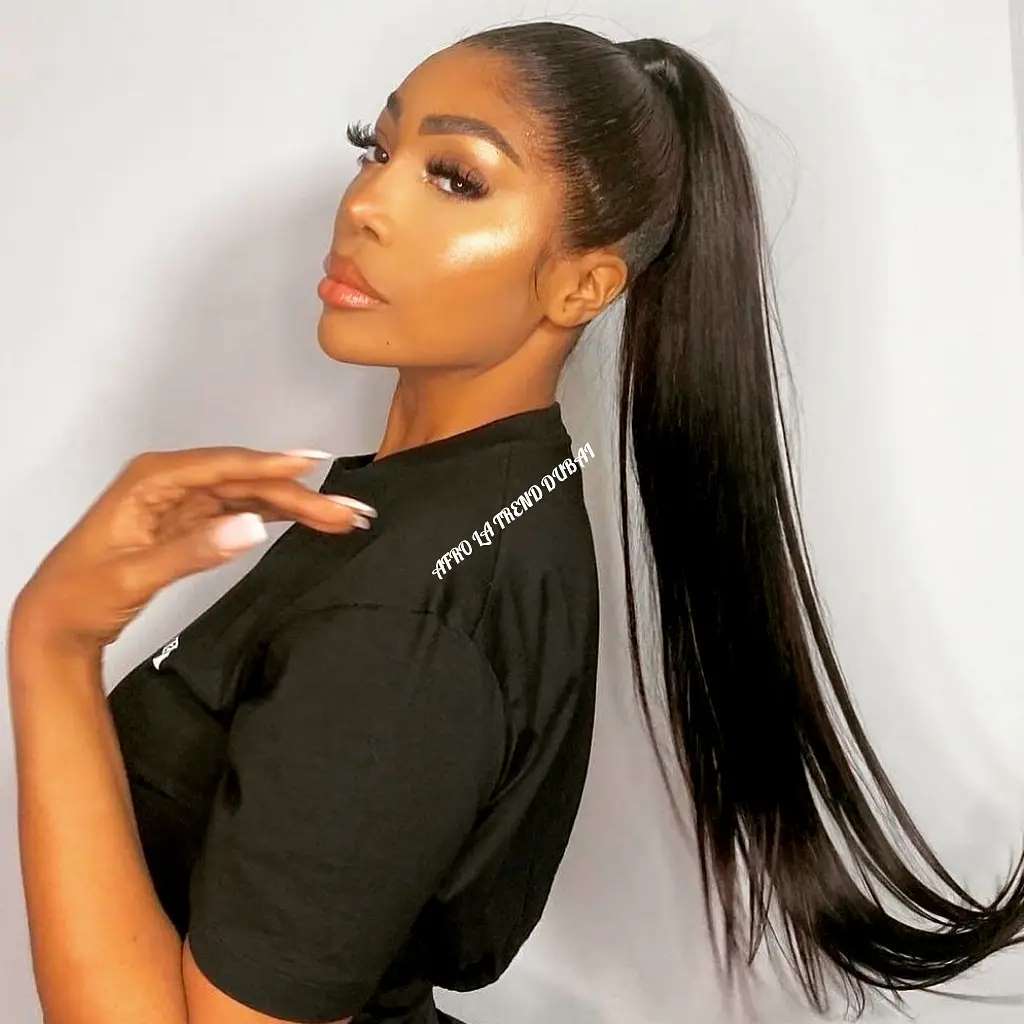
High placement and a tight pull back create a ponytail that is neat from every angle. Dark brown hair is brushed smooth from the hairline to the tie, with no texture breaking the surface. Fine, straight texture holds this finish well because there is less bulk to fight at the crown. Collarbone length or more keeps the ponytail from looking sparse at the ends. Not for wavy or curly hair that would need significant blow drying and straightening first. Ask your stylist for: high ponytail, slicked back, straight. A strong hold gel applied before the brush gives the surface tension that lasts through a full evening.
Two tone dark blonde ponytail with lighter highlights
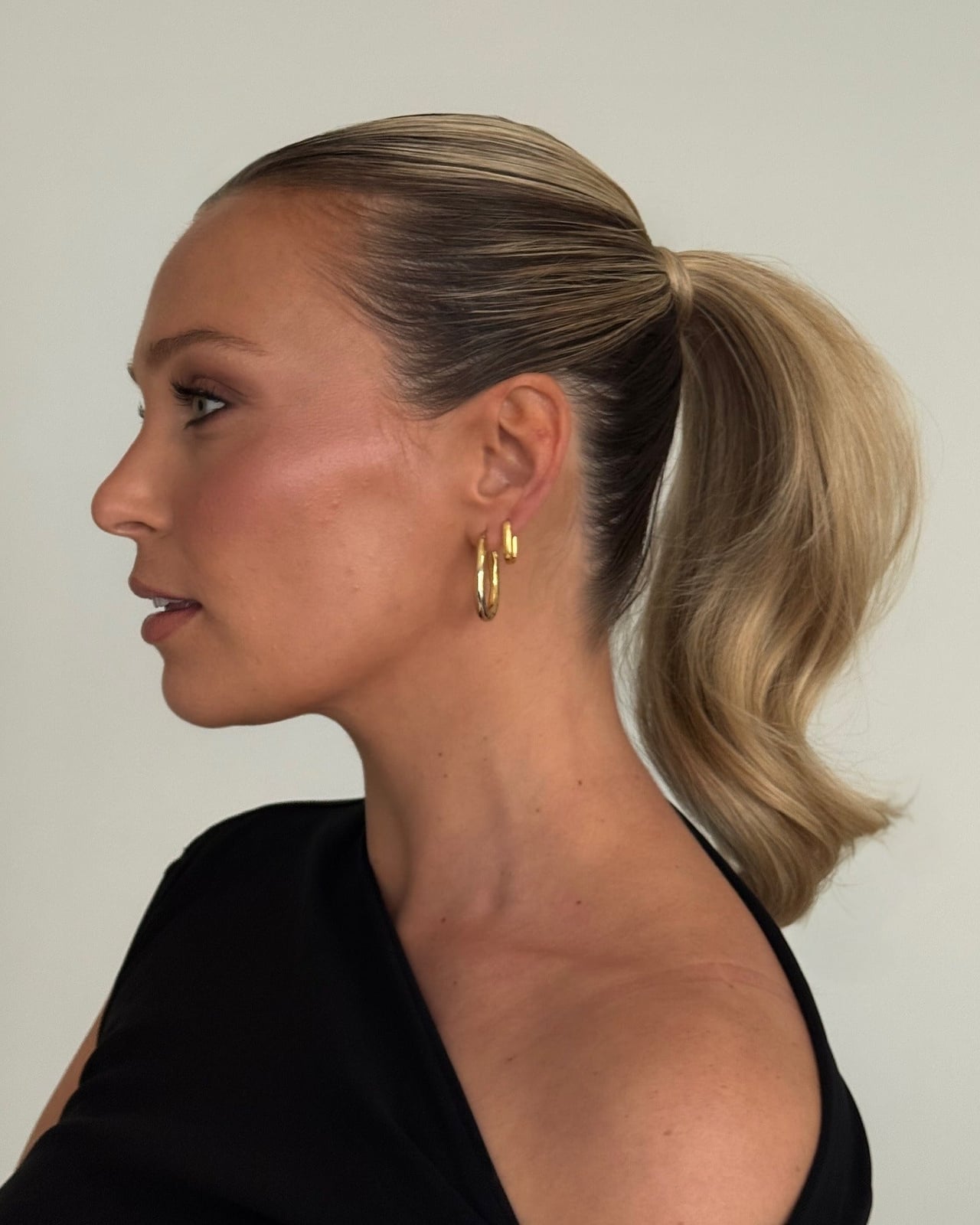
Pull hair back at the crown, smooth the top and sides, and gather into a high ponytail. That is the basic move. The effect depends on what the color does once the hair is gathered. Dark blonde with lighter blonde highlights creates contrast at each section of the ponytail, breaking up what would otherwise be a flat block of color. Fine, straight texture allows the highlights to read clearly. Collarbone length gives the ponytail enough drop for the two tones to separate visually. The contrast is the defining feature of this look. A smoothing cream applied to the ponytail length keeps the surface glossy without weighing fine strands down.
Platinum blonde ponytail with darker roots and waves
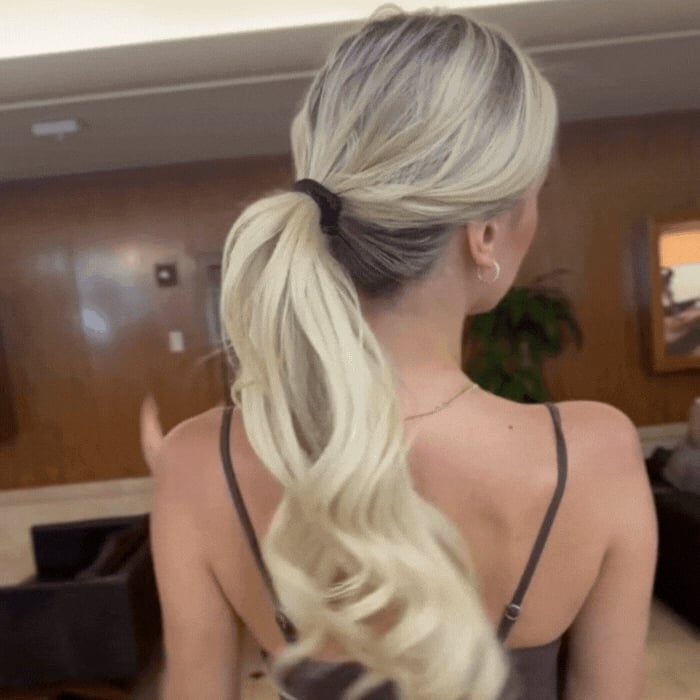
Platinum blonde at the ends and darker at the root means visible regrowth is part of the design. Thick, wavy hair gets pulled into a high ponytail, slicked back at the parting, then released into loose waves. Skip it if you prefer a solid blonde shade or straight texture; the wave is what softens the contrast. Ask your stylist for: high ponytail, slicked back, platinum blonde with roots.
Blonde hair pulled back with wispy strands evident
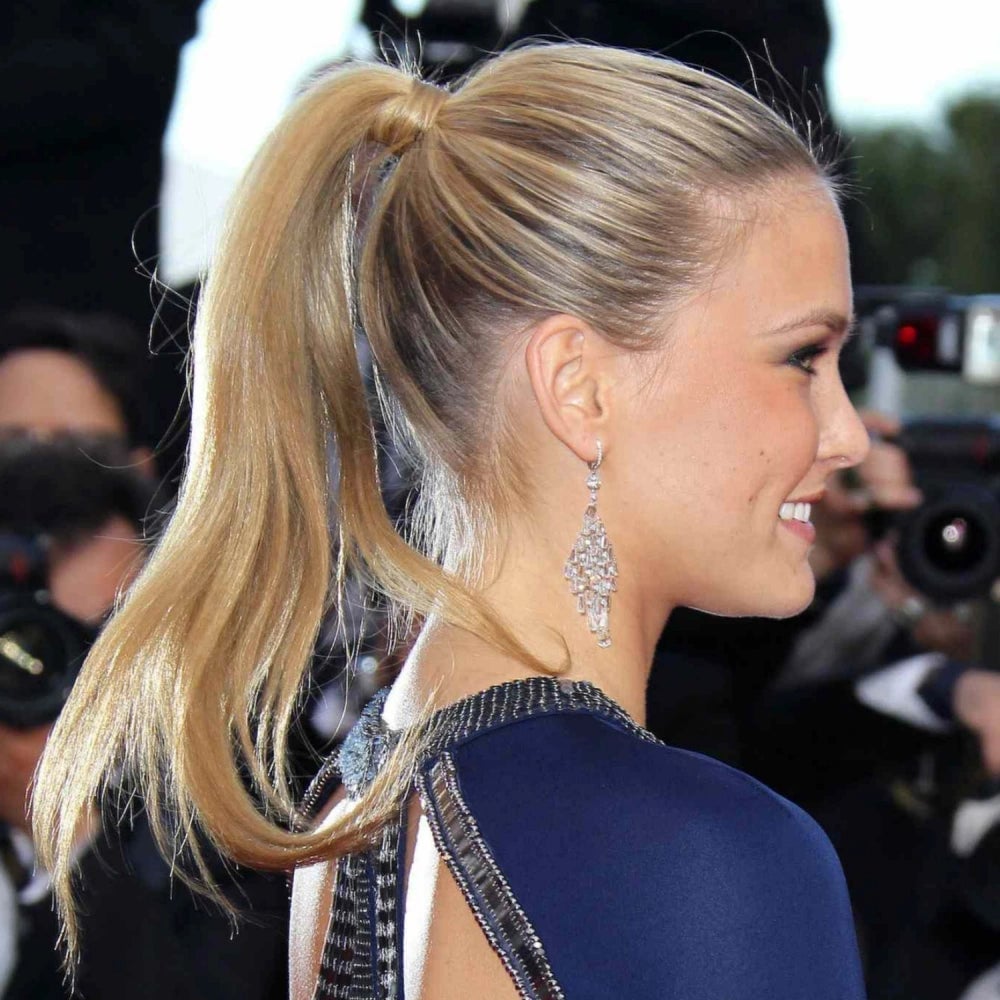
Not every slicked back ponytail needs a tight seal. This one keeps the high placement but lets fine, straight texture show itself in wispy strands around the hairline. Blonde with lighter highlights looks like a single shade from a distance, then separates into two tones close up. The wisps work because there is not much hair to lose. A texturizing spray on the crown gives the fine strands something to grip.
Wet-look dark brown ponytail with a high-shine finish
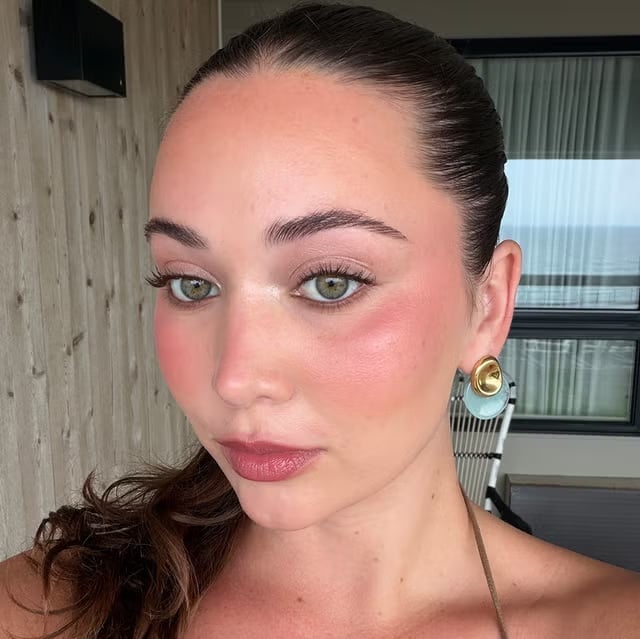
Gel and a fine-tooth comb are the only tools you need. Thick, straight dark brown hair gets pulled back tight, layered ends falling into a ponytail with a wet-look, high-shine finish. The layers keep the ponytail from looking like a single solid block. Skip it if you prefer a matte finish or have fine hair; the wet look needs density to avoid showing scalp. Ask your stylist for: ponytail, wet look, slicked back. Apply gel liberally, then smooth with the comb until every strand is sealed.
Clean dark brown ponytail for fine straight hair with long layers
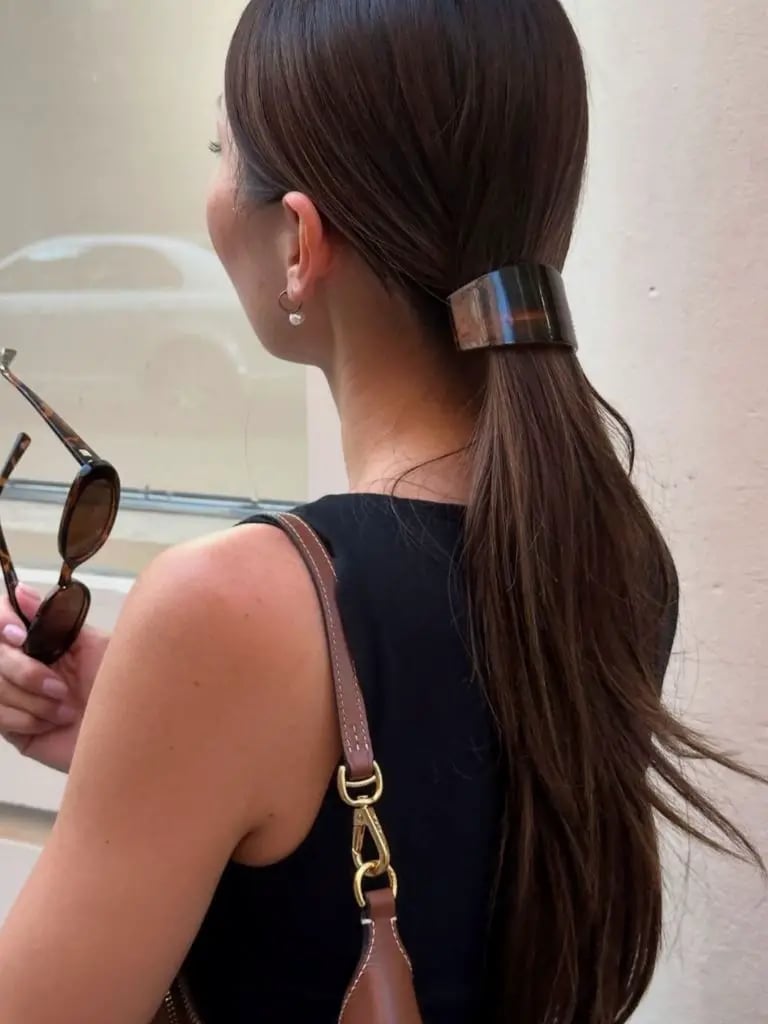
The mistake with fine, straight hair is pulling it back too tight, which exposes every gap. Long layers in dark brown hair create enough texture so the ponytail looks full at mid-back length. Slick it back with a smoothing balm, not gel, so the finish stays clean without stiffness. Skip it if you have thick hair that will look sparse in this style; the layers are cut to work with thin density. A six- to eight-week trim keeps the layers from disappearing.
Two tone dark blonde ponytail with a sleek finish
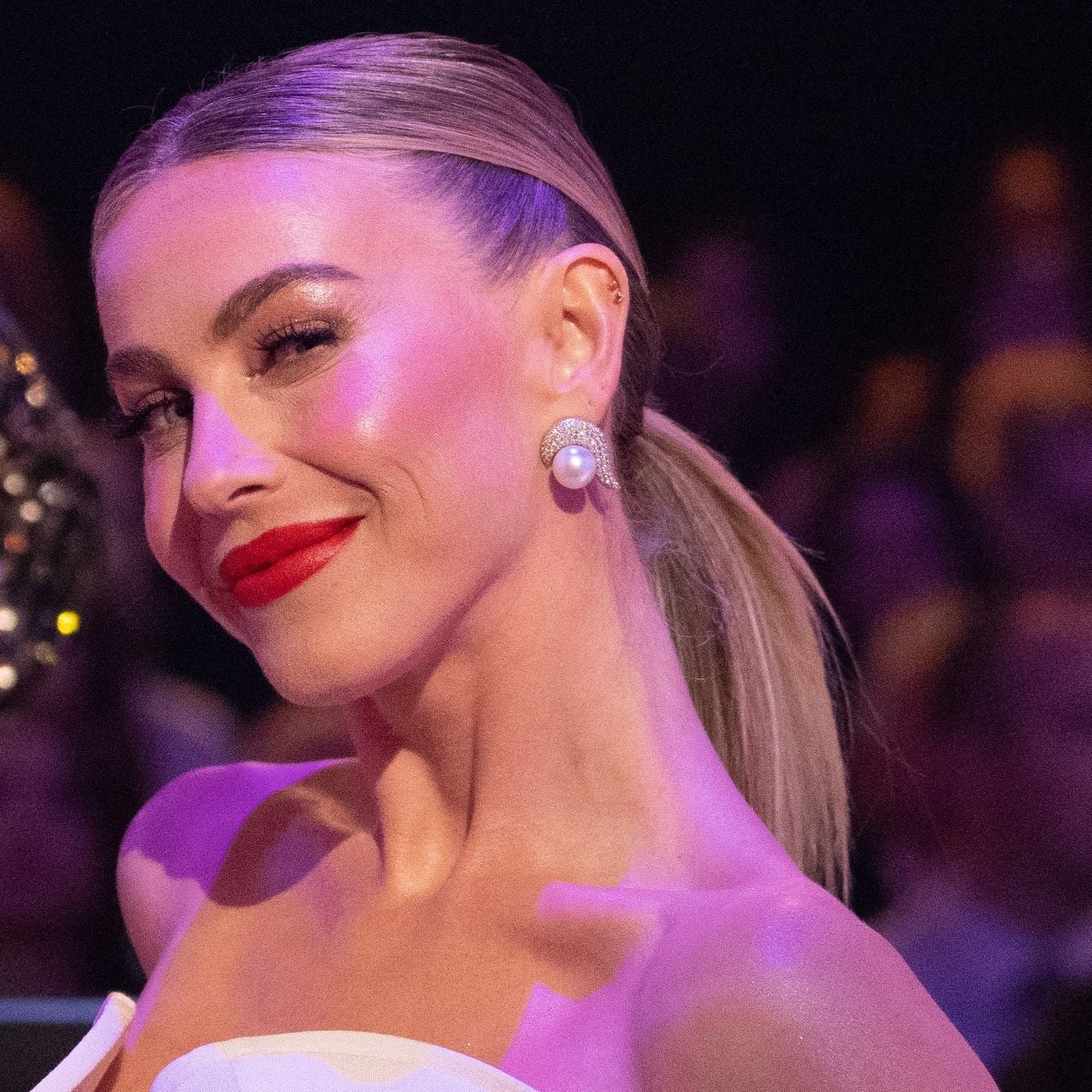
A middle parting changes the proportions. Dark blonde with lighter highlights pulled back into a straight, fine ponytail creates two visible tones that run from root to tip. The sleek finish means every strand stays put, so the parting line stays sharp. Skip it if you prefer a side parting or a different color; the symmetry is the point. Ask your colorist for: ponytail, middle parting, slicked back. A teasing brush at the crown adds volume without disturbing the line.
Wet look ponytail with sculpted baby hairs and waves
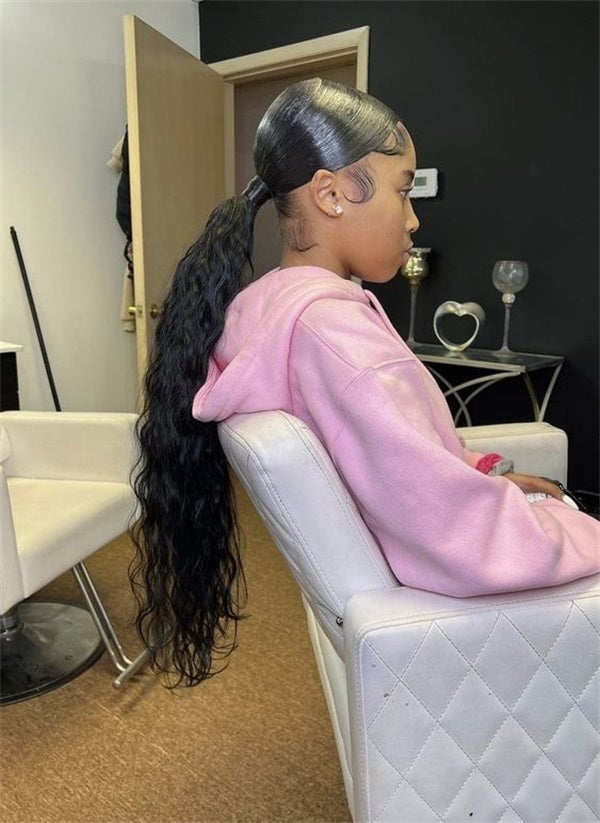
Six seconds of gel is the difference between a baby hair that stays and one that frizzes. Thick, wavy hair at collarbone length or longer gives the wet look enough weight to appear deliberate, not damp. The sculpted baby hairs frame a round face; the long wavy tail adds the movement that the slicked top removes. A matte finish is not the goal here. The gel shine is essential.
Bubble ponytail in thick straight dark brown hair
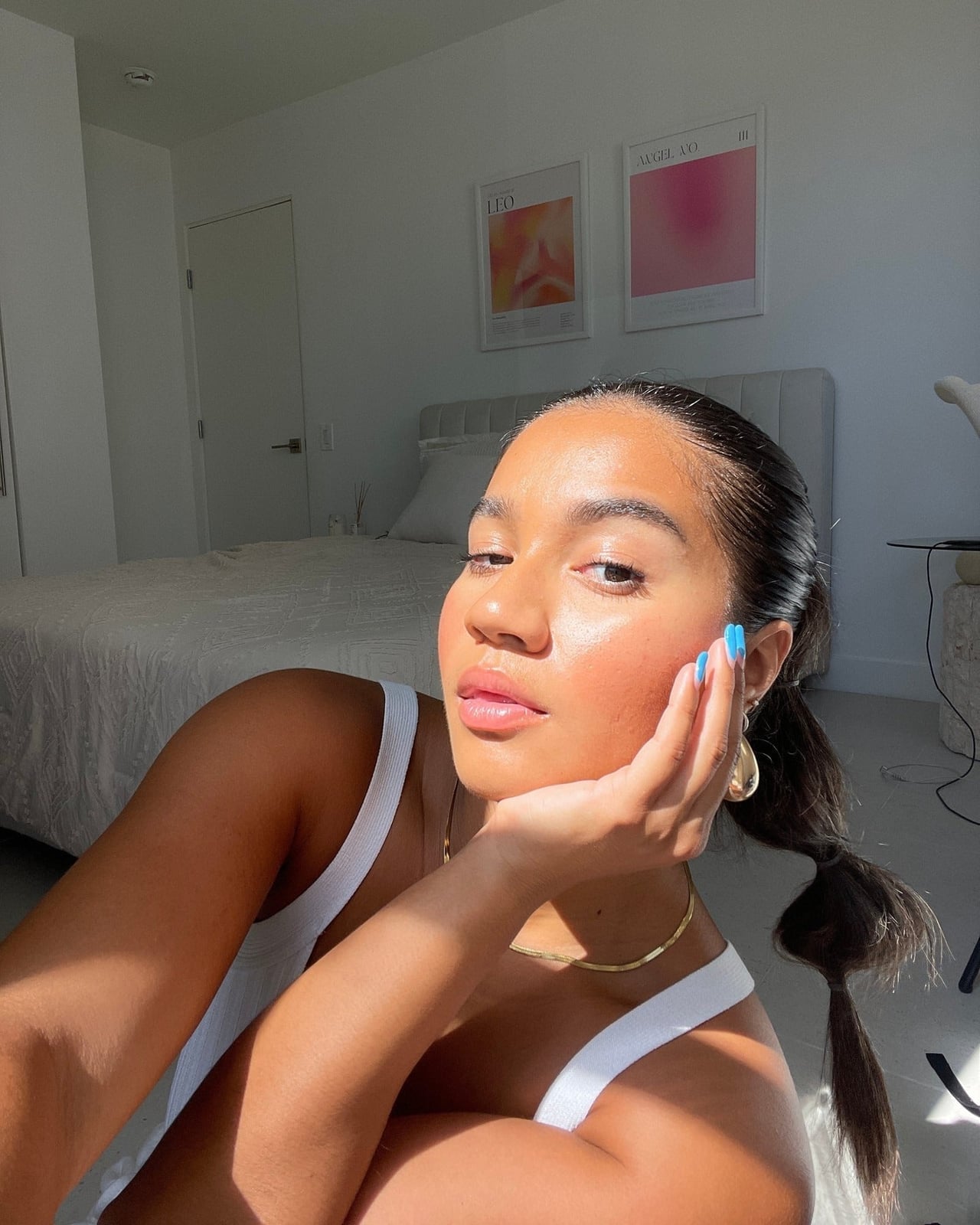
A bubble ponytail is a straight-hair trick that works because the elastic sections do the shaping. Thick, straight dark brown hair pulls back easily at the crown, and the bubble effect adds volume without teasing. The side profile shows a clean hairline; the bubbles break up the length visually. The elastics are the look.
Precisely sculpted baby hairs on a deep black ponytail
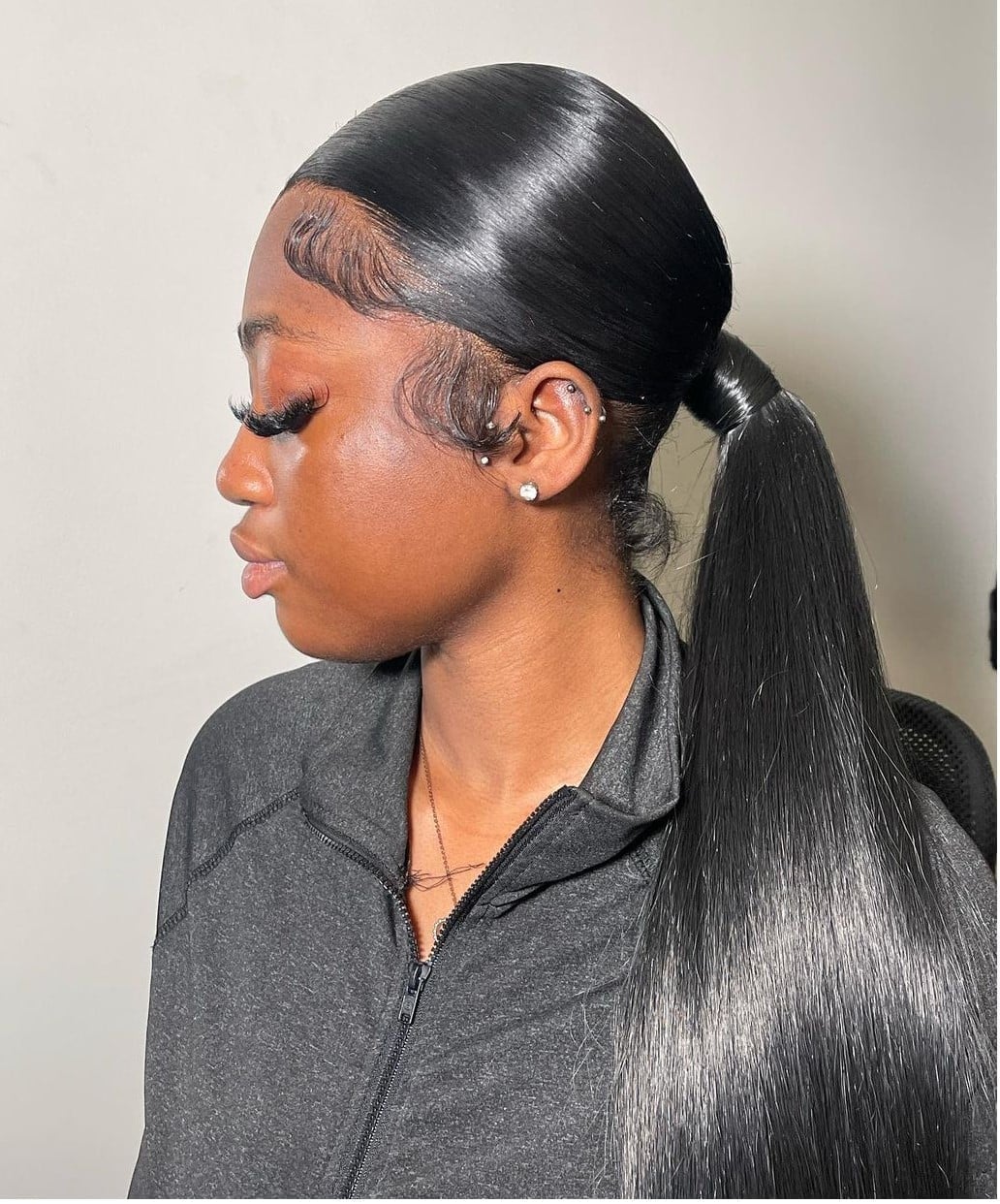
Start with dry, fine, straight hair at collarbone length. The deep black shade here shows every gel ridge, so precision matters. The slicked-back top and high ponytail create the canvas; the sculpted baby hairs are the detail that takes the look from gym to evening. Not for anyone who prefers a clean hairline with no wisps. Ask your stylist for: high ponytail, slicked back, sculpted baby hairs. A fine-tooth comb and strong-hold gel are the tools; the hold lasts until you wash.
Ultra-sleek high ponytail with wet-look finish and caramel highlights
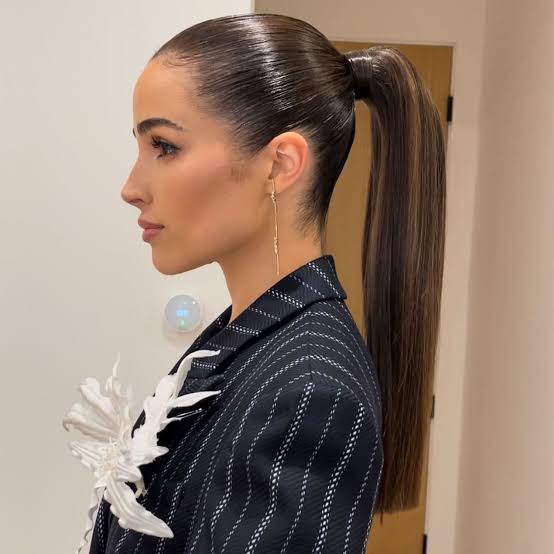
This is a three-product finish: gel, shine spray, patience. Thick, straight hair at collarbone length or longer holds the wet look without the hair separating into strands. The caramel highlights against the dark brown base become visible only when the light hits the slicked-back surface. A matte finish is not the goal here. The product weight will flatten thin textures.
Final Thoughts
Pick the one that matches your morning and your hair’s natural rhythm.
- Fine hair: backcomb the crown before you slick.
- Ten minutes in the morning: dampen, gel, comb, and go.
- Thick or wavy texture: a wet-look finish holds longer.
- Cool base that pulls brassy: a purple shampoo keeps the tone clean.
Find your match and call it done.
