

35 Cute Starter Locs Hairstyles to Try in 2027
Cute Starter Locs 2027 feature 35 styles for dark brown and thick coily black hair, including small twisted and high pigtail looks. See the styles.

You sit in the chair with your coil pattern mapped out, ready to commit to a style that will define your look for months. Starter locs are worth the time because they set the foundation for the entire journey, and getting the shape right now means less fuss later.
That is why Cute Starter Locs 2027 fill so many saved boards. This collection of 35 ideas covers everything from air-dried naturals to high buns with undercuts, so you can pick the look that fits your texture, your schedule, and your personality. No more second-guessing which parting or length works best.
Naturally air-dried dark brown coily starter locs
Dark brown coily starter locs that are thick and air dried look a commitment to texture from day one. The cut is locs, formed from your natural coily pattern, so the density stays front and center. A more neat, less natural texture right out of the gate is not the goal here. Ask your stylist for: natural air dried starter locs. A gentle scalp massage after washing encourages the locs to tighten evenly.
Thick coily locs styled into two high pigtails with gold wire wraps
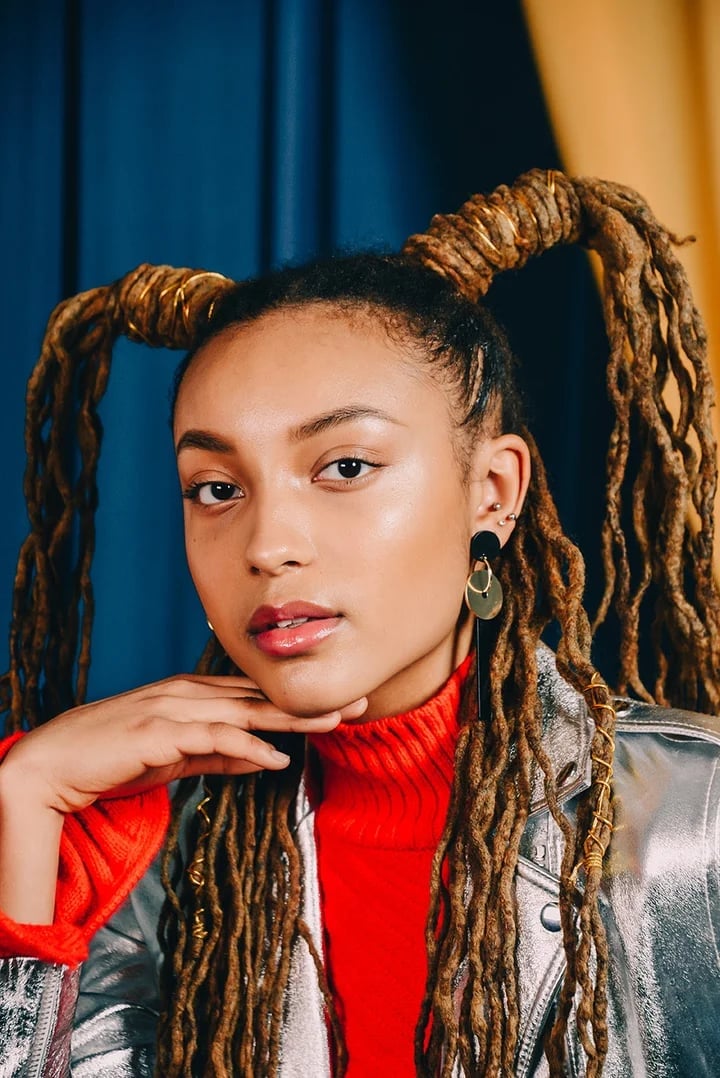
Pigtails versus a single ponytail: this version splits the volume into two thick coily locs sections, each anchored high for lift. The gold wire wraps add a decorative touch without adding weight. Skip it if you dislike accessories or prefer a more uniform silhouette. Use strong, fabric-covered elastics to avoid snagging the locs.
Tightly twisted small black starter locs with subtle red highlights
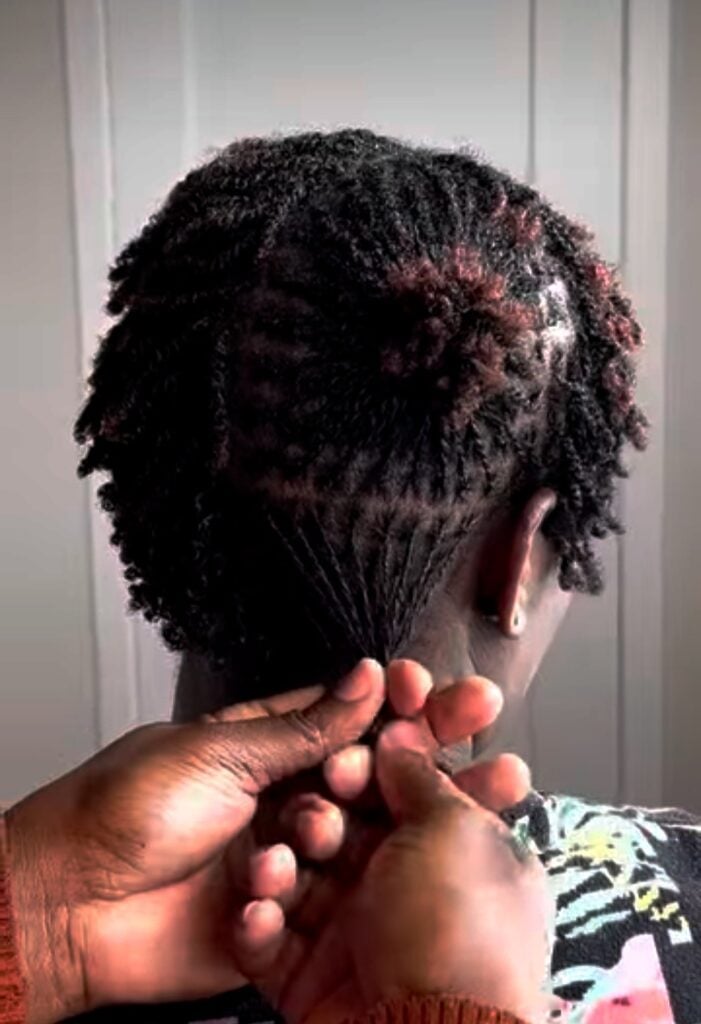
Small, tightly twisted starter locs in black with subtle red highlights mean each loc looks its own defined unit. The middle part keeps the symmetry clean, while the red tone adds warmth without a full color commitment. Skip it if you prefer larger, more voluminous locs. Request from your stylist: small, tightly twisted starter locs with subtle red highlights.
When you want locs without a lot of fuss
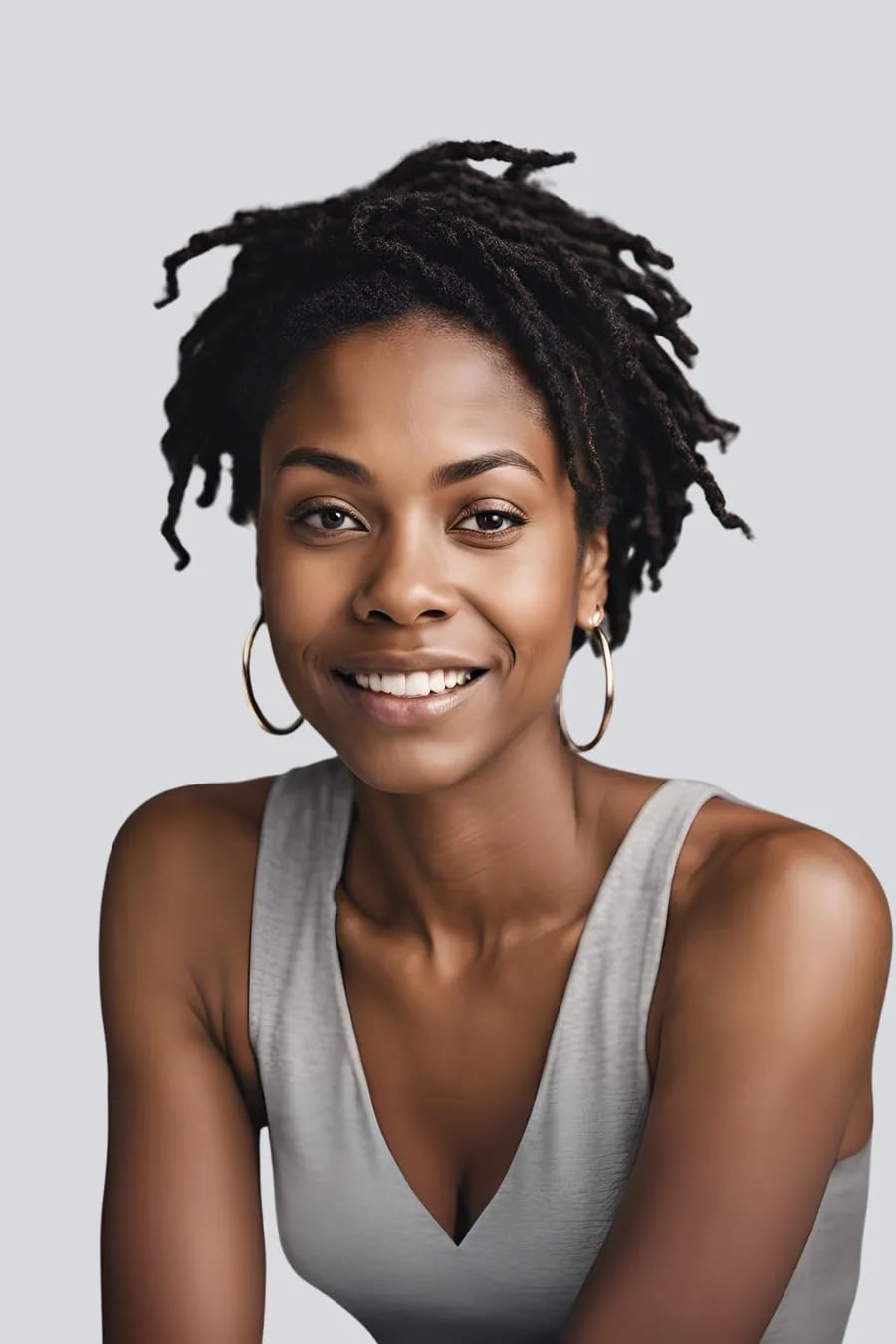
Thick coily black starter locs worn air-dried: that is the entire styling routine. The cut is locs, so the texture does the work, and the front framing naturally falls around the face. Not for you if you prefer styled or up-swept looks for daily wear. Regular salon retightening keeps the formation neat over time.
Back view of neatly formed black starter locs, air-dried
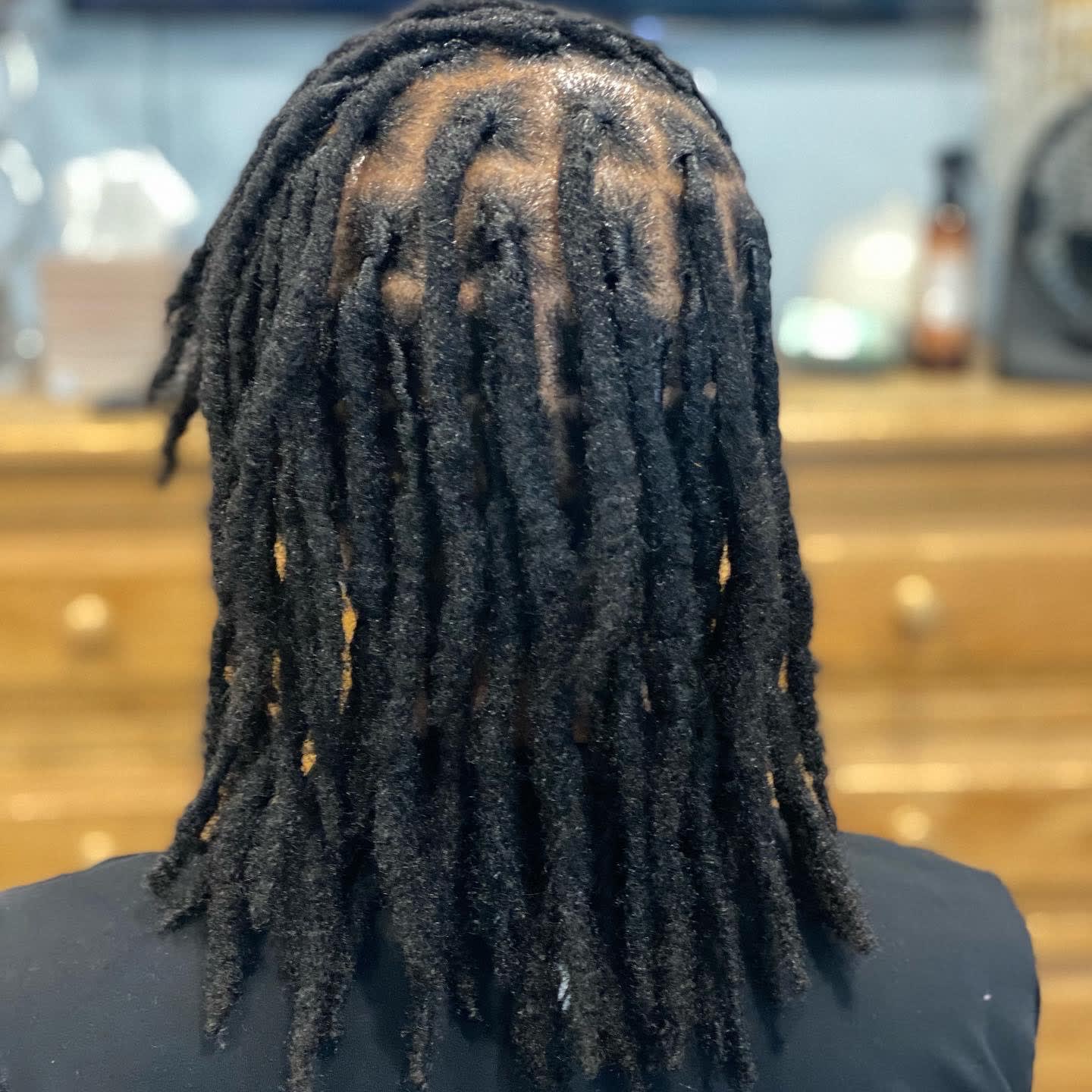
Neatly formed black starter locs from the back view show even sectioning and consistent thickness from root to end. The thick coily texture holds its shape without product, and the air-dried finish keeps the look low-intervention. Not for those looking for front styling details rather than overall formation. Ask your stylist for: neatly formed black starter locs, back view.
Ponytail style for medium length coily locs
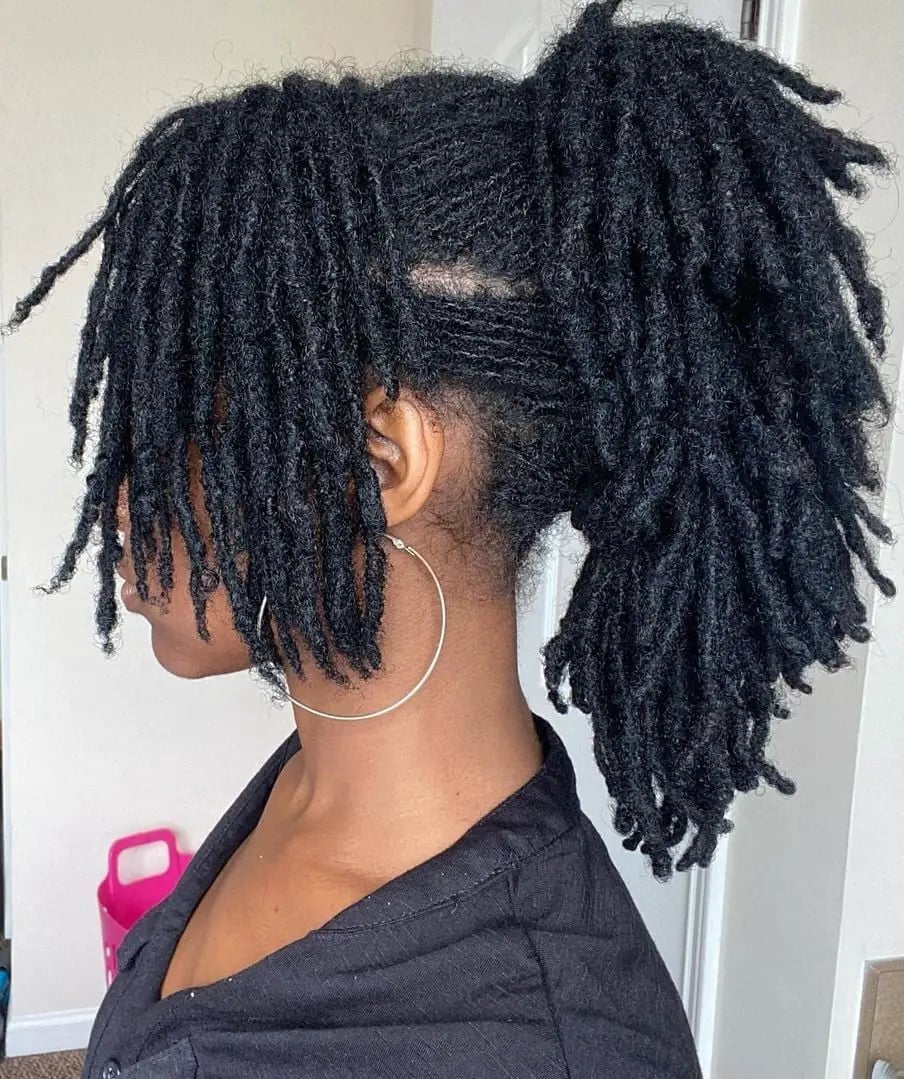
A ponytail keeps locs out of the way without the commitment of a full updo. Thick coily starter locs at medium length gather into a high ponytail that falls forward around the face. The texture does the work here, no bangs needed when the locs themselves frame the jaw. Skip it if you prefer your locs worn down every day. A satin scrunchie prevents breakage at the tie point.
Dark brown thick coily locs styled into a high bun with middle part
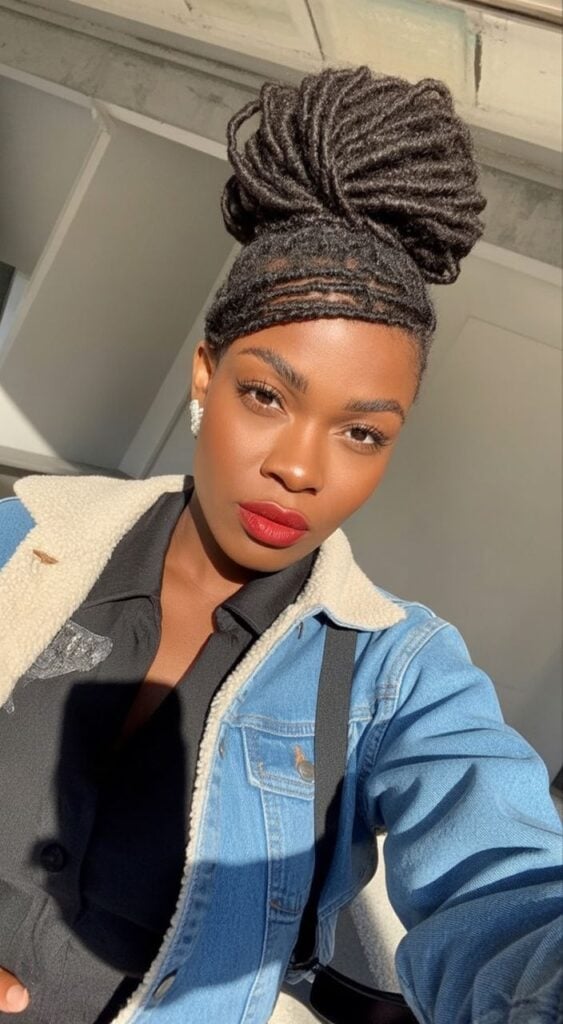
Dark brown thick coily locs in a high bun look deliberate from the first glance. The voluminous top knot sits at the crown, with the middle parting keeping the front symmetrical and clean. No bangs means the eye moves straight to the bun’s shape and the neat sectioning that supports it.
This cut works for thick, coily textures that can hold height without slipping. Request from your tech: dark brown thick coily locs in a high bun. Choose a more casual, unstructured style that does not require pins or a precise part if you want less maintenance. The middle parting and bun placement demand a salon consultation for initiation, but the result holds all day.
High top bun of locs with a striking undercut

The undercut changes the silhouette entirely. Buzzed short sides sit close to the scalp while the locs above gather into a high top bun, creating a contrast that is deliberate. Dark brown coily texture keeps the bun looking dense rather than sparse. No bangs means the eye goes straight to the shape contrast. This cut works for thick coily hair types seeking a bold look. The buzzed sides need regular trims to hold the line.
Medium brown loose locs with gold hair cuffs
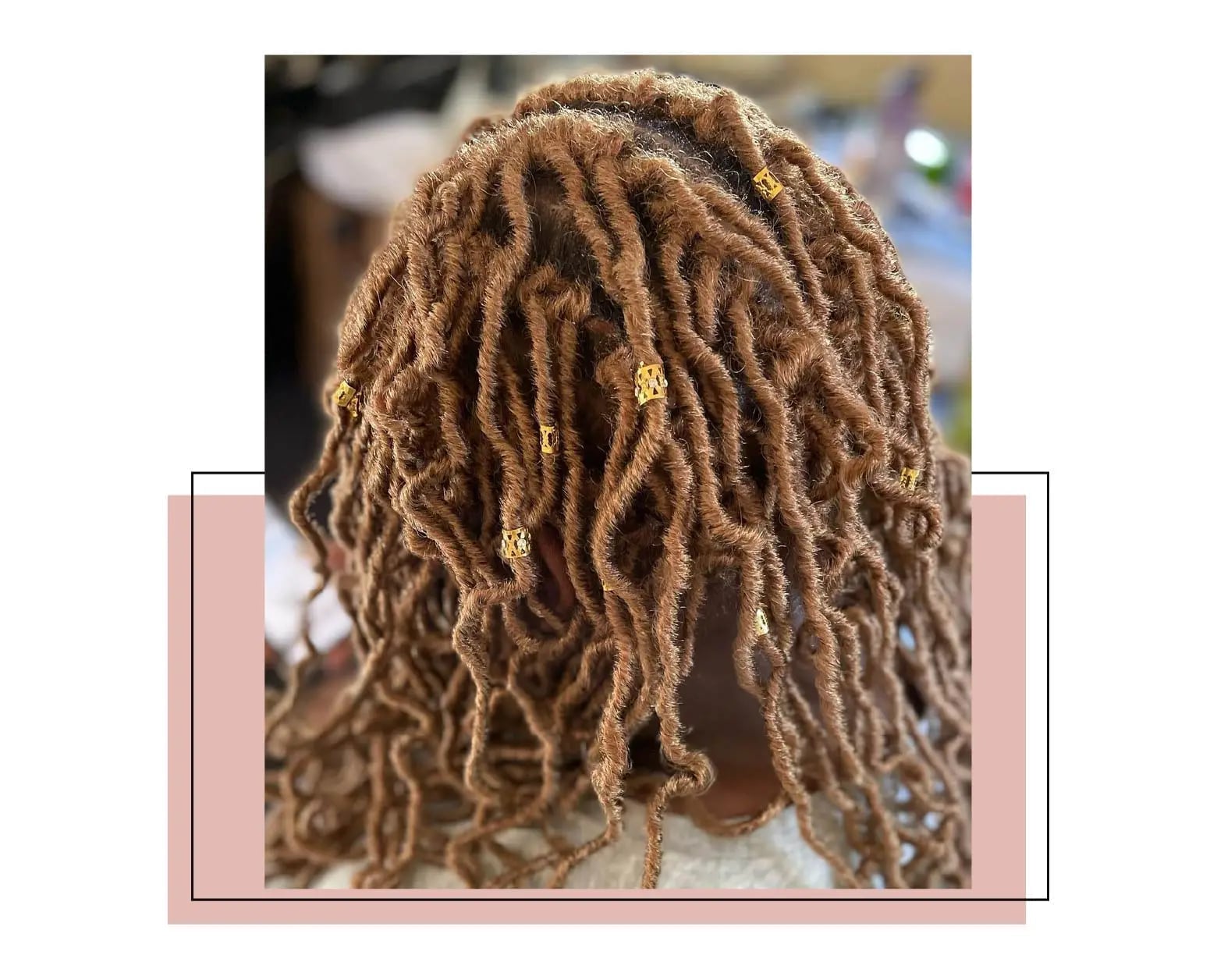
Loose locs read differently than pulled-back ones. Medium brown starter locs hang freely, their coily thick texture visible in the slight bend of each loc. Gold hair cuffs spaced along a few locs catch the light without weighing the hair down. No bangs keeps the side view clean. Compare this to a tight updo: loose locs give more texture to see but less structure for active days. Not for you if you dislike decorative accessories. Tell your stylist: medium brown starter locs, loose style with gold cuffs.
Short black locs with a braided side section framing the face
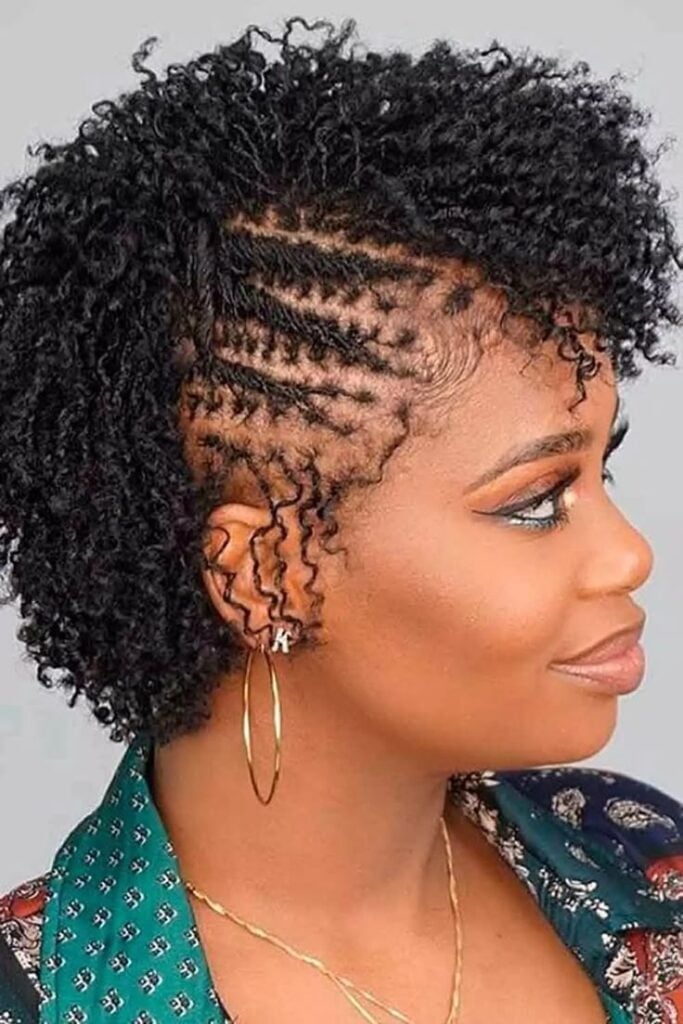
A single braided section changes how the whole front reads. Short coily black locs end around the ear, but one section at the side is braided, creating a contrast between the twisted braid and the free-hanging locs. The braid frames the face without bangs. This technique works because the braided section stays contained while the rest moves naturally. The braid needs retightening every few weeks to keep its definition.
Geometric parting with brown and blonde highlights
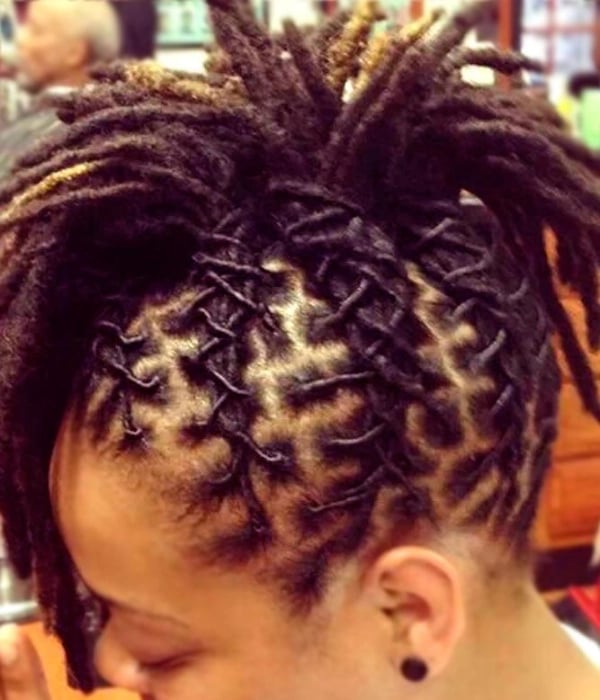
Geometric parting on starter locs is a design choice that announces itself. Dark brown locs with blonde highlights create the contrast that makes the pattern read clearly from across the room. The side view shows the precision involved, each section separated with intent. Thick, coily texture holds the shape without slipping. Request from your stylist: starter locs with geometric parting and blonde highlights. A simpler, more natural parting blends in and does not stand out. Regular salon visits maintain the sharp lines of the design.
Pulled up dark brown starter locs with face-framing strands

Wondering how to wear starter locs when you want them off your face without committing to a full updo? Pulled up with a few strands left out at the front. Thick, coily dark brown locs work naturally this way. The texture gives the pulled sections enough grip to stay put. No bangs needed when face-framing strands do the job. Not for you if you prefer your locs down and loose all day. Use a soft tie or fabric band to avoid damaging the locs when pulling them up.
Neatly styled black and brown locs pulled into a sharp bun
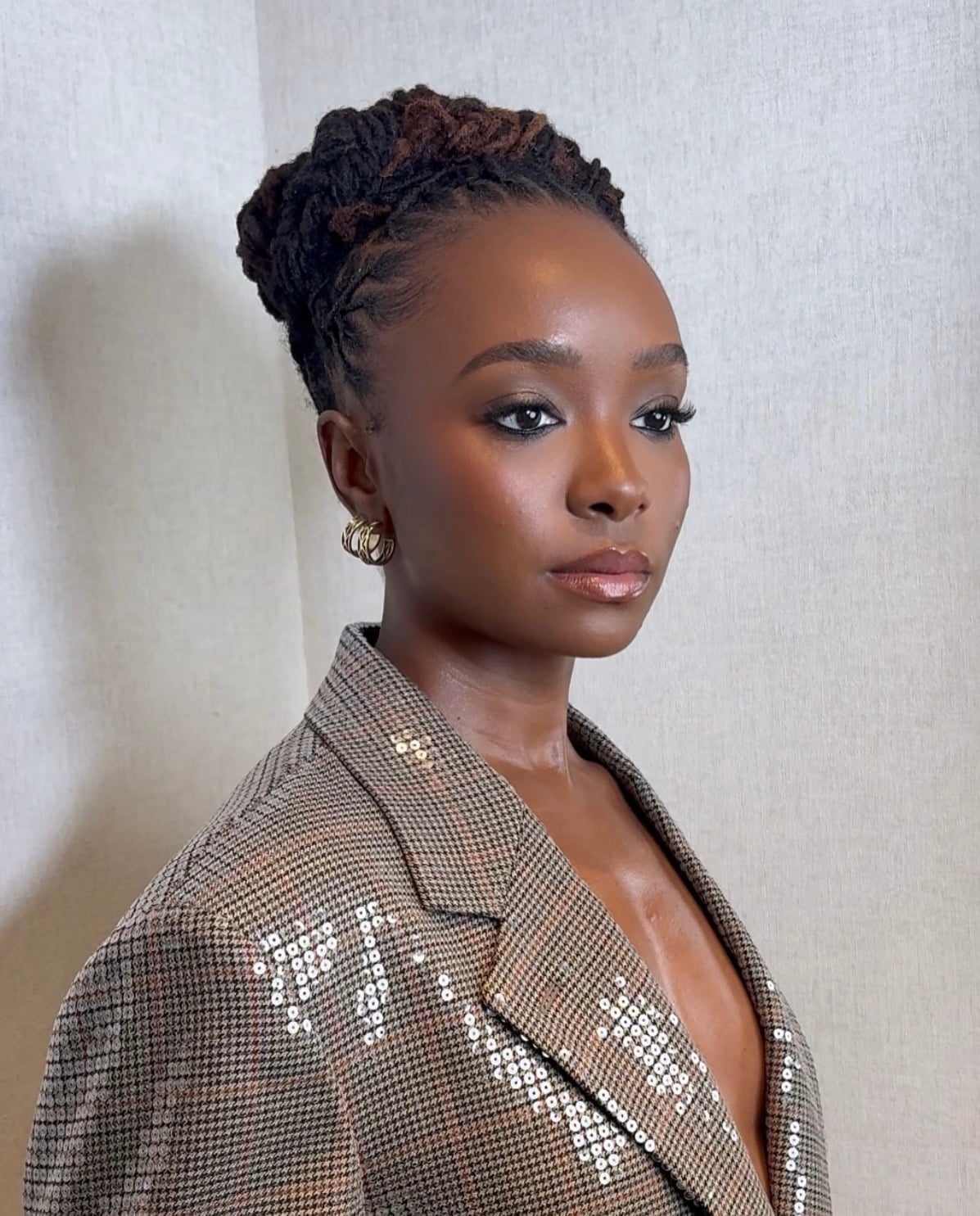
This bun sits differently from a quick gather-and-twist. Neatly styled starter locs in black with brown highlights create subtle dimension that a single solid color would miss. The coily texture coils around itself cleanly, no loose ends fighting the shape.
Request from your stylist: neatly styled black and brown starter locs in a sharp bun. Use pins that match your loc color to secure the bun discreetly. The finish holds through a workday without constant adjustment. Not for anyone who wants a messy, undone look. This one requires precision from the start.
High bun of black locs with brown Ombre tips
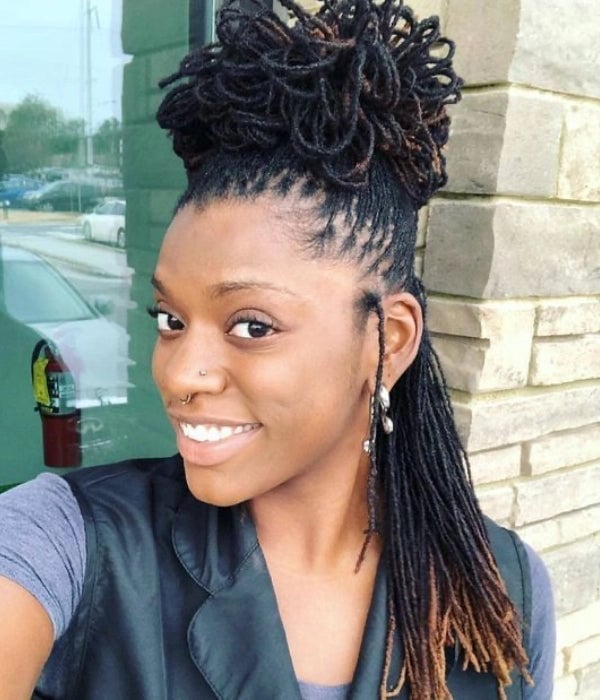
Ombre tips on starter locs change the bun entirely. Black locs with brown tips pulled into a high bun at the crown mean the color gradient shows even when the hair is up. The middle part keeps the front clean, with locs pulled back from the face to expose the full shape. Thick, coily texture gives the bun volume without extra padding.
Ensure the ombre effect is visible when locs are worn down or styled up. The two-tone effect is the focal point of this style.
Neat black starter locs in a half-up half-down style
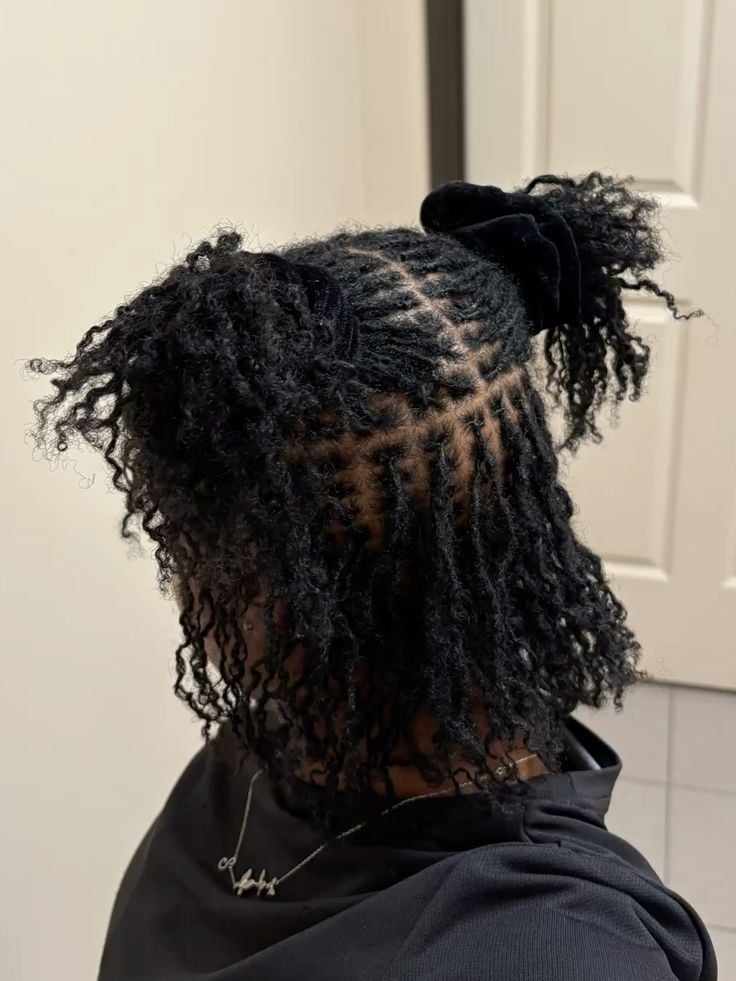
A middle part and a black scrunchie. Neat starter locs sectioned precisely, the top half gathered while the rest falls. Thick, coily texture keeps the half-down portion from looking sparse. No bangs needed. The parting and the scrunchie do the work. Request from your stylist: neat starter locs in a half-up half-down style. Use a satin scrunchie to avoid snagging or damaging the locs. The style looks finished and carefully arranged.
High updo of thick black locs with a v-shaped undercut design
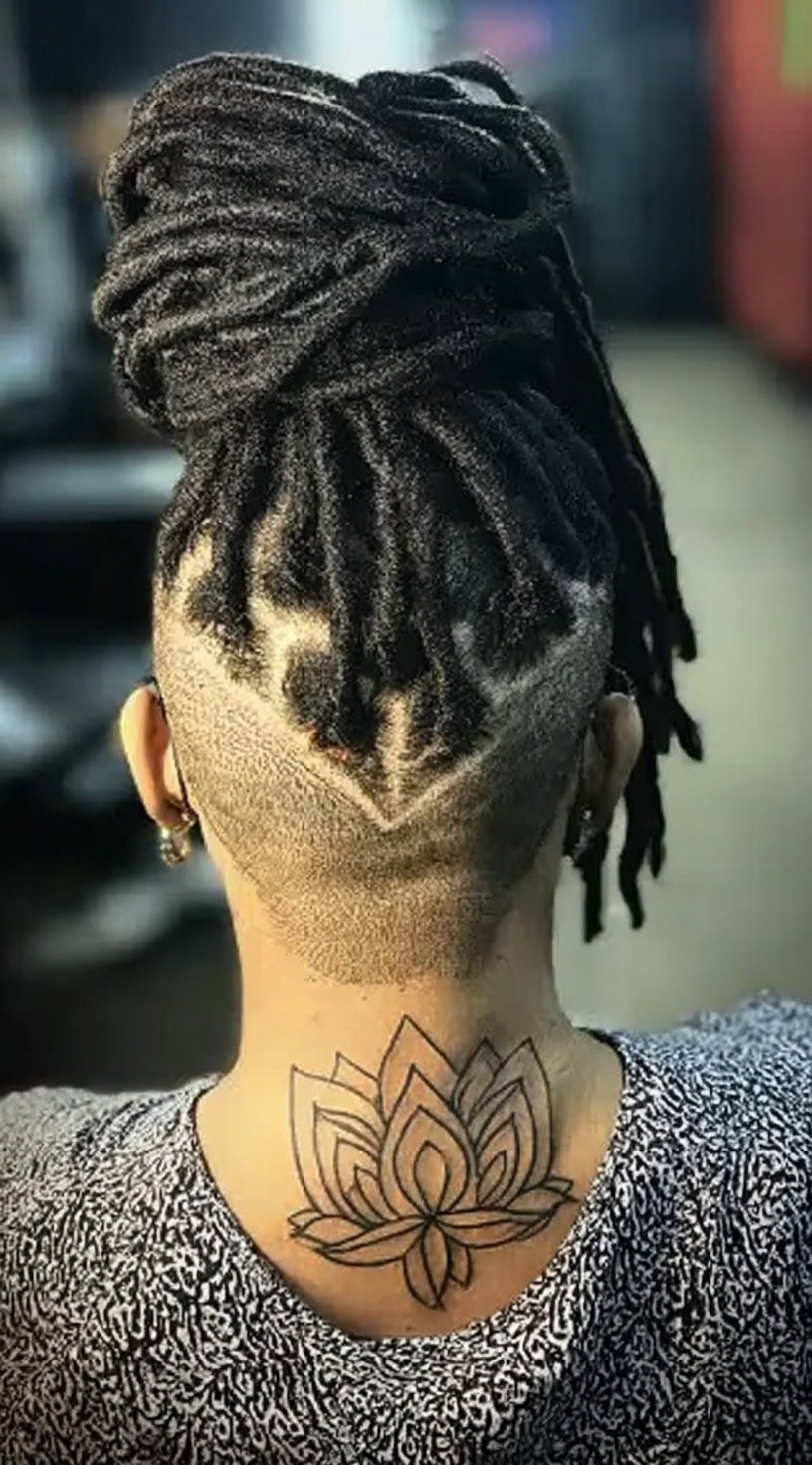
A high updo of thick black coily locs contrasts sharply with a v-shaped undercut at the nape. The cut goes where most locs styles do not, carving out a deliberate negative space that makes the updo look sculptural. Thick, coily hair holds the v-shape line cleanly, provided your stylist sketches it freehand first. This style removes density for the sake of the design. The v-shape needs a trim every three weeks to stay sharp; let it go and the geometry softens into a rounded nape.
Back view of neatly formed air-dried black starter locs
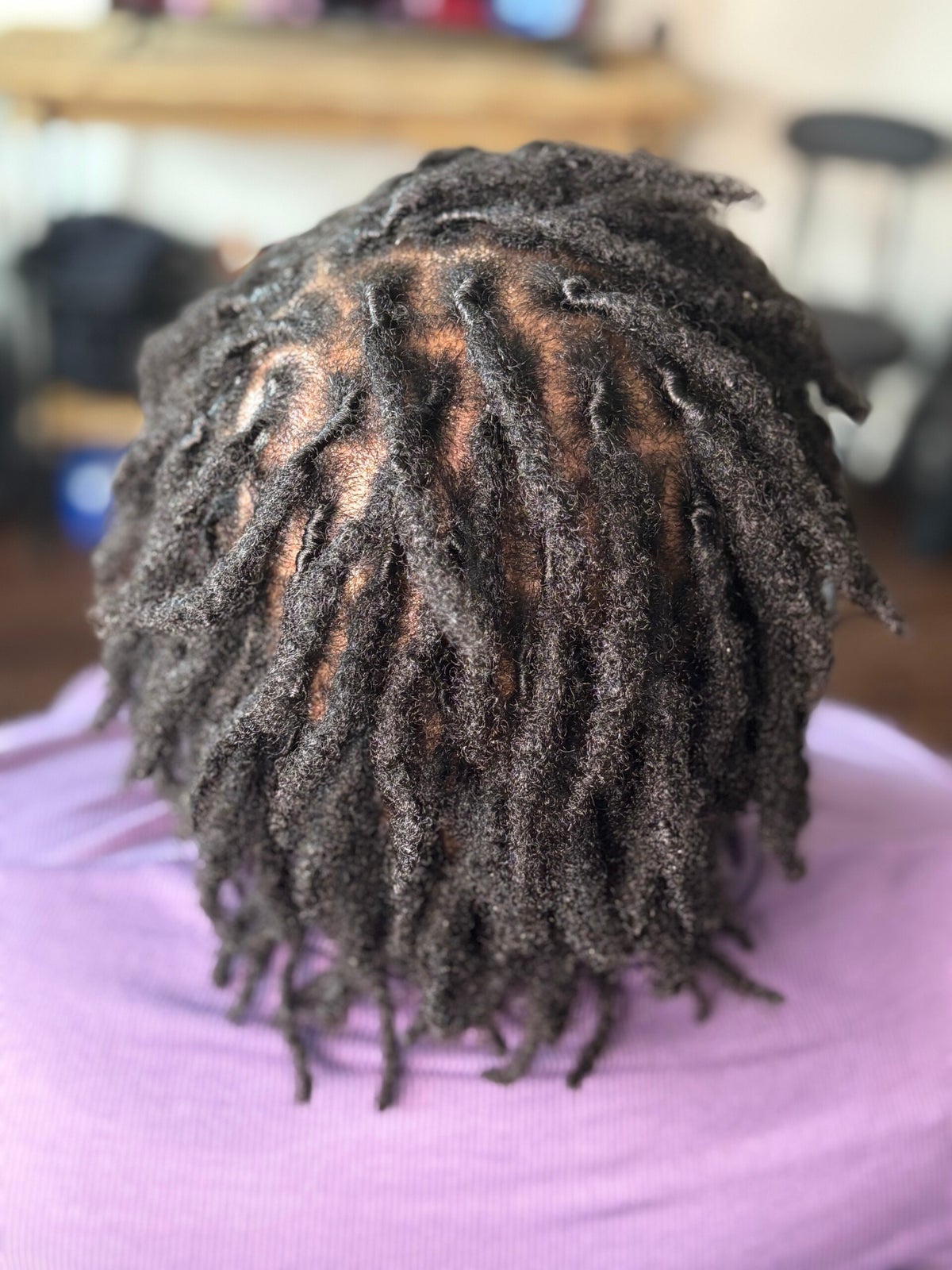
From the back, the neat formation of these thick black coily locs tells the story. The middle part runs straight down, and each loc sits evenly beside its neighbor without a single flyaway breaking the line. Air-drying lets the natural texture settle, so the locs land at their true thickness rather than a stretched version. The neatness comes from salon retightening every four to six weeks, not from a styling product. A back view that looks this orderly means the front is just as clean.
Black starter locs with geometric parting in a high ponytail
Geometric parting turns a high ponytail into an intentional pattern. The sections at the crown are mapped out in precise squares, and the rest of the thick black coily locs sweep upward into the ponytail. The middle part anchors the design, keeping the geometric lines visible even when the hair is pulled back. A smooth band secures the ponytail without crimping the locs. This is a style where the parting does the talking; the ponytail is just the delivery system.
Green highlights on twisted dark brown locs
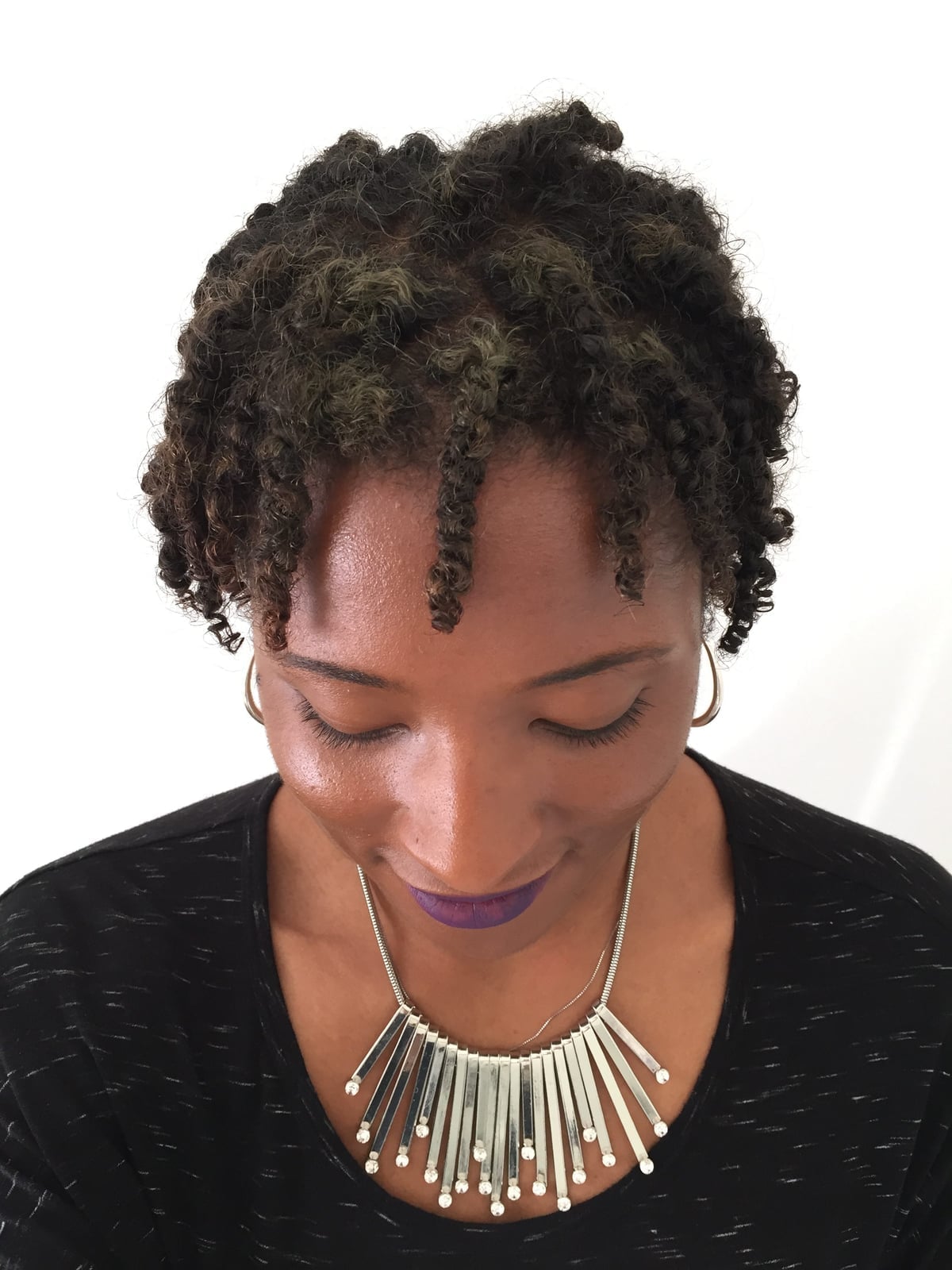
Subtle green highlights slip into dark brown starter locs without shouting for attention. The defined twists give the color a rhythm, green appears every few locs, never in a solid block. The coily, thick texture keeps the green from washing out, grounding it in the dark base. A middle part lets the face-framing locs fall symmetrically. The green looks an accent, not a commitment, because it stays subtle enough to fade gracefully over time.
Neatly formed dark brown starter locs ending around the ear
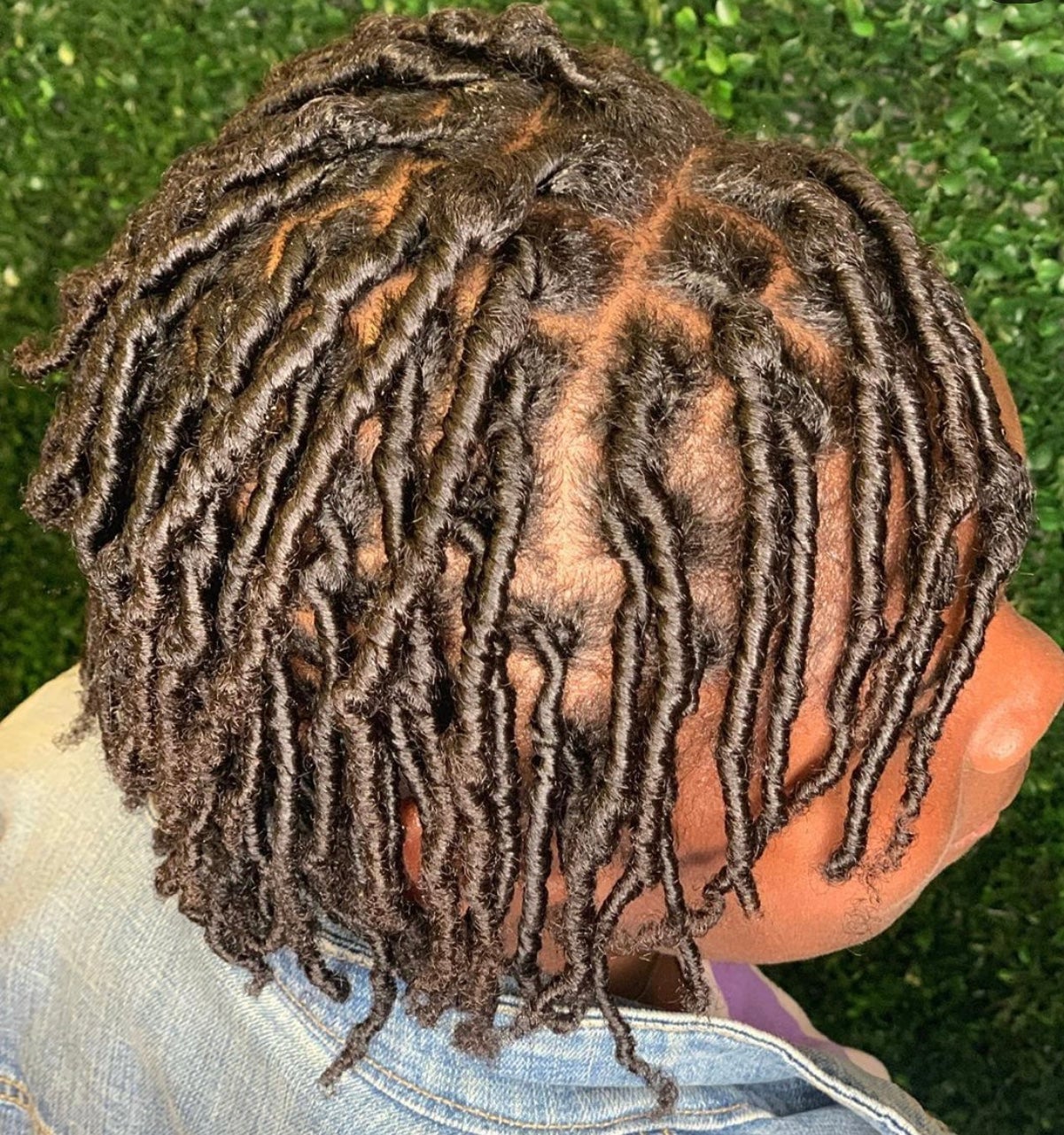
Dark brown starter locs that end around the ear offer a compact silhouette with no length to manage. The thick, coily texture creates a rounded shape that works well for oval and heart-shaped faces, adding volume at the sides without overwhelming the jaw. The middle part keeps the neat formation symmetrical. Not for you if you prefer longer locs that can be pulled back. A trim every six weeks keeps the ends looking deliberately shaped rather than grown out.
Spiky locs with faded sides
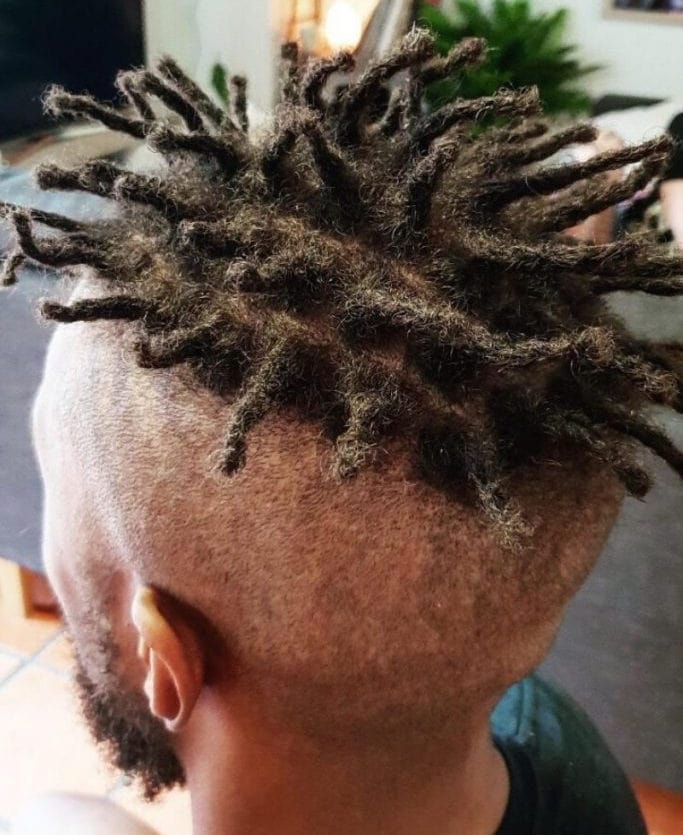
Spiky starter locs sit closer to a short textured cut than a traditional loc style. Short, dark brown locs stand up on top while the sides and back fade close, leaving coily, thick texture front and center. The catch: you commit to a barber schedule. Faded sections need a refresh every two to three weeks to keep the contrast sharp. The locs themselves air-dry with no fuss. Not for you if you have no interest in maintaining a shaved or faded section. Request from your stylist: short spiky dark brown starter locs with faded sides.
Rolled locs styled from the side
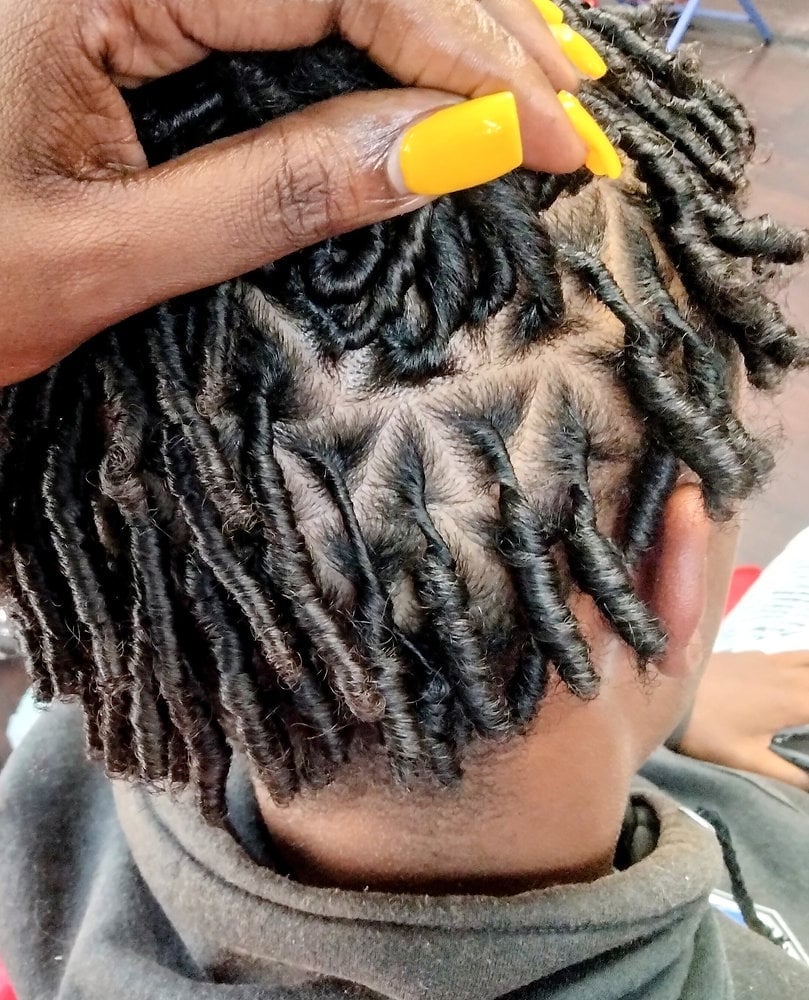
Neatly rolled locs look neat without pulling tight. The middle part splits the coily, thick sections evenly, then each loc rolls toward the side for a clean, salon-leaning finish. The technique matters more than the length. A light-hold styling product smoothed over each loc after washing keeps the roll in place through the week. Not for anyone who prefers a looser, air-dried look. The roll demands precision at the initial appointment.
Uniform dark brown locs in a back view
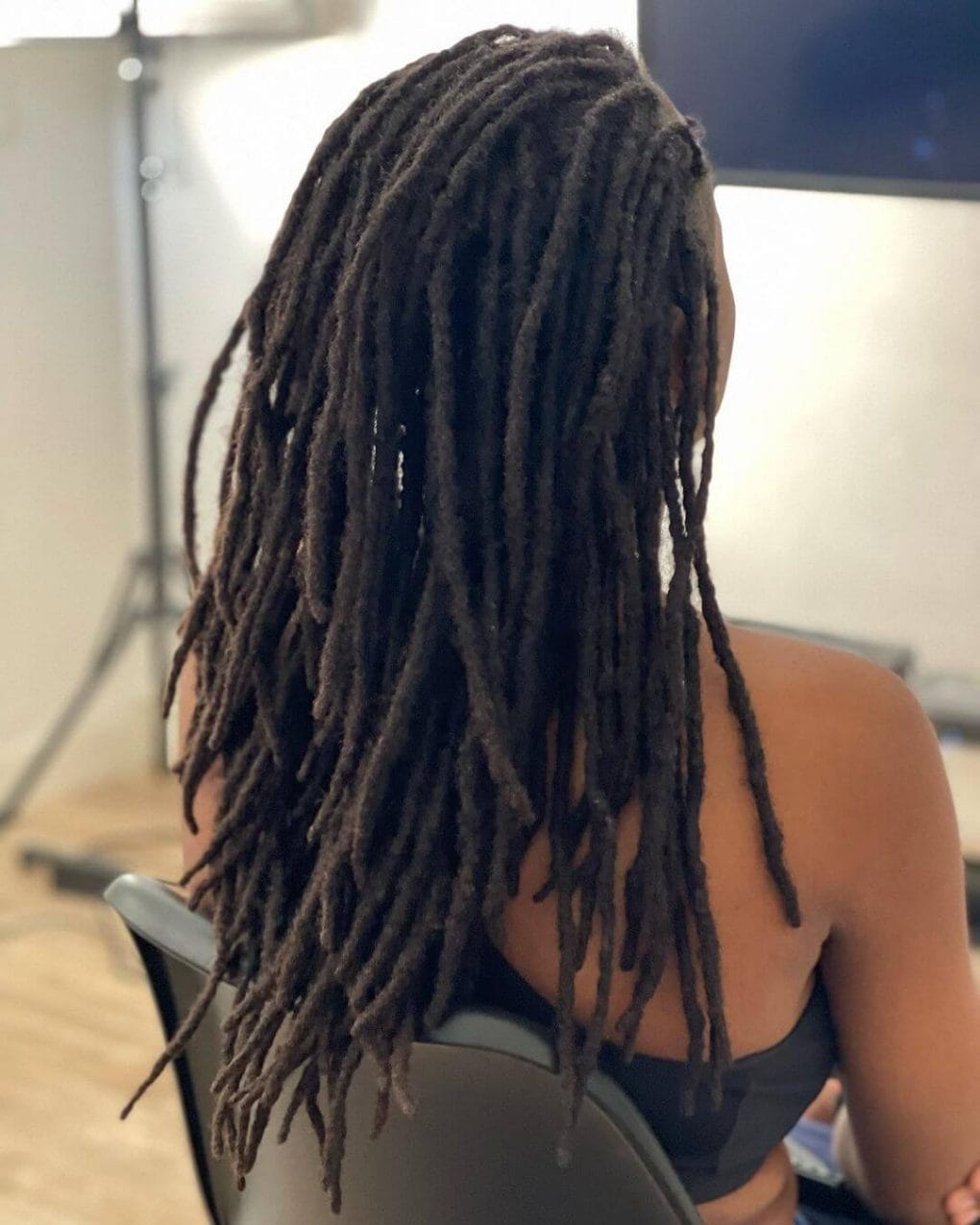
Uniform locs look simple from the front. The back view tells a different story. Dark brown coily, thick locs fall in even rows with no strays, which means someone paid attention to section size at the start. The common mistake: expecting uniformity to hold on its own. These locs require retightening appointments on a regular rotation, roughly every six to eight weeks, depending on your hair’s growth rate. Not for you if you want a set-and-forget routine. Uniformity is a commitment, not a coincidence.
Black starter locs styled into two playful buns at the crown
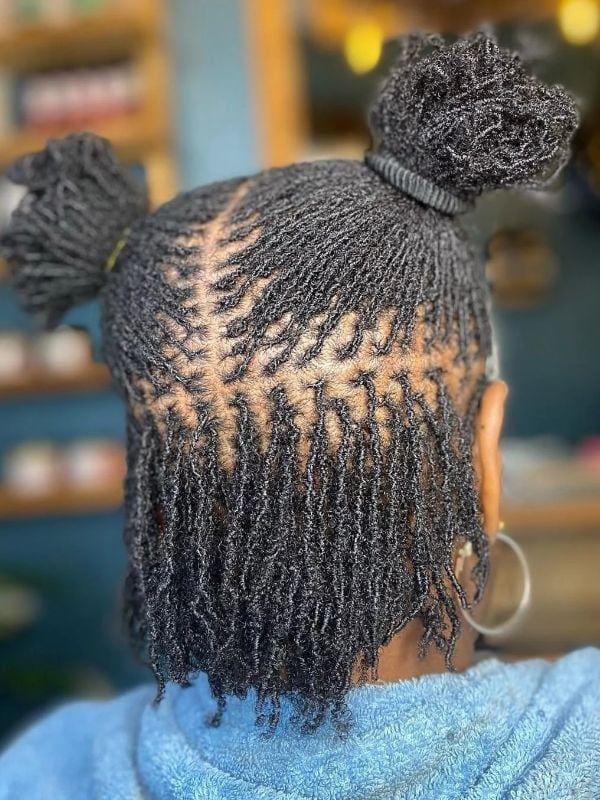
Two buns at the crown work best on starter locs with a neat middle part. The parting creates distinct sections, and the coily, thick texture gives each bun enough volume to hold its shape. Compared to a single high bun, this style looks lighter and more playful. One word of caution: secure the buns firmly without pulling the locs taut at the root. Stress on young locs can weaken the forming pattern. Pass when you prefer your locs worn down or swept into a single updo.
Twisted black starter locs with precise square parting
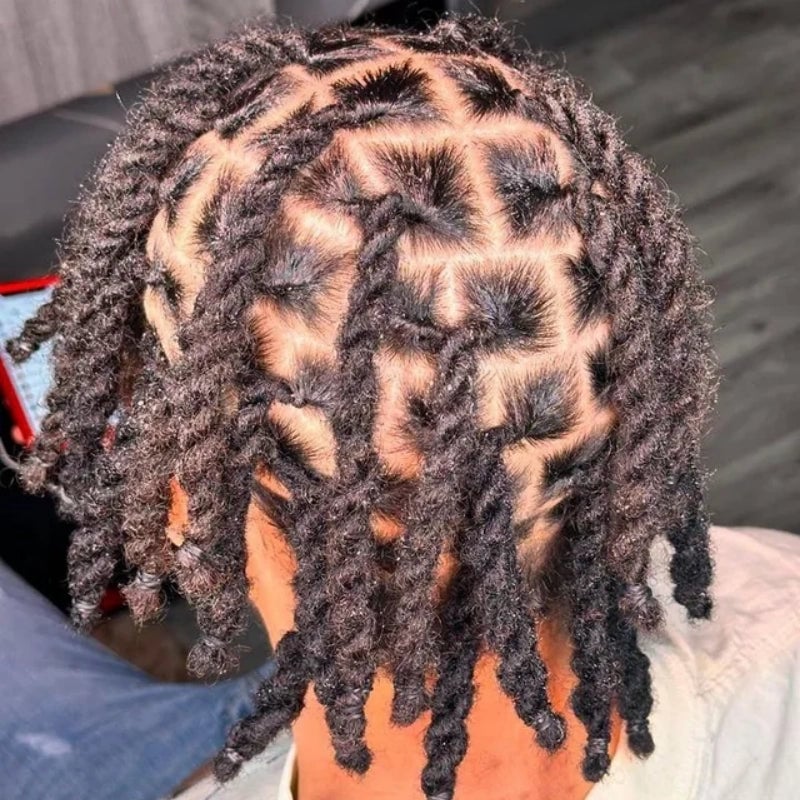
Square parting turns the scalp into a geometric grid. Each loc starts from a clean square section, then twists from root to tip in a uniform motion. The dark black color and coily, thick texture make the pattern read clearly. Practically, the parting lines blur as the locs mature, so the first appointment is the moment for precision. Request from your stylist: starter locs with square parting, twisted. The sharp lines need a touch-up every four to six weeks to stay visible.
High voluminous bun of black starter locs with neat sectioning
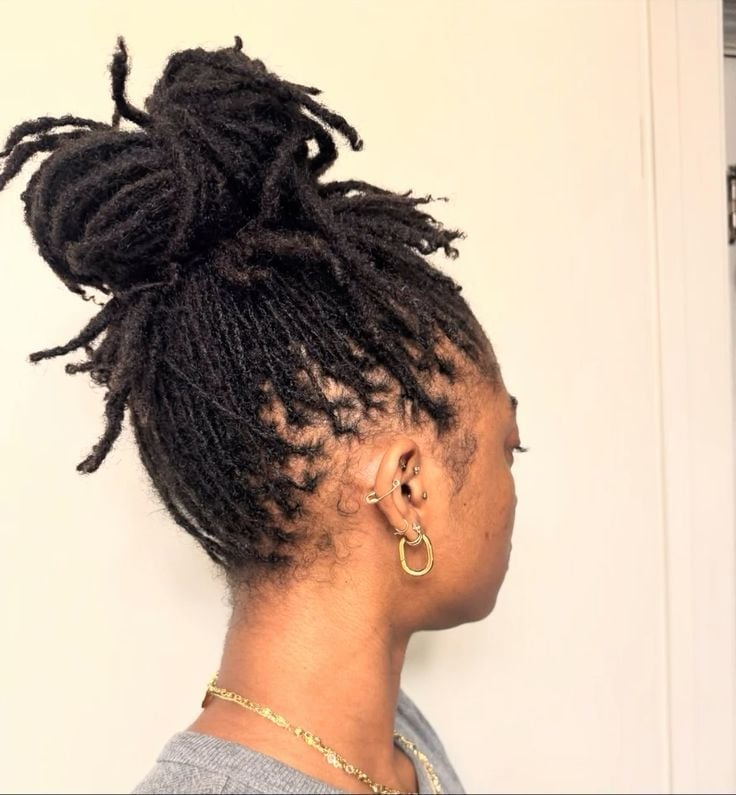
Coily black starter locs pulled into a high bun are a structured look from the start. The volume sits at the crown, with neat sectioning keeping each loc in place. It suits thick, coily textures that hold shape well. The catch: you commit to structured styling. This is not a toss-it-up-and-go look. Expect a salon session focused on precise parting; the result wears clean for several days with minimal fuss.
A middle parting keeps the bun centered and balanced. No bangs here, just a clear line from scalp to gathered ends. The updo hides the loc ends, which helps during the early fuzzy phase. It works best for those who prefer a neat, secure bun. The bun needs to be secure without being too tight; a satin scrunchie or wrap reduces tension on new growth.
Thick black coily locs in a high ponytail with beads
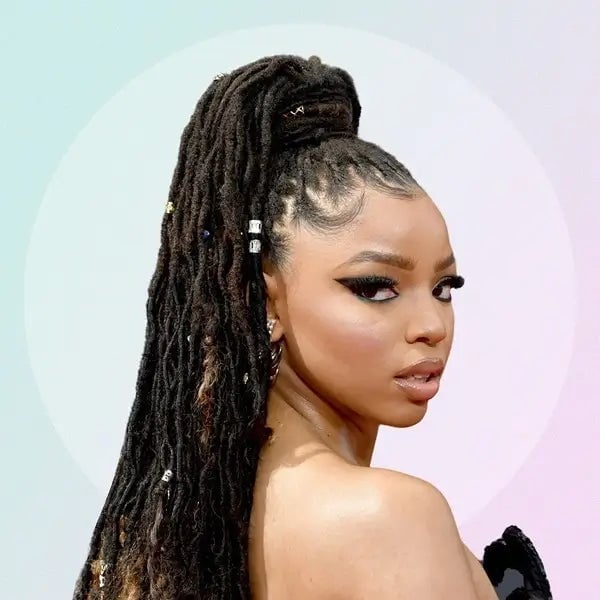
Thick coily locs in a high ponytail hit a practical note: the style clears the neck and shows off the full length. A centered parting frames the face, with baby hairs smoothed along the hairline. Beads and accessories add weight to the locs, so check that each one is fastened tight before you walk out. Request from your stylist: thick coily locs in a high ponytail with beads. This look requires salon expertise for the intricate styling. The parting alone takes precision. No bangs, just a clean sweep back.
Top knot with auburn highlights
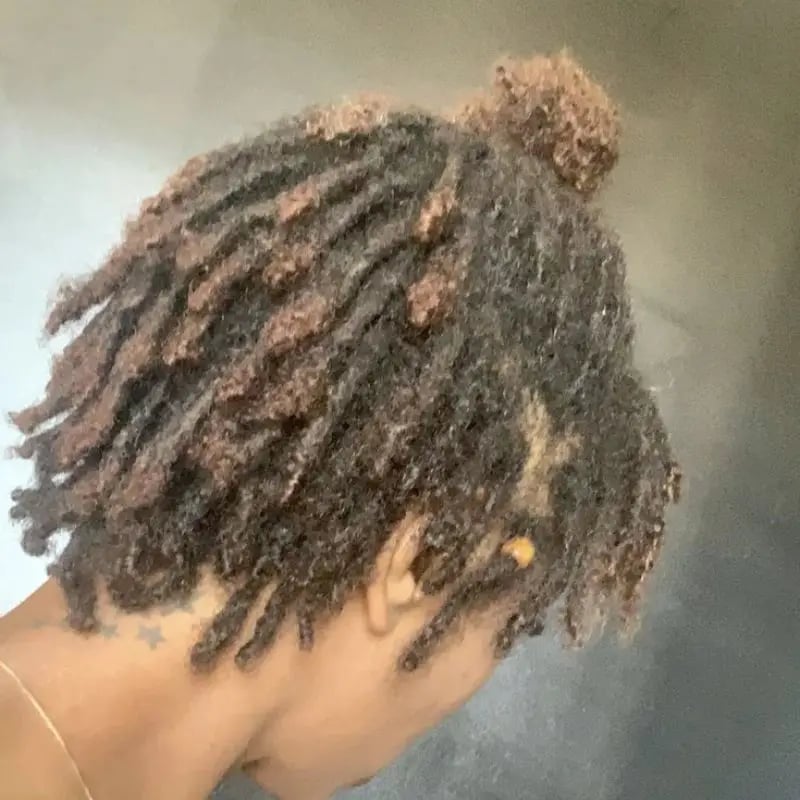
Dark brown starter locs with auburn highlights look a low-commitment color move. The top knot gathers the ear-length locs into a neat bundle, keeping the ends tucked. This cut works for thick, coily textures that need to stay out of the way during the early loc stage. The auburn pieces sit subtly through the coil, no full head of color, just a few strands catching light. No bangs, just a side profile that shows the color shift from root to tip. The top knot stays with pins that blend with your loc color.
Elegant updo with neat sectioning
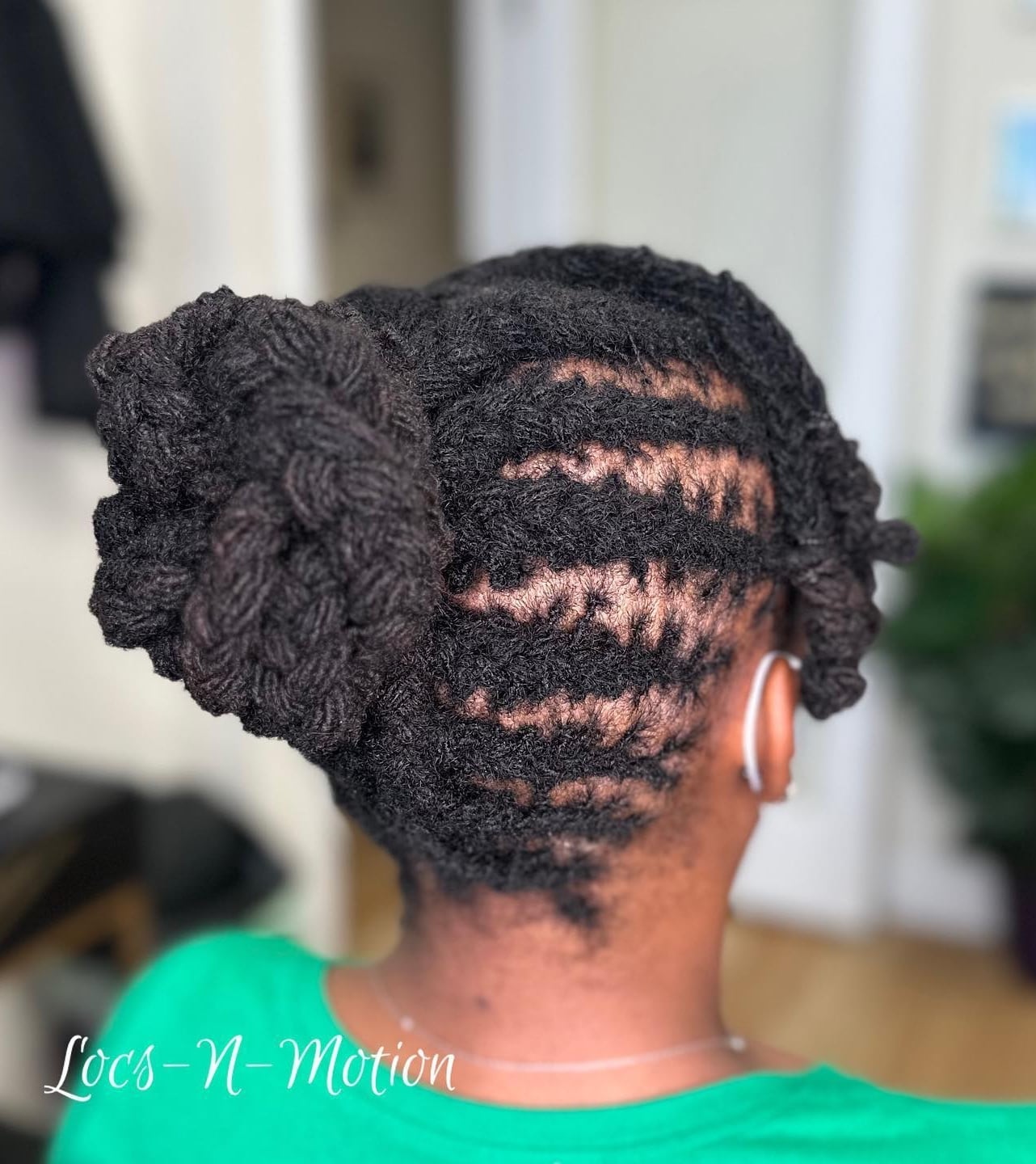
Neat sectioning turns black starter locs into an elegant updo that holds its shape all day. A middle parting splits the locs evenly, with each coil wrapped into the bun at the back. It suits thick, coily textures that need structure to stay tidy. Request from your stylist: neatly sectioned black starter locs in an elegant updo. The salon work here is the parting, clean lines make the difference between a smooth bun and a lumpy one. No bangs, just a clear part that runs from forehead to nape. A light-hold hairspray keeps flyaways in place without stiffening the locs.
Playful buns with square parting
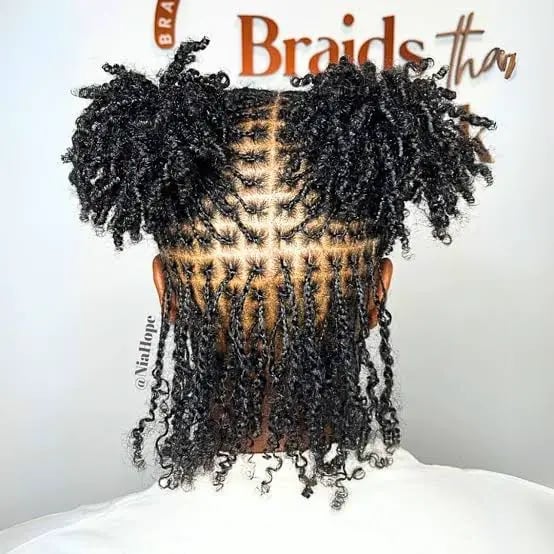
Square parting on starter locs creates a grid that looks deliberate from day one. Two buns sit at the top, with the remaining locs falling free. This cut works for thick, coily textures that can hold a precise part without shifting. The salon time goes into mapping the part. Each section must match in size for the buns to sit evenly. No bangs, just a clean part line that shows through the updo. A simpler, more natural parting takes less chair time.
Air-dried dark brown coily starter locs showcasing, close-up take
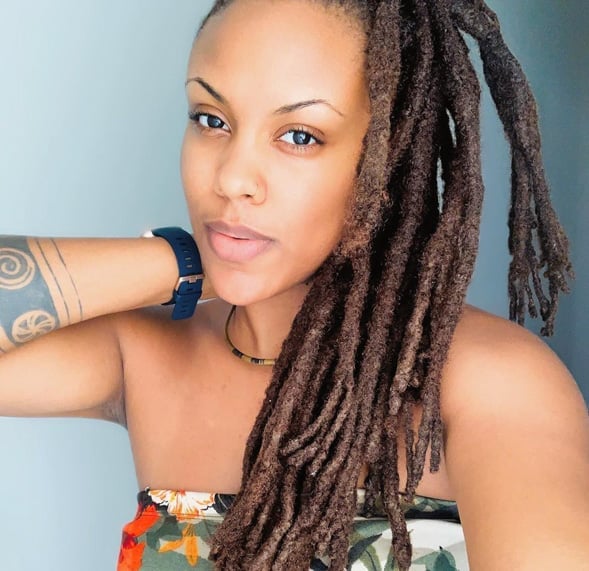
Air drying is the truest test of a loc’s formation. Dark brown coily starter locs, thick from root to tip, show exactly what the texture does when left alone. No product, no manipulation, just the natural coil doing its thing. This approach works best for thick, coily hair types who want to see how their locs will settle before adding any styling. A more neat texture requires regular palm rolling or interlocking. The payoff is a fully authentic look that reveals every kink and curve.
Black locs updo with heart-shaped charms and intricate parting
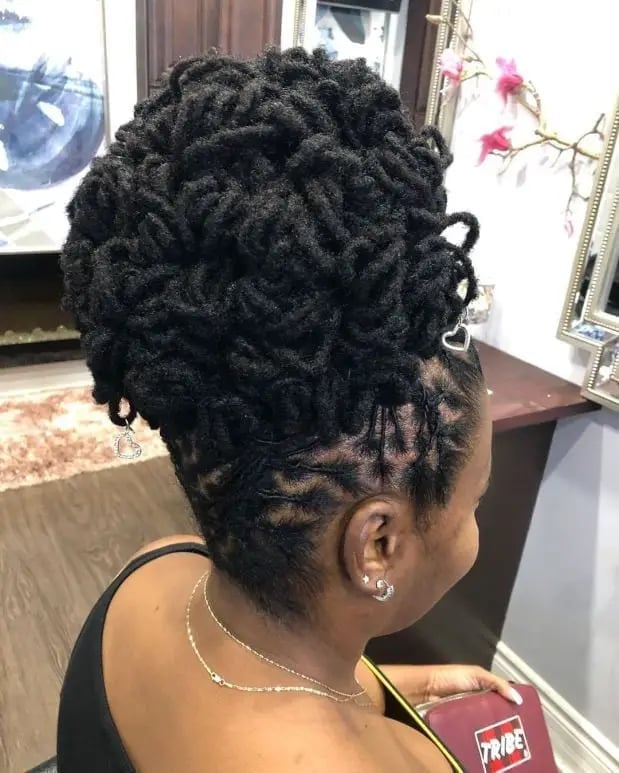
This is an updo that earns its keep. Thick coily black locs are gathered into a voluminous shape, with the side profile revealing intricate parting at the nape. Heart-shaped charms add a playful detail without overwhelming the structure.
The middle part keeps the symmetry clean, while the volume comes from the locs’ natural thickness. Request from your stylist: black coily locs updo with heart charms. This is not a quick throw-together style; the parting requires precision, and the charms need to be attached securely so they don’t slide down the locs during wear. Not for you if you dislike decorative charms or intricate styles that demand careful maintenance.
Neatly sectioned air-dried black starter locs with middle part
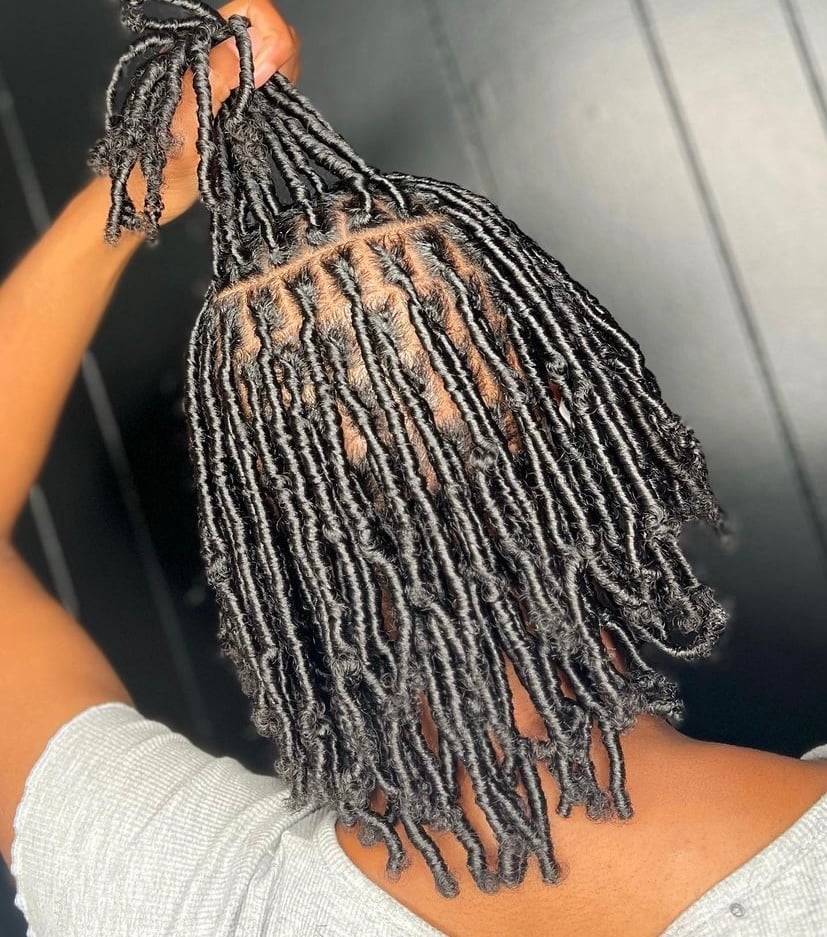
Precise sectioning makes the difference between starter locs that look intentional and ones that look accidental. Neatly sectioned black starter locs with a middle part rely on clean parting from the start. The coily thick texture holds its shape once air-dried, meaning what you see is what you get. This look requires a salon consultation for the initial parting, as uneven sections will show through the entire loc journey. A more free-form, less structured style allows the locs to find their own path.
Short black starter locs with defined coils and centered parting
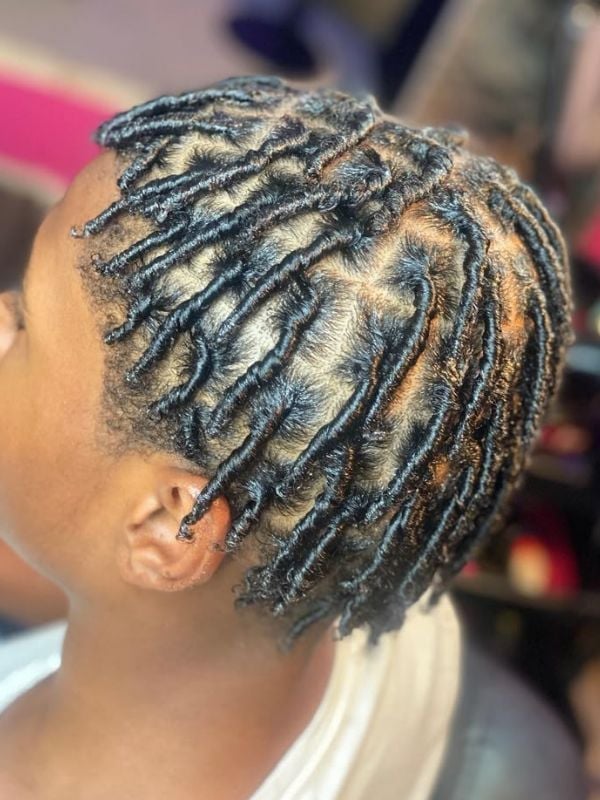
Short starter locs with defined coils suit anyone who wants the loc look without waiting for length. The centered parting keeps the face symmetrical, while the defined coils give each loc a clear, consistent shape. Thick coily texture holds these coils well, so they don’t unravel between appointments. Not for you if you prefer longer locs or less defined coil structure that allows for more relaxed styling. This is a sharp, low-fuss option for the early loc stage, but the precise sectioning requires a salon visit to set the foundation.
Dramatic high bun of black locs with brown highlights
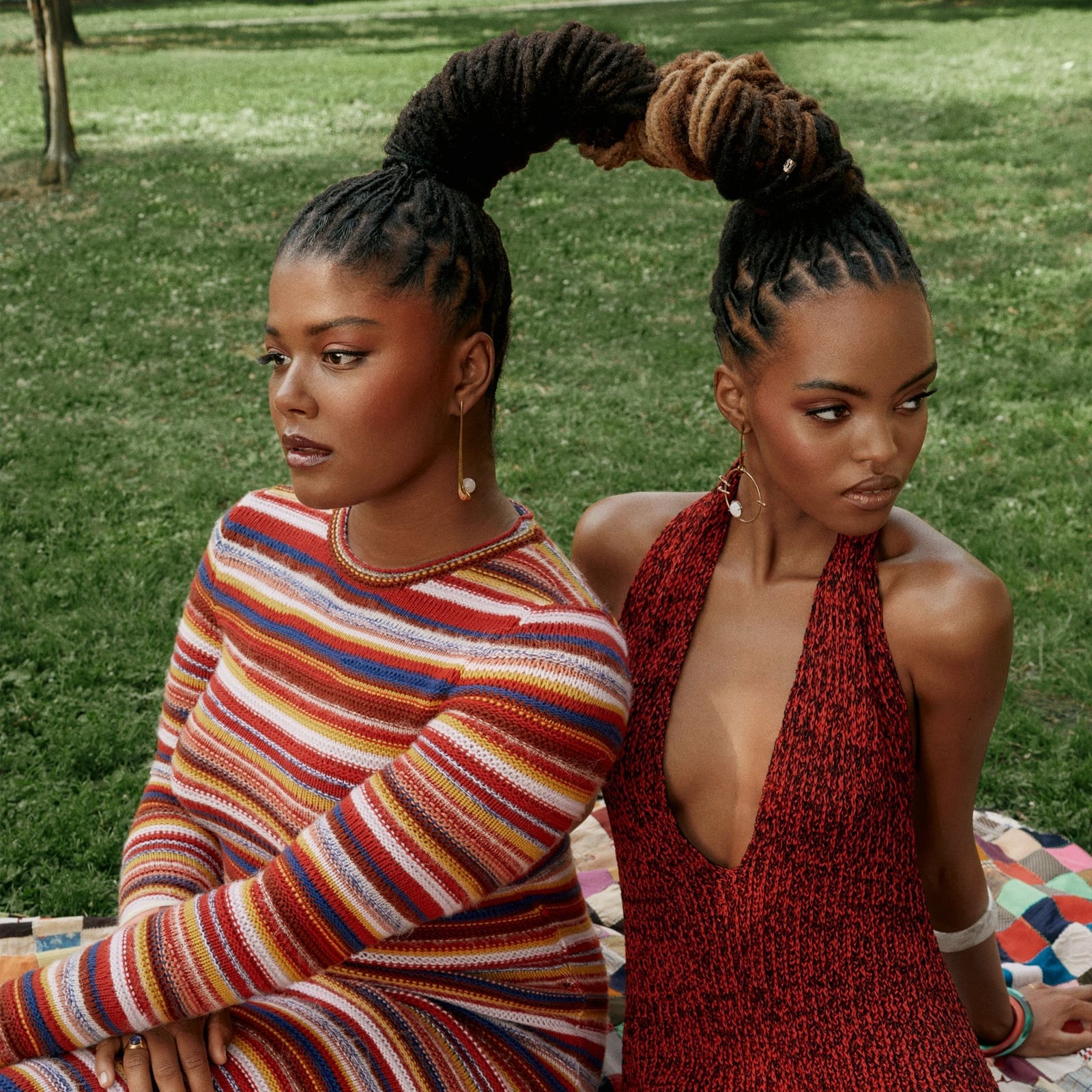
A high bun that arches over the head changes the silhouette entirely. Thick coily locs in black with brown highlights give this updo a layered color effect that draws the eye upward. The middle part keeps the front neat, while the dramatic height demands secure structuring.
Request from your stylist: thick coily locs in a dramatic high bun with brown highlights. The brown highlights at the ends add a subtle fade of color that makes the bun look planned. This is a statement look for events where the hair needs to hold its shape for hours.
Final Thoughts
Your starter loc style comes down to how much time you have each morning and how neat you want your roots to stay.
- Ten minutes or less: choose an air-dried or half-up half-down look.
- Weekly styling: a high bun or ponytail holds shape with minimal effort.
- Bold statement: add gold cuffs, wire wraps, or geometric partings.
- Low maintenance: stick with uniform sections and a middle part.
Embrace your loc journey with confidence and style.
