

33 Aesthetic Wavy Haircuts 2027 with Layers and Bangs
Aesthetic Wavy Haircuts 2027: Save 33 looks with curtain bangs or face-framing layers in ash blonde, dark blonde, or light brown shades. Get easy style.
You walk into the consultation with a picture saved, but the real question is whether that cut works with your wave pattern and your morning routine. The right shape cuts styling time, grows out without a weird phase, and makes the texture look intentional rather than just air-dried.
Which is why Aesthetic Wavy Haircuts 2027 fill so many saved boards, 33 options that range from a five-minute air-dry shag to a blown-out lob, built for fine strands, thick density, or anything between. The struggle is finding the one that matches your wave and your willingness to pick up a round brush.
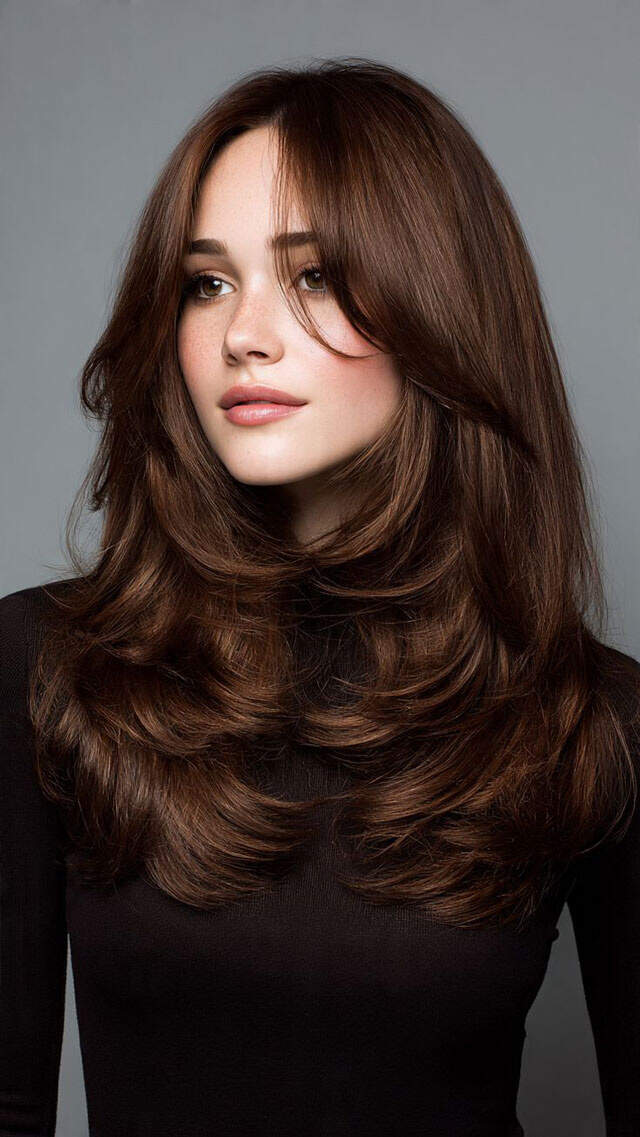
Dark brown long layers with voluminous blowout and curtain bangs
Long, face-framing layers require a middle parting to land exactly right. The curtain bangs blend into the thick, wavy texture, and a voluminous blowout gives the dark brown cut its shape. You need hair at least shoulder length to let the layers move.
Thick, wavy hair holds this style best. The face-framing pieces soften most face shapes, from round to square. Low-maintenance styling is not an option here; a blowout this full demands time. Schedule trims every six to eight weeks to keep the layer’s shape precise. Tell your stylist: long face-framing layers, soft curtain bangs.
Ash blonde shag with fine texture and air-dried waves
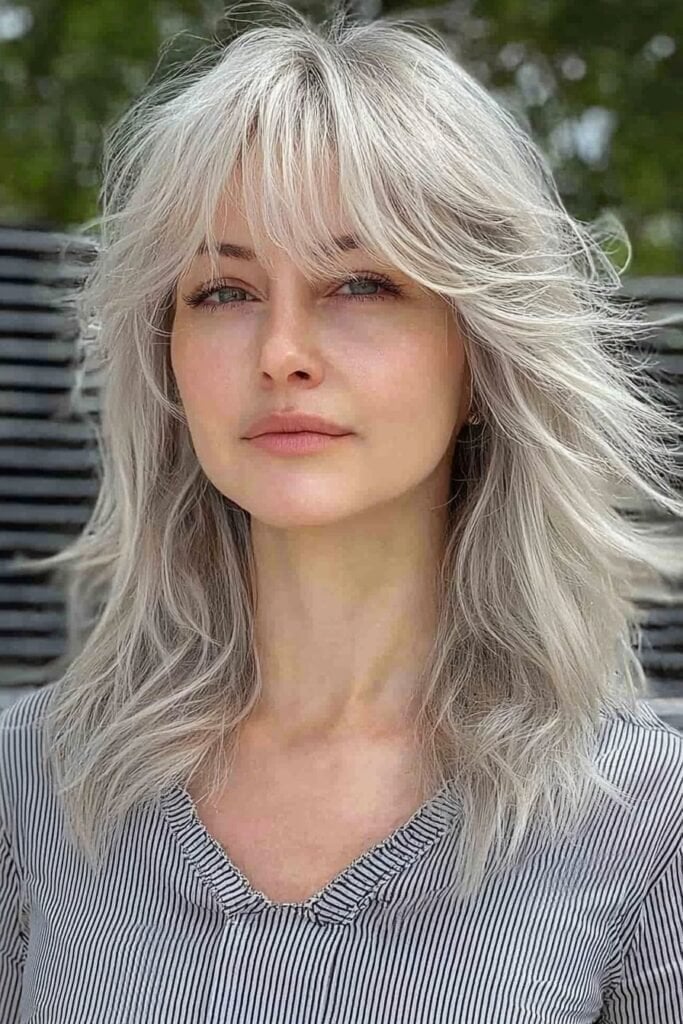
A shag cut lives or dies by its precision layering. This is not a scissors-at-home situation. The ash blonde color and fine texture work with the curtain bangs, which soften the front. Air-dried styling lets the pieces around the face fall naturally, giving the cut its shape.
Subtle layers add elegance to dark blonde
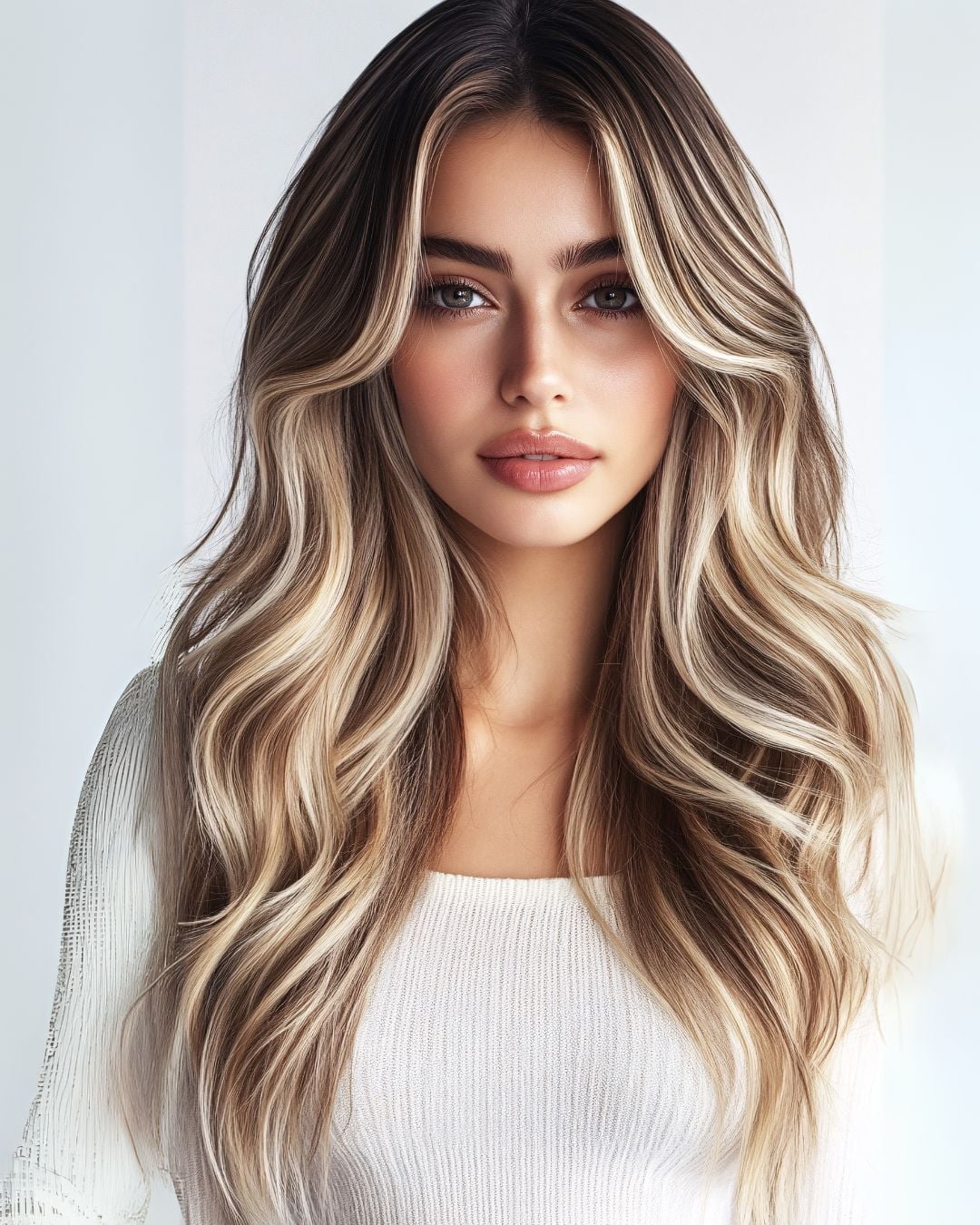
Dark blonde with blonde highlights gets its dimension from layers that are present but not aggressive. The face-framing pieces land around the jaw, softening square lines without removing weight. A soft blowout finishes the cut, but the real work is in the color placement, ask for a dark blonde base with blonde highlights that start a few inches from the root.
Fine, wavy hair at collarbone length or longer works best here. A solid color or very coarse hair that won’t hold the blown-out wave is not ideal. A heat protectant before the blowout keeps the ends smooth; schedule a trim every eight weeks to maintain the layer line.
Light brown layers with subtle blonde highlights, air-dried

Shorter front sections change the silhouette of a layered cut. The light brown hair with blonde highlights gets its shape from those pieces, which are cut to hit around the chin. Air-dried texture keeps it low-maintenance, but there is a catch: the soft waves require a salon cut to land correctly. A blunt at-home trim will ruin the movement.
Fine, wavy hair at chin length or longer suits this cut. The shorter front sections can soften a longer face shape. A blunt cut or very coarse hair that needs more structure are not ideal for this style. Apply a texturizing spray on damp hair and let it dry without touching it.
Medium brown layered cut with uniform air-dried waves
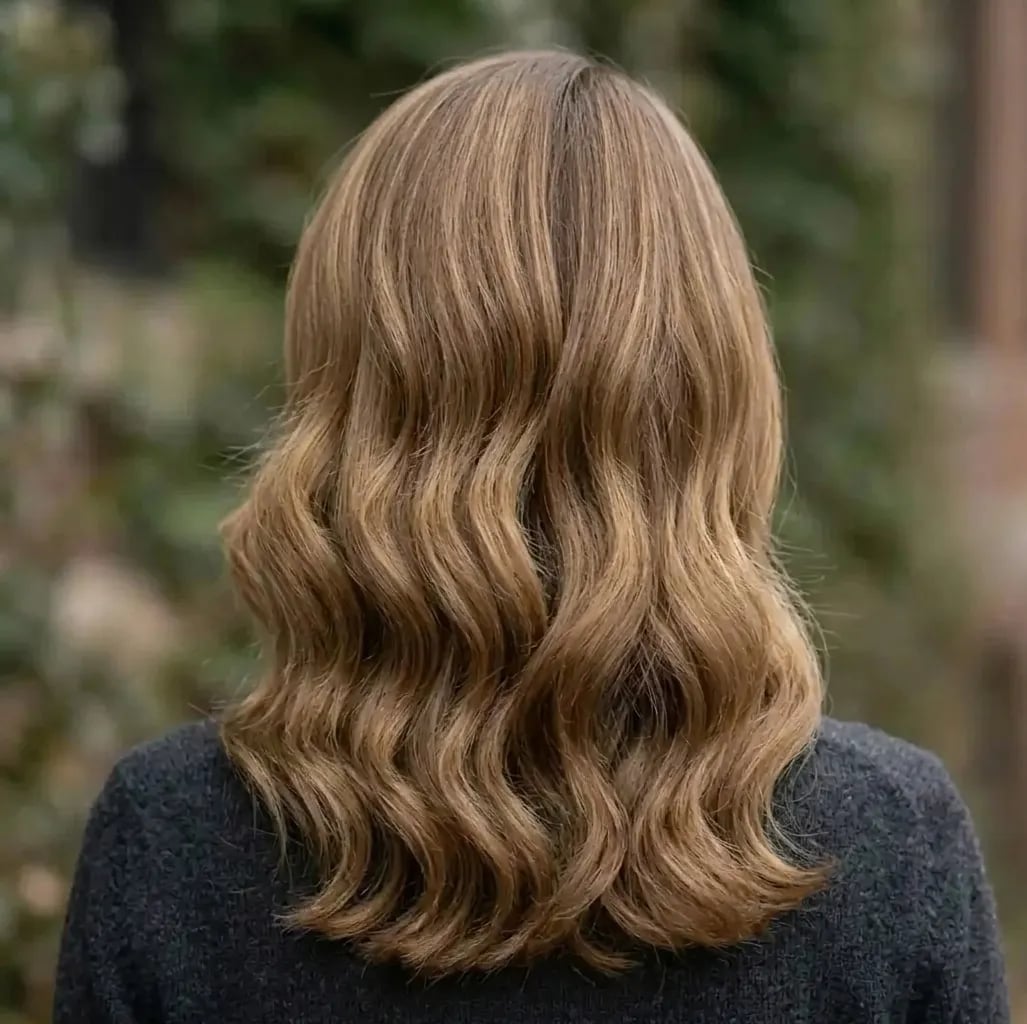
Uniform waves versus piecey texture. This layered cut aims for the former. The medium brown base with subtle highlights gains definition from even layering throughout, not just at the ends. Air-dried styling keeps the finish natural, but achieving uniform waves takes skill; the layers must be cut to distribute the hair’s weight evenly.
Fine, wavy hair of any length can carry this cut. The uniform waves soften square or oval faces by adding gentle volume at the sides. Thick hair may not achieve uniform waves without significant styling. A texturizing spray on dry hair helps separate the waves without heat.
Fine ash brown hair with lighter strands
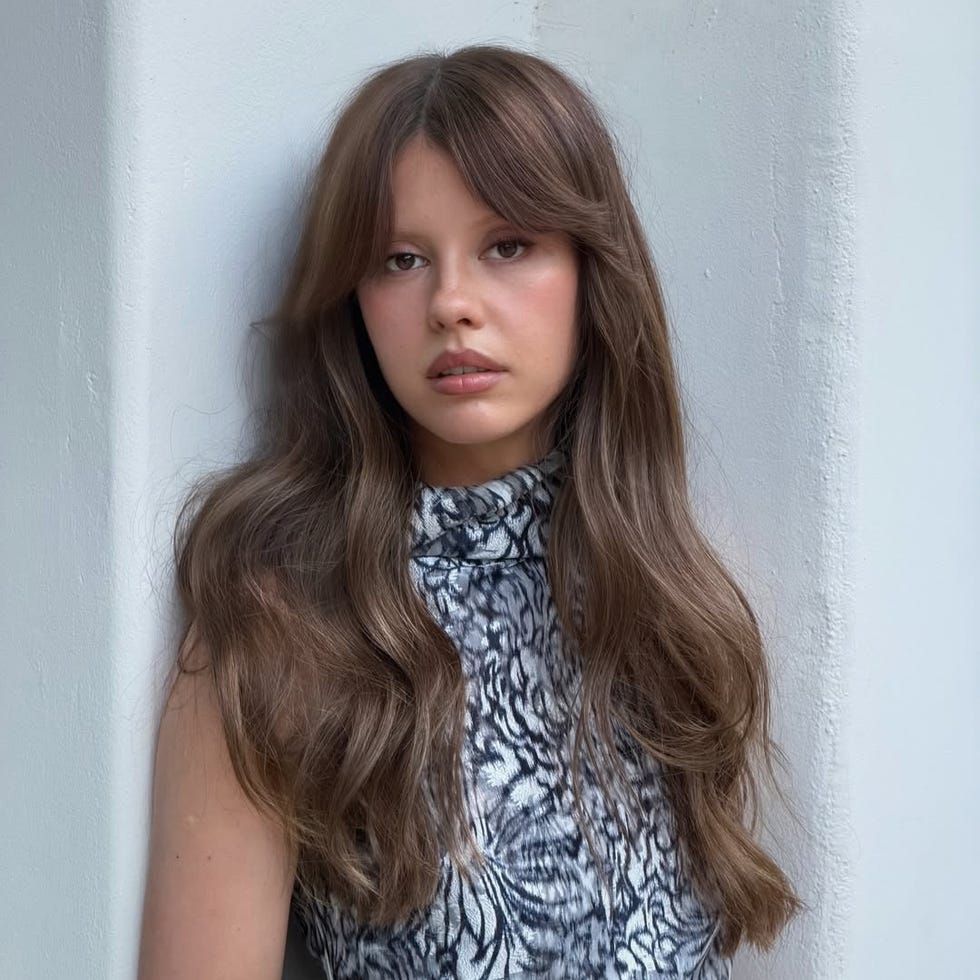
Ash brown with thin lighter strands reads like a neutral base, but the curtain bangs are doing the real work here. Long layers keep the fine texture from collapsing, and the middle part lets those front pieces fall where they should. Good for collarbone-length hair or longer. The catch: very thick hair can make curtain bangs look heavy rather than wispy. Tell your stylist: long layers, face-framing curtain bangs, ash brown with subtle highlights. A light hold spray on the bangs in the morning holds the shape through the day.
Auburn highlights create lived-in texture
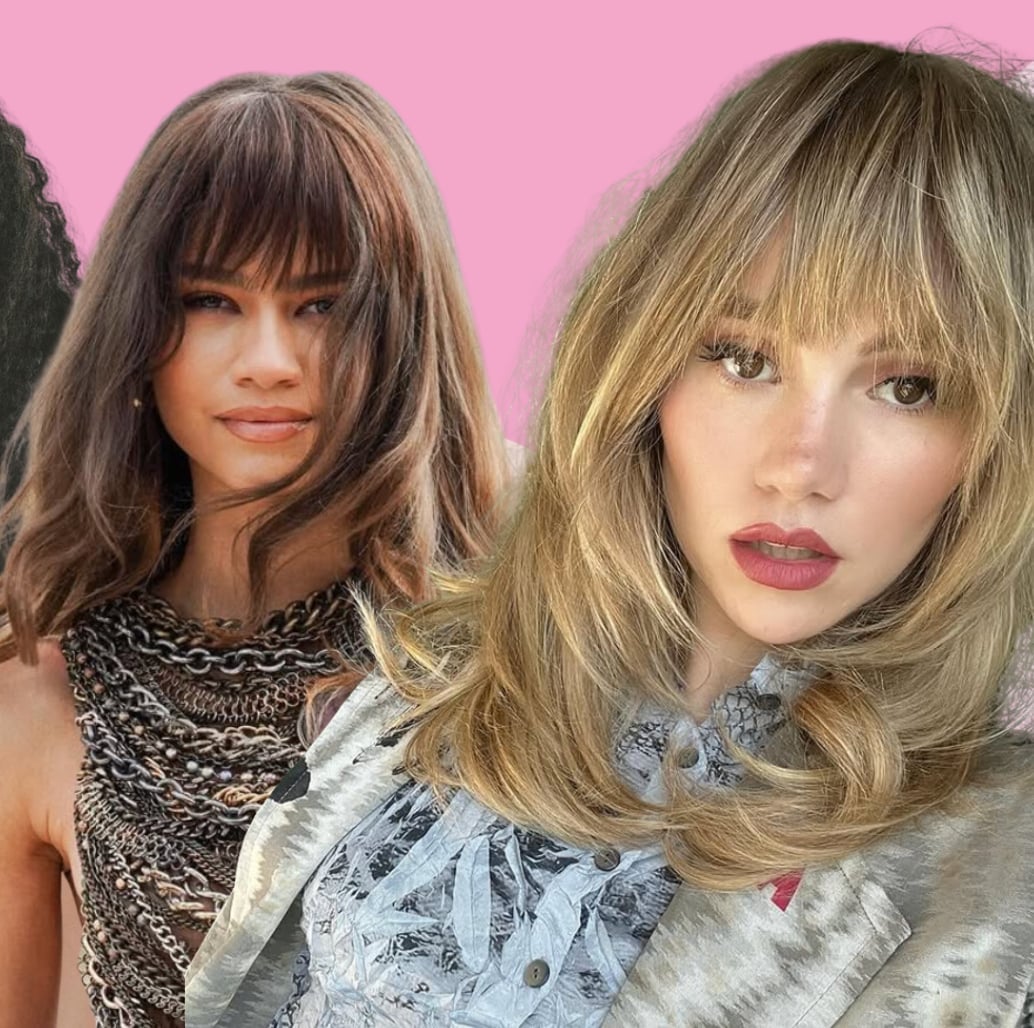
Want the lived-in look without the faded-out regret? Dark brown with auburn highlights actually lands somewhere natural. The mistake is asking for chunky streaks. The face-framing layers and curtain bangs need fine, blended pieces to look intentional, not misplaced. This is not a box-color job.
Softening the face with dark brown long layers and side-swept bangs
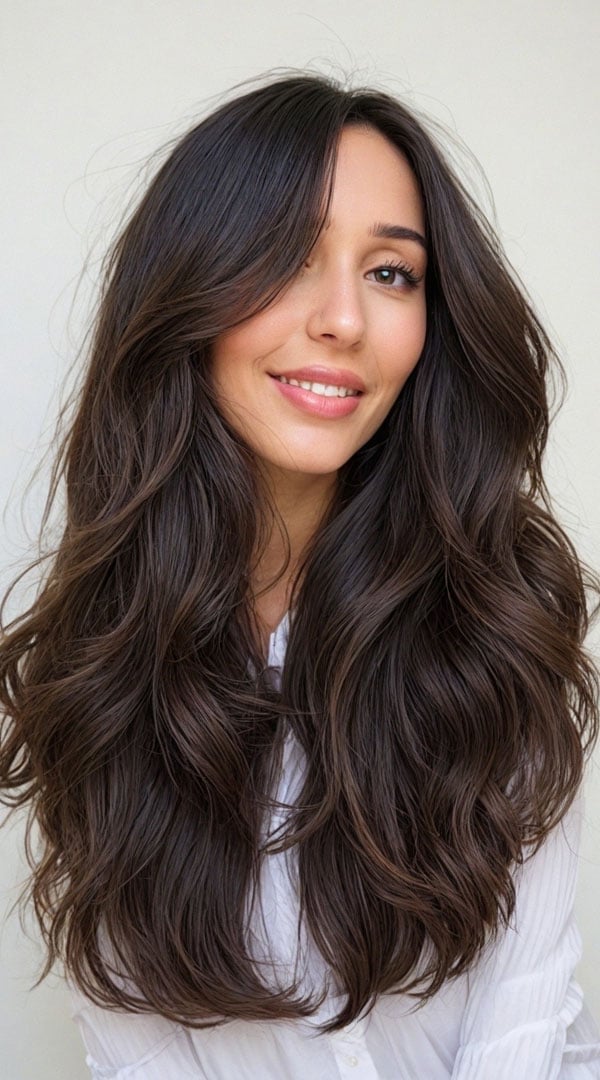
Side-swept bangs and long layers are a standard softener, but the trade-off is real. Dark brown reads solid without highlights, which keeps the grow-out clean. Middle part underneath, bangs swept to the side, the blend depends on the stylist’s hand with thinning shears. Skip it if you want hair that stays out of your face without a clip. The shape suits square and round faces best.
Thick, wavy hair holds the sweep better than fine hair, which tends to split and fall flat. Accept that the front pieces will need a quick redirect with a dryer on low heat each morning. The rest air-dries fine.
Brunette layers with blonde highlights and face-framing curtain bangs
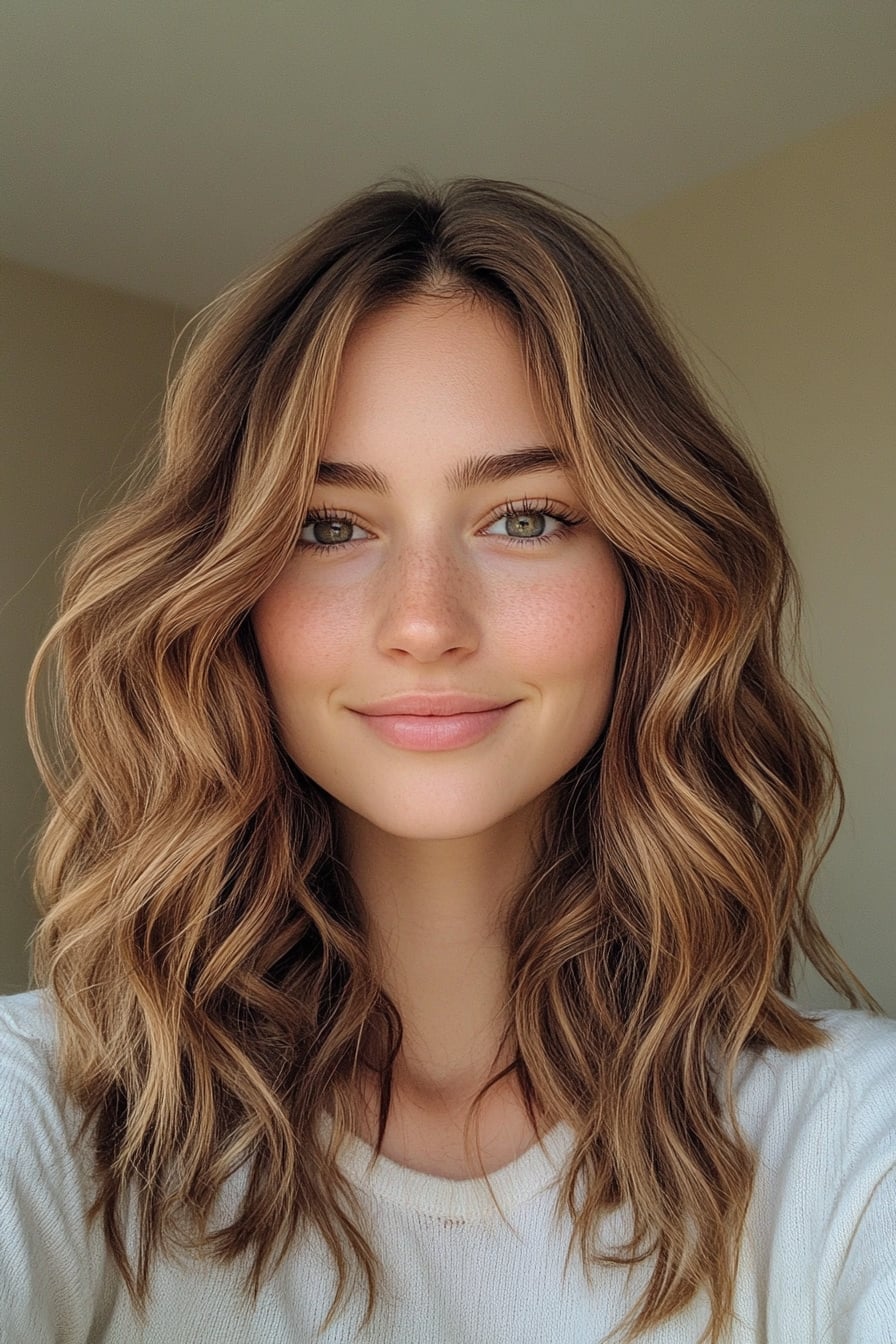
Brunette with blonde highlights is a two-tone commitment. The base needs a toner refresh every eight weeks to keep the blonde from warming into brass. Curtain bangs and fine layers make the grow-out friendly, the highlights blend rather than stripe. Ask your colorist for: brunette base with blonde highlights, face-framing curtain bangs. Air-dried texture cuts styling time; a texturizing spray at the roots lifts fine hair without heat.
Dark brown long layers with subtle highlights, close-up take
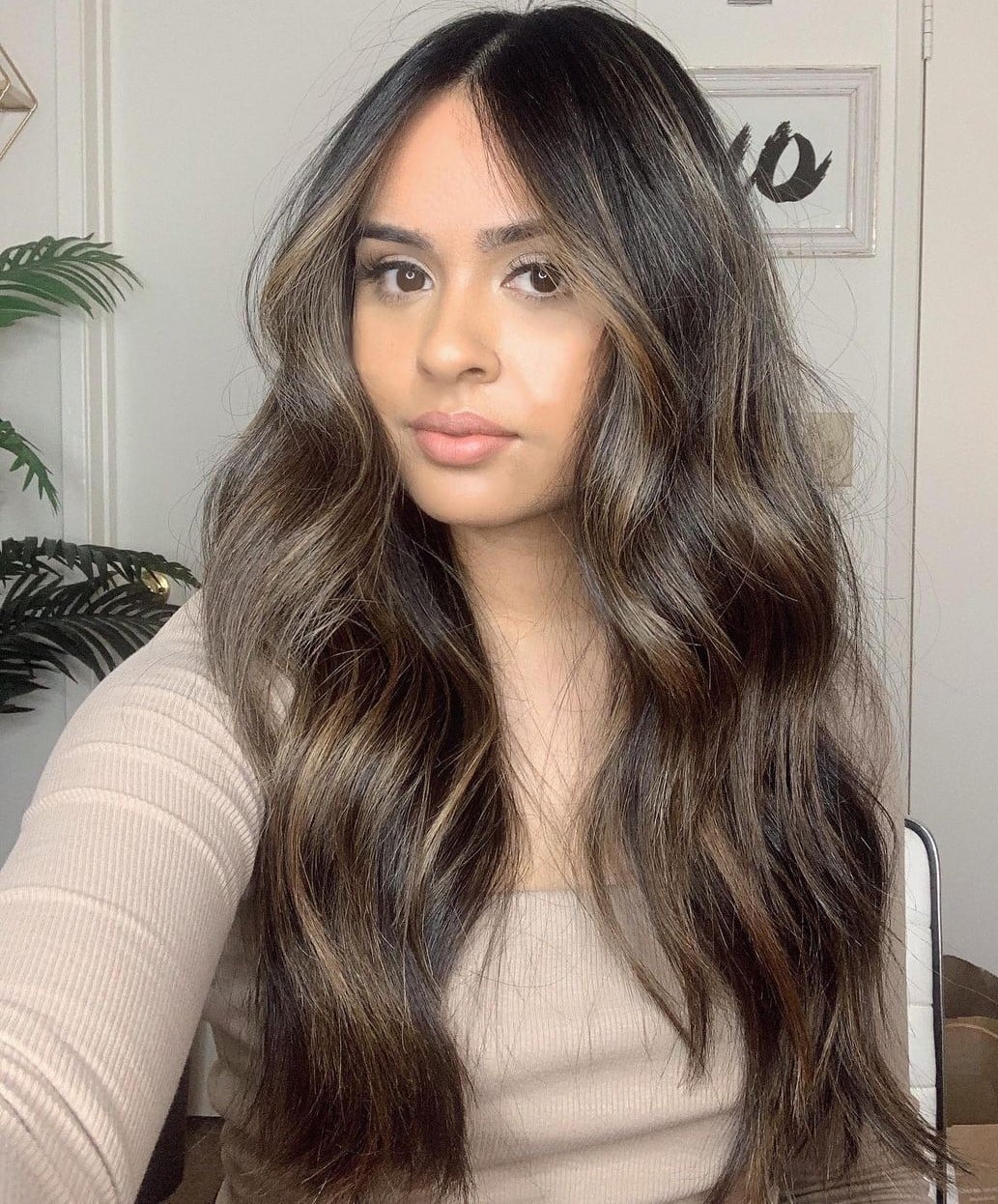
Fine highlights on a dark brown base look dimension, not contrast. The long layers stack from collarbone down, and the curtain bangs open at the middle part. What makes this work is the precision: each layer cut at a slight angle so the wave patterns stack rather than separate. Not a cut for blunt-end lovers. The fine highlights need a gloss every second trim to keep the shine even. Request: long layers, face-framing curtain bangs, dark brown with fine highlights. The shape holds for about four days before the bangs need a refresh.
Texture is everything here. Fine wavy hair that air-dries into an S-pattern works best. Coarse waves can make the layers look choppy rather than soft.
Caramel highlights soften dark brown base
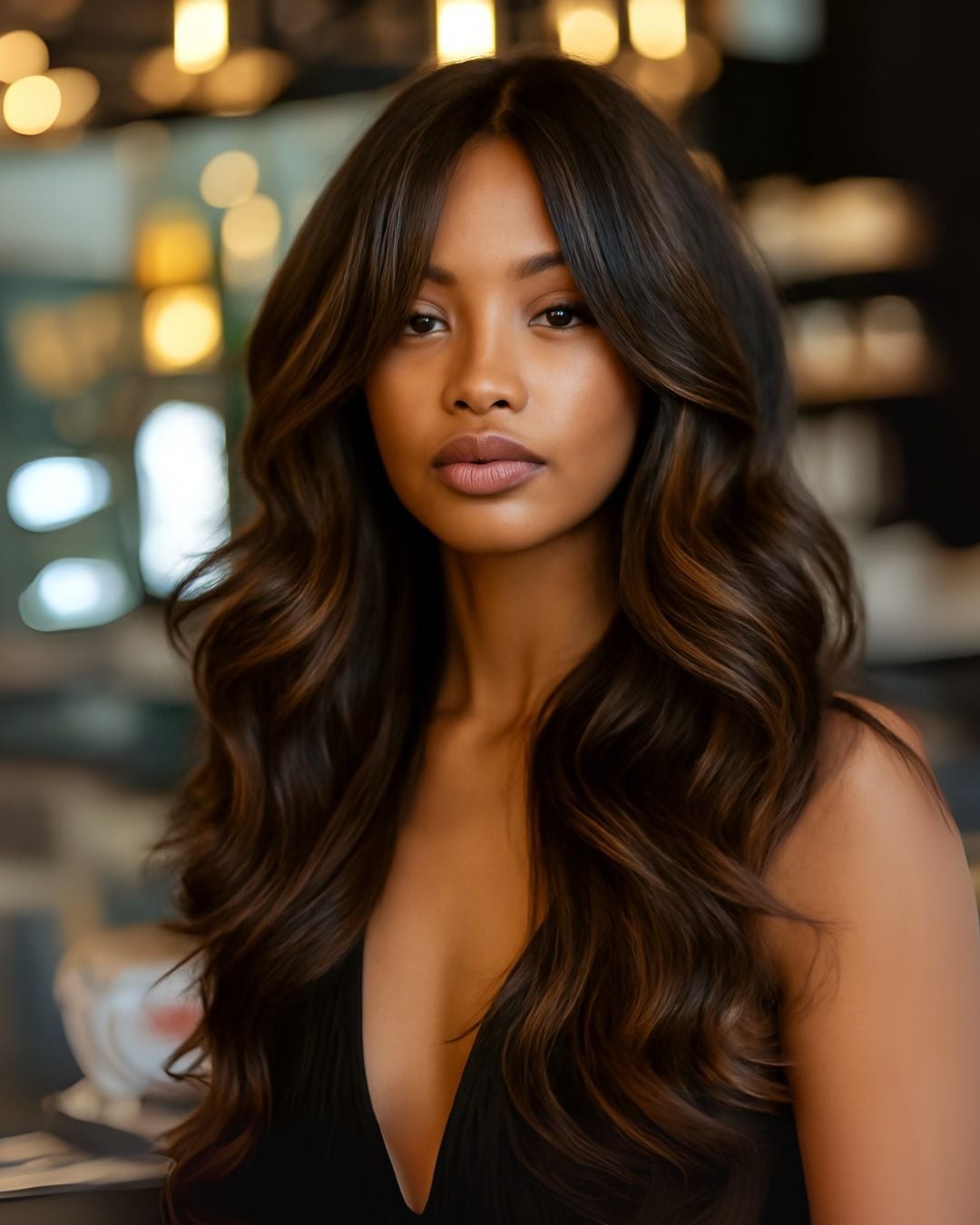
Does a blowout at home ever look quite like the salon version? This one takes long layers and a dark brown base, then adds caramel highlights that are subtle enough to pass for natural sun exposure. The curtain bangs hit right at the cheekbone, which means you can wear them swept to the side or tucked behind an ear without losing the shape. Thick wavy hair holds the volume best here; fine strands tend to let the blowout fall flat by mid-afternoon. Book it as long layers with face-framing curtain bangs and caramel highlights.
The chair time runs longer than a single-process cut because the highlights need to be painted, not foiled, to keep that soft blend. A solid color or very fine hair that lacks natural volume will not get the same effect.
Layered shag with curtain bangs and face-framing pieces
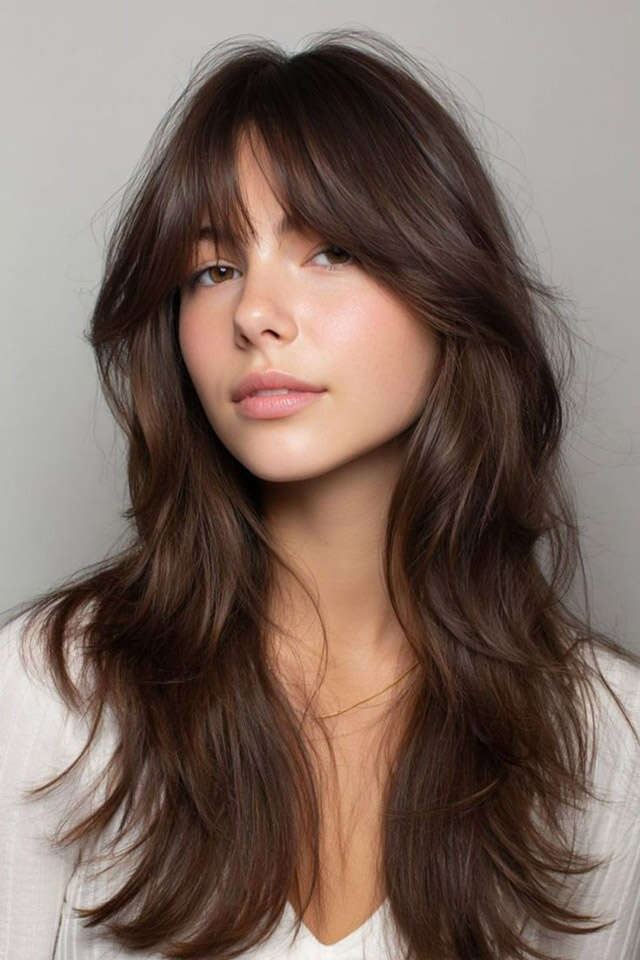
A layered shag lives on the contrast between short interior layers and longer perimeter pieces. Here the dark brown base gets curtain bangs that feather toward the ears, with face-framing layers cut short enough to expose the jawline. The middle part pulls the eye to the center, so the asymmetry of the shag is balanced by the placement of the layers. Fine wavy texture works well because the cut removes weight without leaving visible gaps. The drawback: the face-framing pieces grow out fast and lose their shape around week five, making a six-week trim rhythm necessary to keep the geometry sharp.
Air-dried styling plays to the cut’s strength. A texture spray on damp hair encourages the layers to separate naturally.
Wispy bangs frame dark brown waves
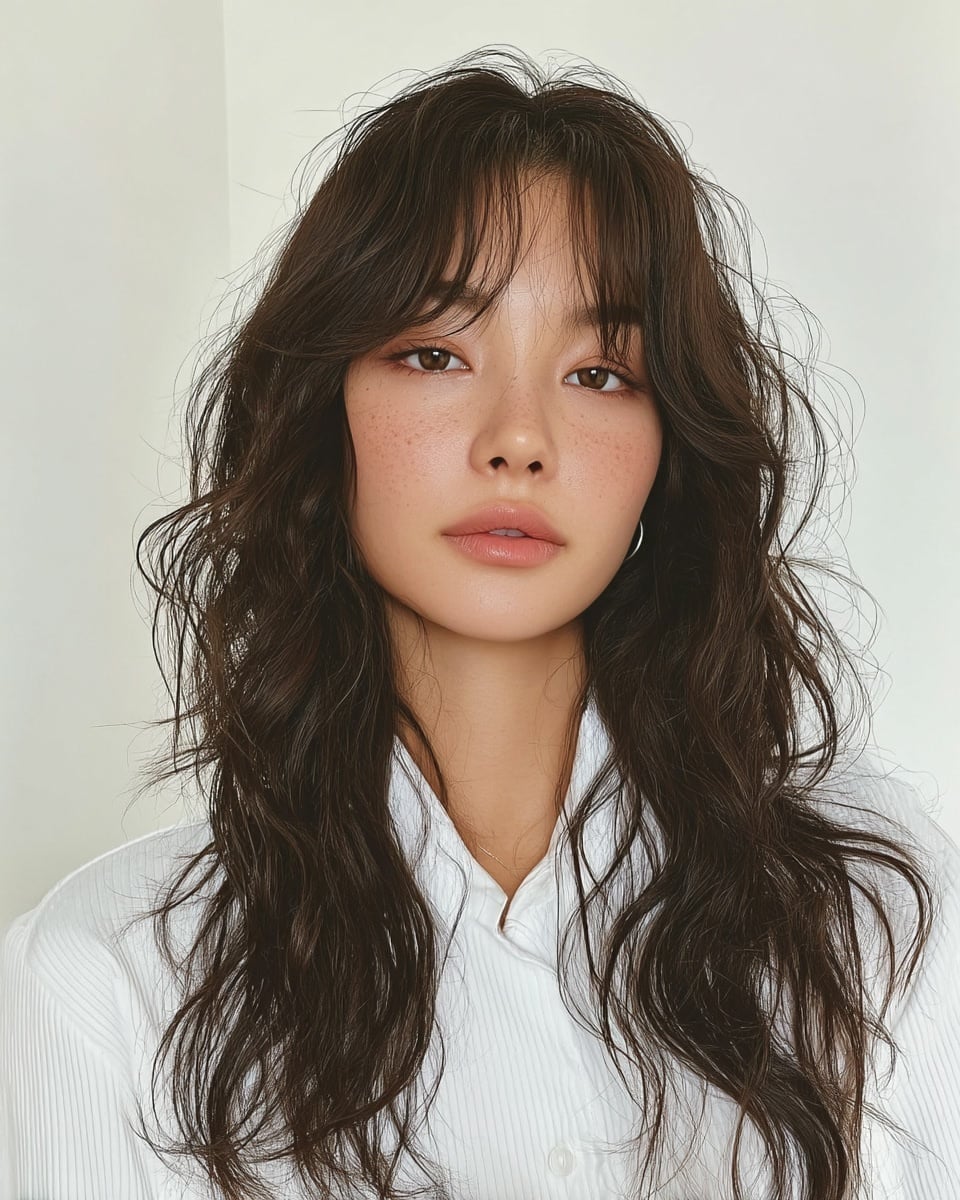
The wispy curtain bangs here do not hit the brow; they stop at the outer corner of the eye, which keeps the forehead visible and the face open. Long layers run through the rest of the dark brown hair, with the shortest layer landing just below the chin. The middle part creates symmetry, while the loose, undone waves give the whole cut a finish that looks air-dried even though it requires a round brush on the bangs. Fine wavy texture is the ideal starting point. Thick hair would need more weight removed from the interior to stop the waves from puffing out the silhouette.
A salon appointment is the only reliable way to get the wispy ends right. A home trim risks cutting the bangs too blunt, which defeats the point.
Blonde layered cut with soft waves and curtain bangs

Blonde with highlights needs a cut that shows the contrast between the base and the lighter pieces. Layers do that work by letting the color shift as the hair moves. Curtain bangs frame the face without covering it, and soft waves keep the overall shape rounded instead of angular. Fine wavy hair at collarbone length or longer holds the wave best. Thick hair may not suit this cut, since the layers can look too subtle against the density and the bangs may separate into unflattering sections.
Thick texture shown in air-dried shag
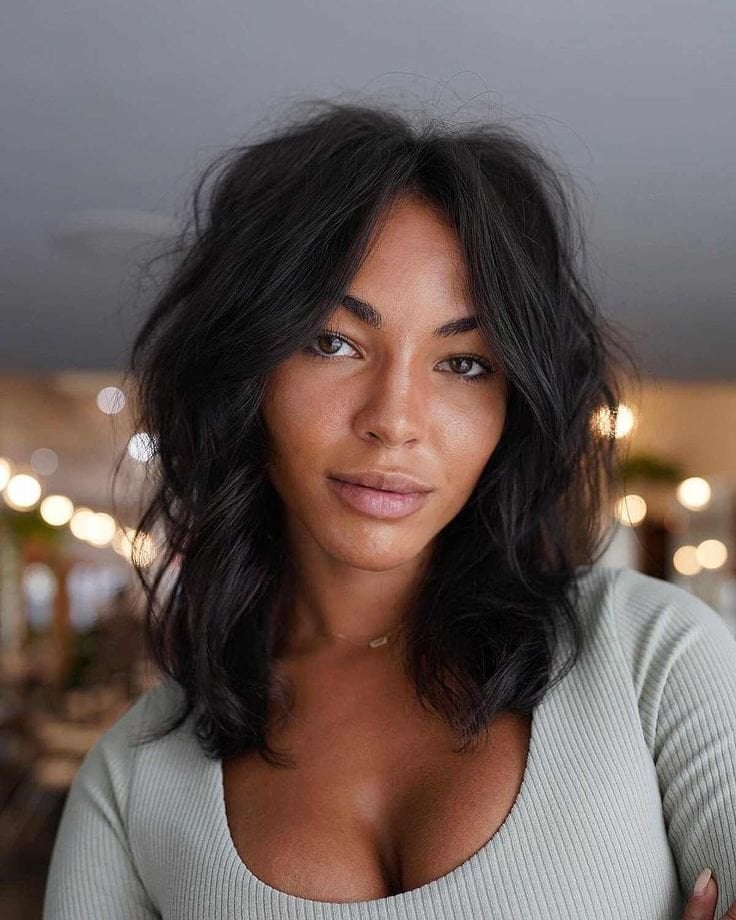
Compare this shag to a layered cut with a blunt perimeter. The shag removes weight from the interior so thick wavy hair does not triangle out at the bottom. Face-framing layers here start at the cheekbone and graduate toward the collarbone, with curtain bangs that blend into the top layer. The middle part keeps the distribution even. Air-dried styling works because the cut already does the volume work. The honest truth: a shag requires precision layering, and a stylist who does not cut many of them can leave the layers too heavy. That mistake turns the shape into a helmet. A stylist who knows the geometry will leave you with a cut that dries itself in under ten minutes.
Enhancing natural texture with dark brown long layers and air-dried
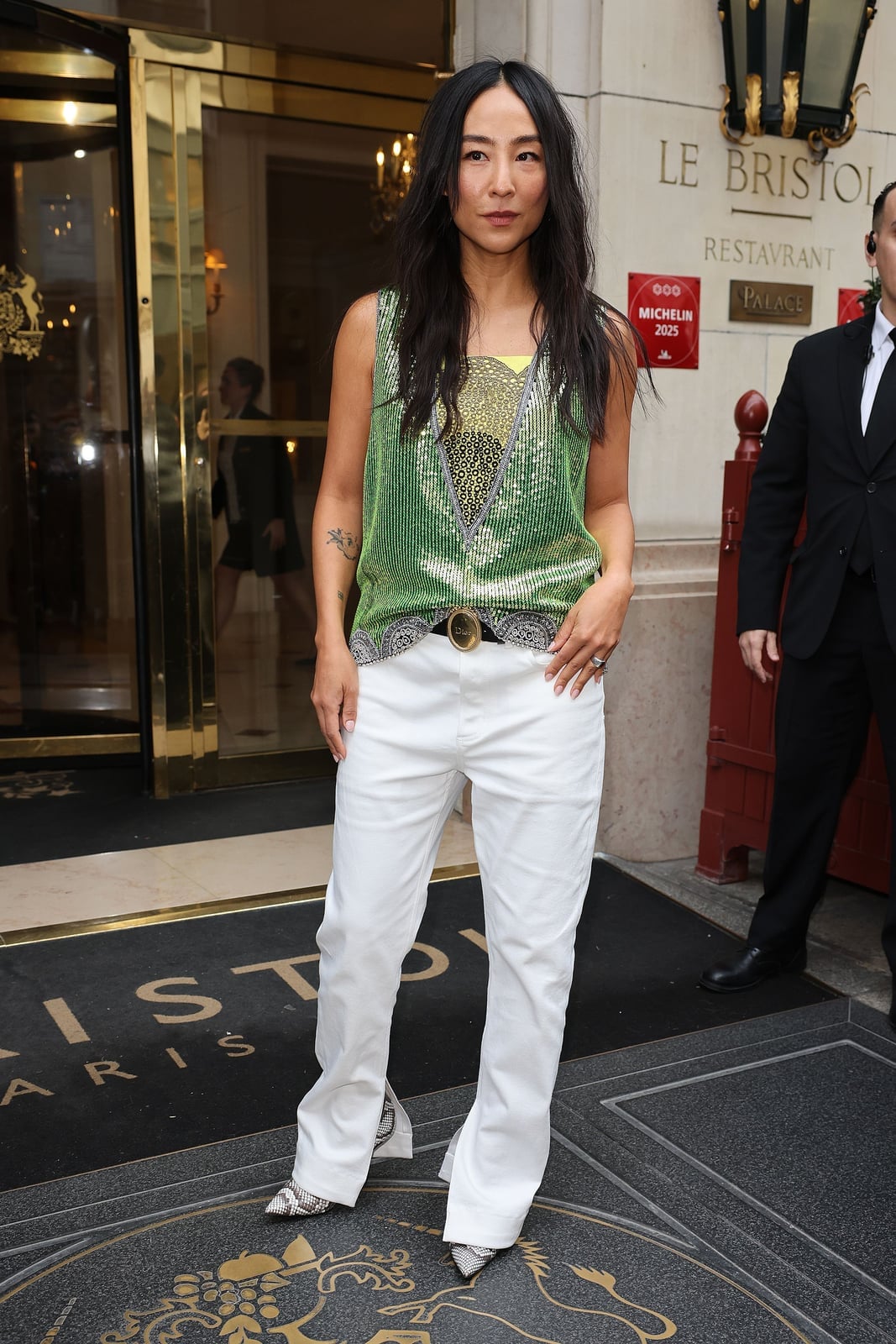
Long layers on fine, wavy dark brown hair do one thing well: they let the texture move. No bangs here, just a middle part and air-dried waves that land loose. The cut removes weight so the wave pattern shows itself instead of collapsing. You need hair at least collarbone length for the layers to register. This shape depends on that open, airy finish. Between cuts, a texture spray on damp hair and a quick scrunch is the whole routine.
Shorter front sections add shape to shag

Shorter front sections do the heavy work here. The shag cut lands at chin length in front, with curtain bangs that break at the cheekbone. Dark blonde with lighter pieces at the surface keeps the fine texture from reading flat. The middle part lets those front pieces fall forward on their own. No styling trick required, air-dried is the whole point.
Platinum blonde long layers with dark roots and flowing waves
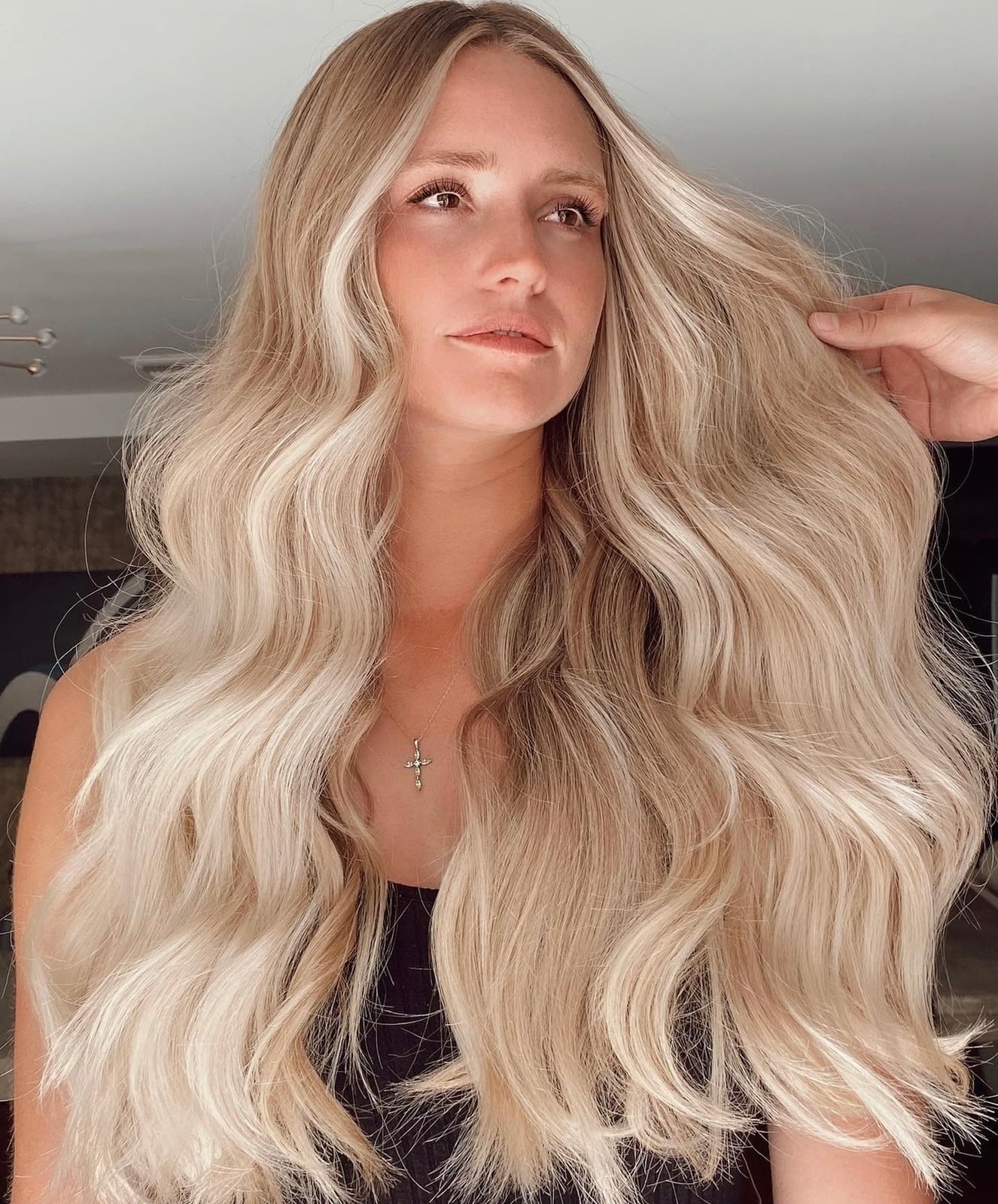
Platinum blonde with dark roots looks deliberate, not grown out. That is the whole trick. The long layers stay subtle, never chunky, so the fine texture can hold a loose wave pattern without getting lost. Middle part, no bangs, air-dried finish. The color demands a salon visit every five to six weeks for root blending. DIY toning between appointments keeps the platinum from tipping yellow, but the wave shape itself is a wear-and-go situation once the stylist sets the layers right.
Brunette layers with blonde highlights and air-dried loose waves
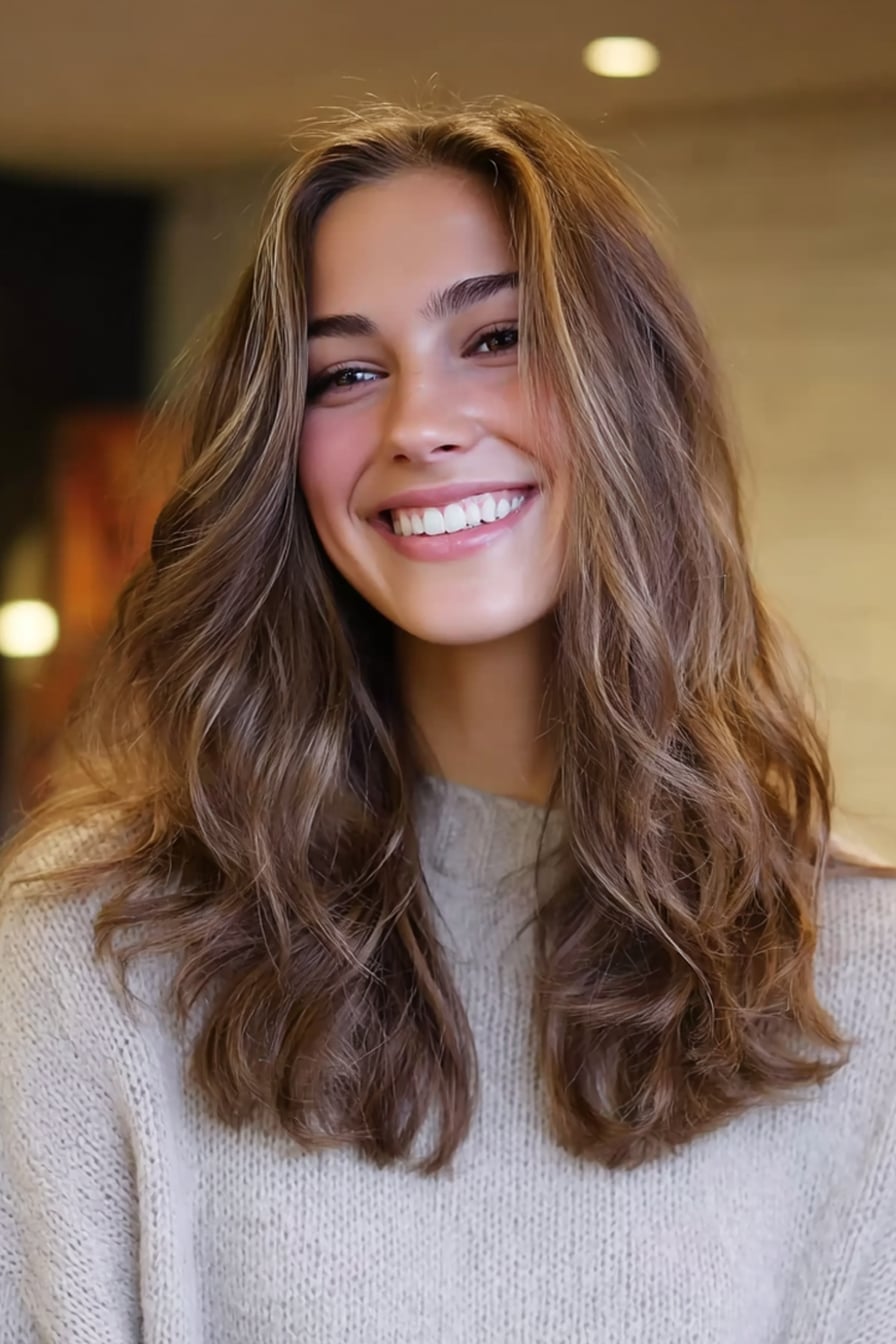
Soft layers cut through a brunette base with blonde highlights spaced close enough to look dimension rather than streaks. The middle part and air-dried finish keep the fine texture from being weighed down. Request: long layers, no bangs, loose wave pattern. The color work needs a toner refresh at week four to keep the blonde from warming into brass. A trim at week ten stops the layers from disappearing into the length.
Lob with fine highlights and air-dried waves
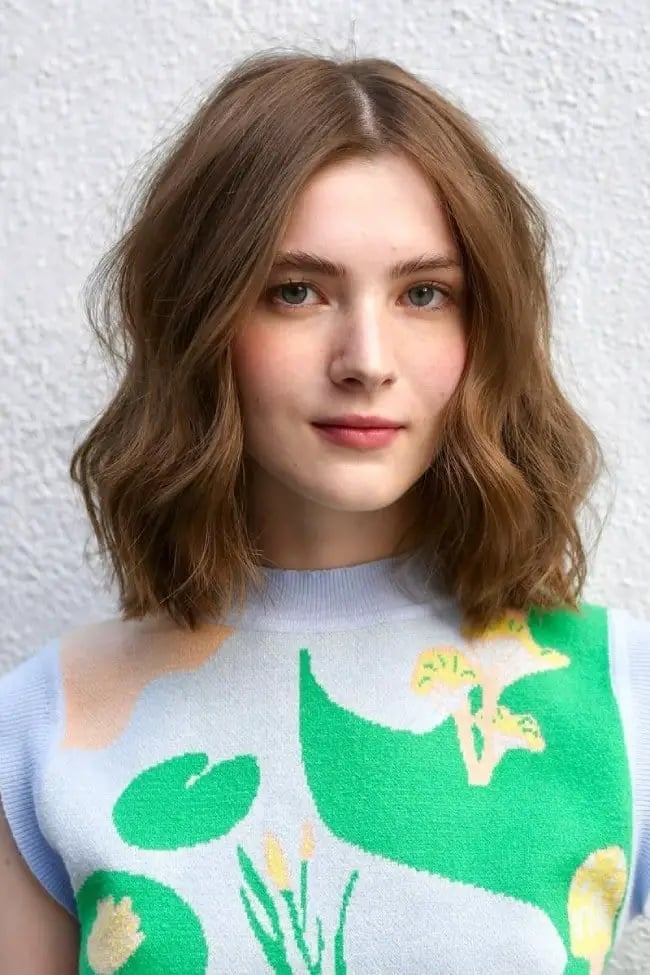
The lob hits collarbone, which gives the fine texture enough weight to wave without falling straight. Fine highlights in medium brown keep the surface from looking flat. Middle part, no bangs. The undone wave is not accidental, the stylist cuts the layers so the wave lands at the same point on each side. Air-dried is the finish, not a compromise. Skip it if your wave pattern is uneven; this cut shows every kink.
Black hair with subtle layers for voluminous air-dried waves
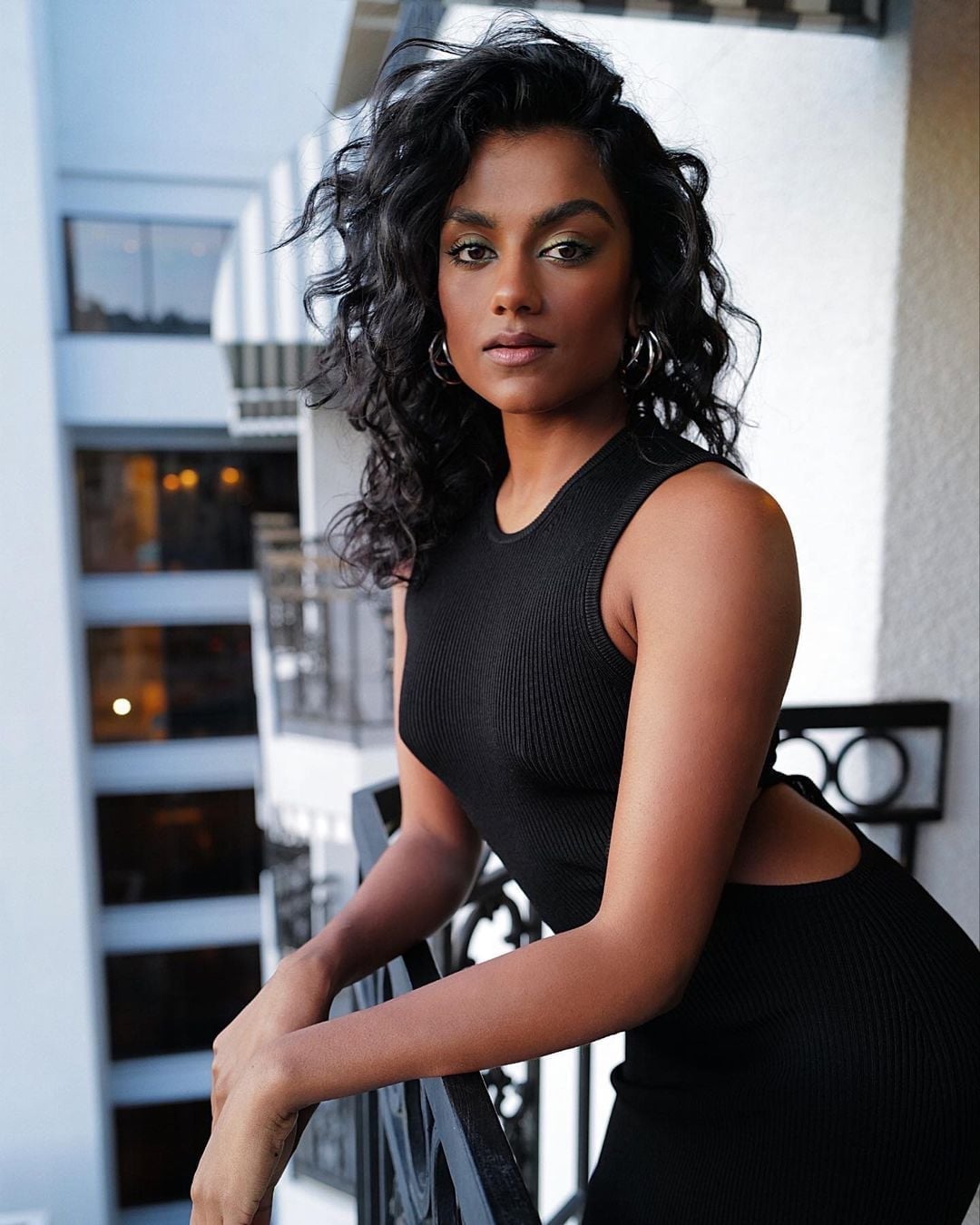
Thick, wavy hair at collarbone length or longer finally gets a cut that works with its weight, not against it. Subtle layers remove bulk without losing density, so the hair falls into loose, air-dried waves that hold volume from root to end. A middle part keeps the shape balanced.
Pass when your hair is fine or struggles to hold any lift. This much volume needs raw density to start with, not a curling iron.
Defined waves best achieved in salon
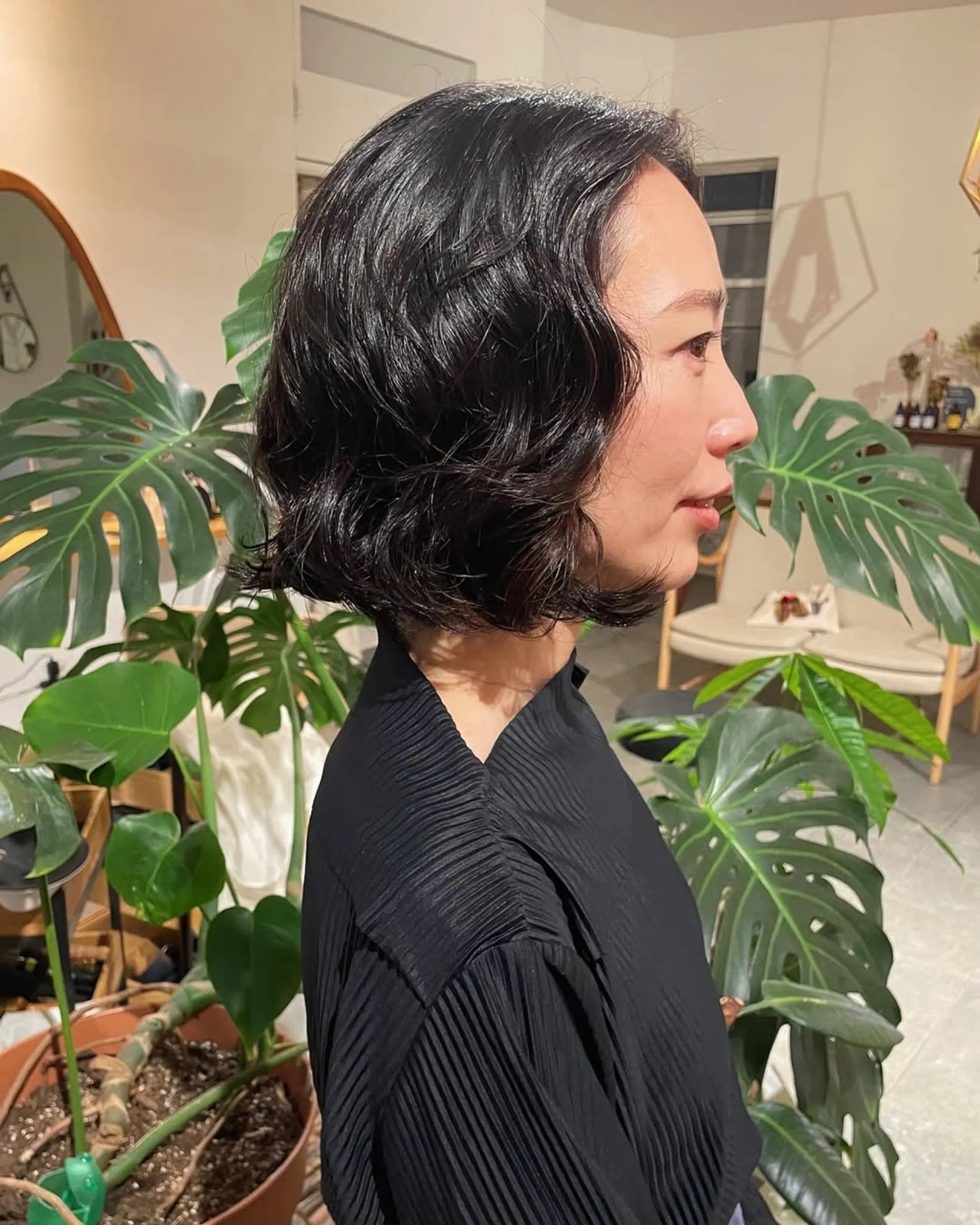
A bob that relies on precise, air-dried wave placement is a different breed from a wash-and-wear bob. The dark brown hair sits chin-length with a middle part, and each wave sits exactly where the cut points it. That takes a stylist who maps the wave pattern during the cut, not a curling iron after. Fine wavy texture holds the shape well; very thick hair tends to push the bob wider than intended.
Loose natural waves create textured bob
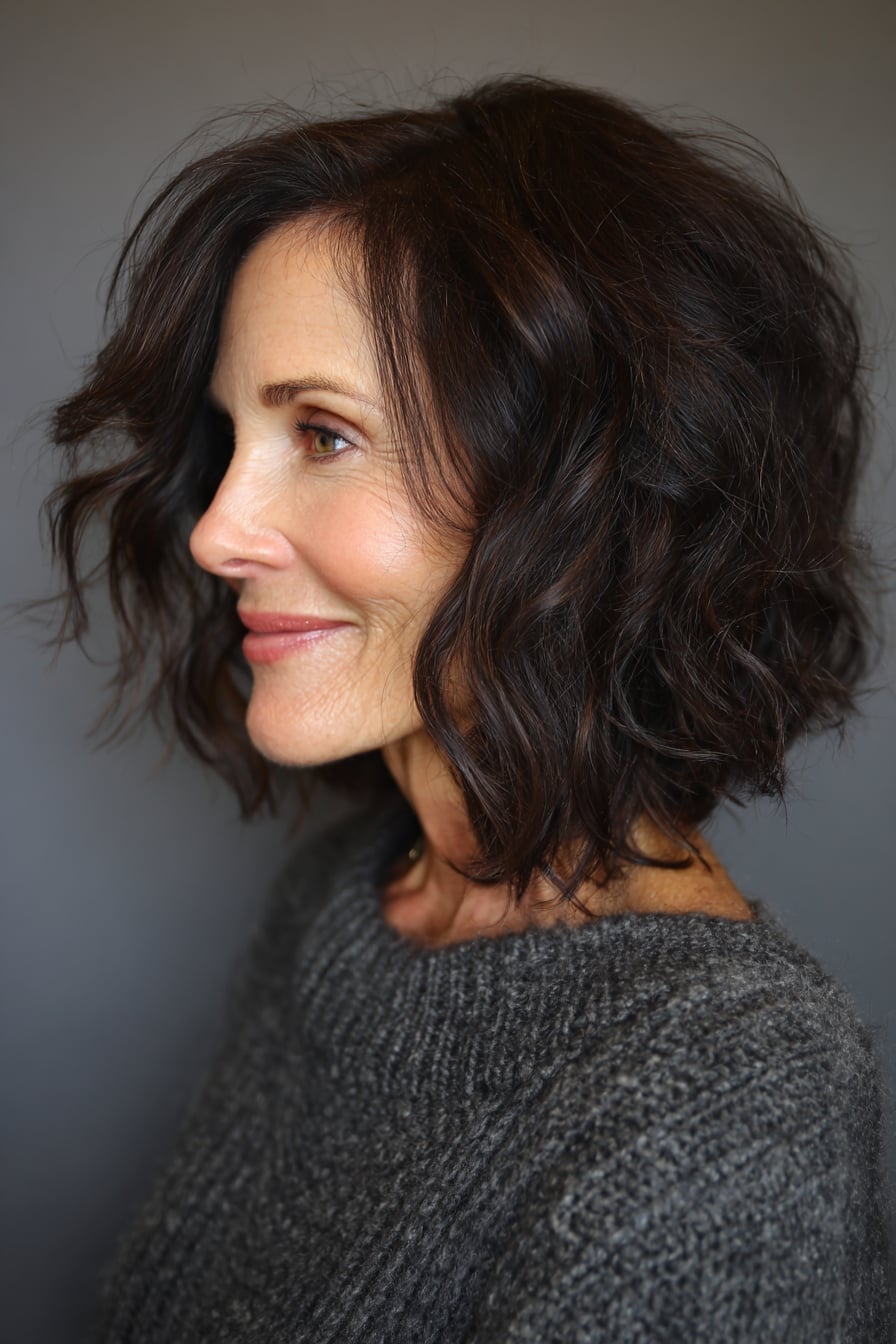
Letting the wave pattern land where it wants keeps this bob from looking too precise. The dark brown hair is cut to chin length with a middle part, and the loose, air-dried texture gives it a relaxed finish that looks deliberate. Fine wavy hair benefits from the lack of heavy styling. The cut does the shaping, not heat. The salon-leaning part is the internal layering that stops the bob from sitting like a helmet.
Styling thick dark brown wavy bob with a side parting
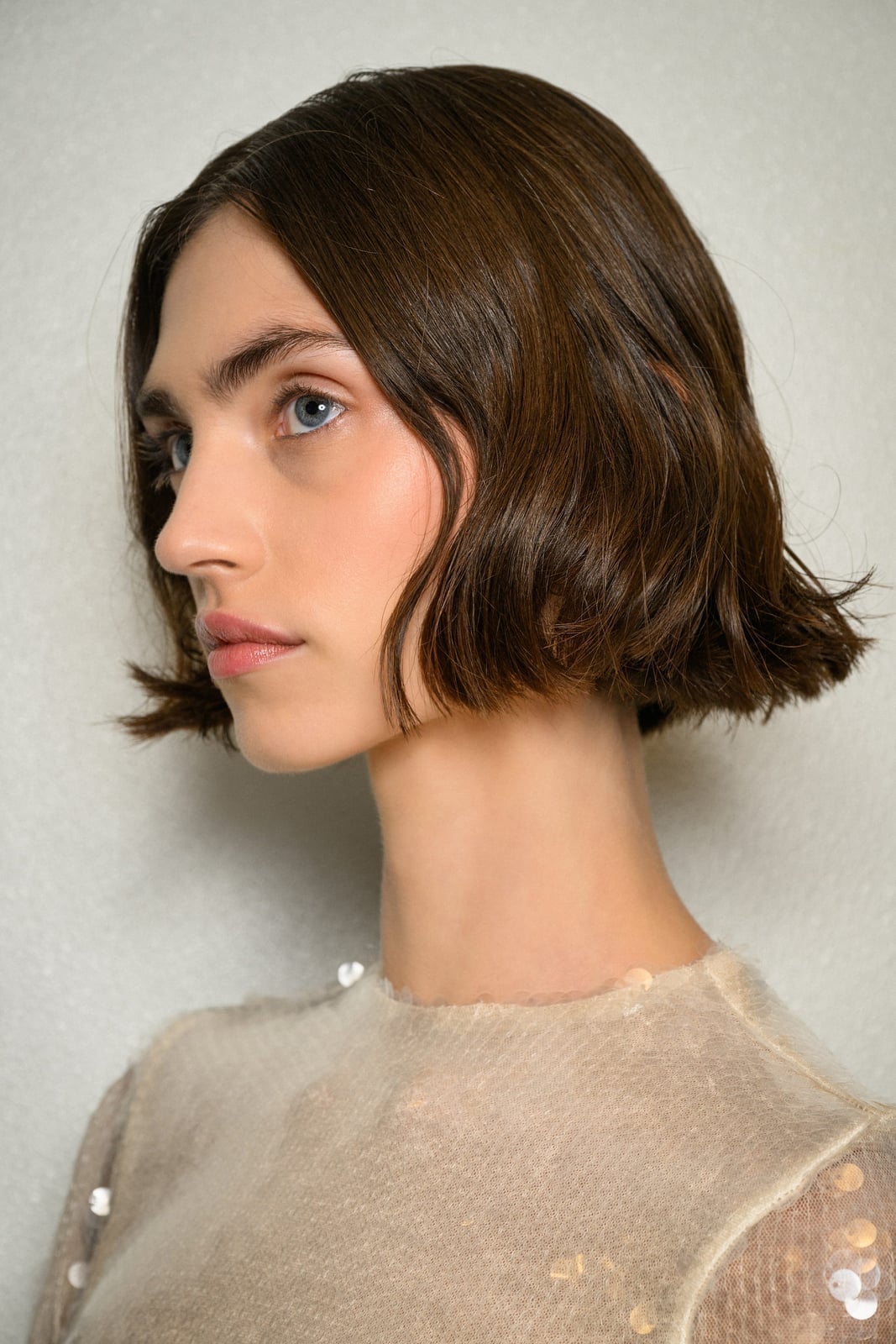
Thick wavy hair in a bob shape needs a side part to break up the weight. A chin-length cut with a deep side part lets the soft, natural-looking waves fall asymmetrically, which keeps the silhouette from looking too round. Book it as a bob cut with a side part and air-dried texture. The DIY version works if you have a good texturizing spray and a diffuser. The salon part is the precise cut that makes the waves land in the right spots.
Side-swept bangs soften layered bob
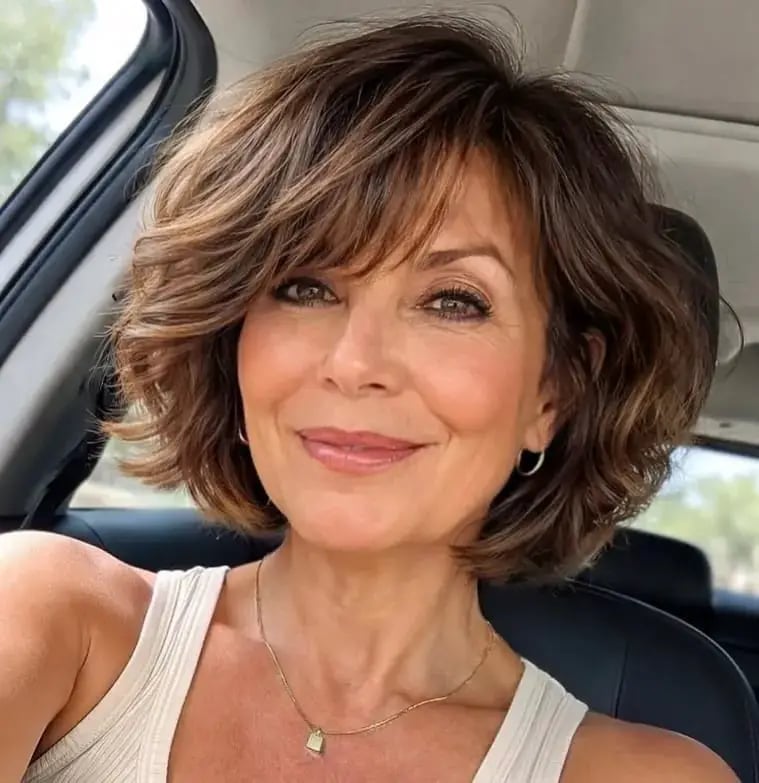
A layered bob with side-swept bangs needs a blowout to land the volume. The brunette base has subtle lighter strands that catch the light, and the blowout lifts the fine wavy texture so the layers separate instead of clumping. They grow into your eyes faster than curtain bangs. The bob itself holds its shape for six to eight weeks between trims, but the bangs dictate the schedule.
Dark brown lob with ash blonde highlights and beachy waves
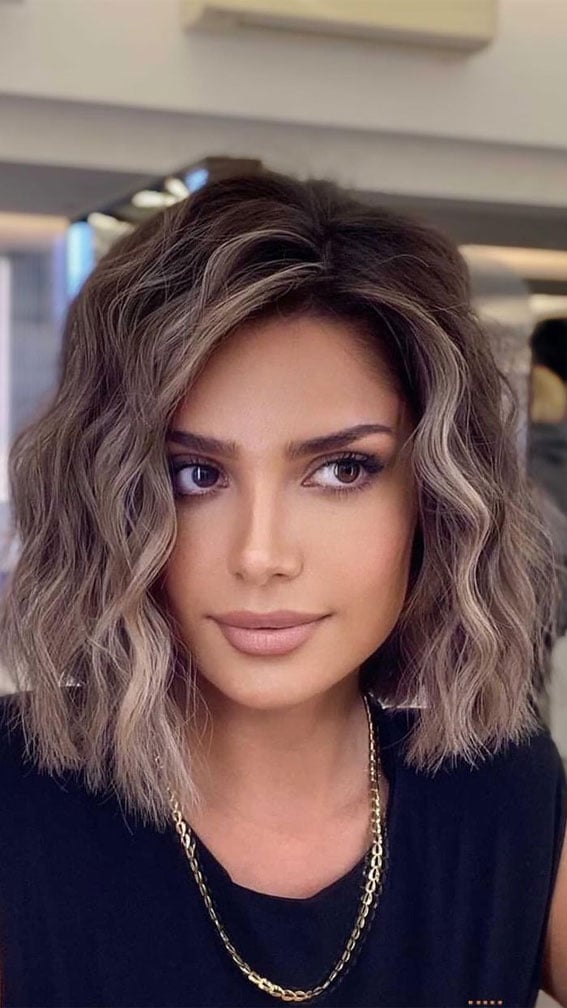
Fine, wavy hair often lands somewhere between styled and slept-on. This lob splits the difference cleanly. The dark brown base keeps depth, while ash blonde highlights add contrast without screaming for attention. No bangs here means the middle part does the work, and the lob length lands just past the collarbone.
Beachy waves on fine texture need a light hand. A salt spray at the ends gives hold without weight. The catch: ash blonde requires toning every four to six weeks to keep the cool tone from drifting warm. Not for anyone who prefers a solid color or has very thick hair that might read heavy in this shape. Ask your stylist for a lob with dark brown base and ash blonde highlights, finished with beachy waves.
Rope braid adds romantic detail
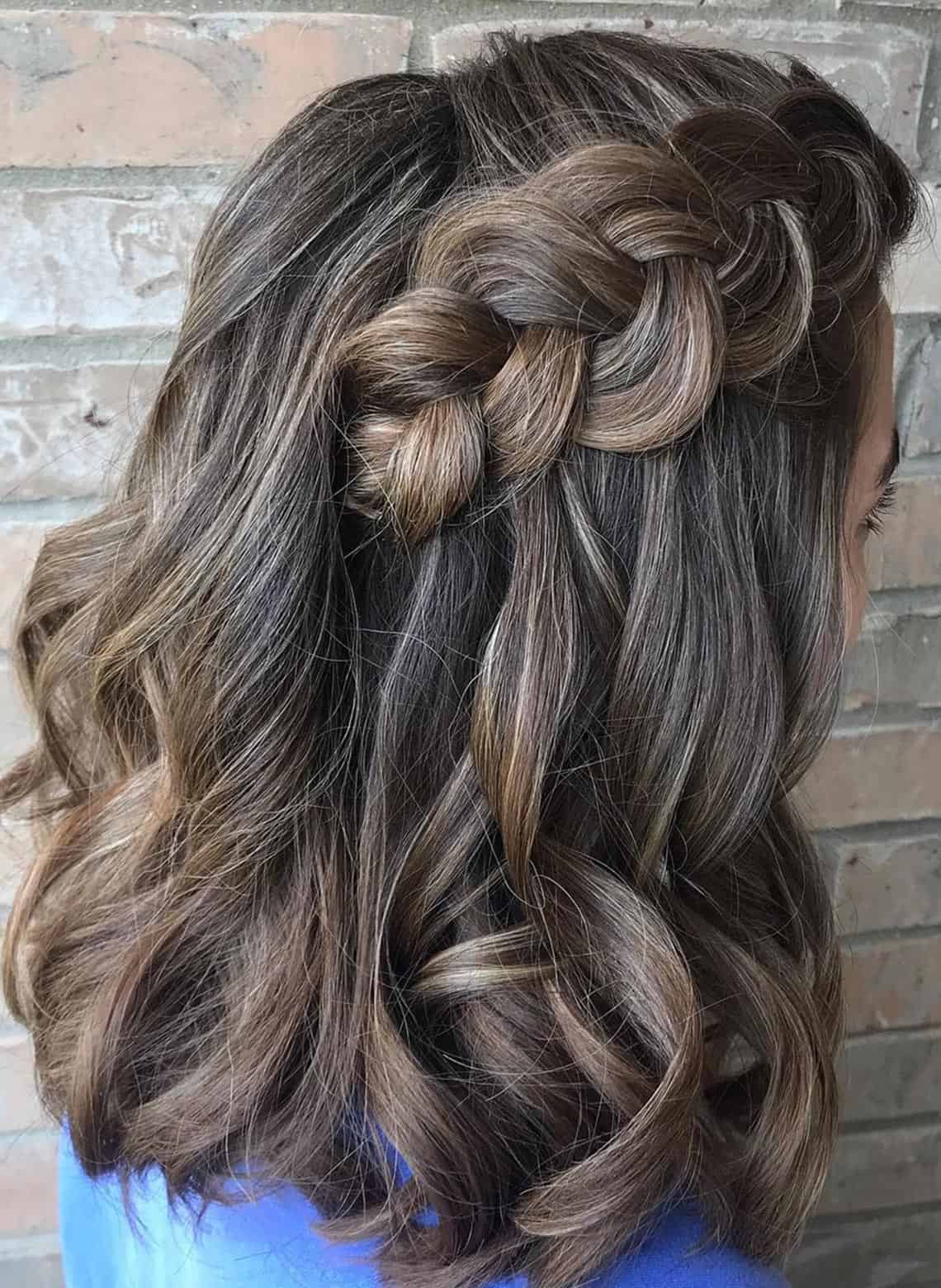
Loose waves and a rope braid sound like two separate looks. They work together when the braid sits across the crown and the rest falls freely. The layers here give the waves room to move without tangling into each other. Medium density hair holds this braid best; very fine strands may need a grip spray to keep the twist from slipping.
Practice the rope braid on dry hair before the event. Two sections twisted in opposite directions lock tighter than a simple three-strand. The dark brown base with blonde highlights shows up better in the braid’s twists, so the color placement matters.
Honey blonde lob with subtle highlights and a knotted ponytail
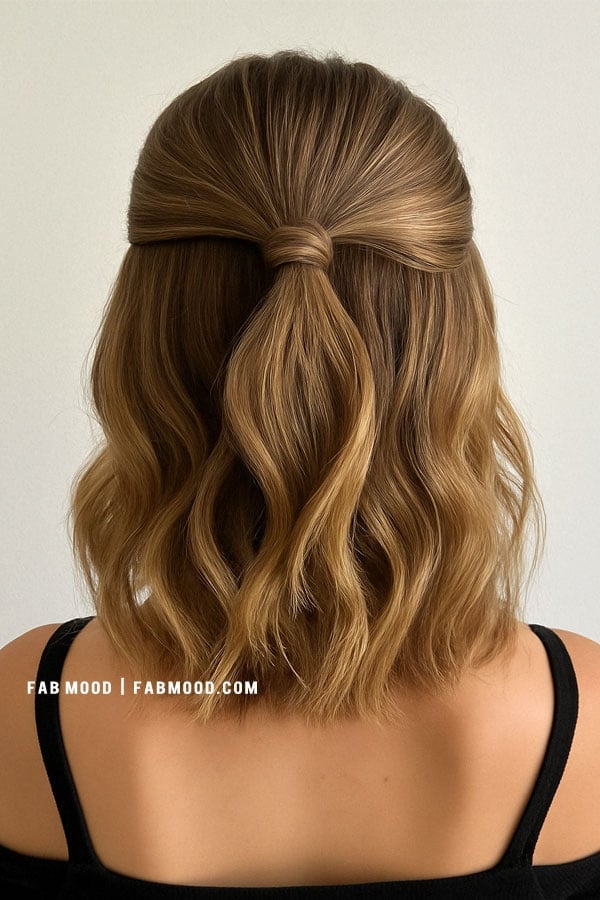
Half-up styles can look casual. This one has structure. The lob with subtle layers gives the knotted ponytail enough weight to stay put without pins. Honey blonde with highlights means the knot shows light differently from the loose ends below. The middle part keeps it symmetrical, which matters when the back view is the main event.
Plan three hours in the chair for the initial cut and color. A good occasion for this is a wedding or dinner where you want hair off the neck but not fully up. It works best for those who like hair partially up and have layers long enough to reach the knot.
Face-framing layers add polish to lob
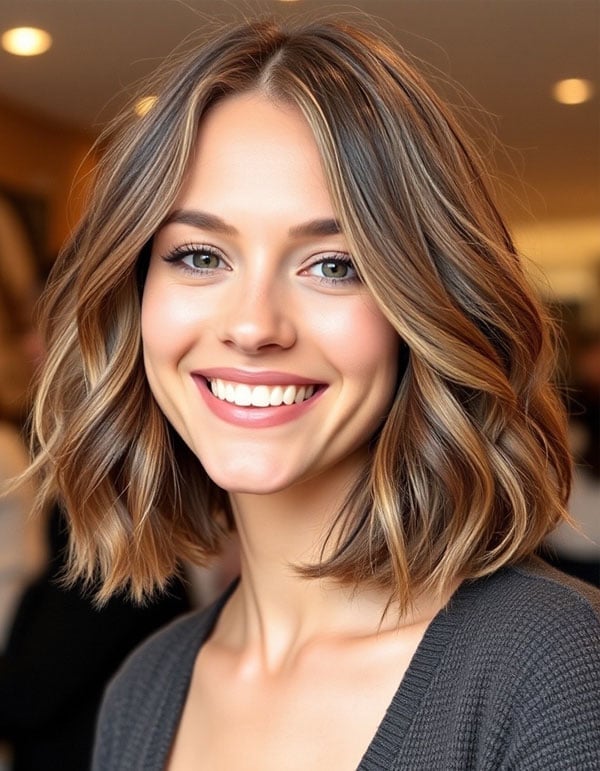
Face-framing layers do exactly what the name promises: they soften the edges around the jaw. On this lob, the layers start around the chin and blend into the rest of the length. The brunette base with blonde highlights means the lighter pieces sit where they catch the most light, which is the point. No bangs, just the layers doing the shaping.
Natural waves on fine texture need a refresh each morning. A quick mist of water and a scrunch bring the waves back without a full wash. The layers grow out gracefully for about eight weeks before the shape blurs. Pass when you prefer a blunt edge or have very thick hair that would need more internal weight removal.
Soft uniform waves on a layered medium brown cut, close-up take
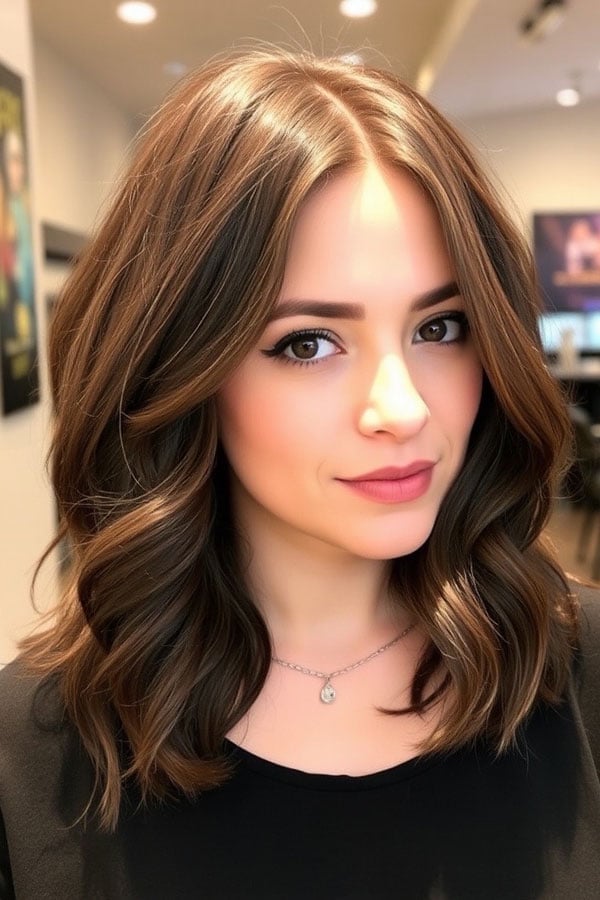
Uniform waves require a specific cut and a blowout. The layers here are cut to create even S-shapes from root to end, so no section waves differently from its neighbor. The medium brown base with subtle caramel highlights gives the waves a visual rhythm: each curve catches light the same way. No bangs means the middle part stays clean, and the length lands just past the collarbone.
This is a salon-leaning look. Achieving these waves at home takes a round brush and heat protectant, plus about fifteen minutes of sectioning. The payoff is a neat finish that holds through a workday. Skip it if your natural wave pattern is tight or irregular, since forcing uniformity on coiled texture requires significant heat.
Voluminous blowout finishes uniform waves
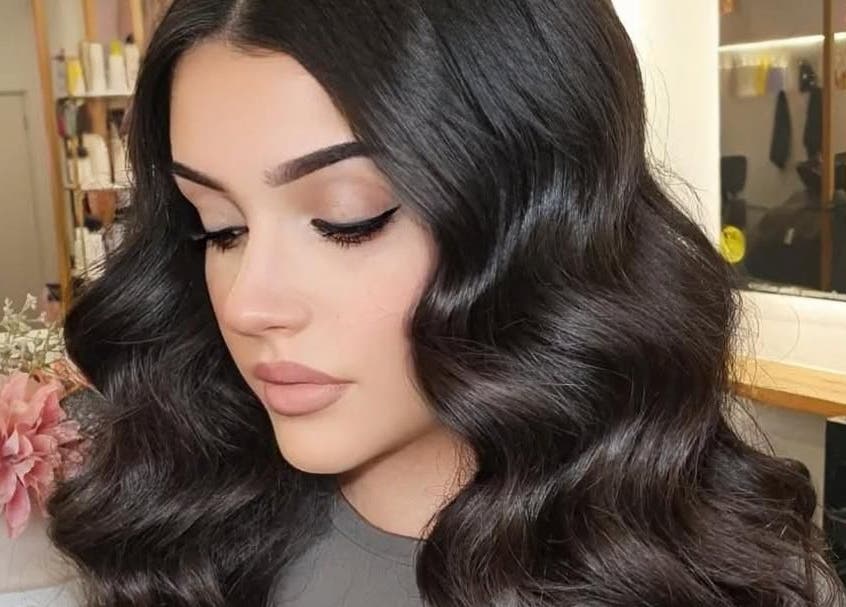
Thick wavy hair needs a certain amount of length to let a blowout land properly. Shoulder or longer gives the round brush something to work with. The deep, uniform waves here come from a middle part and long layers cut to stack volume, not remove it. Request: long face-framing layers and a voluminous blowout. The catch: this is a salon-leaning finish. Recreating those uniform waves at home takes a round brush and a solid twenty minutes. Skip it if your hair is fine or resists holding curl past lunch.
Dark brown at this density reads rich without extra gloss. The side profile shows how the layers roll back, then forward. No bangs, no curtain pieces. The weight sits at the ends. Without them, the wave pattern blurs into a single triangle.
Choppy ends give relaxed vibe
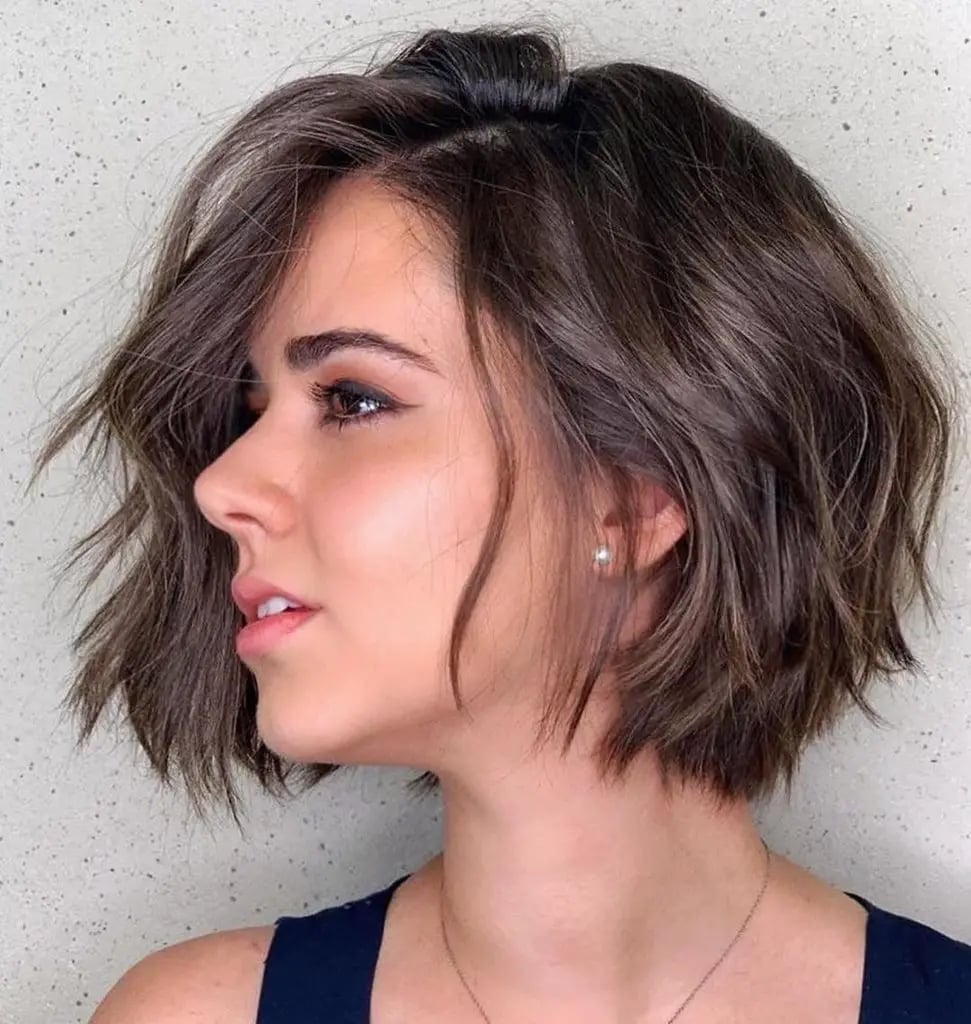
A shag cut lives or dies on the ends. Choppy, uneven, cut with intention. That is the whole point. Dark brown with subtle lighter strands keeps the texture readable, and the middle part lets the fine wavy hair fall forward naturally. Request: a shag with choppy ends and air-dried texture. Precision layering is required; a blunt scissor hack will not produce the same piecey result. Touch up the face-framing pieces with a flat iron if a wave lands wrong. Otherwise, it air-dries and you are done.
Blunt bangs emphasize natural waves

Blunt bangs on wavy fine hair sound contradictory, but the contrast is the point. A straight-across edge against soft, air-dried texture creates a deliberate look. Ash blonde with subtle highlights gives the shag enough dimension to keep the front view from looking flat. The middle part is essential here. It lets the blunt bangs sit centered and heavy. Ask your stylist for: a shag cut with textured blunt bangs and ash blonde with highlights. Let them grow past the brow and the effect softens into curtain territory.
Fine hair benefits from the weight of a blunt edge. The natural wave does not fight the bang line; it sits below it, creating a clear separation. Softer, feathered bangs or very thick hair might make the blunt bangs look too heavy.
Final Thoughts
Pick the cut that matches your wave pattern and your tolerance for a trim schedule.
- Fine hair: look for shorter layers and a shag shape for volume.
- Thick hair: long layers and curtain bangs keep weight off the ends.
- Ten minutes in the morning: air-dried styles with a texture spray.
- Blowout every wash: choose a blunt lob or uniform layers.
Find the aesthetic wavy cut that suits your lifestyle and texture.
