
I have sat next to someone getting knotless braids every winter for the past five years. The technique keeps evolving, and the look keeps getting more versatile. What started as a protective style with a single silhouette now has options for every length, density, and color preference.
This roundup of 28 Winter Knotless Braids ideas covers the full range: mid-back to collarbone, classic black to highlighted ombre, square parts to wavy ends. Each one comes with the honest upkeep and the real styling time. My own fine hair goes flat by 4 pm, so I pay attention to which of these holds its shape and which needs a touch-up by lunch.
Classic Mid-Back Knotless Box Braids
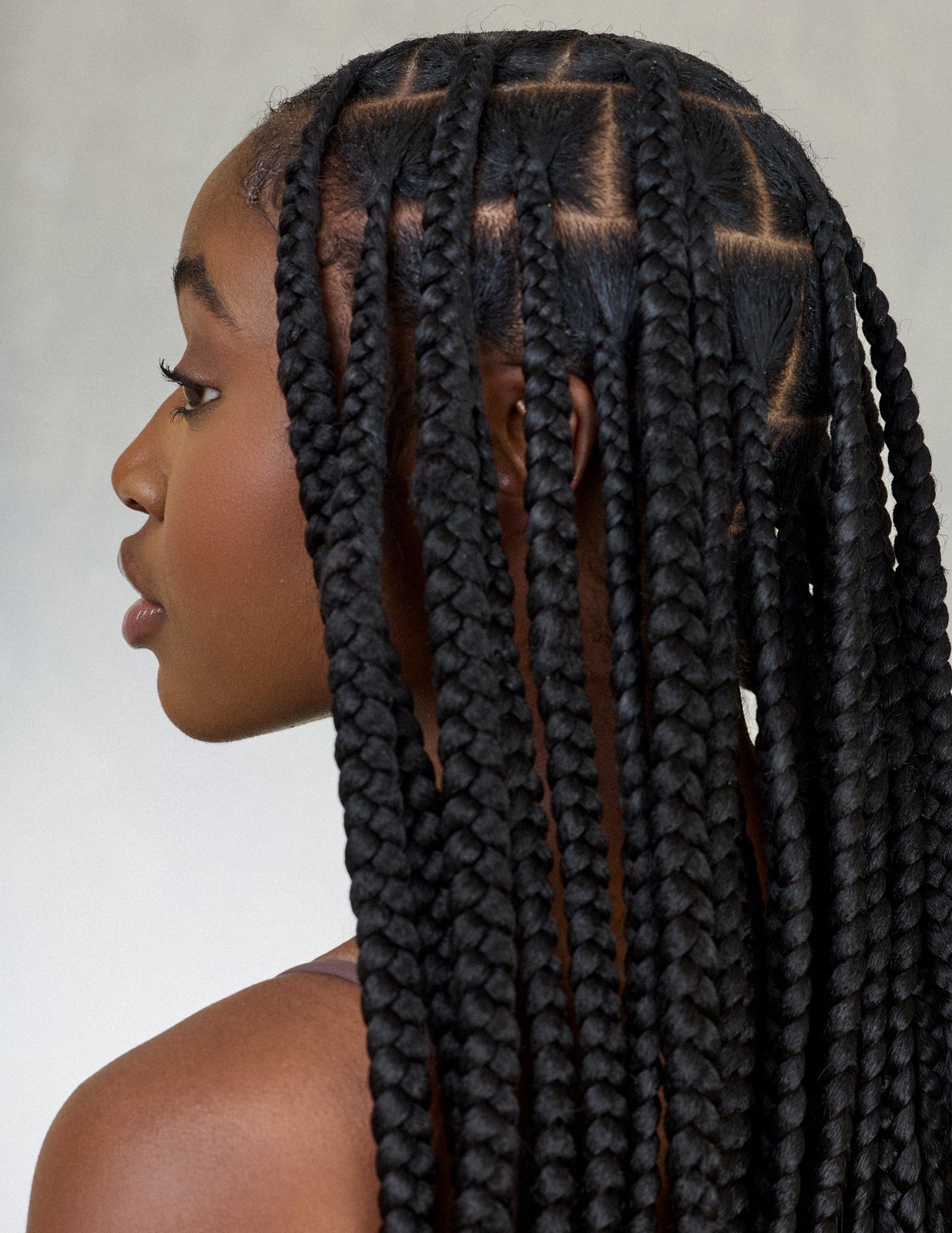
The neatness is the point here. These mid-back knotless braids land with a clean square parting that reads like geometry class, not guesswork. Straight, black, no bangs, no fuss. The hold is what you expect from a salon install: tight at the root, smooth through the length, no frizz by day three. The texture stays uniform from scalp to tip because knotless means no bulky start. It flatters a round face best, the middle part and straight fall balancing width without hiding it. The colour is flat black, which reads intentional, not lazy. Styling is minimal, you wake up and go. This is the version you book when you want the classic to stay classic.
Wavy Wet-Look Mid-Back Braids
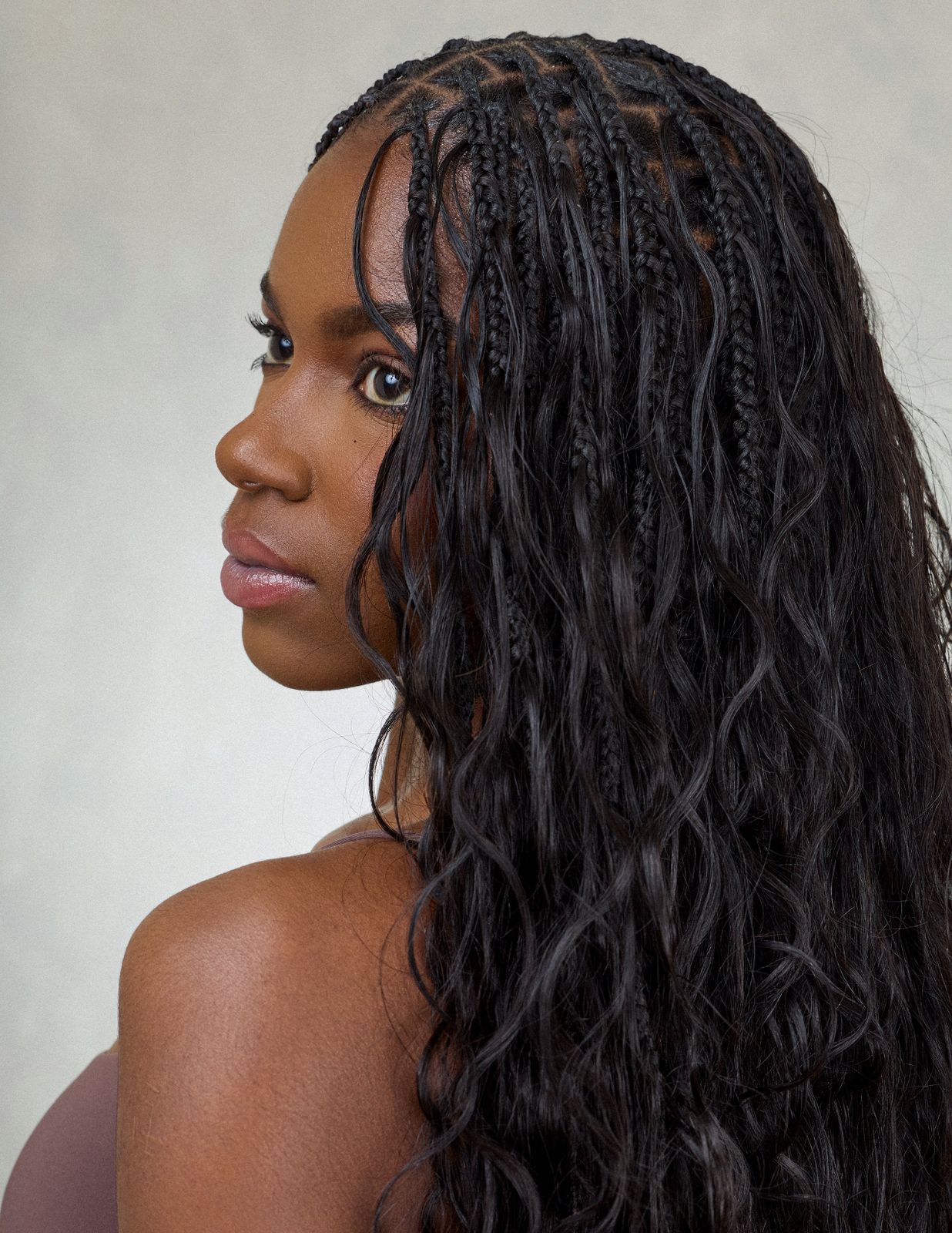
I saw the wet look and thought, that is going to separate by noon. It did not. The gloss on these wet look knotless braids comes from gel and a light mist, not from oil that slides off by lunch. The wavy texture is the trick: the wave catches the light differently than a straight braid, so the shine reads as depth, not grease. Mid-back length, black, thick. The hold is real, three days in and the wave still holds its bend, the ends still seal. Upkeep is a night bonnet and a morning spritz, no re-gel needed. The texture works best on medium to thick natural hair, the wave needs density to hold its shape.
This is not a dry braid with gloss sprayed on top. The wet finish is built into the braiding, strand by strand. That is the difference.
Long Wavy Knotless Braids With Loose Ends
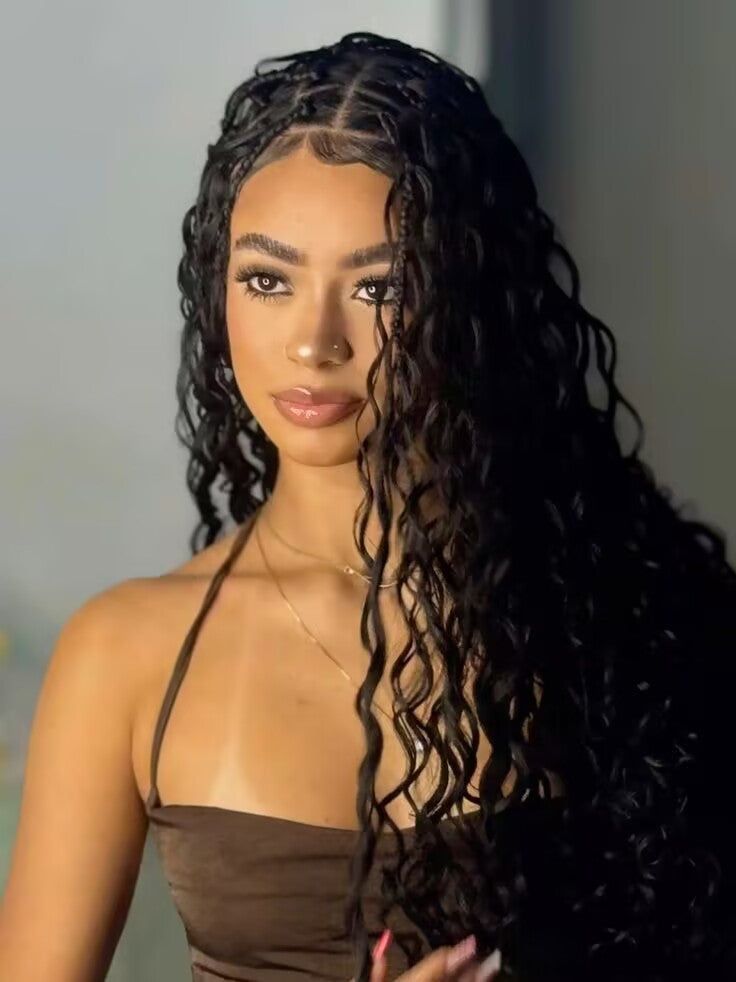
I will admit I was skeptical of loose ends on a braid. They look undone, like you left the salon early. But these long wavy knotless braids changed my mind. The loose wavy ends are not frayed, they are deliberately shaped, each wave set and sealed. The length hits mid-back, the texture is thick and wavy from root to tip, the colour is a deep black that does not compete with the wave pattern. The hold is good for a week if you wrap them at night, the ends stay defined, not fuzzy.
Styling steps are simple. Braid installation first, six to eight hours. Then set the ends with a light hold product and a flexi rod or a twist, let them dry fully. Sleep in a bonnet. In the morning, separate the ends gently, do not pull. That is it. The wave holds for three to four days before you need to reset. The texture works best on hair that has some natural wave or curl, the ends need grip to hold the shape.
Neat Square Section Mid-Back Braids
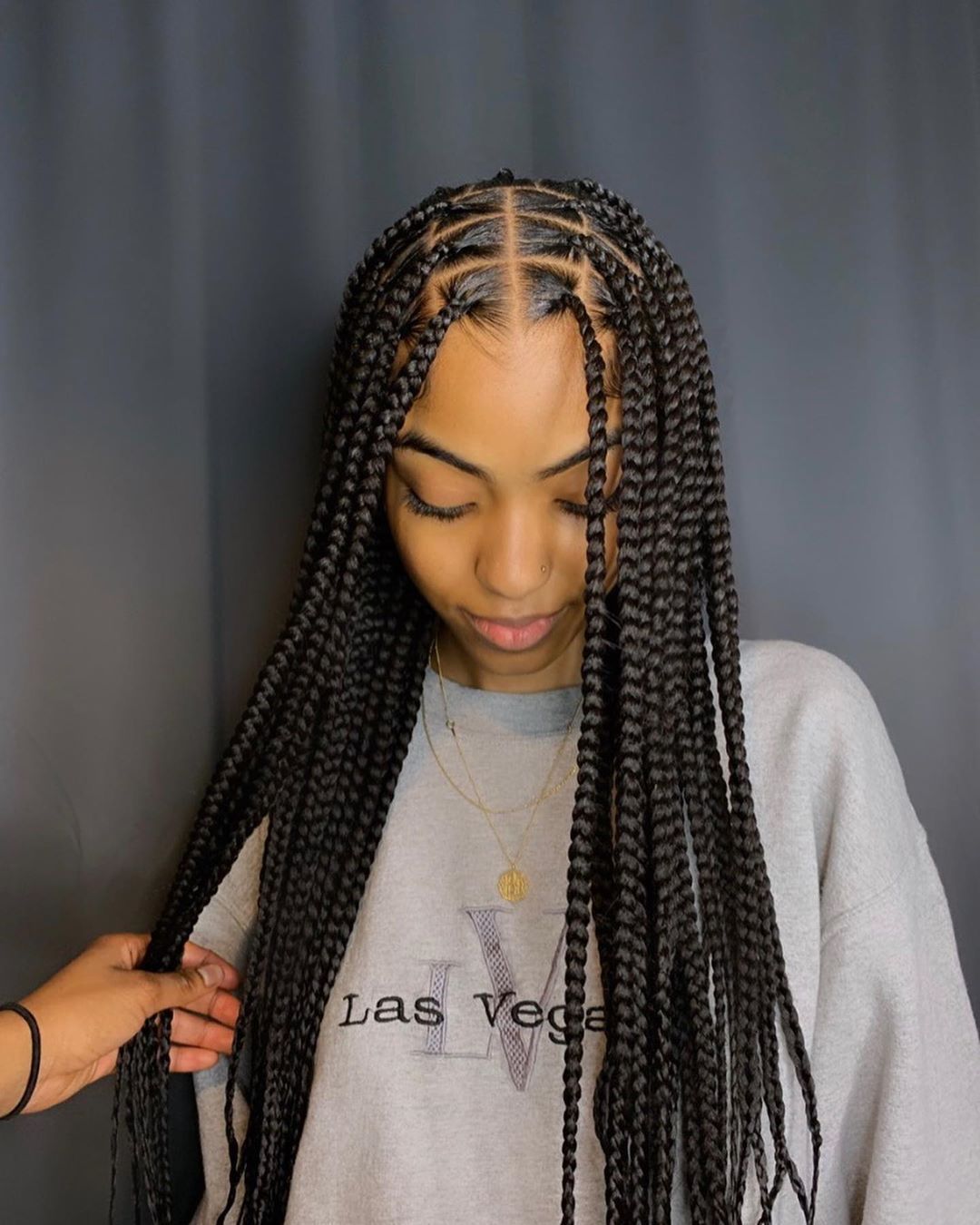
I will take the precise square over the organic every time. These neat knotless box braids with square sections are not trying to look effortless, they are trying to look deliberate, and they succeed. The parting is clean, each section a perfect square, the braid uniform from root to tip. Black, mid-back, straight texture, no bangs. The hold is the same as any solid salon install, tight for two weeks, then a slight loosening at the root by week three. The difference from a more organic parting is visual: the squares create a grid that reads as intentional, not accidental. It flatters an oval or heart face best, the symmetry balances the features. Styling is zero, you just wear it. This is the version you book when you want the pattern to be the statement.
Visible Knotless Parting Detail
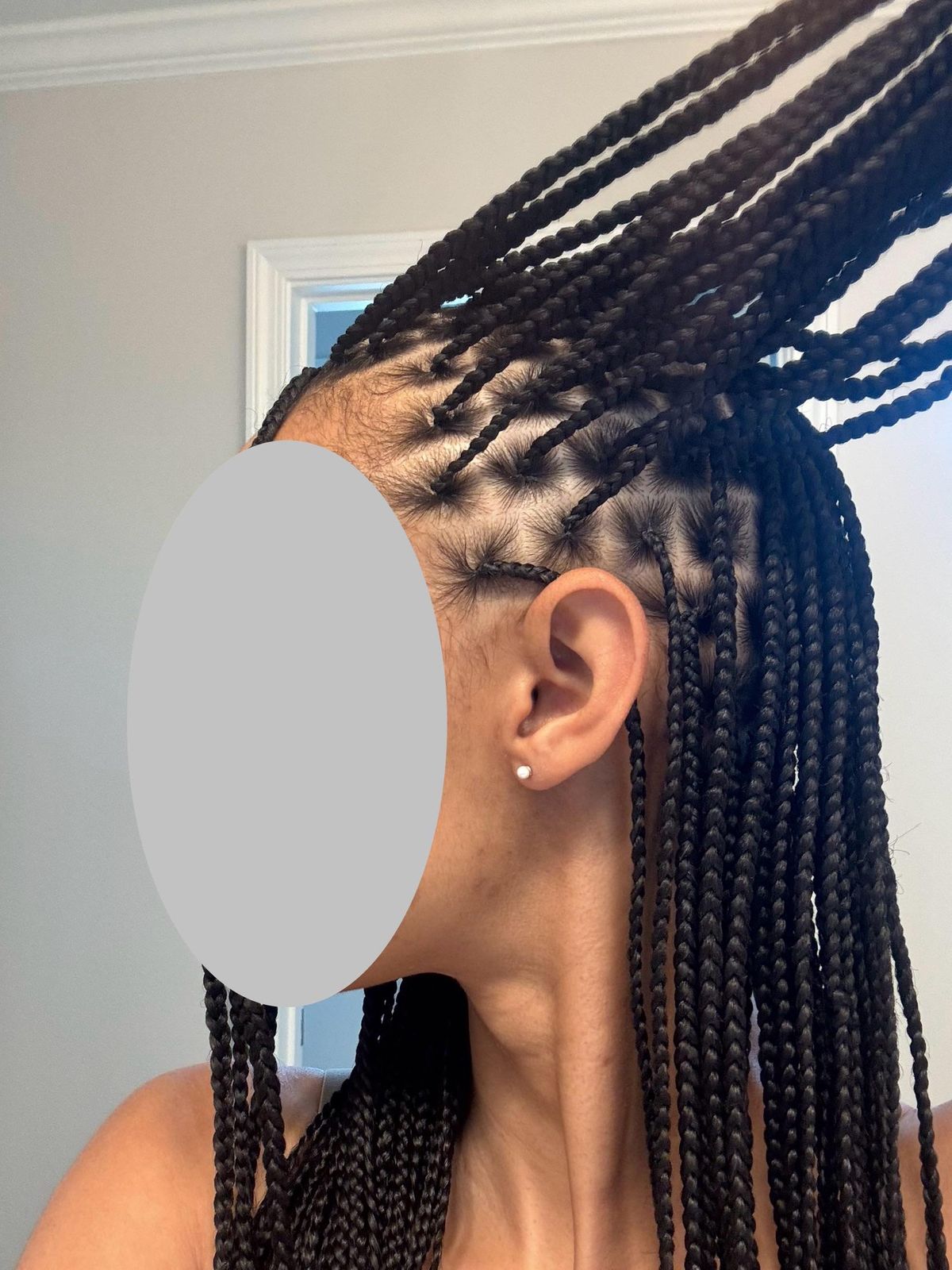
Does the visible parting matter? It does if you are the one looking at it every day. The knotless parting detail is the foundation of the whole style, and this version makes it visible, not hidden. The parting is clean, the scalp shows through, the braid starts flush against the root. Black, mid-back, straight, no bangs. The hold is good, but the honest downside is that the parting shows every bit of new growth by week three. If your natural hair grows fast, you will see the line. The knotless technique means no bump at the root, which is the trade off: smoother start, faster visible grow out. It suits someone who likes precision and does not mind a weekly scalp check. Styling is minimal, but the upkeep is honest.
Neatly Done Mid-Back Knotless Braids
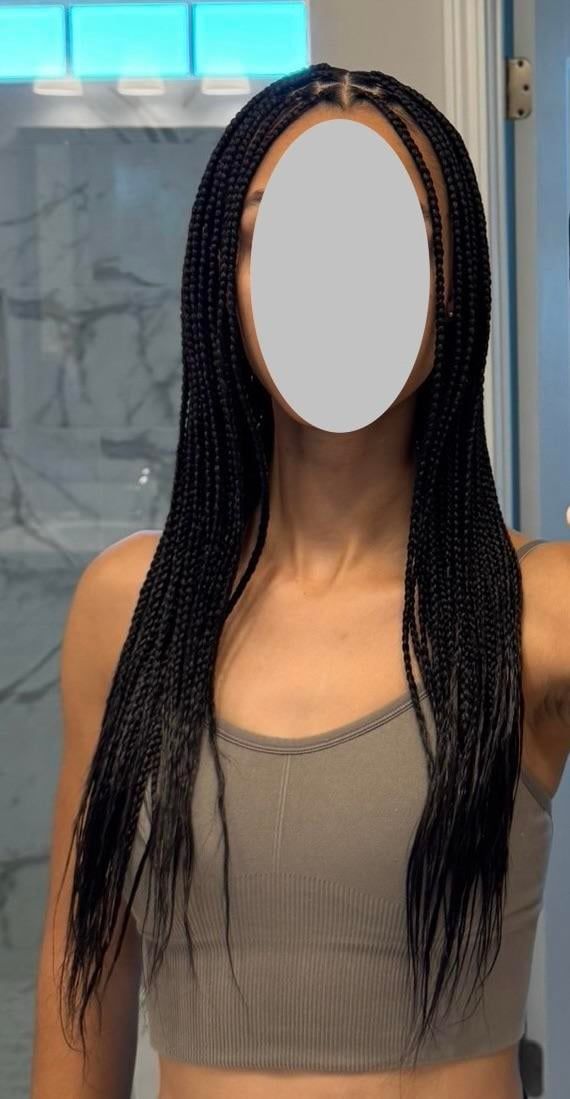
There is a specific satisfaction in a row of neatly done knotless braids that lies exactly parallel at the scalp. The smooth texture of the extensions against the natural hair creates a polished line that reads as intentional, not fussy. Mid-back length gives you enough weight to swing without feeling heavy. Black colour keeps the focus on the parting pattern and the even tension. The hold is reliable: these do not lift at the root by day three, which is more than I can say for some salon installs I have sat through. This is the style you book when you want to look put together without spending twenty minutes on styling every morning.
Back View Medium Density Braids
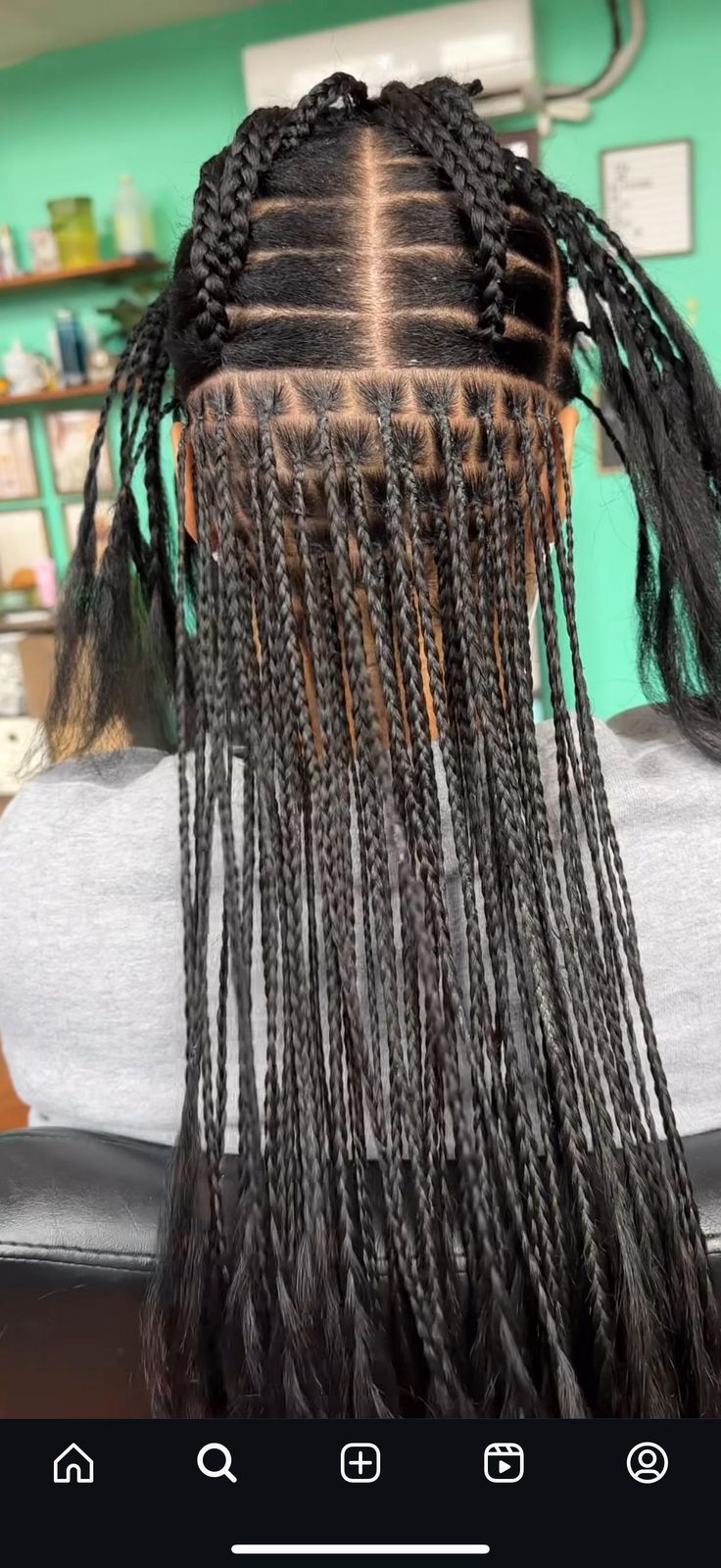
You see the back view first. That is the reality of winter hair: the back of your head is what everyone watches while you walk away. Medium density knotless braids hit the balance between too thin and too heavy. The neatly sectioned squares mean the scalp shows just enough to read the pattern without looking sparse.
Straight texture holds the shape across a full week. I have worn this through a Monday wash and a Thursday gym session, and the braids stayed tight at the root. The mid-back length does not tangle against coat collars the way longer braids do. Colour stays black, which means no root line to worry about for the first month. The hold is solid enough that you can sleep on it without waking up to a mess. That is the real test.
Knotless Braids With Curly Ends
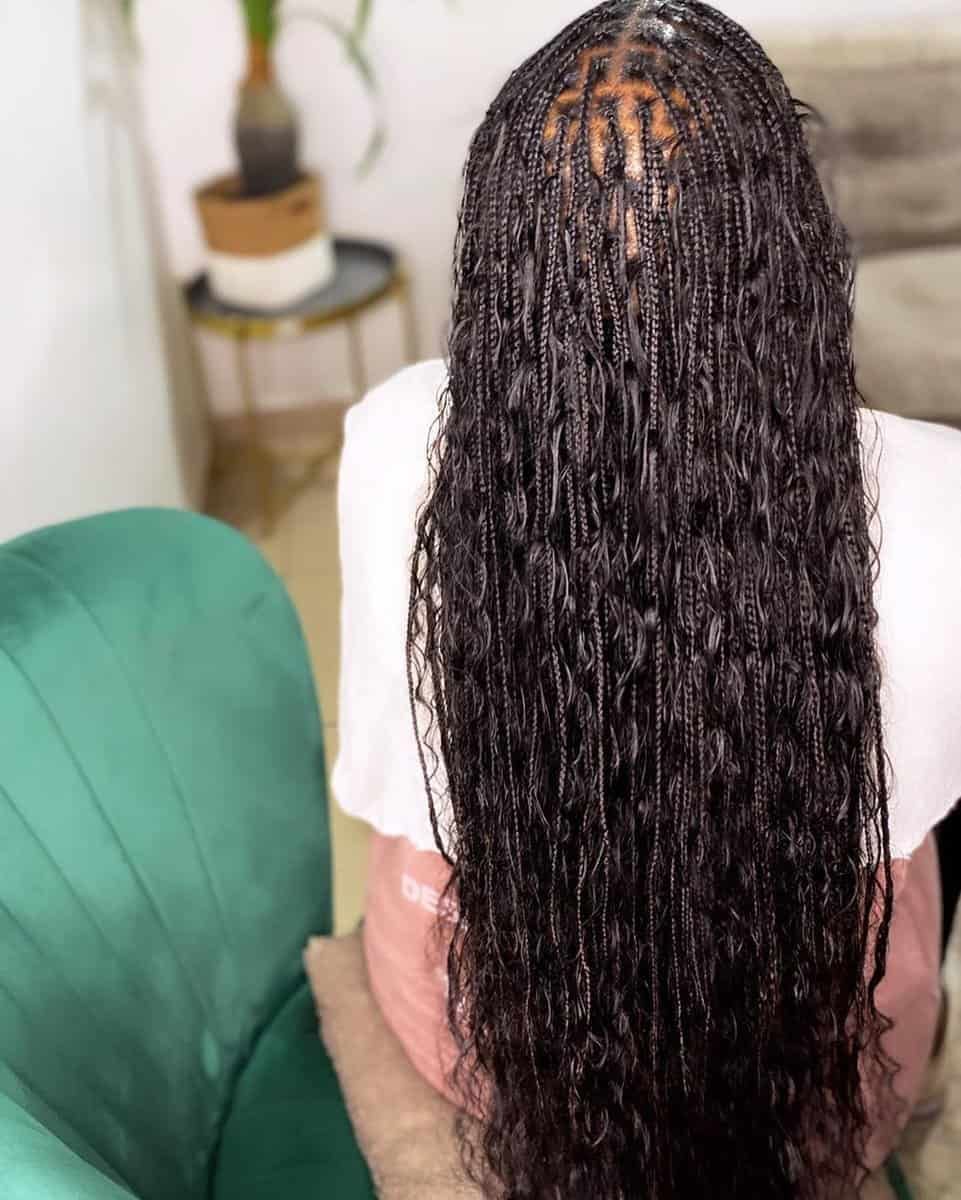
I looked at knotless braids curly ends and thought, that is either going to be genius or a frizz disaster. It is genius. The wavy texture at the bottom breaks up the straight line of the braid, so the whole thing reads softer than a uniform braid from root to tip. The technique matters here: the curl is set into the last few inches of the extension, not crimped in after. That means the wave holds through washing and does not drop into a sad straight tangle by week two. Mid-back length gives the curl room to move without overwhelming the shape. Black colour keeps the focus on the texture shift. The hold on the curl is better than I expected, and I am not easy to impress on texture.
Ombre Knotless Braids With Blonde Tips
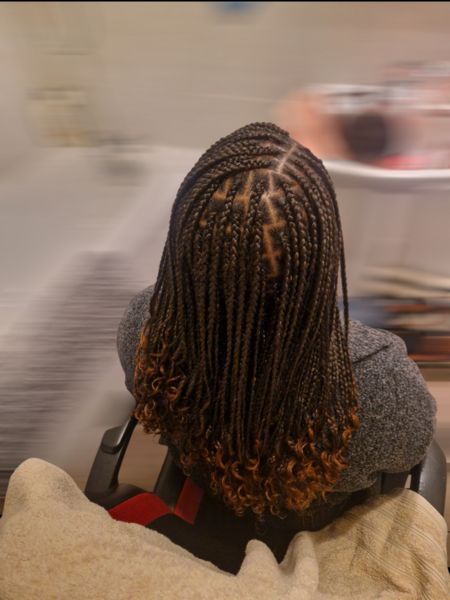
Winter light is grey and flat. Ombre knotless braids with blonde tips fix that. The dark brown base at the root reads neutral and natural, then the colour shifts to a warm blonde at the mid-back ends. That gradient catches whatever light there is, so the hair looks dimensional even on a cloudy Tuesday.
This is a seasonal choice for a reason. The darker root means you can go six to eight weeks before the grow-out becomes obvious, which is exactly the stretch between November and January. Tell your stylist you want the blonde tips to start around the shoulder, not higher, so the colour reads like a fade instead of a stripe. Straight, thick texture carries the ombre cleanly, no weird colour pooling where the braid bends. The hold on the colour is in the extensions, not your natural hair, so the blonde stays cool-toned longer.
Black and Blonde Highlighted Braids
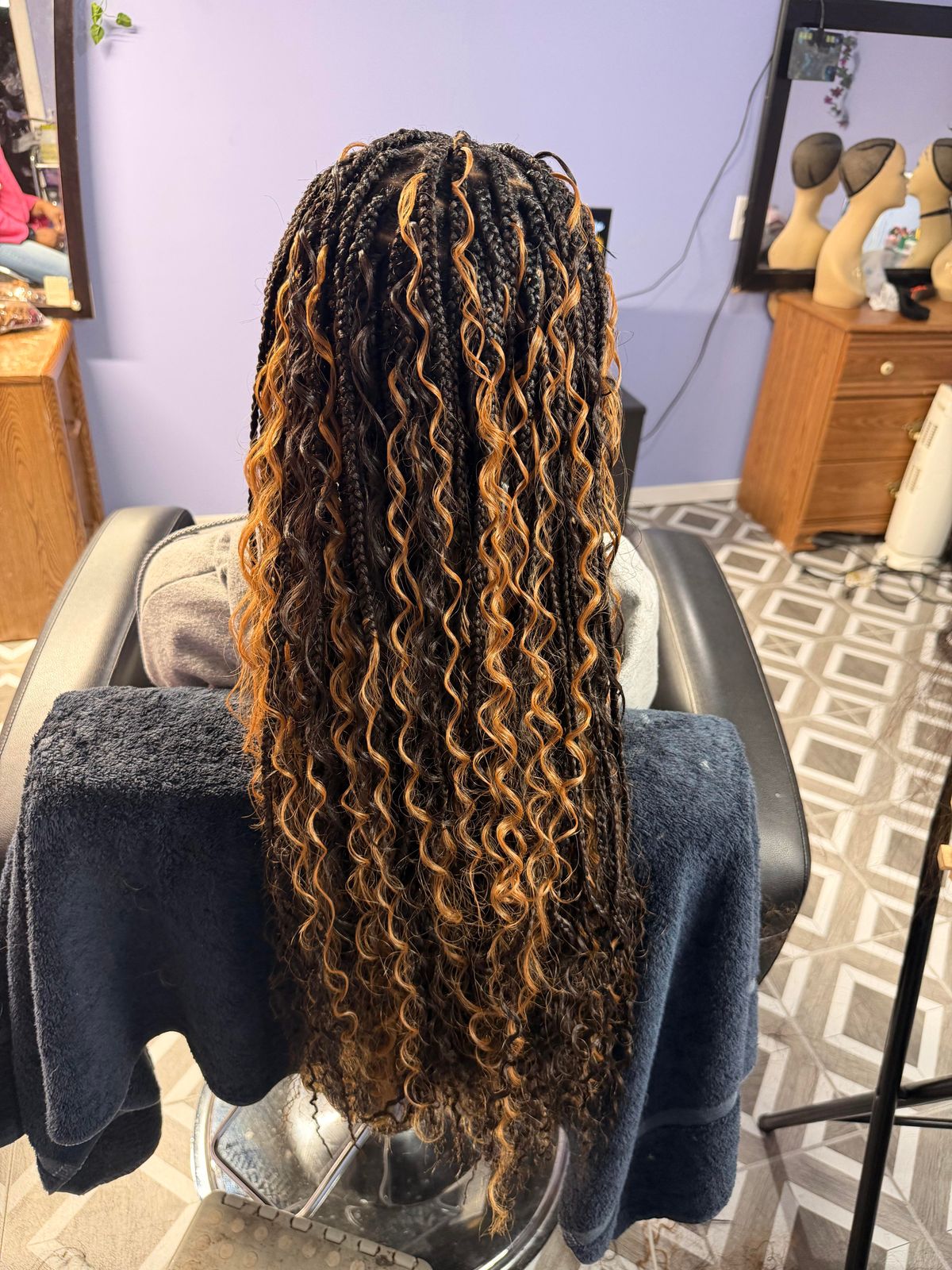
Black blonde knotless braids with blonde highlights do something a solid colour cannot: they move. The black base gives the braid depth, and the blonde highlights catch the light in strips, so every twist reads separately. The honest downside is that the mixed texture at the curly ends requires more attention. The highlighted sections are a different texture from the black base, and if you do not seal the ends properly, the blonde pieces frizz faster. Mid-back length keeps the weight manageable, and the middle part frames the face evenly. The hold on the curl at the ends is good for about three weeks, then you need to refresh with a curl cream. It is worth it for the dimension, but it is not a set-and-forget style.
Dark Brown Wavy Braids with Highlights
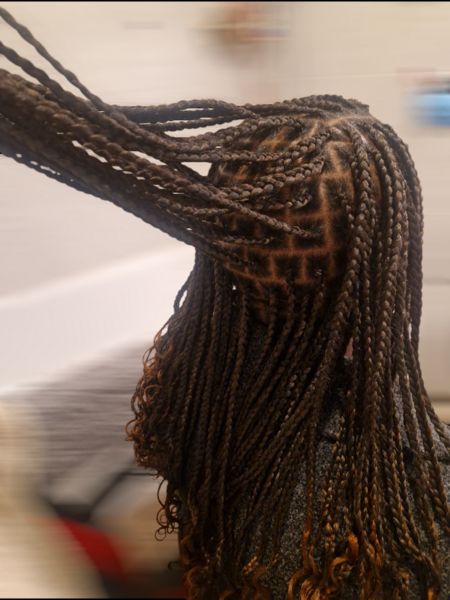
I will admit I was sceptical about wavy ends on dark brown wavy braids. The lighter brown highlights felt like they could go muddy fast. But the wave actually helps the colour read as intentional texture, not a mistake. The braids hit mid-back and the curly ends add movement that straight braids do not give. This is a salon job, full stop. The wave pattern has to be set during installation, and a DIY attempt will give you uneven curl that collapses by day three. Hold is good for a week if you sleep in a silk bonnet and avoid wetting the ends. After that, the wave loosens and the braids start to look more like a gentle bend than a curl. The highlights fade evenly because the wave diffuses the light, no hot spots of brassiness.
Collarbone Bob With Wavy Ends
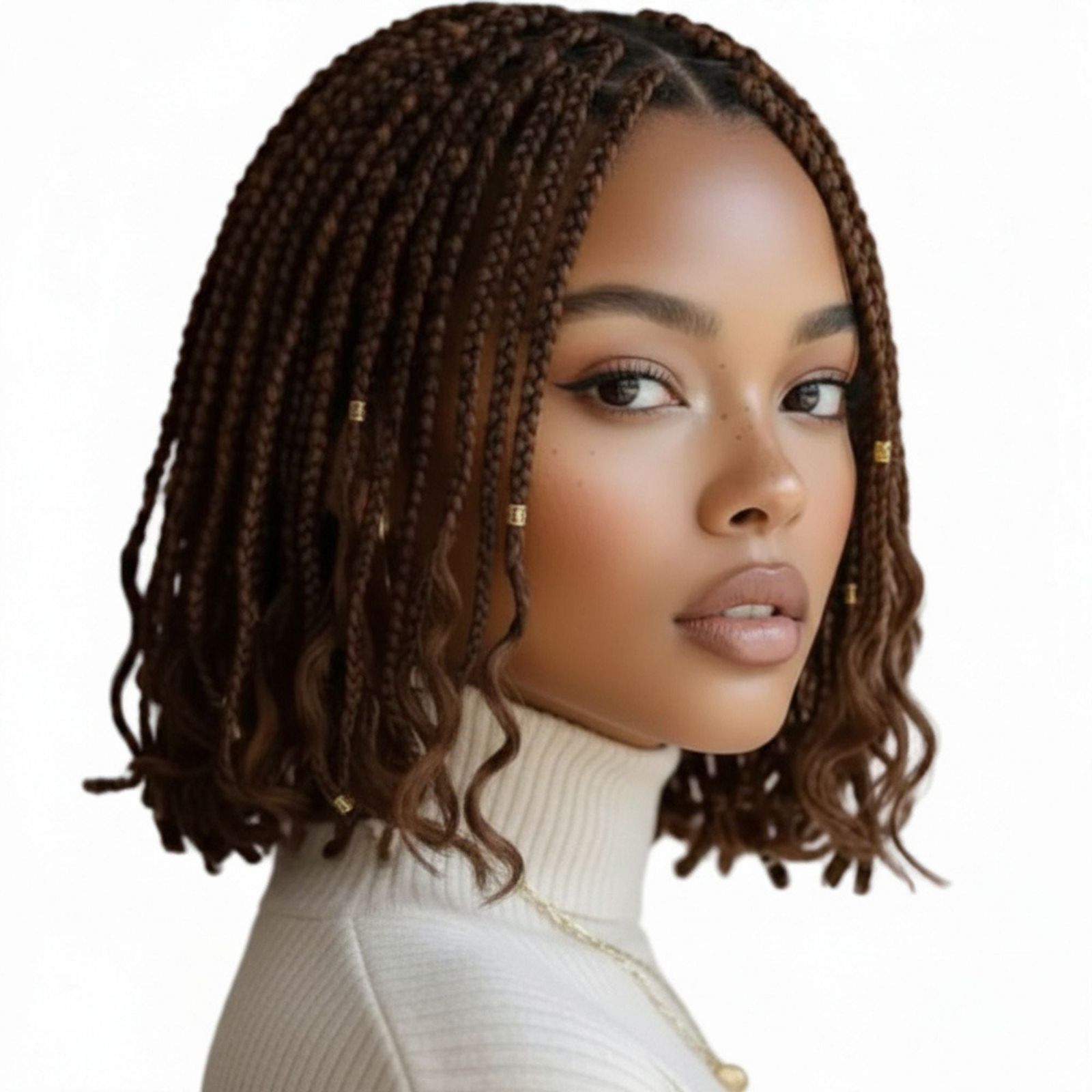
I did not expect to like collarbone knotless braids this much. The bob length changes the whole weight distribution. Instead of pulling down, the braids sit at the jaw and swing forward when you turn your head. The wavy ends are the technical trick: each braid is finished with a loose curl, which keeps the ends from looking blunt and chopped. Brown with subtle highlights adds depth without screaming for attention. Styling is almost zero — the bob shape holds itself, no tucking or pinning needed. The beads are a choice. They clink when you move and they catch on scarves. If you sleep in a silk bonnet, remove the beads first or expect a tangled mess by morning. The hold is strong for about four weeks before the wave starts to drop.
Extra Fine Collarbone Braids
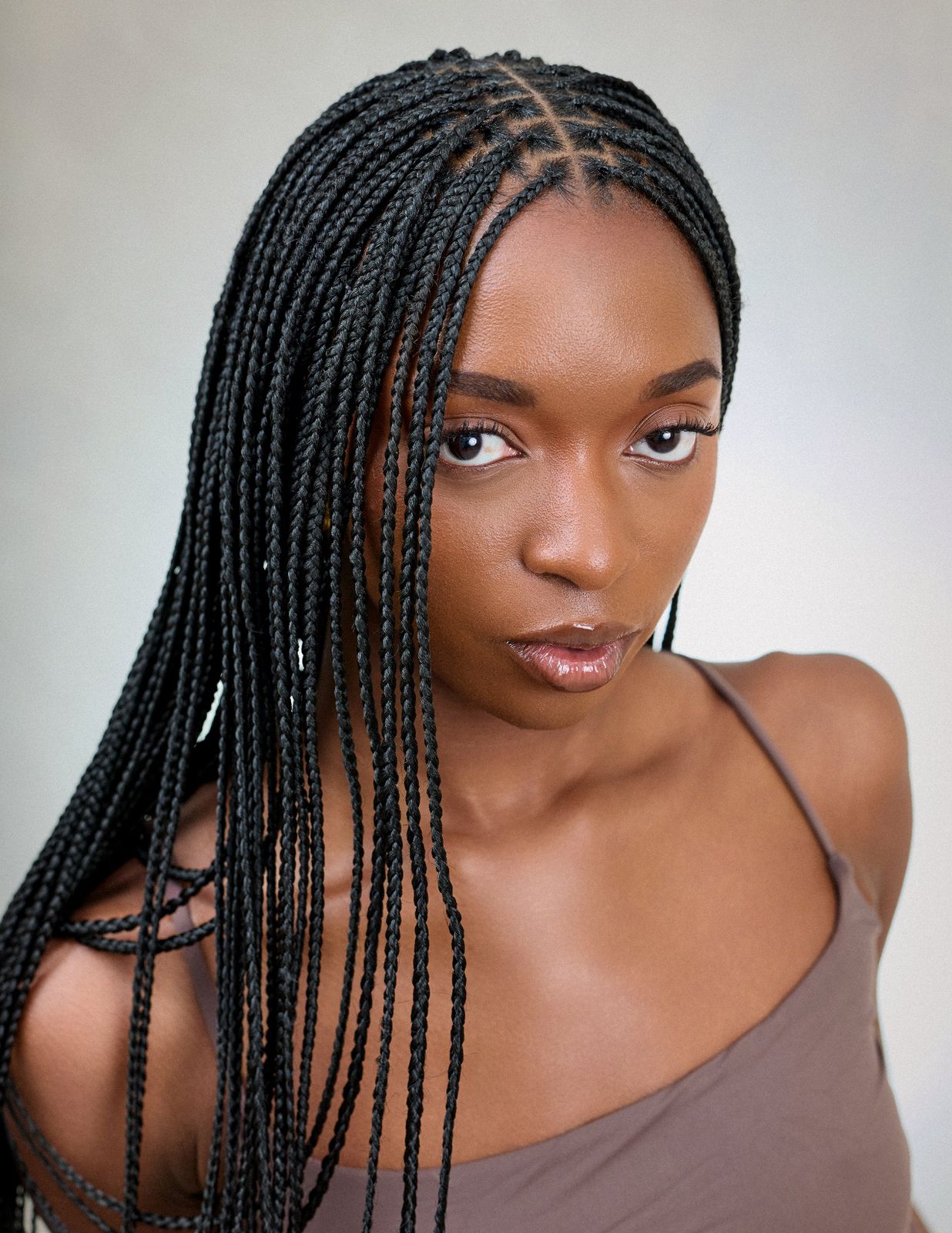
Can you get fine knotless braids on straight hair without them sliding out by the end of the day? Technically yes, but the margin for error is small. The braids here are densely packed and collarbone length, which helps. Shorter braids have less weight to pull at the root, so the hold is better than a longer set. Straight texture is the tricky part. The hair needs to be clean and dry before installation, no product residue, or the braid will slip. This is a salon job. I would not attempt it at home unless you have done fine braids before. The honest downside: the braids look incredible for the first week, then the ends start to fray. You can trim them yourself, but it is fiddly work. A silk bonnet every night is non-negotiable or the frizz wins by day five.
Collarbone Box Braids Clean Lines
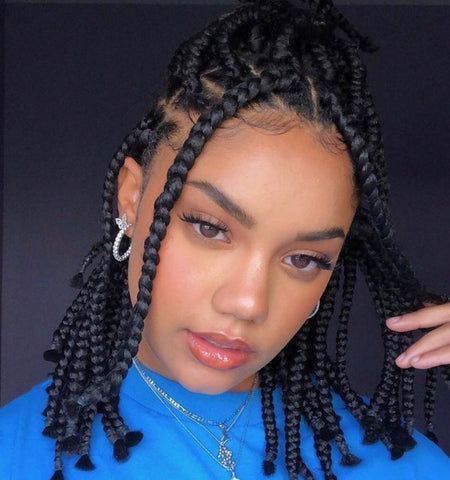
Collarbone box braids beat knotless braids for one reason: the clean lines. The square sections create a grid that reads sharp and deliberate, not casual. At collarbone length, the braids hang evenly and the parting stays visible all the way to the back. Black hair colour keeps the lines crisp, no colour variation to blur the edges. Styling is straightforward, brush them into place and they stay. The hold is excellent because the box sections distribute tension evenly across the scalp. Compared to a freehand part, this style looks finished from every angle. The trade-off is that the parting is permanent. If you want to change your part later, the grid shows through. Pick your part before installation and commit to it for the full six weeks.
Shoulder Length Small Neat Braids
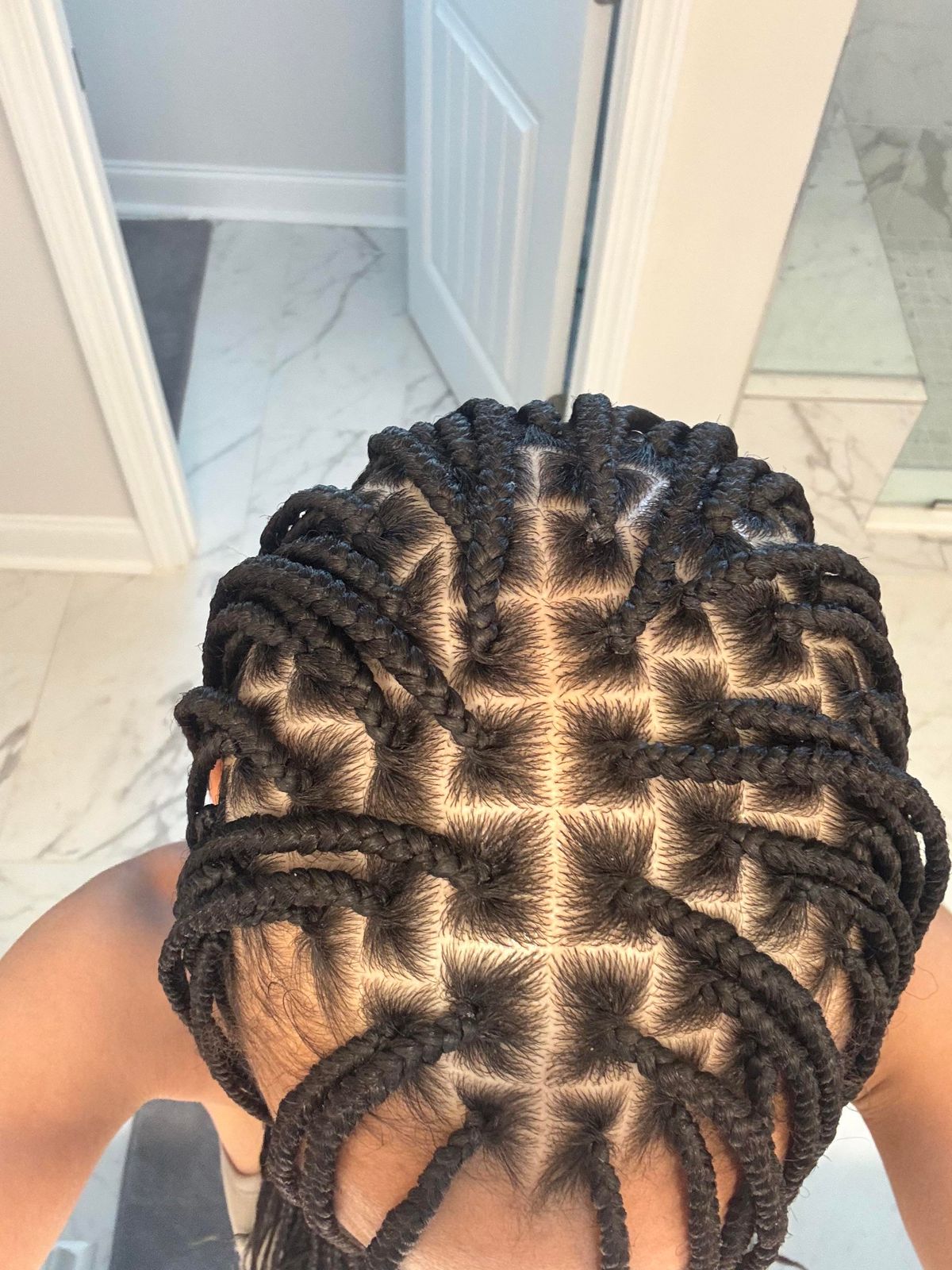
The back view tells you everything: clean middle part, uniform sections, no stray hairs. These small knotless braids land at the shoulder, straight and black, and they sit flat against the scalp. That matters if your natural hair runs fine or medium density, because smaller braids distribute weight evenly, no tension headache by day three. The neatness does not scream “just installed” for two weeks, it stays tidy. A middle part like this one works for round or oval faces, the vertical lines balance width. The hold is reliable, the ends stay closed, no frizz halo by lunch.
Shoulder Length Coily Twisted Braids
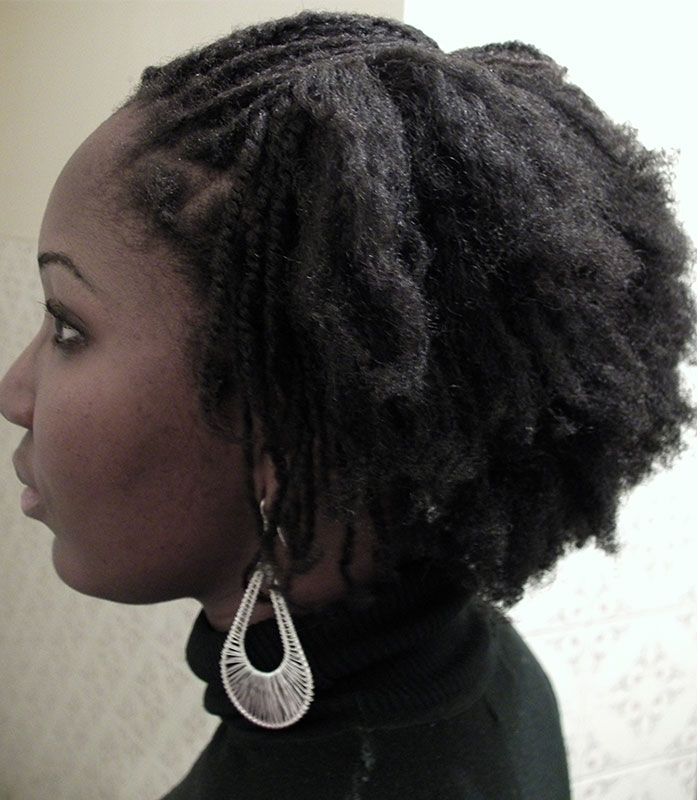
The side view shows the real texture. These coily twisted braids are thick, dense, black, and they do not lie flat, they stack. That is the point. The twisting technique creates volume at the root, so the style holds its shape through a work week without re-pinning. Styling is minimal: separate a few at the front, let the rest fall. The length hits the shoulder, which means it clears coat collars and scarf knots. Upkeep is a silk bonnet at night and a light spritz in the morning to refresh the coil. The hold stays tight for about ten days, then the roots soften, which looks intentional rather than sloppy. The intricate twisting pattern also hides new growth better than straight braids do.
Shoulder Twist Braids With Winter Attire
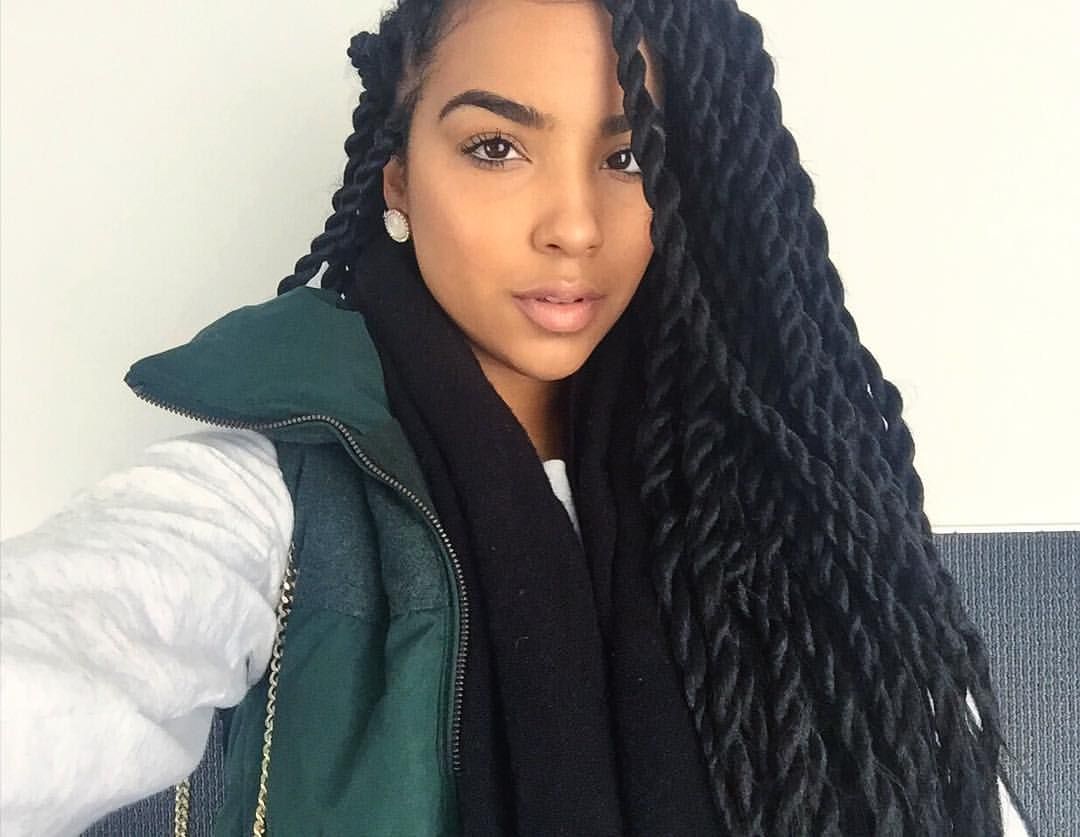
I will admit I was skeptical about braids and winter accessories. Then I saw these shoulder length twist braids with a side part and a thick black texture, and they sat cleanly under a beanie without bulging at the temples. That is the practical win. The side part shifts the weight off the crown, so hats and hoods sit flat. The length stops at the shoulder, which means no frozen ends when you forget the scarf. Colour is black, which reads neutral against dark coats and bright knits both. The styling is straightforward: twist each section from root to tip, no added curl, no loose ends. The hold survives a windy commute because the twists are sealed, not tied. This is winter attire logic, not summer whimsy.
Blonde Thick Wavy Braid
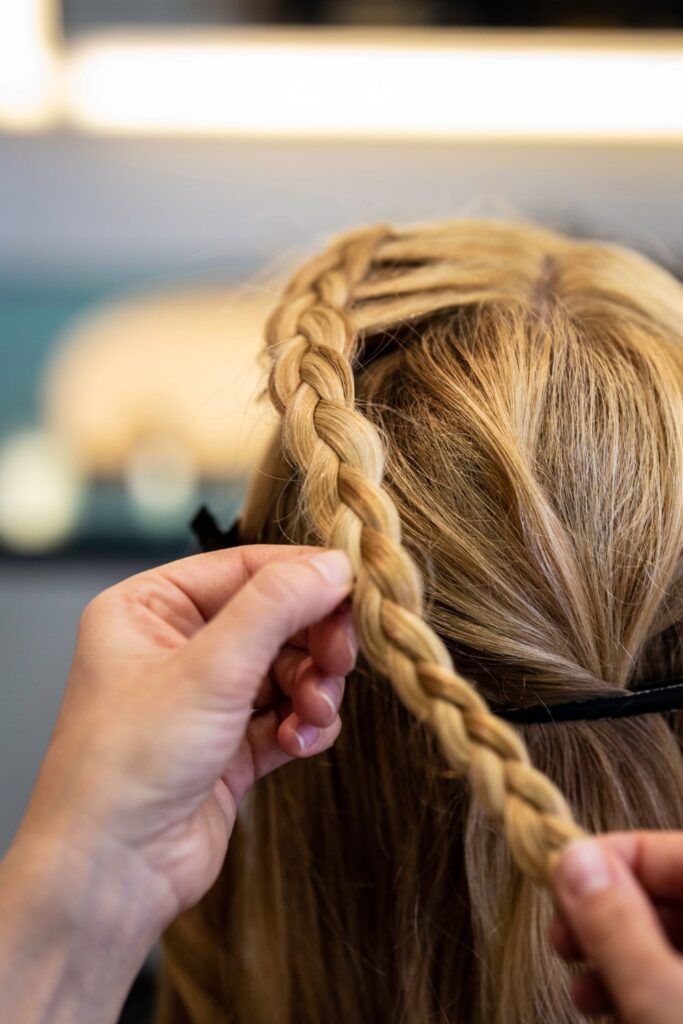
My first thought: that is a lot of blonde to maintain. But the back view, close cropped, shows a thick wavy braid where the colour is woven, not dipped. The technique starts with a blonde base, then each section is braided with a wave pattern, not pulled tight. That wave creates texture that reads as intentional volume, not frizz. The length is shoulder, the parting is middle, and the blonde reads warm against cool winter light. Styling is one pass with a mousse before braiding, then let it dry. The hold is soft, not stiff, which means it moves when you turn your head. This is a salon look, not a bathroom mirror job, because the colour placement and wave pattern need a practiced hand.
Visual Idea
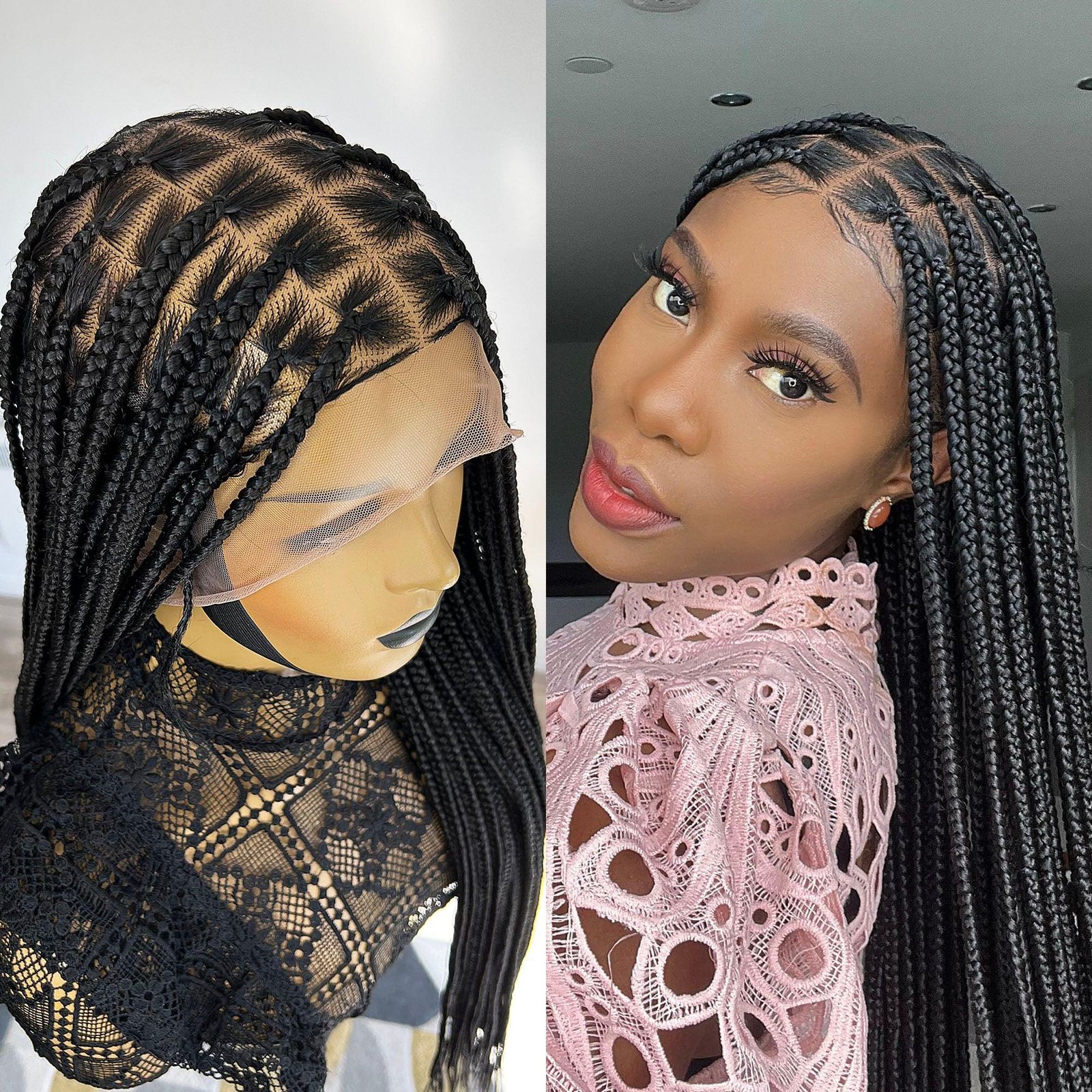
Ever looked at a braid pattern and thought, I could do that? The front view shows a black base with blonde highlights, middle part, side-swept bangs, and the intricate knotless braiding pattern running from root to mid-back. The key step is the feed-in: you add hair gradually, not all at once, which keeps the braid flat at the scalp and thick through the length. Start with a clean, detangled base. Section the hair into small squares, clip the rest. Take three strands, add a thin piece of extension to each, then braid. Repeat every inch until you reach the end. The blonde highlights go in during the feed, not after. This is a DIY project if you have patience and a mirror setup, but expect the first few to be uneven.
Mid-Back Visual Idea
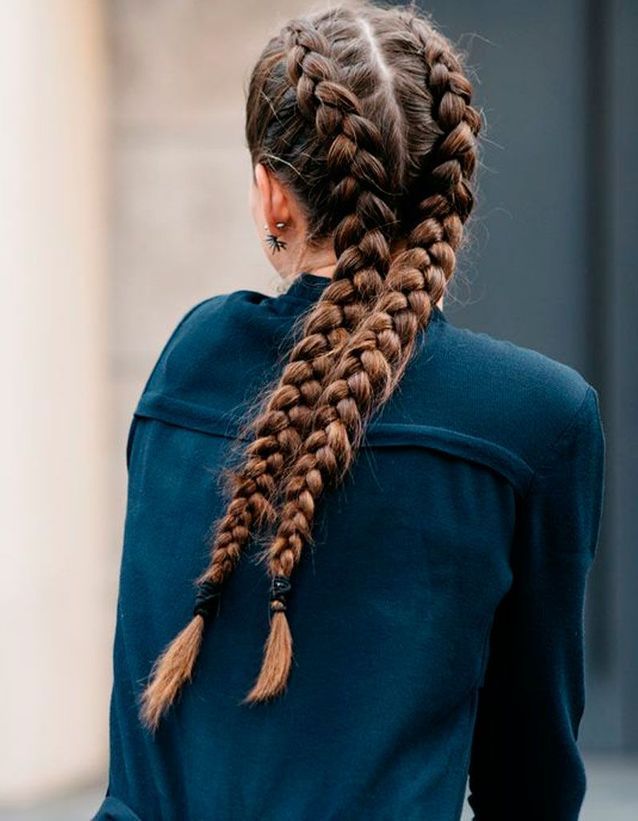
There is something satisfying about a pair of double Dutch braids that lay flat and even, no bumps, no stray strands escaping by lunch. Mid-back length means they swing when I turn my head, which is a small joy I did not expect. The texture is straight and thick, so the braids hold their shape without frizz creeping in by the afternoon. Colour is dark brown with subtle highlights, just enough to catch the light and stop the whole thing from reading as a single dark block. Styling is the real win here: these do not shift or loosen over a full day. A middle part keeps the framing symmetrical, and the hold is solid enough that I can sleep on them without everything going crooked by morning. Upkeep is minimal — a satin scarf at night, and they are good for another day.
Ash Blonde With Highlights Visual Idea

This ash blonde with highlights is a winter surprise. The fishtail braid reads cool and deliberate, and the side part keeps the whole thing from feeling too precious. Ash blonde with highlights works best on medium to thick texture because the braid needs body to hold the pattern. The colour sits cool enough to read expensive but warm enough that you do not look washed out under fluorescent lights. If your skin runs warm, ask for a warmer highlight ribbon to bridge the gap. This is a salon colour, no question. The tone is too specific to fake at home.
Collarbone Visual Idea
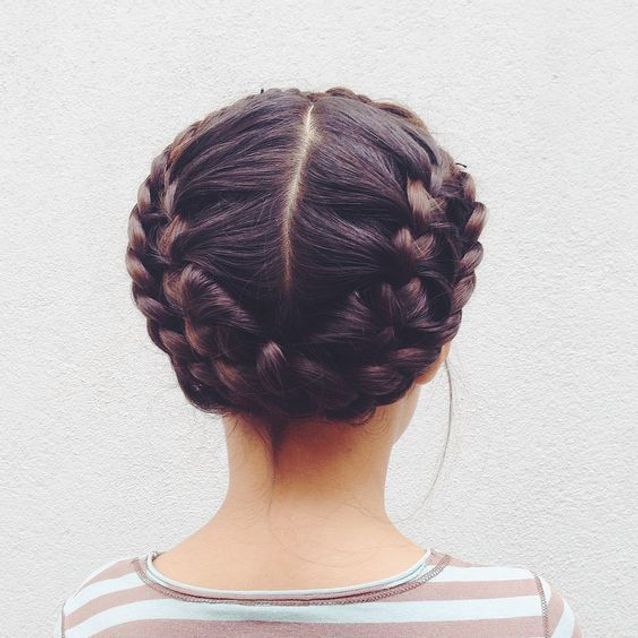
Can a double braided crown actually stay put on collarbone length hair? Yes, if the braids start at the temples and wrap back, not up. The technique is simple: part down the middle, take two sections from the front hairline, braid each toward the nape, and pin them at the back. The double braided crown sits flat because the braids are tensioned against the scalp, not piled on top. Straight, medium density hair holds the shape best. Ash blonde keeps the braid lines visible. No bangs needed. This is a salon booking, not a mirror experiment.
Blonde Balayage Visual Idea
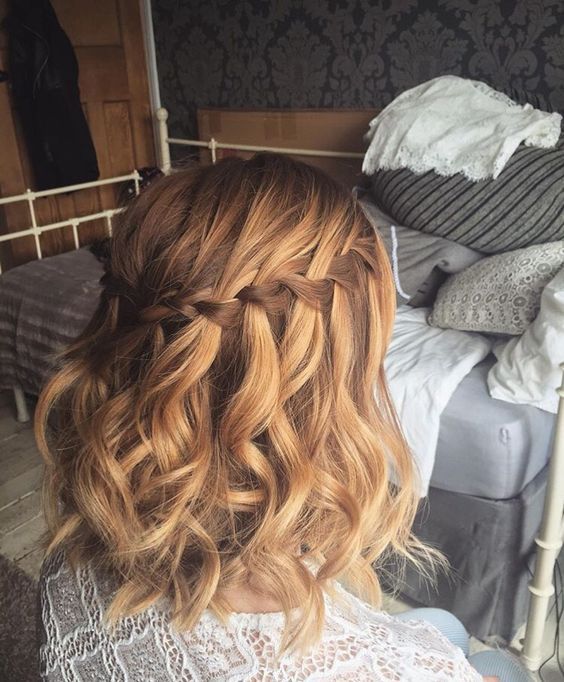
I keep seeing waterfall braids on mood boards and thinking they look breezy, and then I try one and remember why I do not do them more often. The technique is fiddly: you drop a strand, pick up a new one, and if your sections are not perfect, the whole thing collapses into a lumpy mess. The colour is blonde balayage, which at least hides the mistakes — the soft transitions between shades blur the uneven drops. Collarbone length and wavy texture help the loose waves blend into the braid, but the hold is mediocre on medium density hair because strands slip out by hour five. Styling it requires patience, maybe two tries, and I would not call it a beginner style. Honestly, I would pay someone else to do this one.
Visual Idea — Thick
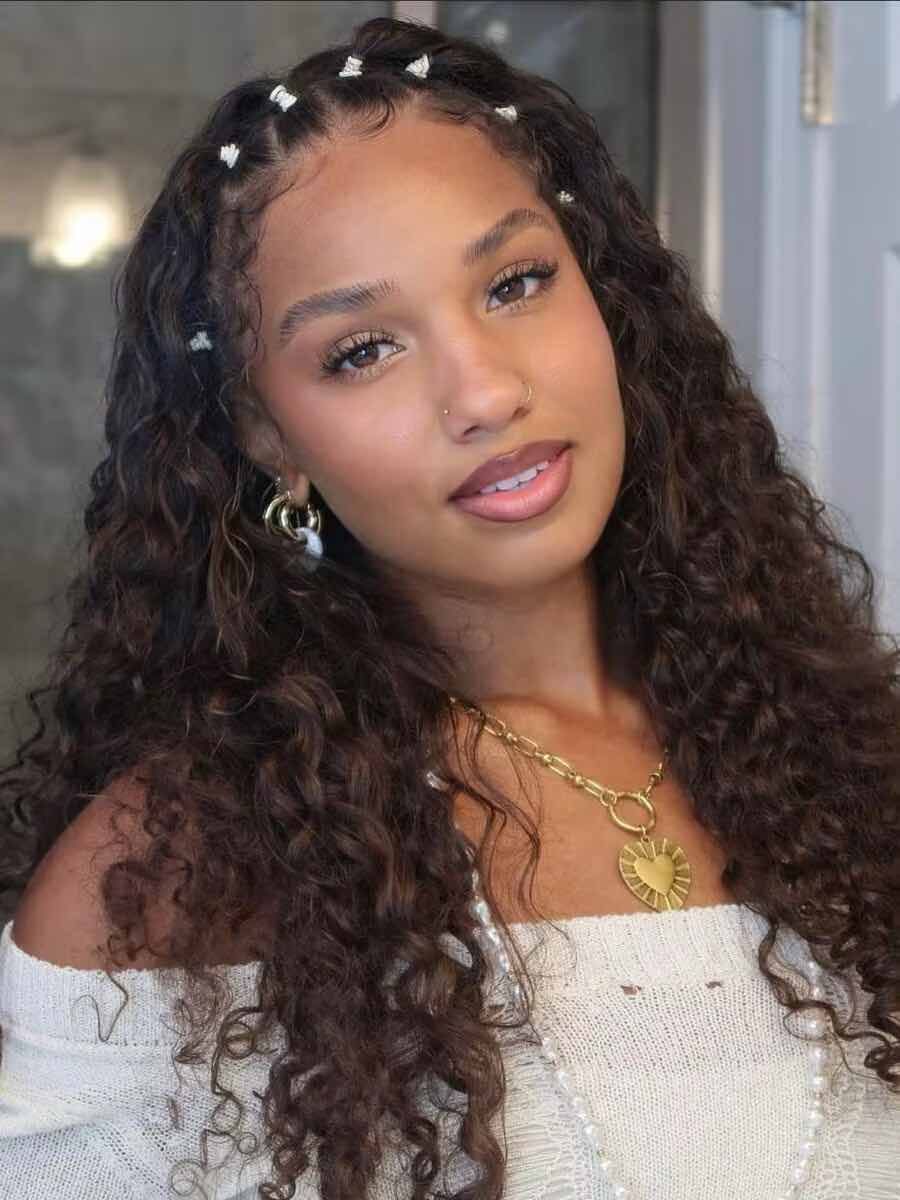
Thick knotless braids with a prominent curly texture at the ends look almost sculptural, and they move differently than straight styles. The curls catch the light and soften the silhouette, making the braids feel less rigid and more natural. Mid-back length gives enough weight to keep the braids from bouncing into my face, but the curly ends add volume that a straight tip would not.
The difference between this and finer knotless braids is the visual density. These look substantial without being heavy, and the upkeep is about managing the ends: the curls can tangle overnight, so a satin scarf is not optional. Colour is dark brown, no highlights needed because the texture already provides enough dimension. Small decorative clips along the hairline are a nice touch for a day when you want polish without redoing the whole style.
Shoulder Visual Idea
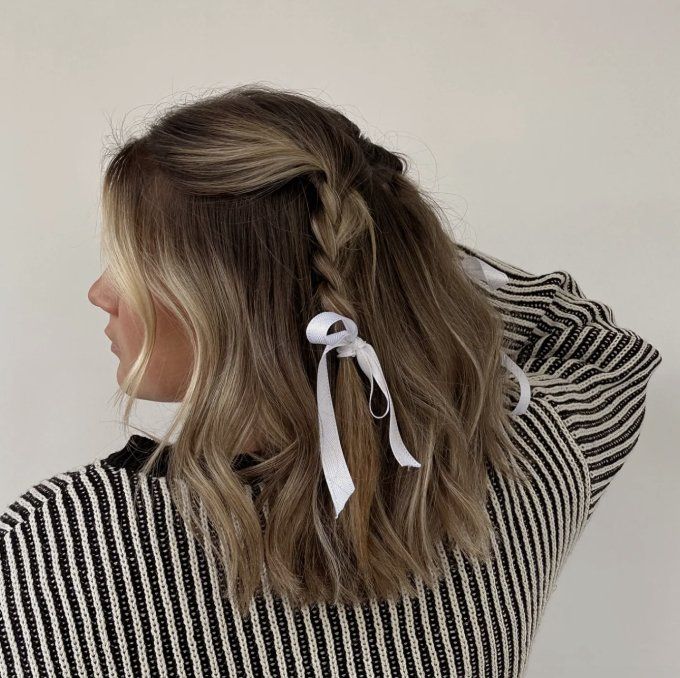
Start with a side part and loose waves, then pull the top section back into a half-up braid. Tie a white ribbon at the base, and let the rest fall past your shoulders. The ash blonde highlights catch the light differently than a solid colour would. This is a bathroom-mirror job if your waves hold, and a ten-minute finish. The ribbon hides any uneven sectioning, which is the whole point.
Black Visual Idea
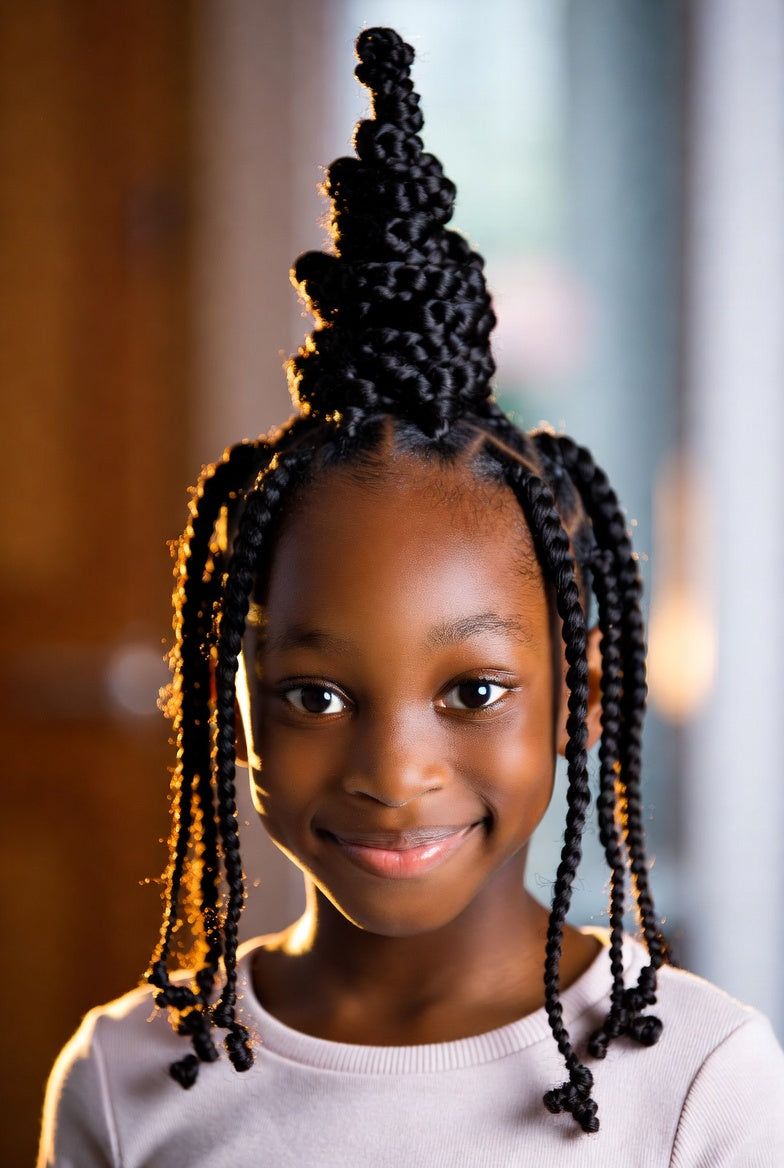
This is the most practical style in this roundup. The black knotless braids sit at mid-back, and the top bun is built from the same braids, not a separate piece. That means no extra weight on your edges and no pins slipping by lunch.
Middle part, front view, the bun sits high enough to clear a coat collar. The hold is solid for a full workday, and the coily texture keeps the braids from sliding out of shape. I booked this twice in one season. The bun stays tight through a commute and a gym session, then loosens into a low ponytail by bedtime.
Dark Brown With Subtle Highlights Visual Idea
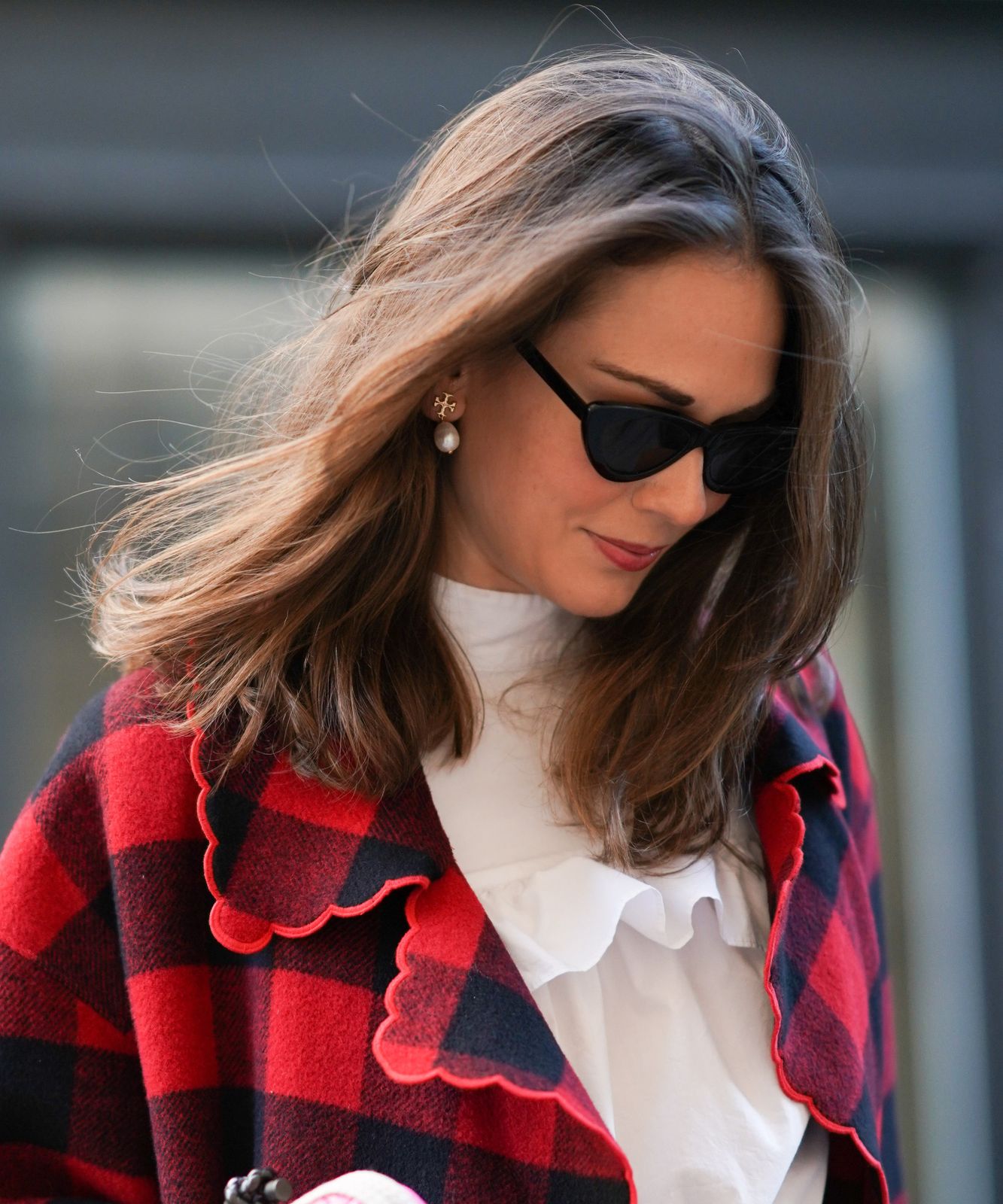
Does your hair need thickness to make a fishtail braid look full? Then this is the one. The dark brown base with subtle highlights creates dimension that a single shade cannot. The back view shows how the fishtail sits straight down the centre, and the thickness of the braid is the whole reason it works.
It flatters medium to high density hair best. If your strands are fine, the fishtail will read as a thin rope, not a thick braid. The highlights add depth without looking streaky, and the mid-back length gives the braid enough weight to hang properly. Wear it for a week, and the fishtail stays defined because the sections are clean from the start.
Medium Brown Visual Idea
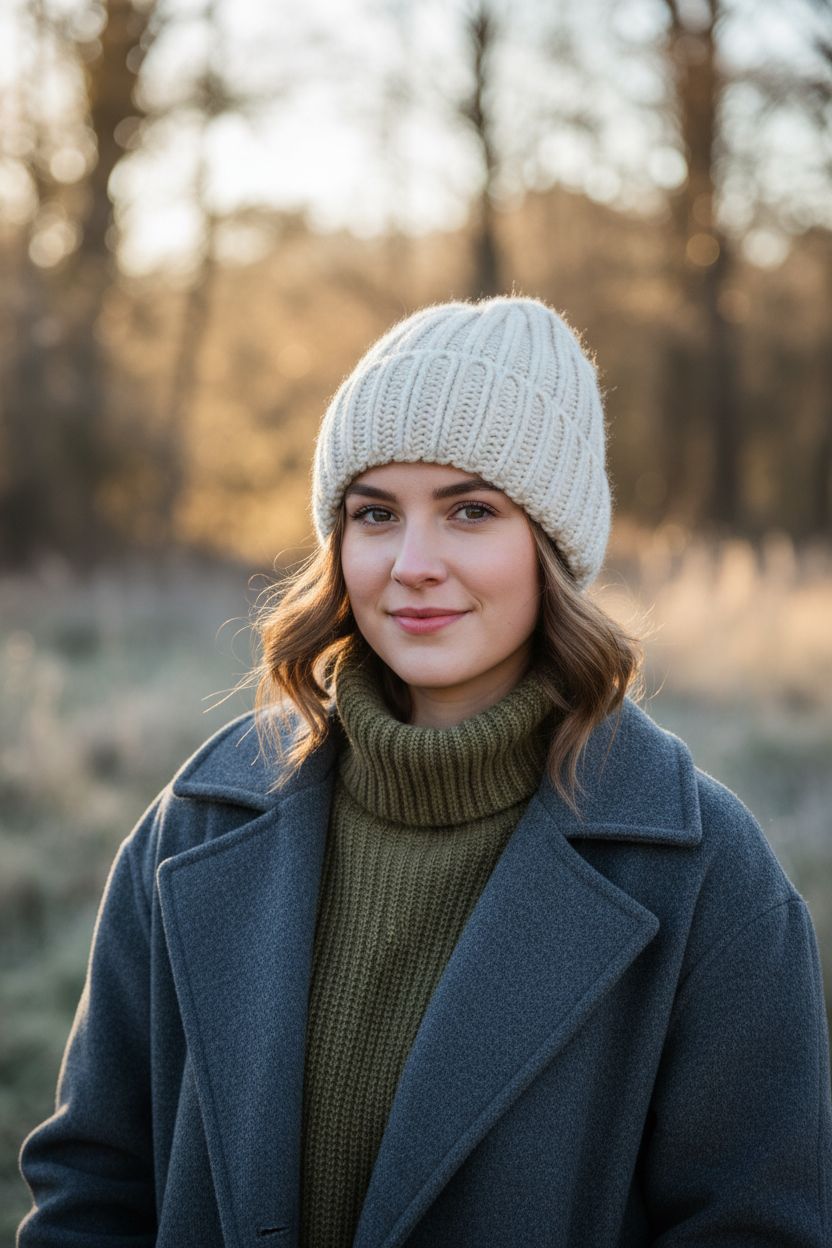
I wanted to hate this. A collarbone-length wavy style with no defined curl pattern and a hat on top sounds like a recipe for flat roots by noon. But the thick texture holds the wave even after the hat comes off, and the medium brown colour does not show the crease from the hat band. The downside is the air-dried finish: it needs the right cut to land this way. If your layers are too short, the ends flip instead of wave. This is salon-leaning because the layers have to be cut to fall, not to stack.
Final Thoughts
After writing all 28 of these, the one I keep coming back to is the collarbone bob with wavy ends. It is short enough to feel like a reset, long enough to still pull back, and the wave at the bottom hides any unevenness in the braid work. I booked it for next week.
- Wrap your braids at night with a silk scarf.
- Moisturize your scalp every three days.
- Trim the ends every eight weeks.
- Use a light oil on the braids, not the roots.