I keep seeing the same thing in the salon chair next to mine: blondes asking for their colour back. Not lighter, not brighter, just something that does not scream for toner at week three. Lowlights for Blonde Hair is that move. It is a root shadow with follow-through, a strand-level reset that reads like depth, not damage.
This roundup has 32 ideas, from a five-minute root stretch to a full caramel melt. For fine hair that goes flat by 4 pm, for thick hair that swallows dimension, for anyone tired of brass. I wrote these after eight years of watching grow-out lines, booking touch-ups too late, and learning that a little brown makes blonde look like a choice again.
Ash Blonde Bob With Subtle Lowlights
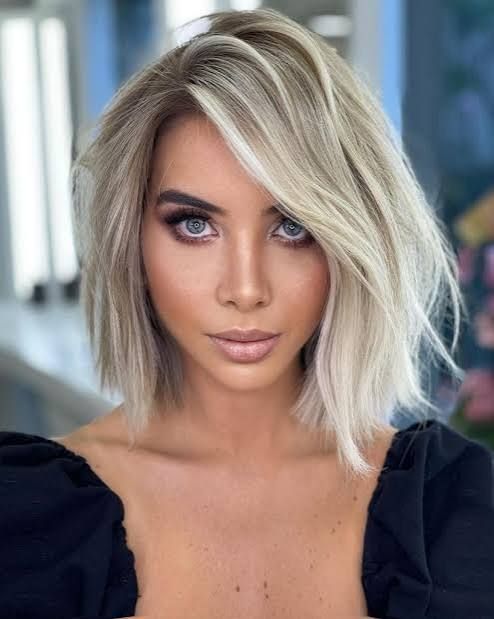
This is the bob for anyone who thinks ash goes flat. The base is a cool ash blonde, but the subtle lowlights sit a shade or two darker, woven through the interior so the whole thing reads dimensional, not stripey. Chin length, side-swept bangs, that slightly messy texture you get from a texturizing spray and air-drying. The lowlights do the heavy lifting for fine to medium density hair, adding visual weight without bulk. A side part helps it sit right on rounder faces. Straight or wavy, it holds its shape.
Textured Ash Blonde Bob With Blunt Bangs
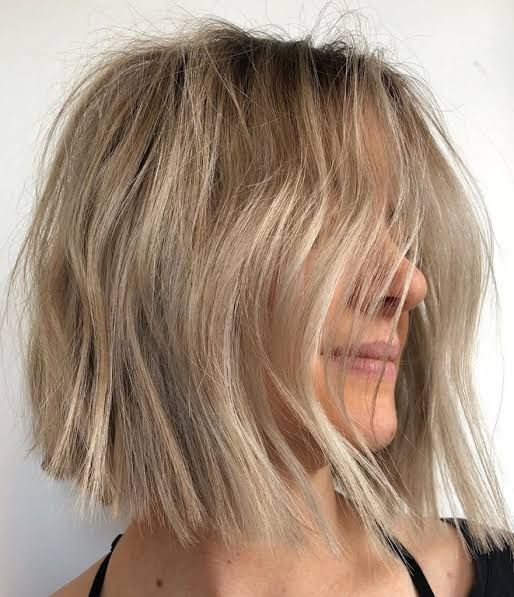
Wondering if a blunt bang works on a bob this short? It does, but only with the right colour. The ash blonde base keeps the cool tone, and the subtle lowlights stop the whole thing from reading like one solid helmet. Chin length, middle part, textured finish from a paste or spray. The blunt bangs sit straight across, no sweep, so they need a flat iron touch-up most mornings. Fine, wavy texture plays nice here. The lowlights add depth that a single-process ash blonde just cannot deliver.
Dark Brown Base With Bright Blonde Money Piece
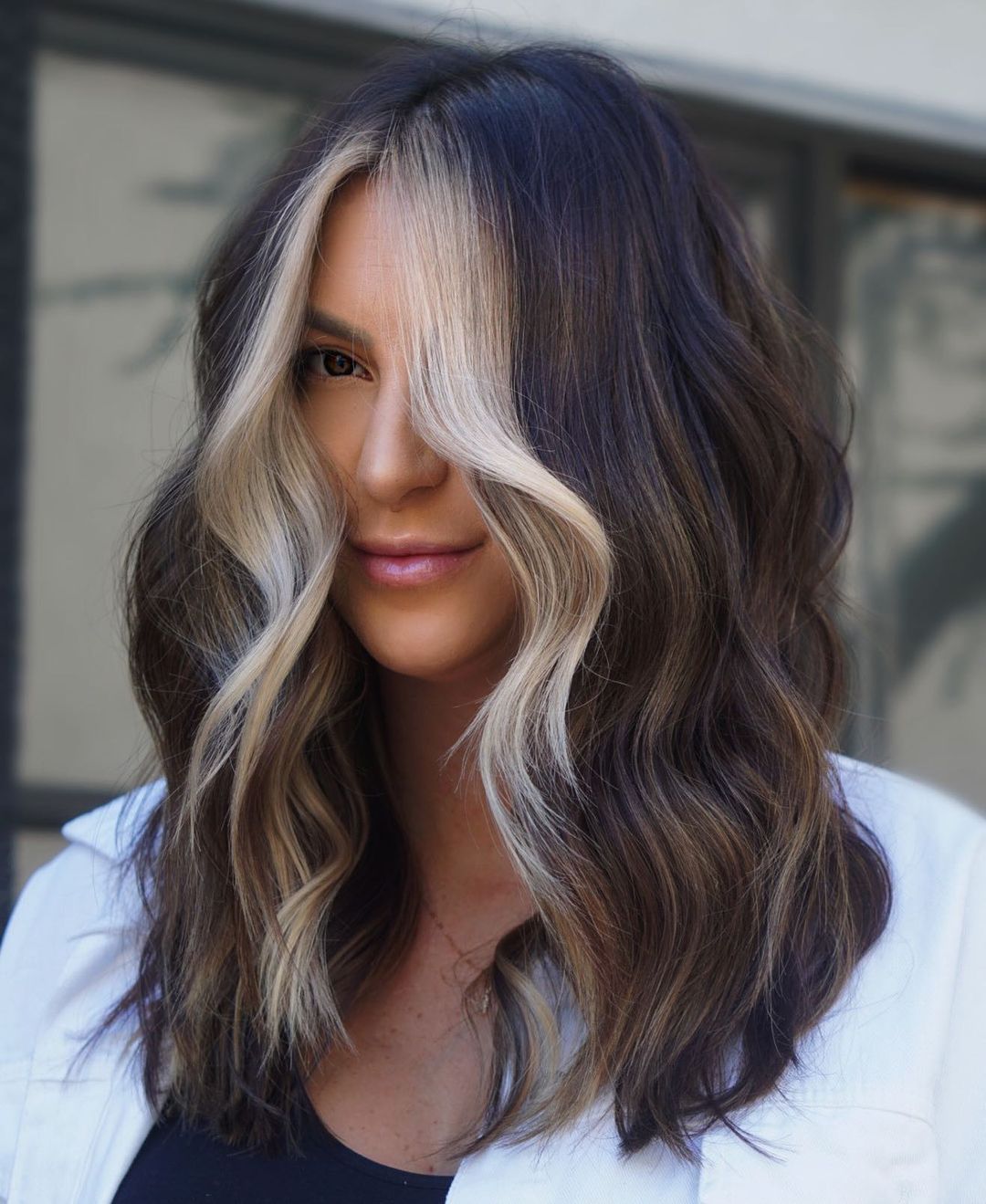
Best use of a money piece I have seen in a while. The dark brown base sits deep and neutral, and the bright blonde money piece runs from the root through the face-framing sections, chunky and deliberate. Collarbone length, middle part, blunt bangs that the money piece hits first. Loose waves, medium density. The technique is simple: the stylist keeps the money piece separate from the rest of the colour, so it stays bright while the base stays dark. Ask for a bright, not brassy, blonde around the face and a shadow root on the money piece so the grow-out is not a hard line.
Dark Brown With Thick Blonde Highlights
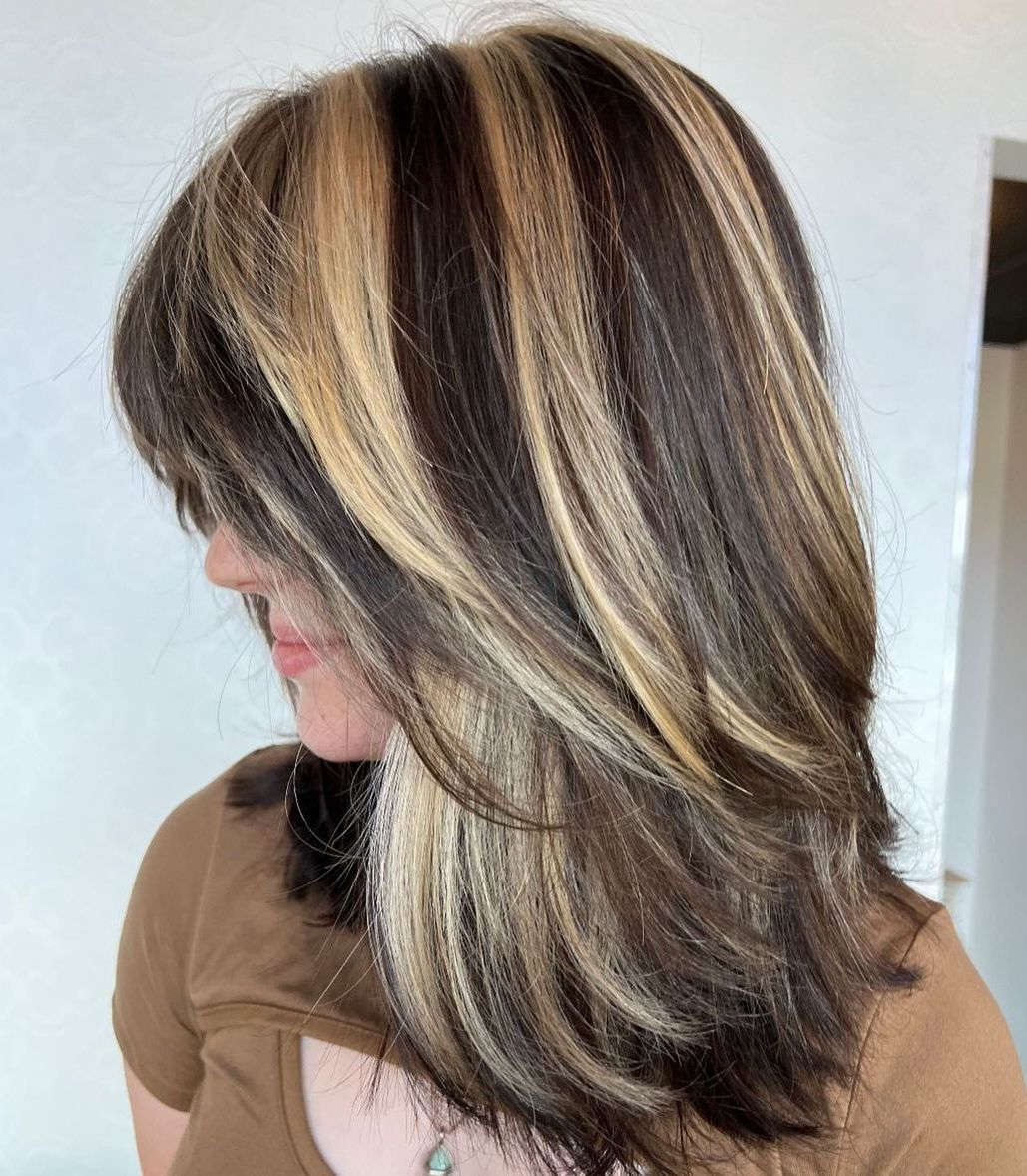
I will admit it: I was skeptical about thick highlights on a dark base. They can look like stripes from a box kit. But this works because the highlights are woven, not painted in solid sections, and the blonde is warm enough to contrast without fighting the brown.
Collarbone length, side part, side-swept bangs. The texture is wavy and thick, which helps the highlights read as dimension rather than chunks. The upkeep is real: those thick highlights need a toner every four to six weeks, and the cut needs a trim every eight to keep the layers from getting heavy. The grow-out is softer than you would expect, since the highlights are thick enough to blur into the base as they grow.
Thick Wavy Hair With Blonde Face-Framing
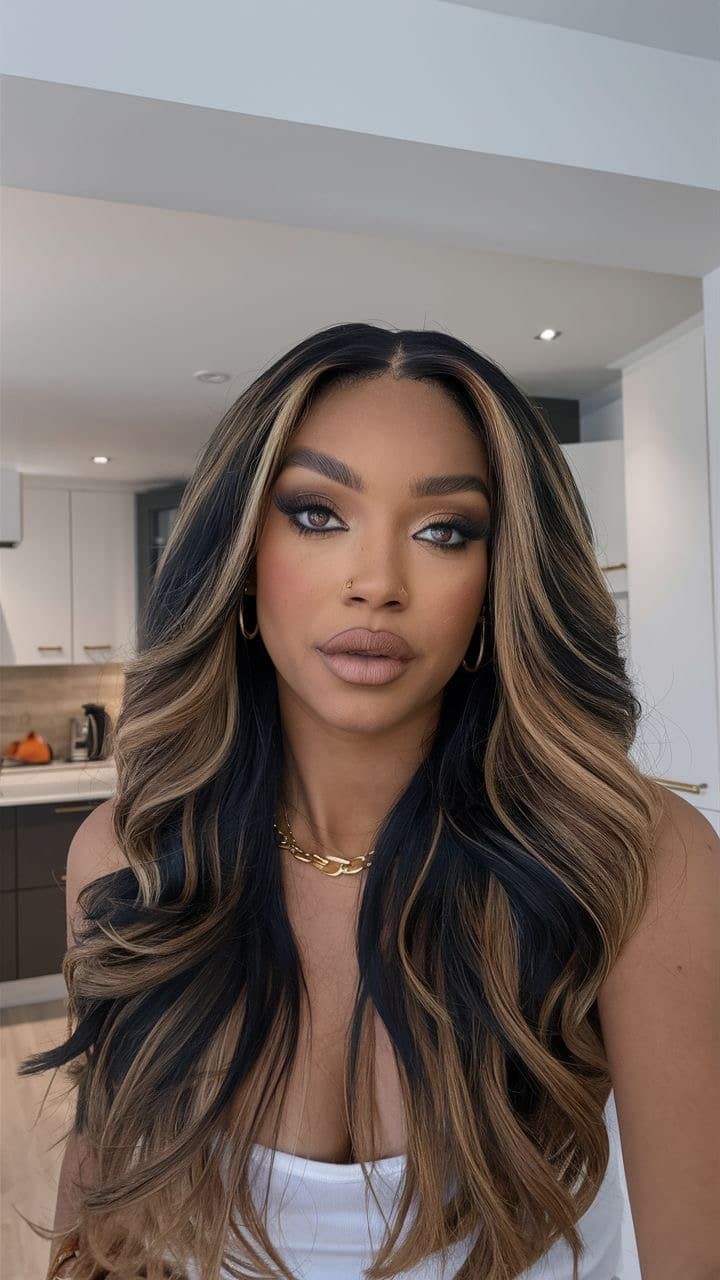
Does your thick, wavy hair eat colour? Then this is the one to show your stylist. The dark base is deep and cool, and the blonde face-framing highlights start at the root and run through the front sections, bold and intentional. Mid-back length, middle part, no bangs. Loose waves, thick texture. The face-framing pieces are what sell it: they lighten the front without committing the whole head to blonde. On a round face, the vertical lines of the highlights elongate. On a square face, they soften the jaw. The rest of the hair stays dark and low-maintenance, which is the whole point.
Mid-Back Curly Dark Brown With Blonde Highlights
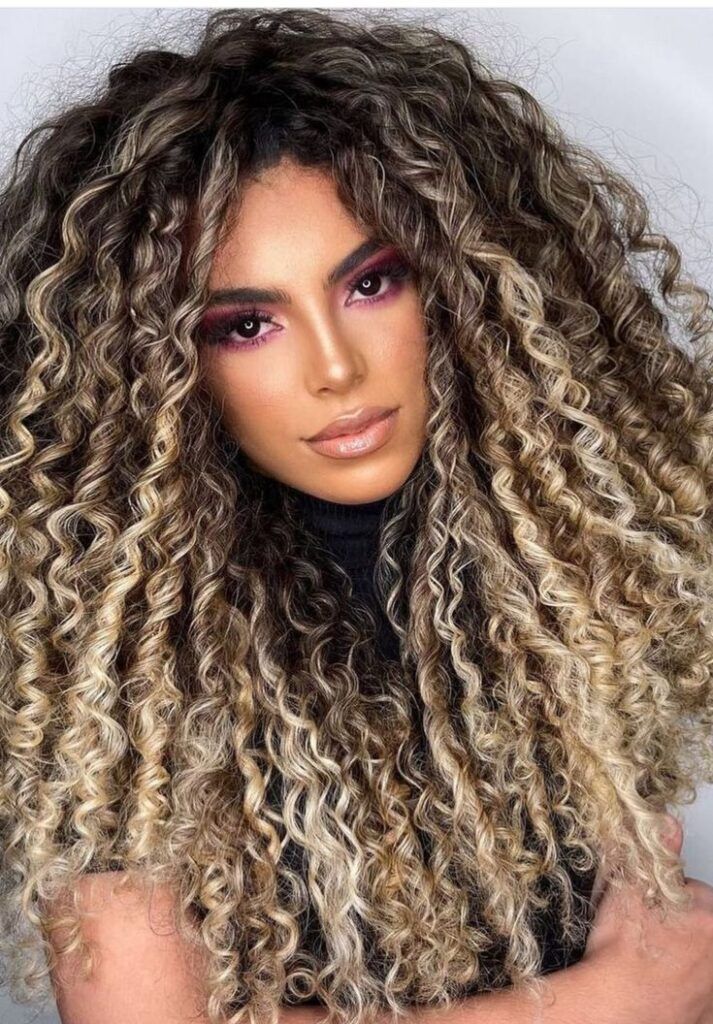
Winter light flattens curly hair fast, and this is the fix. The dark brown base anchors the volume, while blonde highlights catch the low sun and give each curl a separate edge. Mid-back length keeps the weight, so the waves don’t bounce into a triangle. No bangs, a middle part, thick texture: the contrast lands best when the curls are defined, not brushed out. This is the look for a holiday party or a long dinner where you want the hair to do the talking. The blonde needs toning to stay bright, and trims every 8 to 10 weeks keep the layers from tangling.
Dark Blonde Bob With Lighter Lowlights
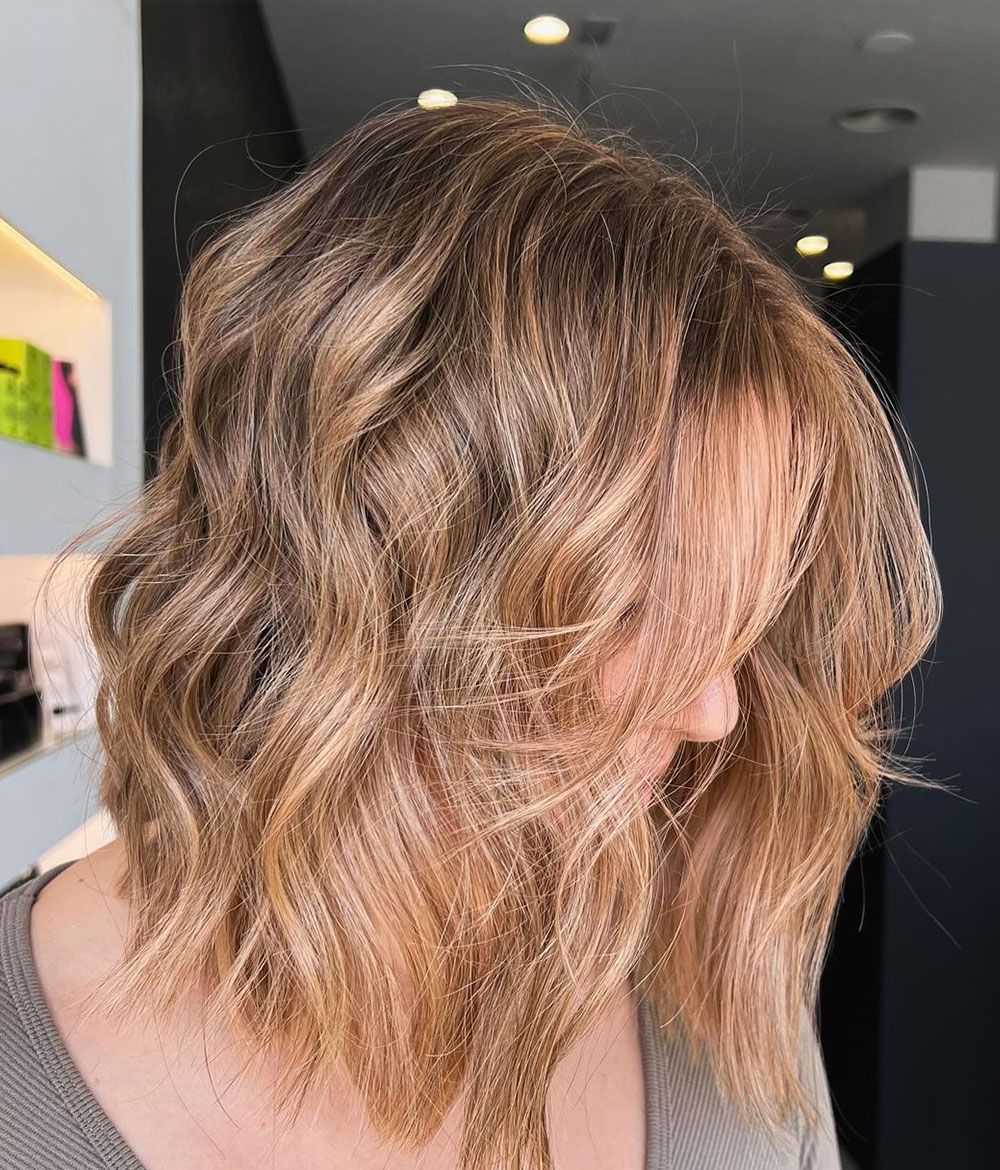
The first time I asked for lighter lowlights on a dark blonde base, I expected a subtle shift. What I got was dimension: the bob at chin length, side-parted, with wavy blowout movement, and the lighter strands weaving through so the whole thing reads natural instead of painted. It took me a second to trust that the contrast wouldn’t look stripey. It doesn’t. The medium density texture holds the wave, and the side view shows the lowlights doing the work. A texturizing spray gives it that lived-in movement in about 10 minutes.
No Bangs Blonde Bob With Dark Lowlights
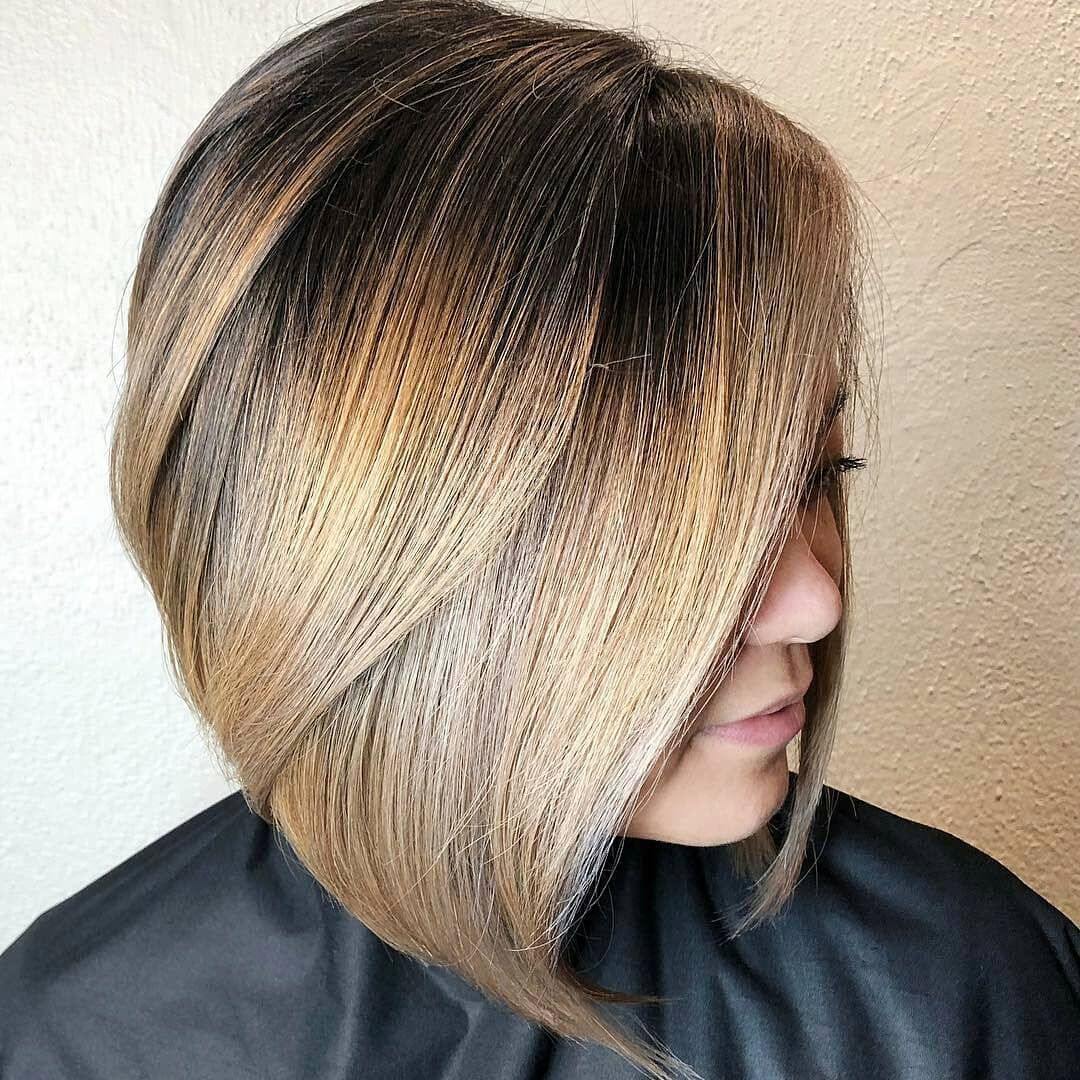
This is a salon job, full stop. The blonde base with dark lowlights on a chin-length bob, side-parted and blown straight, needs a colorist who knows where to place the dark so it doesn’t look like grow-out. At home, you’d end up with patchy contrast. In the chair, the dark lowlights add depth without killing the blonde’s brightness. The straight texture shows every line, so the placement has to be deliberate. Book it, and expect the contrast to get more obvious as it grows, which means a trim every 6 to 8 weeks to keep the bob’s shape.
Medium Brown With Caramel Blonde Highlights
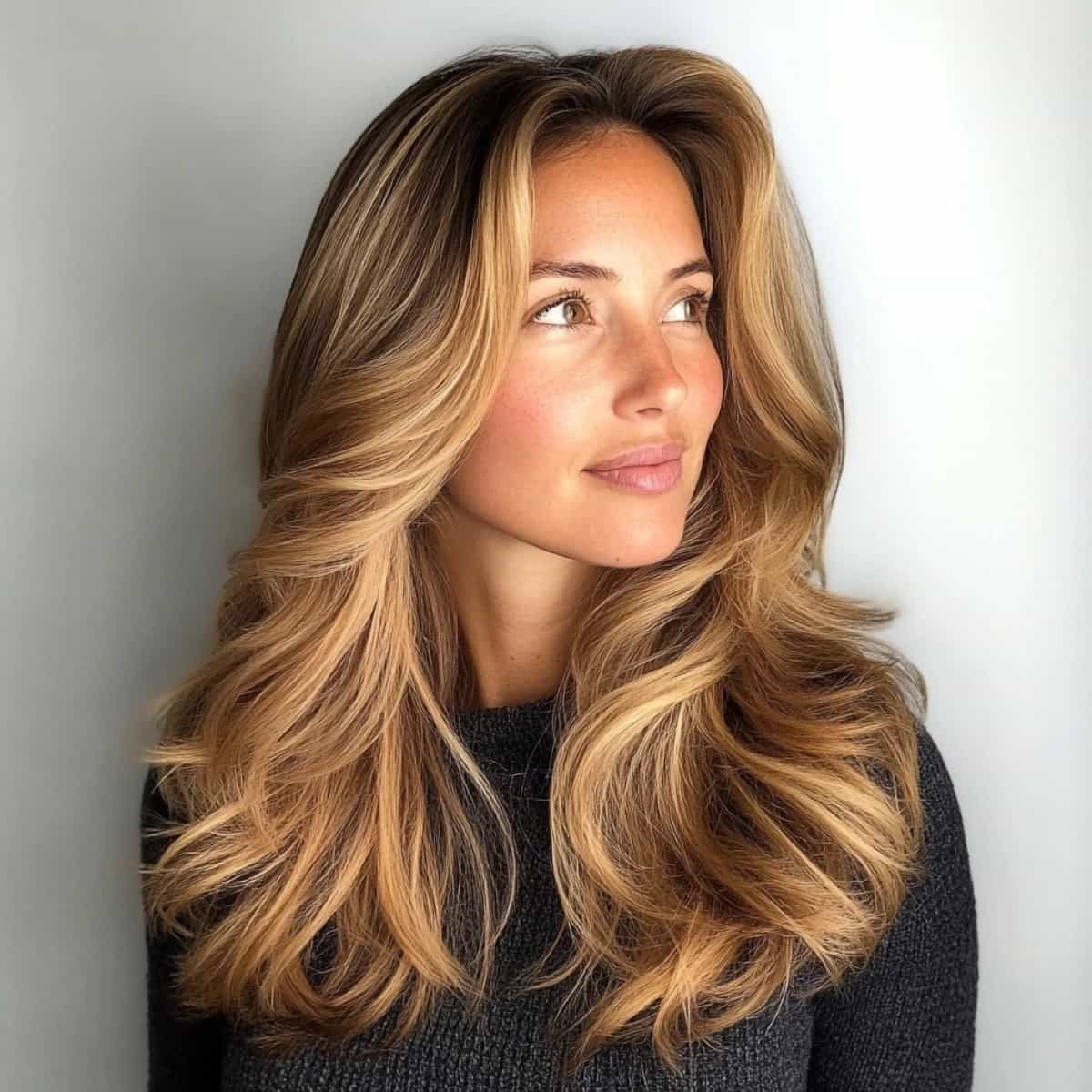
I have a confession: I chased caramel blonde highlights for three years before I got them right. The mistake everyone makes is going too light, too fast. A medium brown base with caramel blonde highlights works because the tones sit close on the color wheel, warm against warm. The technique is a foil weave, thin sections, never a heavy hand. The tone is golden, not brassy, which means you need a stylist who understands the difference. This is mid-back length with a wavy blowout, thick texture that holds the dimension. The honest downside? Caramel fades warm, and if your base lifts brassy underneath, you get orange. Not caramel. Orange. A purple shampoo won’t fix that. Ask your stylist for a neutral toner on the base before the highlights go in.
Dark Brown With White Blonde Lowlights
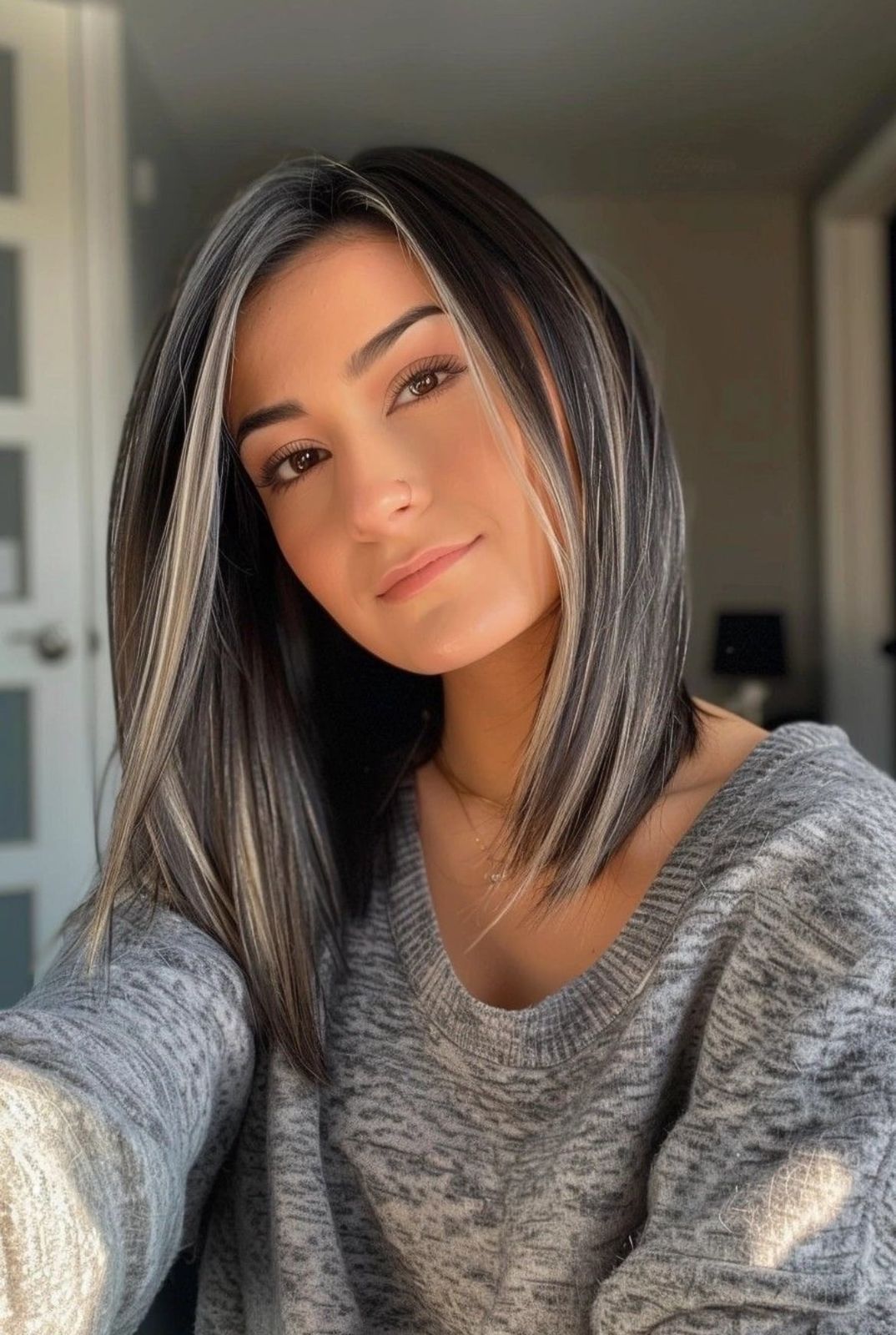
The difference between subtle and stark is about three shades. Dark brown white blonde lowlights sit at the extreme end of contrast, a chin-length bob, straight, fine texture, a middle part that shows every line. The technique is a weaved lowlight, painted from root to tip, no balayage softness. The tone is cool white against warm dark brown, which reads graphic, not blended. Compared to a soft caramel or a mushroom brunette, this one demands commitment. The white blonde lowlights will need toning every three weeks to stay icy, and the dark base shows regrowth fast. It is not a grow-out-friendly look. It is a look you book for a specific event and maintain until you are ready to change.
Blonde Base With Caramel Lowlights
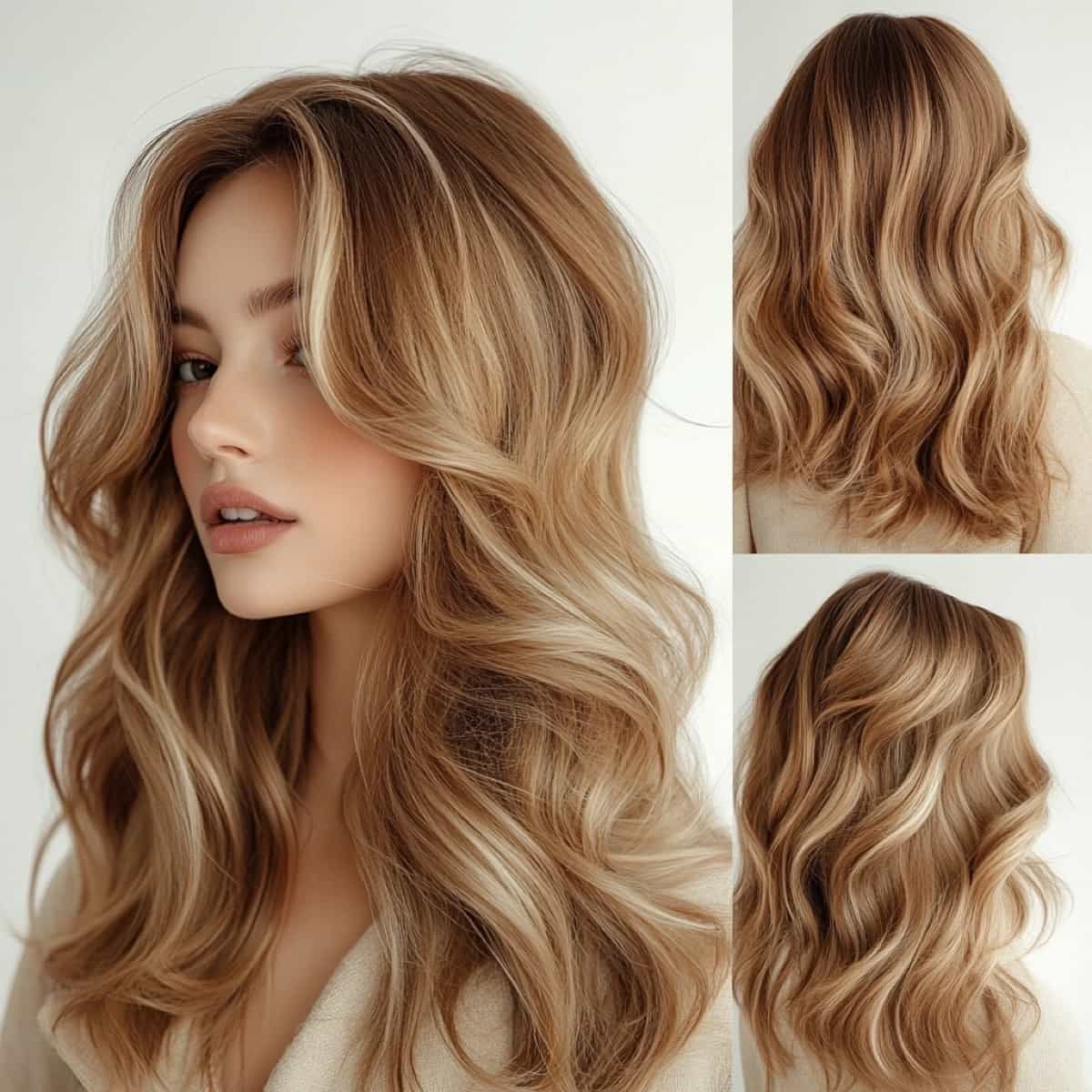
Has your blonde started reading flat, but you are not ready for a full base break? That is exactly where a blonde base caramel lowlights technique steps in. The caramel lowlights sit underneath the surface, so the top layer stays blonde and the depth shows when you move. On a collarbone cut with medium-density wavy texture, the contrast lands warm without going brassy. The grow-out is the real win here. Because the lowlights are darker than your base, the root line blurs instead of announcing itself at week four. I got about eight weeks before I wanted a toner refresh, and that was mostly to keep the caramel from pulling too warm. A trim every eight weeks keeps the layers from tangling at the ends.
Dark Base With Blonde Face-Framing
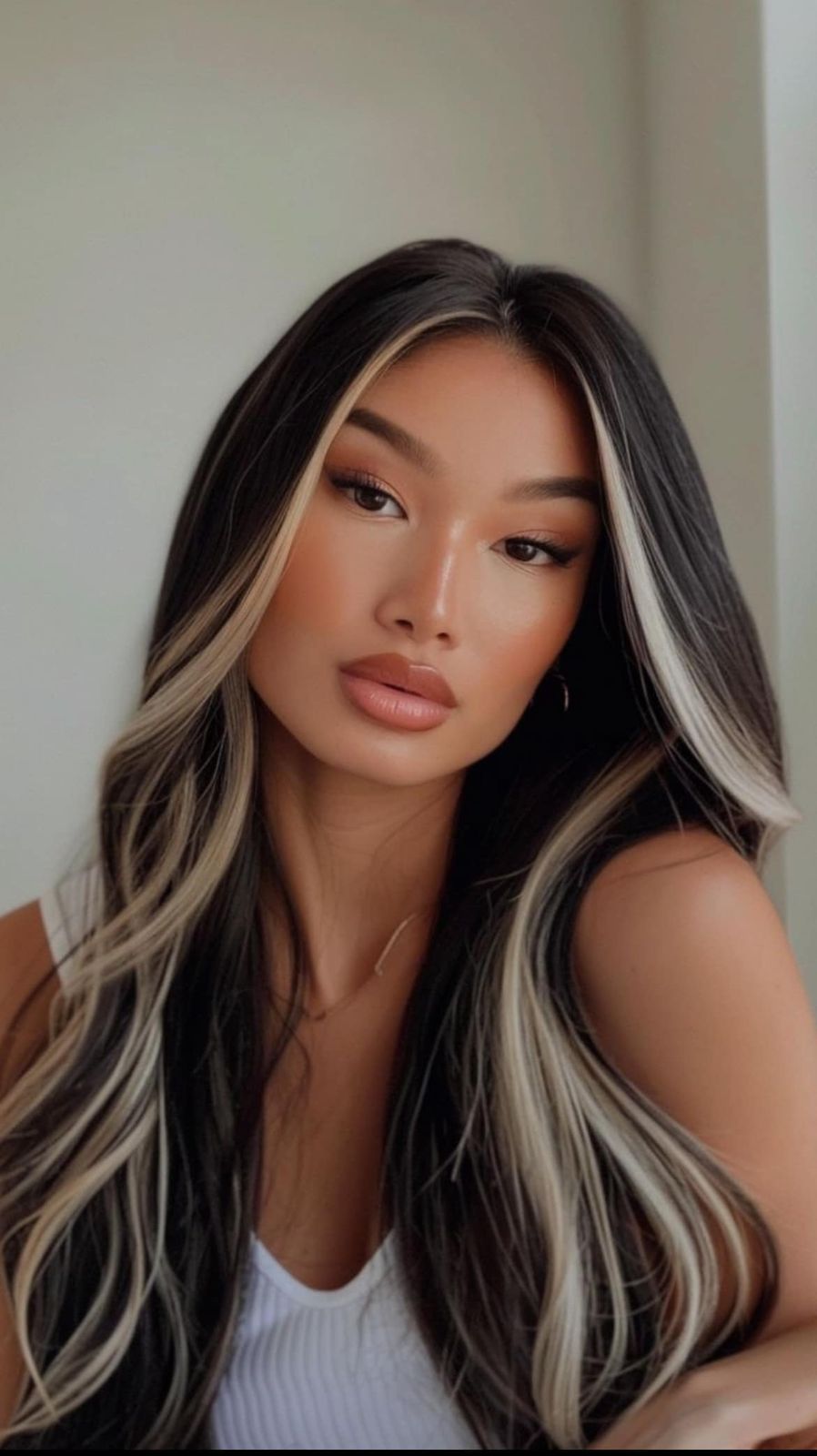
This one is not for everyone, and I mean that as a compliment. A dark base blonde face framing works best when your natural density is medium or higher and your face shape can handle the contrast landing right at the cheekbone. The blonde face-framing pieces start about an inch from the root and sweep forward, so a round or square face gets vertical lines that lengthen the silhouette. If your hair is fine or low density, the dark base can read heavy and the blonde pieces can look sparse rather than intentional. The mid-back length with soft waves carries the weight of the dark base without dragging the eye down. Straight texture will show every placement decision, so ask your stylist for a soft blend on the transition line.
Ash Blonde With Dark Blonde Lowlights
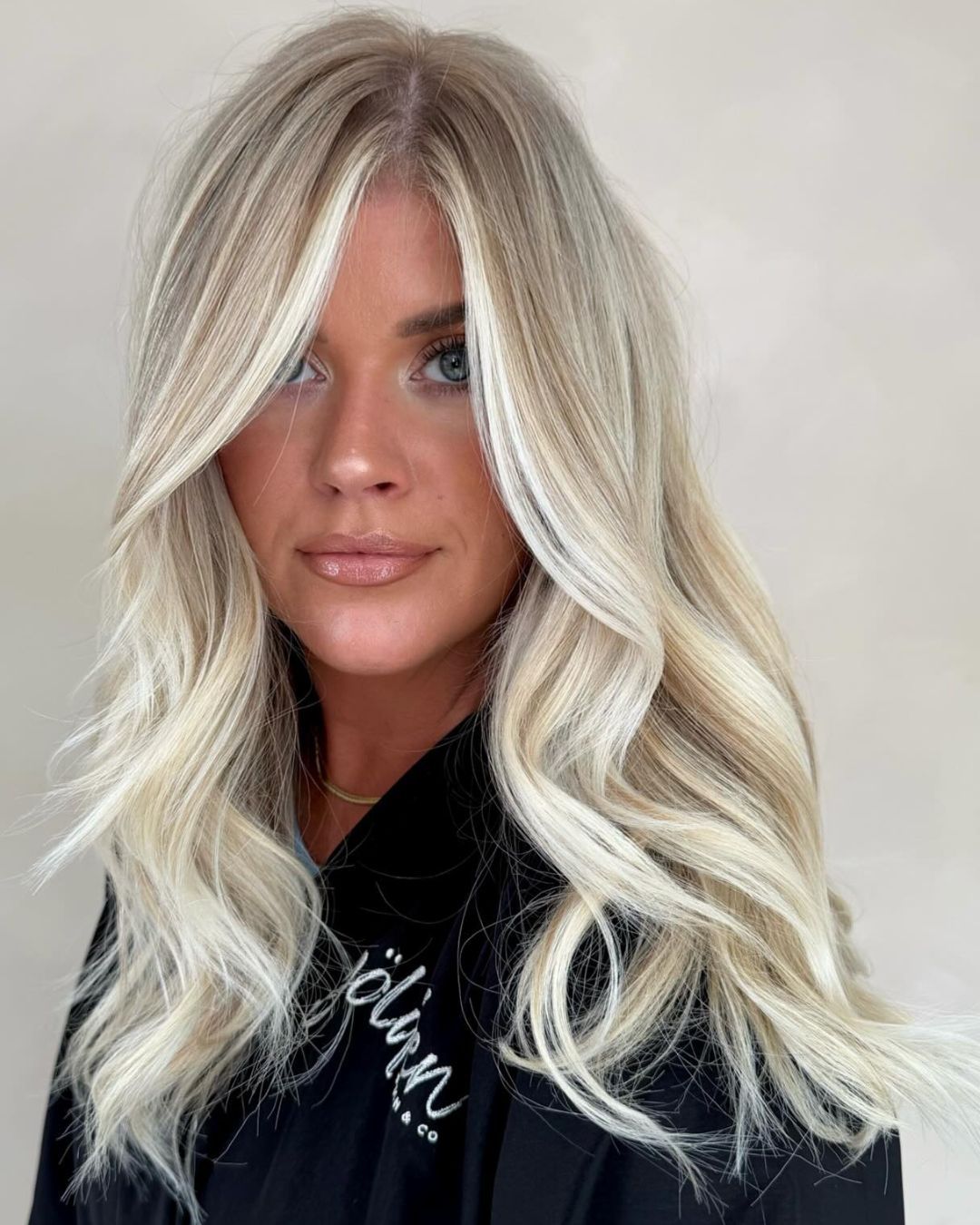
The bowl is mixed, the foil is sectioned, and the stylist is weaving. That is the scene for an ash blonde dark blonde lowlights application. The technique is a back-to-back weave: the stylist takes a thin slice of ash blonde base, places a dark blonde lowlights strand underneath, then skips a slice and repeats. This creates alternating cool and neutral tones that read as shadow rather than stripe. On a collarbone cut with thick wavy texture and curtain bangs, the lowlights sit deep enough that the ash blonde still leads the eye. The curtain bangs are left mostly untouched so the face stays bright. A middle part lets the contrast fall evenly on both sides. The result is dimensional without being busy, which is harder to achieve than it sounds.
Long Dark Base With Blonde Highlights
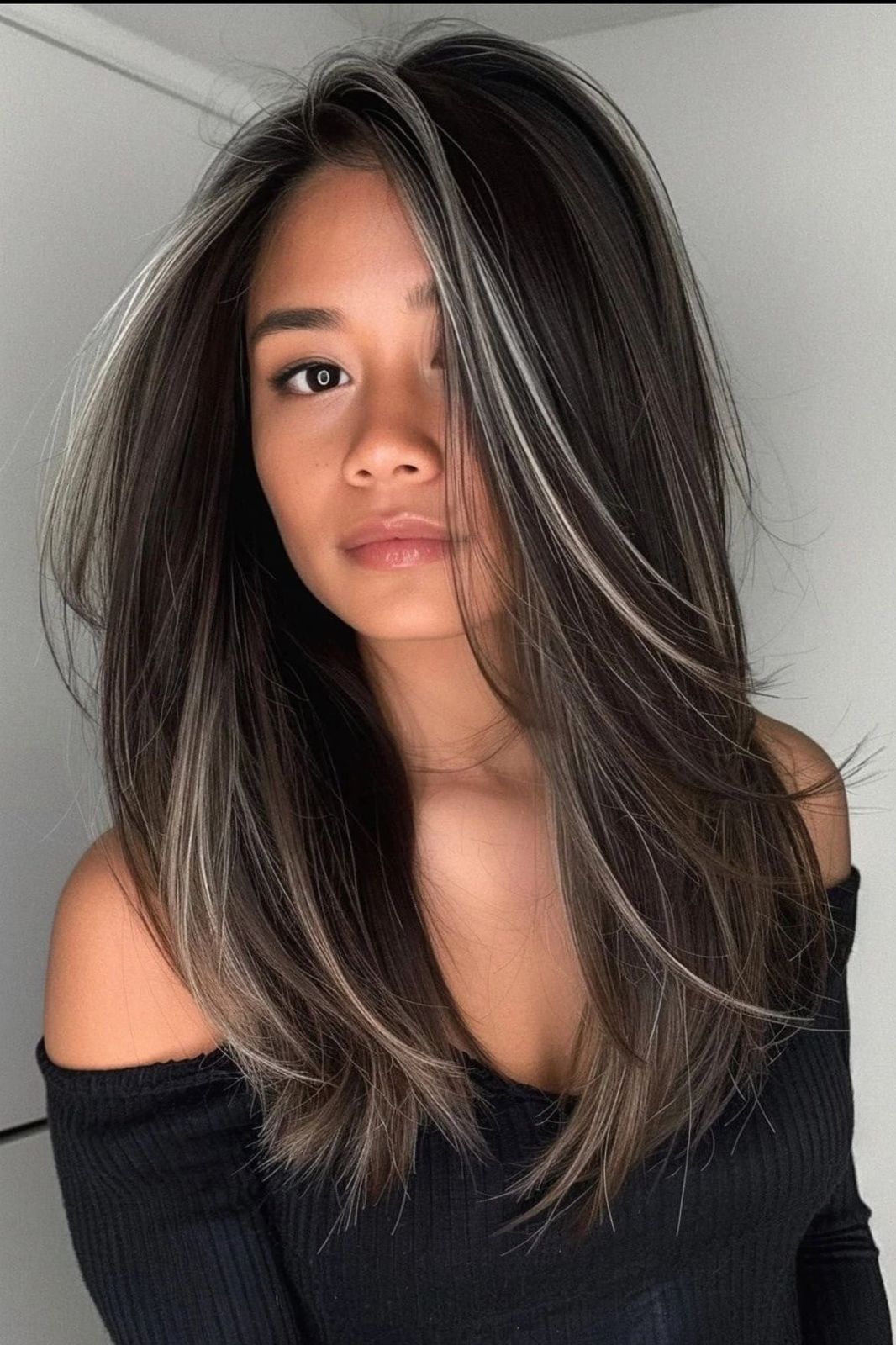
The transition from fall to spring is where a long dark base blonde highlights strategy earns its keep. In cooler months, the dark base absorbs the low light and the blonde highlights read as a soft glow rather than a bright stripe. Come spring, the same placement catches the higher sun and reads warmer. The long length here is key: the layers are cut to stack the highlights at the mid-lengths and ends, so the roots stay dark and the light builds as the hair falls. Medium-density wavy texture holds the shape without needing a full restyle. A middle part keeps the face-framing pieces balanced. The blonde highlights will need a toner refresh every six to eight weeks if you want them to stay cool, but the dark base buys you time on the root side.
Dark Blonde Lob With Natural Lowlights
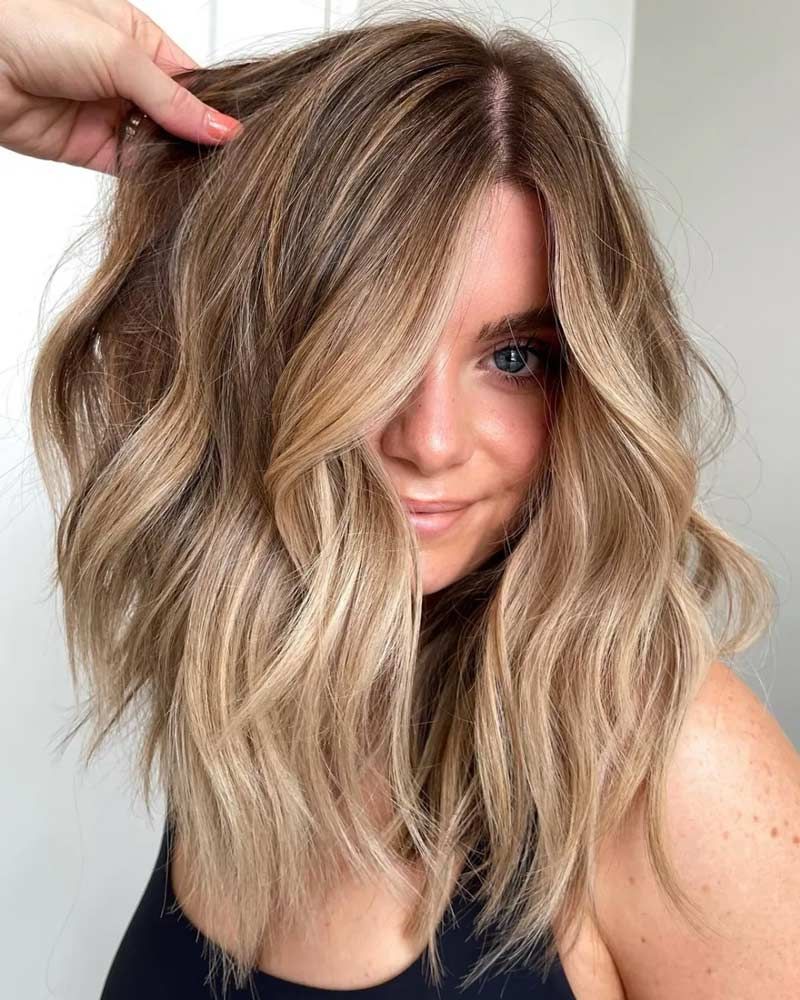
I walked into the salon last year with a photo of a lob that looked nothing like my hair and told the stylist to make it look like I had not tried. She laughed and handed me a swatch book. That is how I ended up with a dark blonde lowlights lob. The base is a warm dark blonde, and the natural lowlights are a shade lighter woven through the mid-lengths and ends. On a collarbone lob with thick wavy texture and side-swept bangs, the blend reads like grown-out sun rather than salon work. The side part lets the lowlights fall forward on one side, which adds asymmetry without cutting. It took about 15 minutes to style into loose waves, and the grow-out was invisible for nearly ten weeks. That is the kind of low maintenance I can get behind.
Dark Blonde With Lighter Highlights
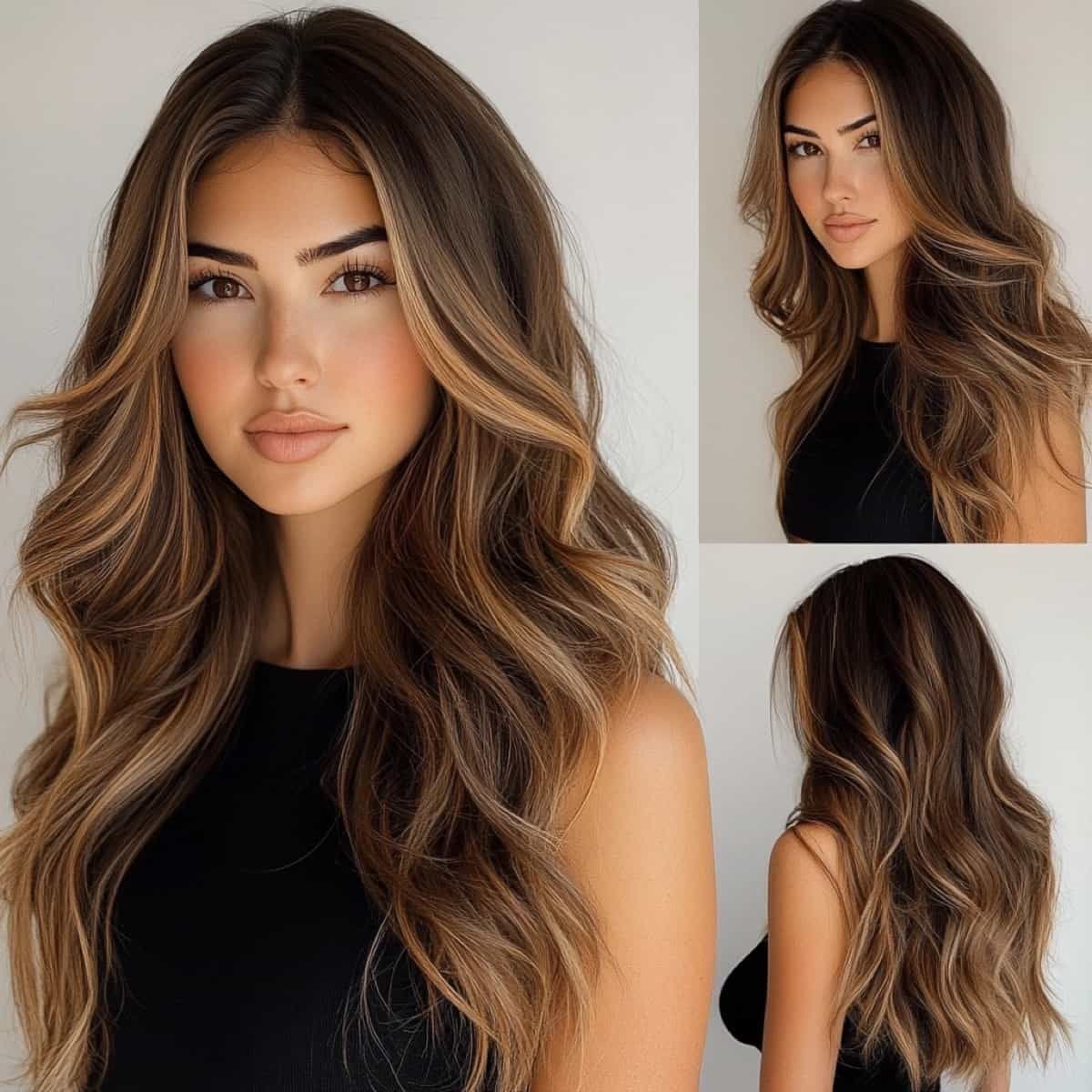
This one surprised me. Dark blonde base with lighter blonde highlights on thick, wavy hair that reaches mid-back. The contrast is the whole point. It reads dimensional without looking like you tried. But do not attempt this at home. Achieving that separation between base and highlight on thick texture requires a stylist who knows how to weave, not just paint. My fine hair would swallow this whole. It needs density to carry the lighter blonde highlights without them floating on top. A middle part helps the contrast land evenly. Book the consultation first.
Who should pass? Anyone with low-density hair. The darker base will eat the lighter pieces, and you will end up with a flat, muddy blonde. Also skip if you cannot commit to toning every six to eight weeks. Those lighter blonde highlights will warm up fast, and a brassy mid-back length is a long wait for a fix.
Medium Blonde With Darker Lowlights
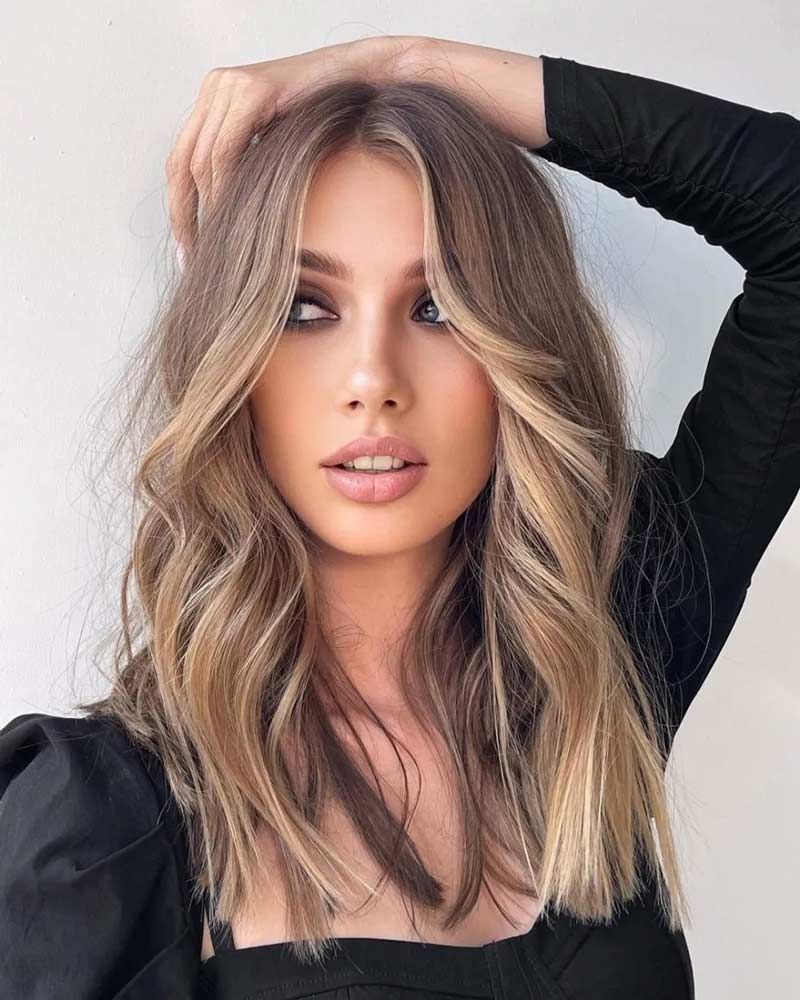
Best grow-out in this roundup. Medium blonde with darker lowlights on a thick, wavy lob. The honest downside: subtle lowlights on thick hair can disappear by week three. The darker lowlights sit underneath, so when the top layers shift, the dimension goes with them. It is not a failure of technique, it is a physics problem. Thick hair has volume, and volume hides depth. If you want the lowlights to read, you need a stylist who places them high enough to catch light. Otherwise you are paying for a colour that only shows in the mirror at home.
Dark Blonde With Lighter Highlights and Curtain Bangs
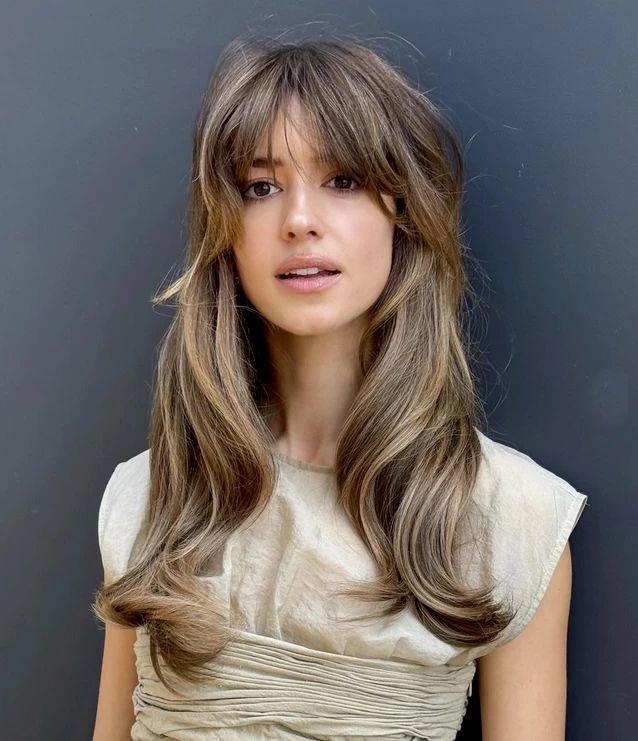
Is this the most flattering combination for wavy, thick hair? I think so. Dark blonde base with lighter blonde highlights and curtain bangs that hit mid-cheek. The curtain bangs frame the face without demanding a full fringe commitment. This works best on medium to high density hair. The lighter blonde highlights need something to grip. On fine hair, the contrast flattens and the bangs separate by noon. The middle part helps the highlights fall forward naturally, so the face-framing does not look painted on. A wavy blowout takes about fifteen minutes. The bangs need daily attention, but that is the trade for softness.
Who should skip? Anyone who wants a low-effort morning. Curtain bangs on thick, wavy hair require a round brush and a few minutes of heat. Also pass if your hair is naturally oily at the roots. The bangs will separate and the dark blonde base will look greasy by afternoon. A dry shampoo helps, but it is a workaround, not a fix.
Visual Idea
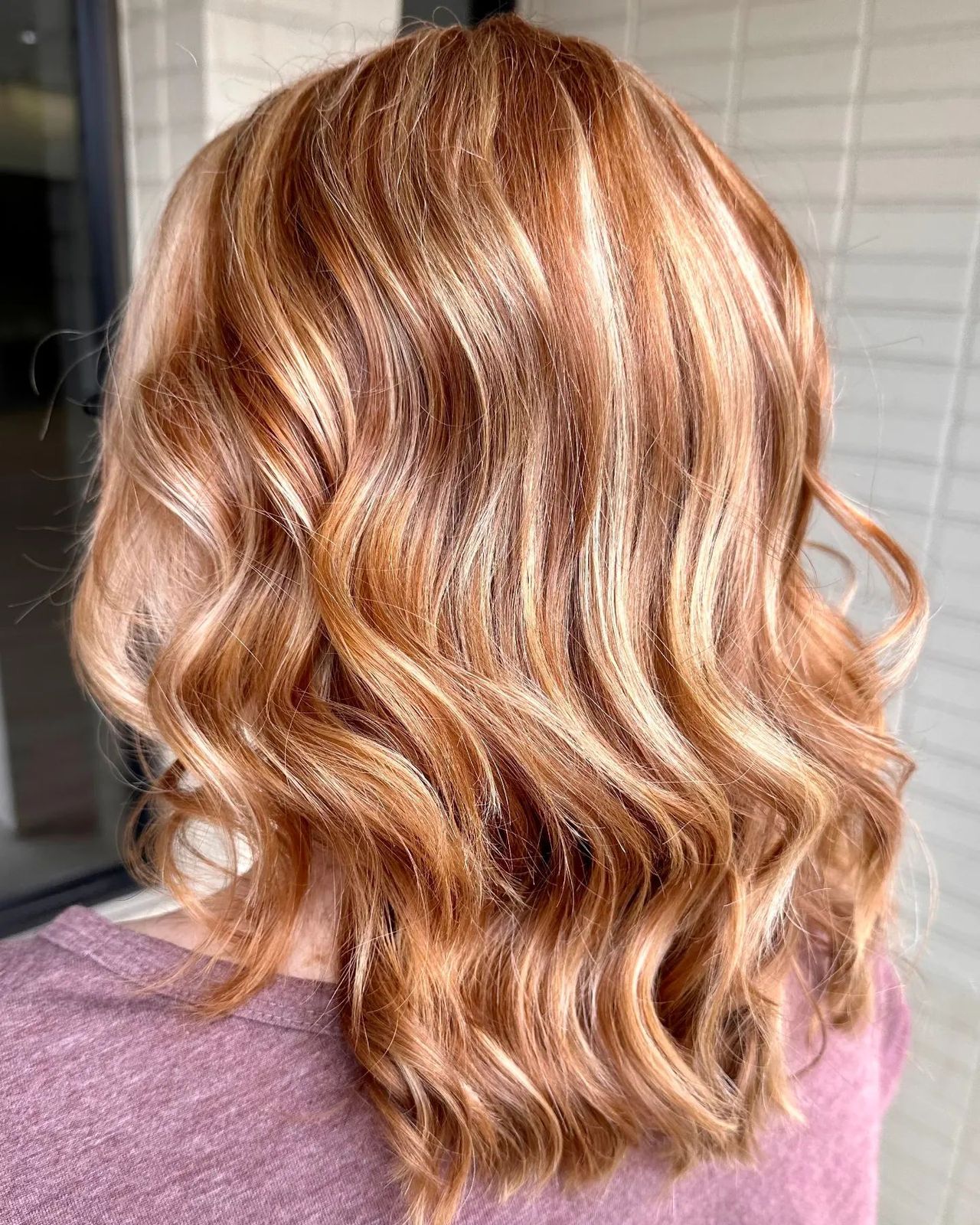
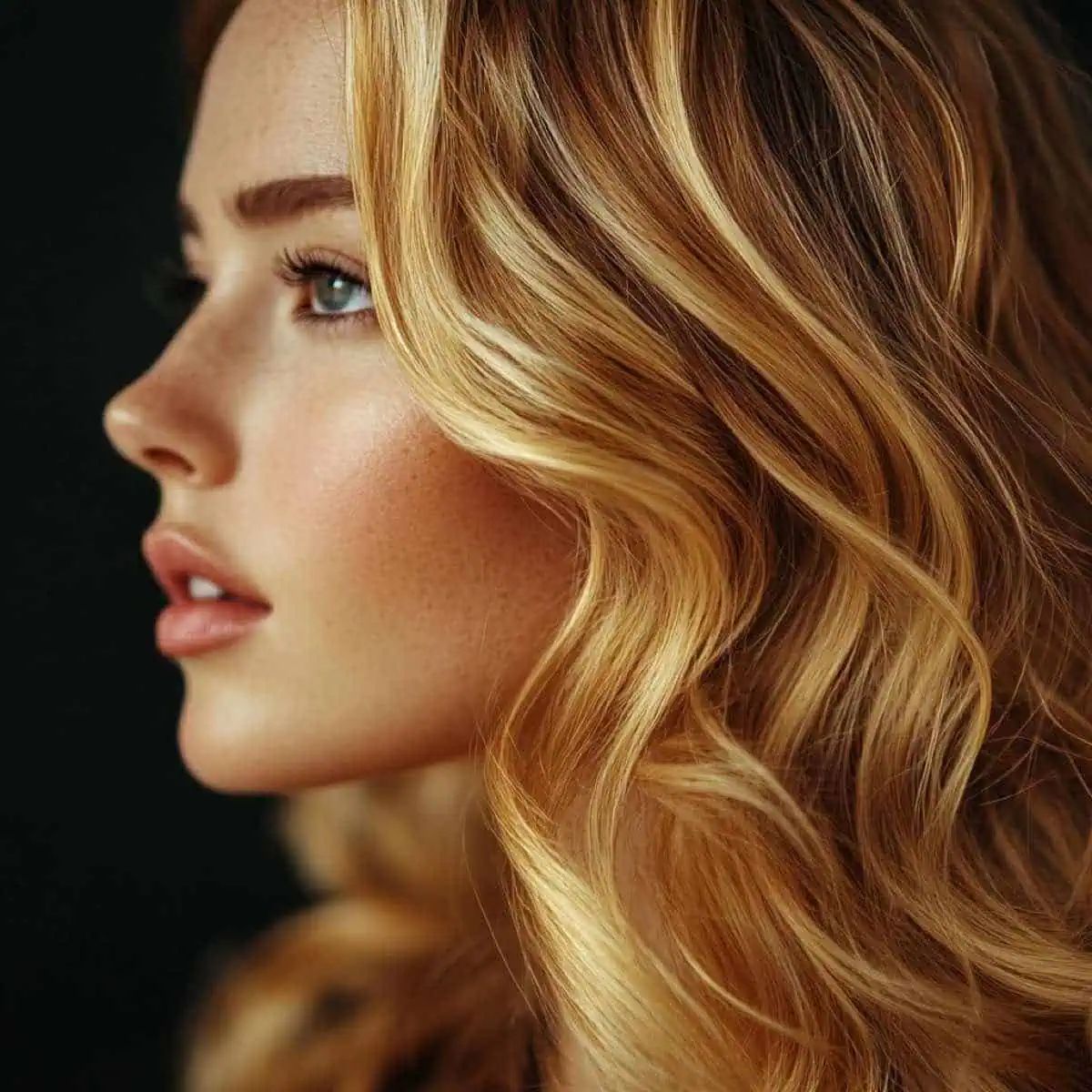
Strawberry blonde with lighter highlights, seen from the back. Collarbone length, wavy, medium density. The technique here is subtle. The strawberry blonde tone sits as the base, and the lighter highlights are painted in fine sections, not chunky weaves. That is what keeps it from looking like a stripe. The middle part lets the colour fall symmetrically. It works because the base and the highlights share a warm undertone. No hard line, no ash clash. Just a shift in depth. This is a salon job. The toner alone is too precise for a box.
Collarbone Visual Idea
Mid-Back Visual Idea
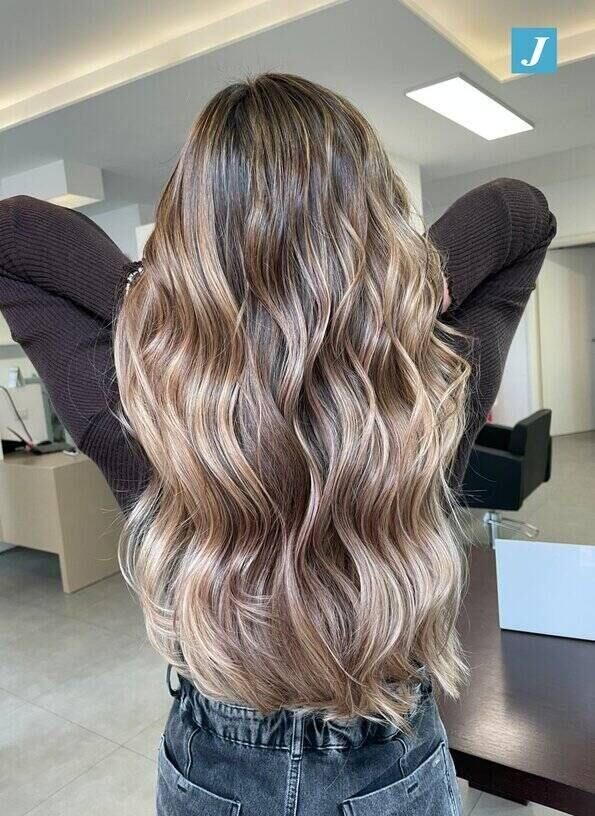
I will admit this: I booked a root shadow because I was tired of my own grow-out line. The stylist wove a lighter blonde highlight through an ash blonde base, and the root shadow softened into the mid-back length so gradually that my own roots stopped announcing themselves at week five. Thick, wavy texture helps the blend look deliberate rather than grown out. A middle part shows the depth best.
The tone stays cool enough that the lighter pieces read as sun, not brass. No bangs, just layers that let the colour fall where it wants. I forgot I had a root line for six weeks. That is the whole point.
Shoulder Visual Idea
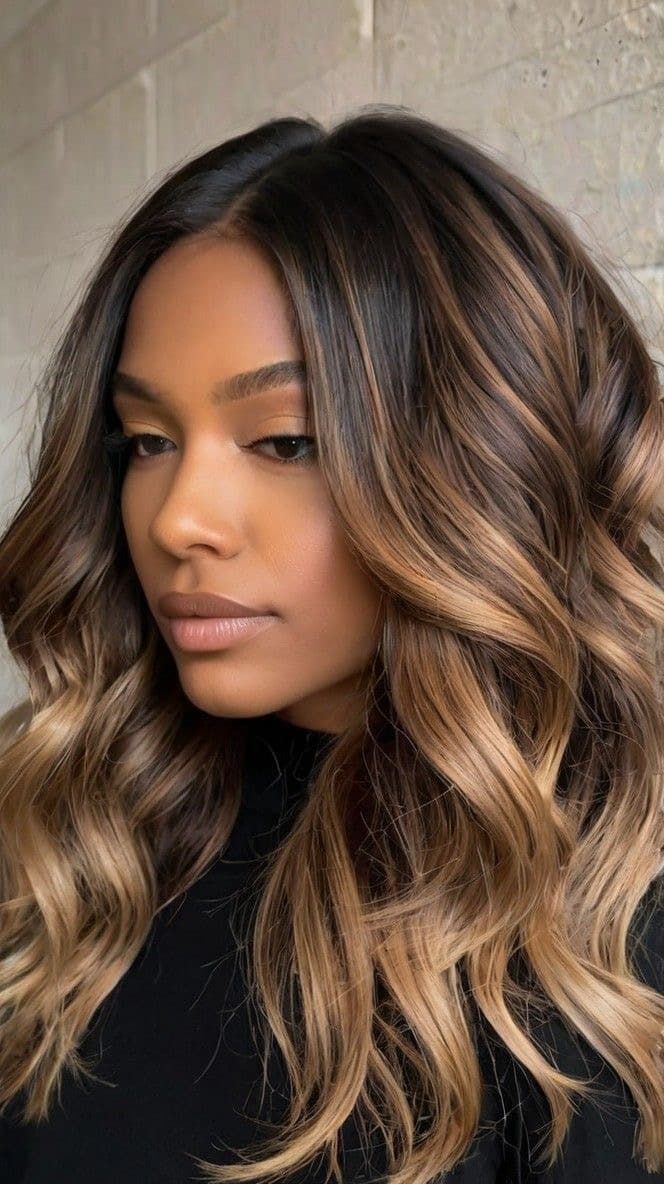
Should I compare this warm honey blonde balayage to every other balayage I have seen? I will. The seamless blend on a dark brown base is what separates it from a stripe. The tone reads warm, not orange, because the stylist painted the honey close to the root and let it fade into the shoulder-length layers. Thick, wavy texture catches the light at every bend. A middle part keeps the colour balanced on both sides.
Layers Visual Idea
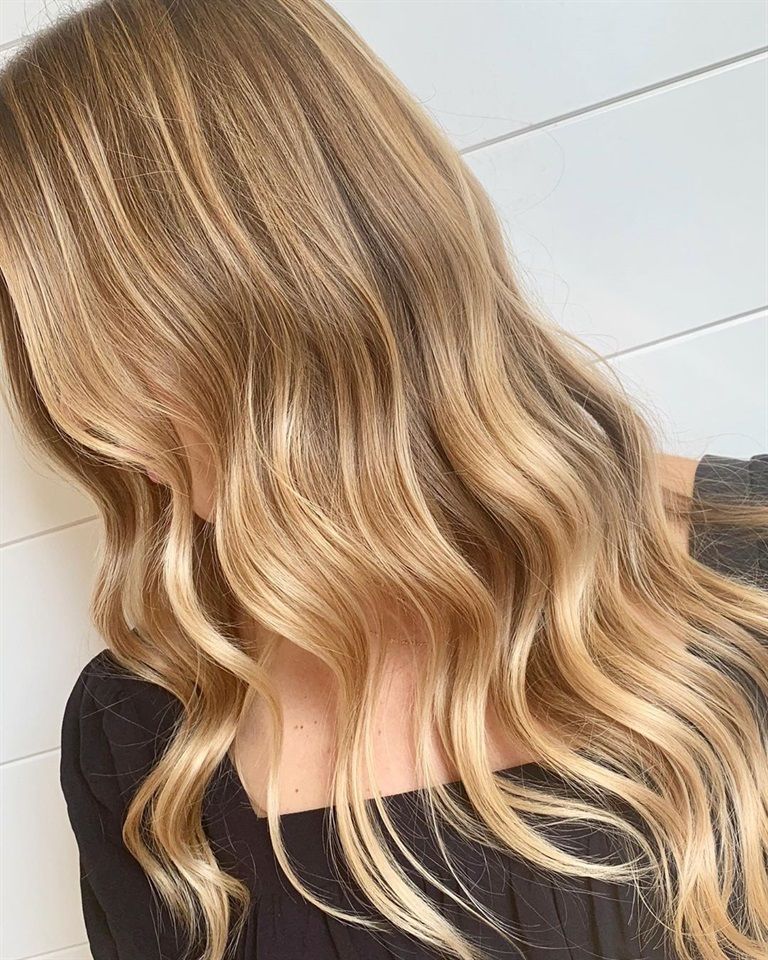
This multi-tonal ash blonde shade is best for medium to thick density. I have fine hair, and I know that a single layer of ash can fall flat. Here the lighter blonde highlights sit inside the layers, so the colour has depth even when the hair is still. The tone is cool, almost silver in the lighter pieces, which reads clean next to pink or warm skin.
Wavy texture spreads the highlights across the mid-back length without needing a curl. A side view shows the dimension best. If your hair is very fine or low density, the ash base might swallow the lighter pieces. Ask for a few chunky highlights near the face to keep contrast visible.
No Bangs Visual Idea
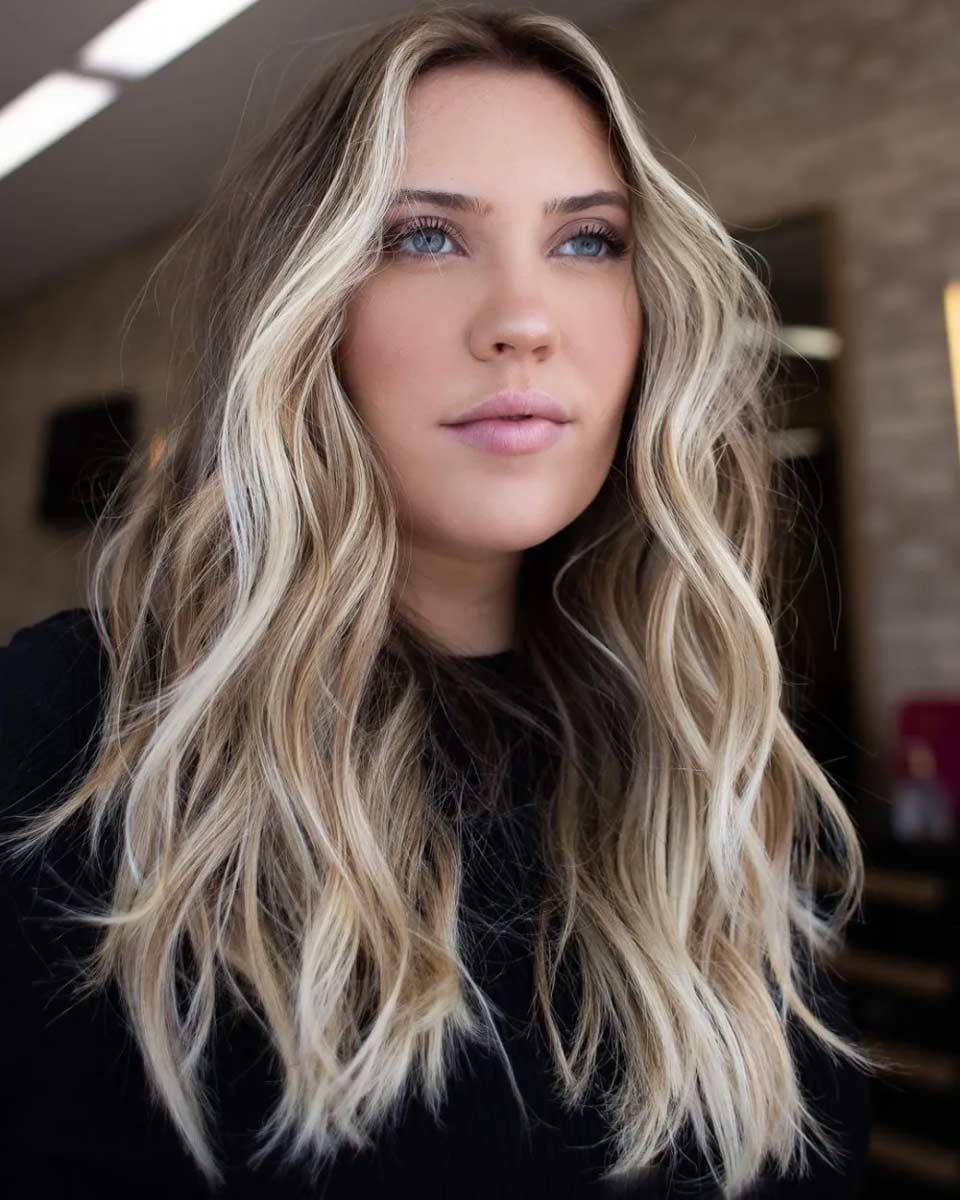
The thing about bright blonde highlights on an ash base with darker roots is that the contrast is the whole look. I have watched stylists lift a collarbone-length section and think, that is a salon job, not a bathroom-mirror job. The darker roots need to be painted close to the scalp, not dragged through the mid-lengths, or the grow-out looks like a mistake. Medium density, wavy texture holds the separation without product. A middle part shows the root shadow meeting the bright pieces. No bangs means the colour does the work.
Long Layers Visual Idea
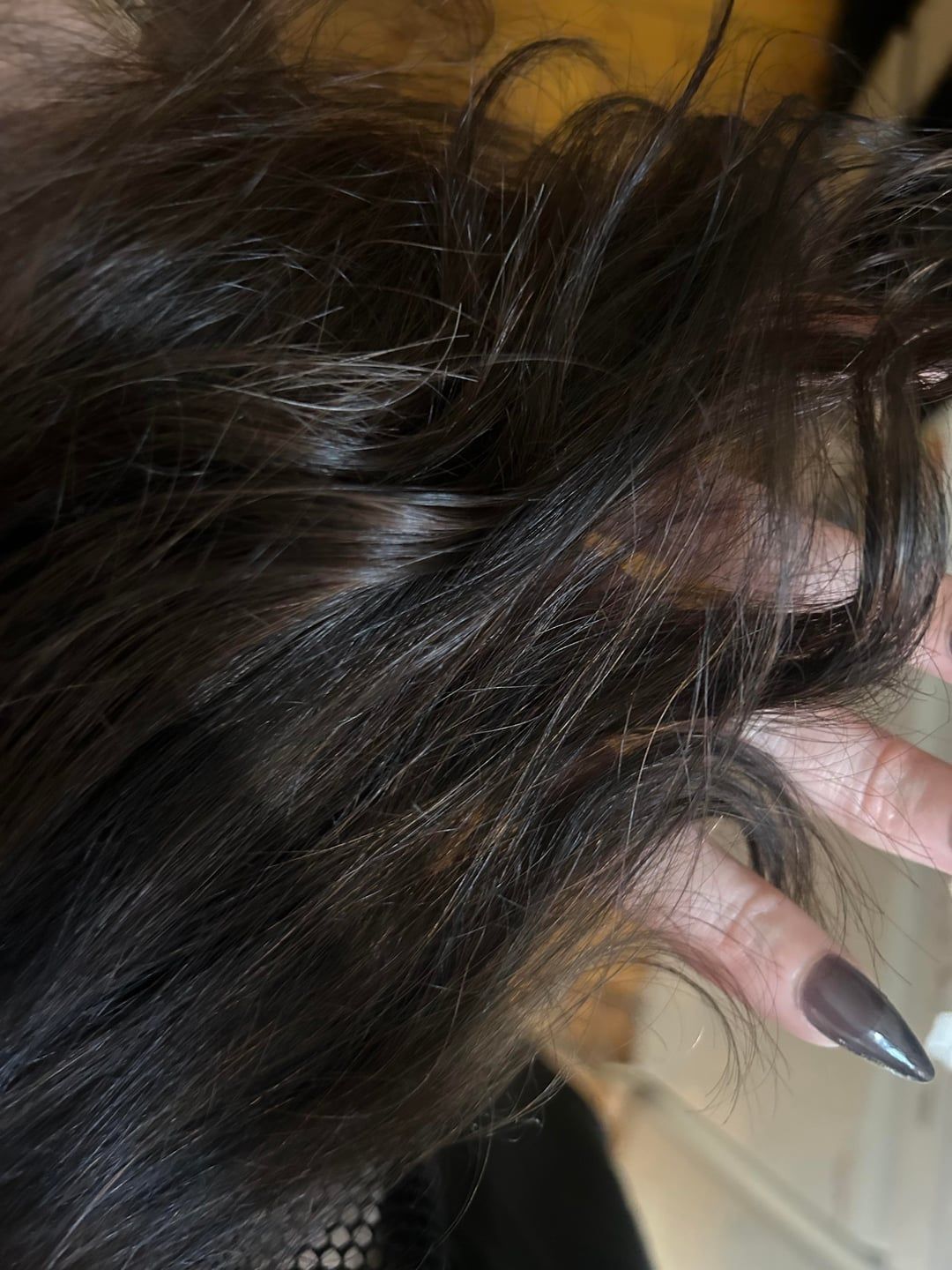
I confess I almost skipped subtle lowlights on fine, wavy hair because I assumed they would disappear. They did not disappear, but they did something worse: they looked muddy when my hair air dried messy. The dark brown base swallowed the subtle blonde lowlights in the mid-back length, and the tone read flat. A side part helped, but only if I actually dried the layers with some direction. The honest downside is that subtle lowlights need styling to show. If you air dry and hope, the contrast stays hidden in the long layers.
Front View Visual Idea
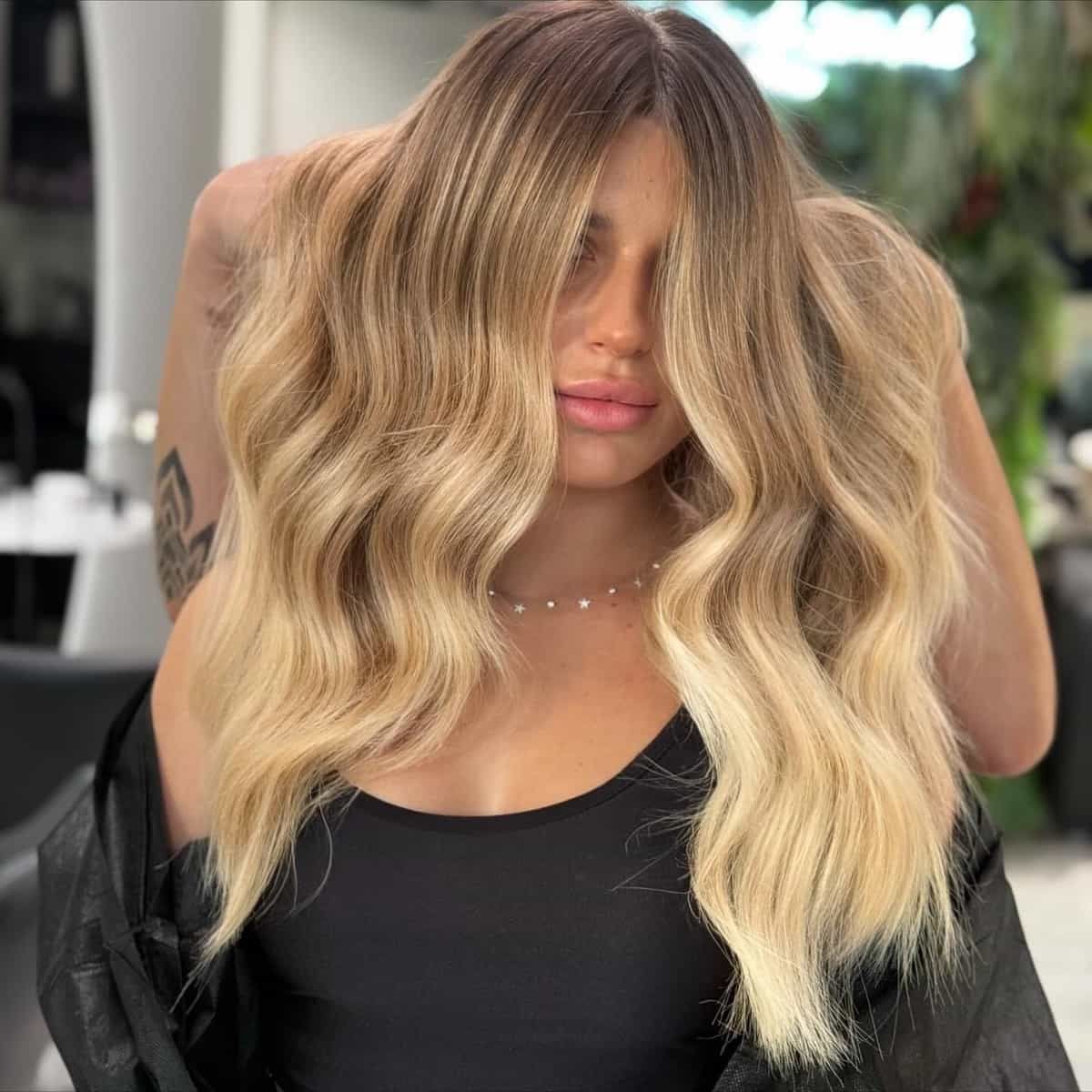
That dark root line meets blonde ends, and the first thing I notice is how deliberate the contrast reads. The dark blonde base is the anchor, then lighter blonde highlights and lowlights weave through the mid-lengths and ends, all on a thick, wavy, mid-back canvas with no bangs and a middle part. The technique here is a foil-based highlight and lowlight placement, not a single-process all-over colour, which is why the dimension holds from root to tip. The wavy texture helps the lighter pieces sit on top instead of sinking into the base. A middle part keeps everything symmetrical, so the contrast reads clean, not chaotic. For daily styling, this needs a wave refresher by day two, and the dark roots buy you about six weeks before the blonde starts looking disconnected. I would not call this low-maintenance, but the grow-out is kind.
Upkeep means a toning gloss every eight weeks to keep the blonde from pulling brassy against the dark base. The wavy texture hides regrowth well, but the front pieces will show root first. If you flat iron this, the contrast flattens too. Let the waves do the work.
Back View Visual Idea
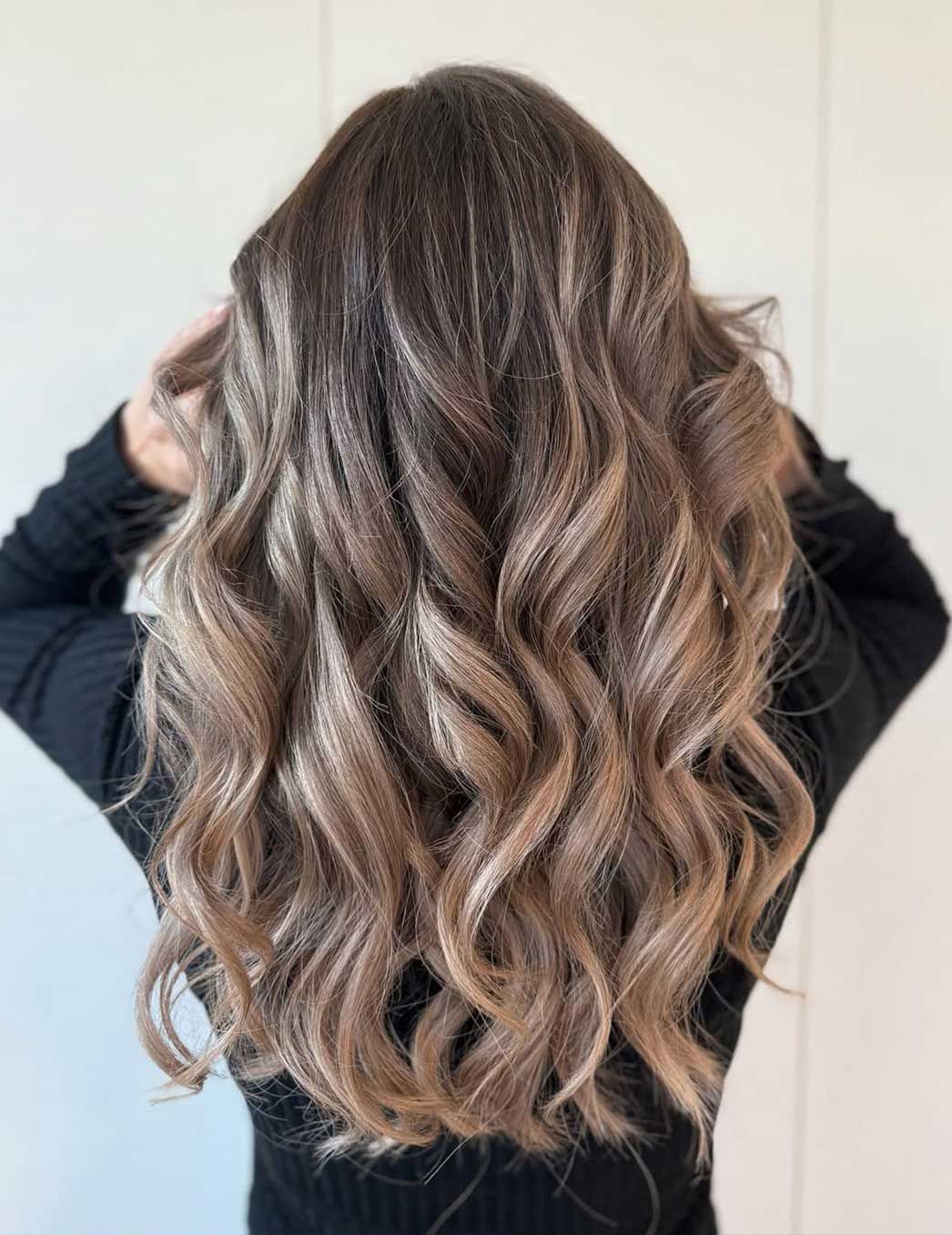
This is the kind of colour that makes you turn your head in a grocery store aisle. Medium blonde base, darker blonde lowlights woven through the interior, lighter blonde highlights catching the surface, all on thick, wavy, mid-back hair with long layers and a middle part. The technique is a babylight placement, fine sections painted close to the root, then a heavier lowlight weave through the mid-lengths to create that rich contrast without a hard line. The layers help the colour move, so the darker pieces peek through when the hair shifts. No bangs, which lets the dimension speak from crown to hem. The back view is where you see the depth, because the lowlights sit underneath the highlights and create a shadow that reads as natural density. This is a salon colour, no question. The fine-section technique takes a steady hand and a good eye for placement.
Middle Visual Idea
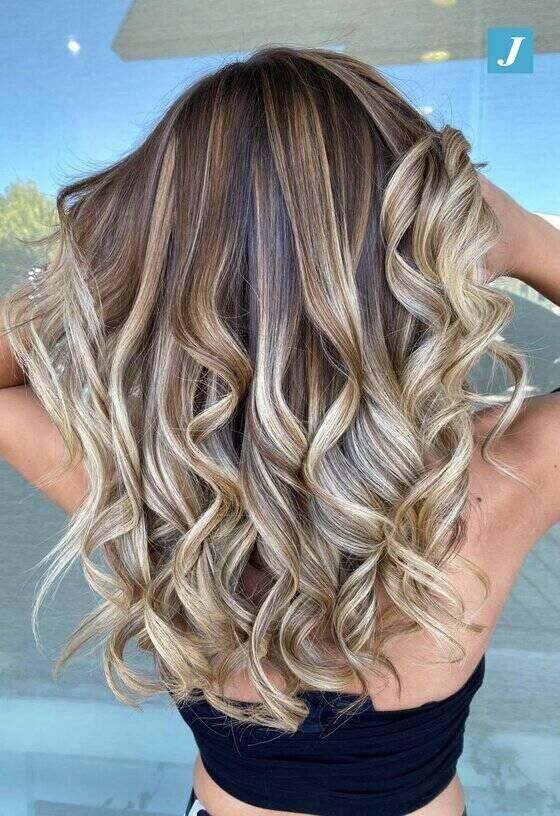
This one works best on medium to thick density, because the contrast between the dark blonde base and the lighter blonde highlights and lowlights needs enough hair to read as dimension, not stripes. Collarbone length, wavy texture, no bangs, middle part. The colour sits on a layered cut, which lets the lighter pieces fall forward and the darker ones stay underneath. If your hair is fine or low density, the lowlights can overwhelm the base and make the whole thing look darker than intended. For thick hair, this combination adds movement without losing depth. The wavy texture softens the transition between the shades, so the grow-out blends naturally. A middle part suits oval and heart-shaped faces here, because the lighter pieces frame the face evenly on both sides.
Long Visual Idea
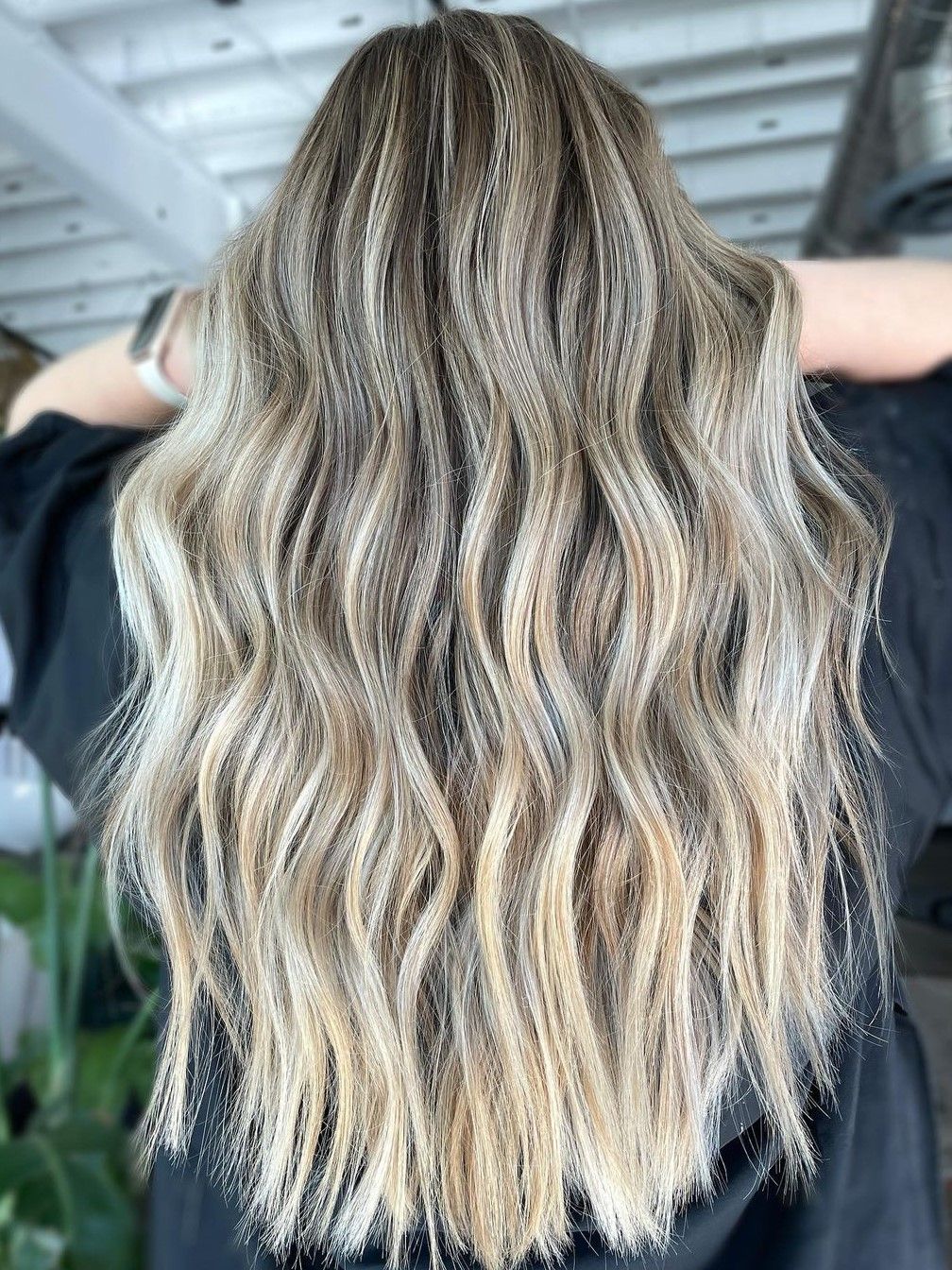
Have you ever sat in a salon chair and watched your blonde go from flat to dimensional in one session? That is what dark lowlights did for me. I had been blonde for three years, and my colourist kept saying I needed depth. I ignored her. Then I did a single lowlight weave through the mid-lengths of my long, wavy, thick hair, and the blonde suddenly had a shadow that made it look expensive, not brassy. The base stayed blonde, the lowlights were a dark blonde tone, and the contrast did not scream. It whispered. The long layers helped the lowlights sit underneath the highlights, so the dimension moved when I turned my head. No bangs, middle part, loose waves. The grow-out was the real win. The dark lowlights blurred the root line so I stretched my appointments to ten weeks instead of six. I should have listened sooner.
Loose Waves Visual Idea
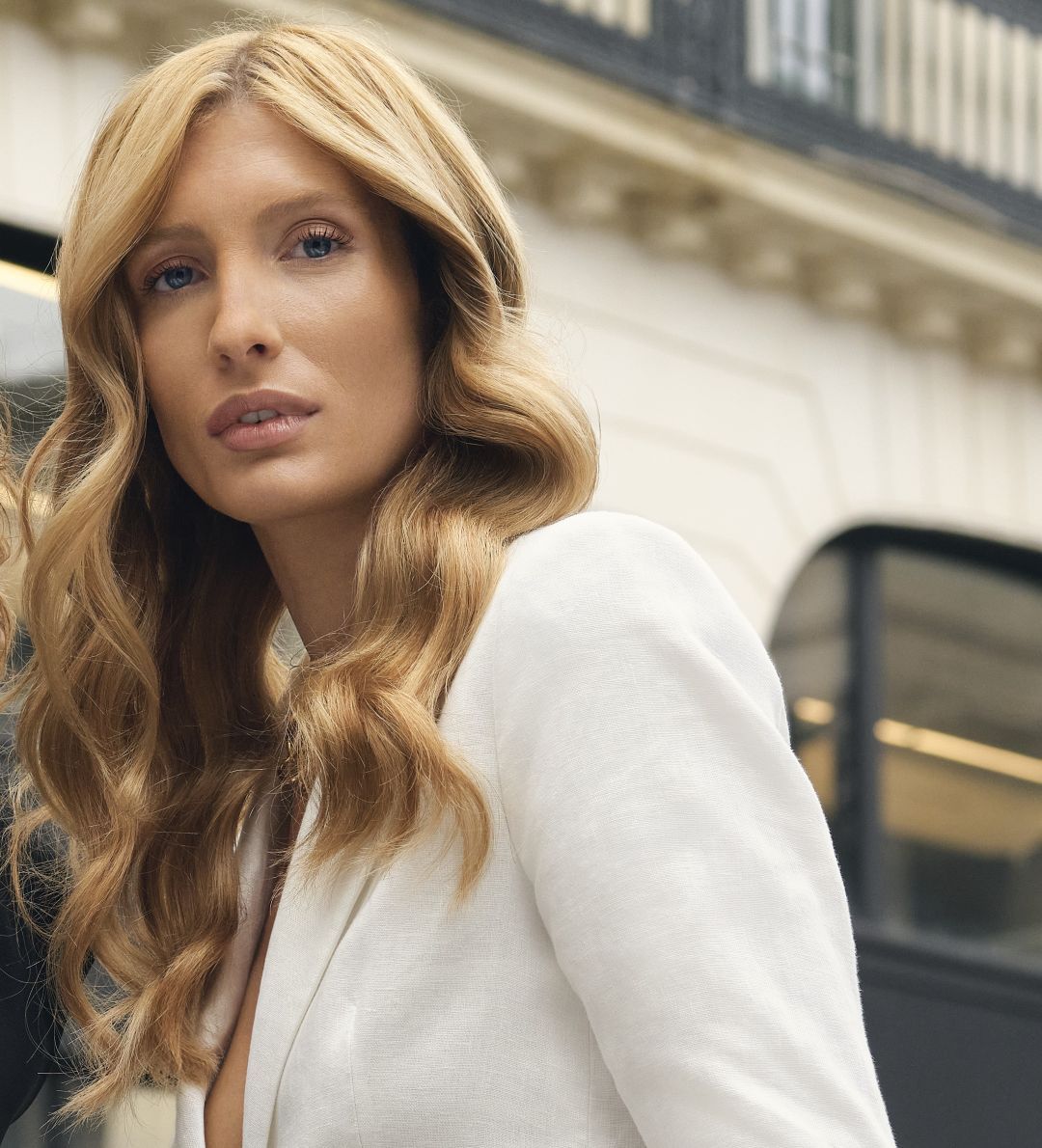
The warm tones in this honey blonde base with darker blonde lowlights land squarely in fall, when the light goes golden and you want your hair to match the season. Mid-back length, thick, wavy texture, long layers, no bangs, middle part. The lowlights are woven through the interior, so the honey base stays dominant on the surface, but the darker pieces catch the light when the hair moves. The loose waves help the contrast read as soft, not stark. This is not a high-contrast colour, it is a tonal shift that reads richer as the waves catch the afternoon sun. The season matters here. In summer, the honey can pull too warm against sun-bleached ends. In fall, it settles into a depth that feels intentional.
Side View Visual Idea
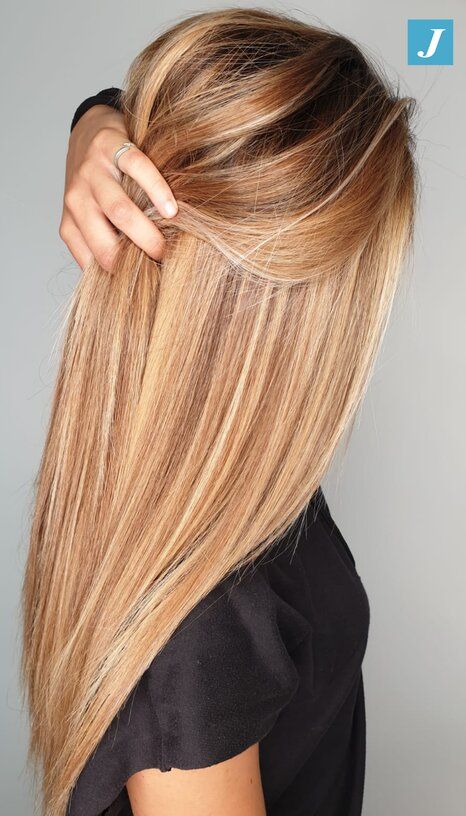
I’ll admit it: I booked this side-view moment because I wanted the warm blonde base with lighter blonde highlights, and I wasn’t about to attempt it at home. The lowlights here do the heavy lifting, adding depth that keeps the lighter pieces from washing out a thick, straight texture. A middle part lets the tone land where it will, and on long hair that falls past the collarbone, the contrast reads clearly. The catch is the contrast itself: on wavy hair, dark and light tones can separate into stripes if the stylist doesn’t weave them finely. Ask for a root smudge and fine weaves, so the warmth melts instead of jumping.
Wavy Visual Idea
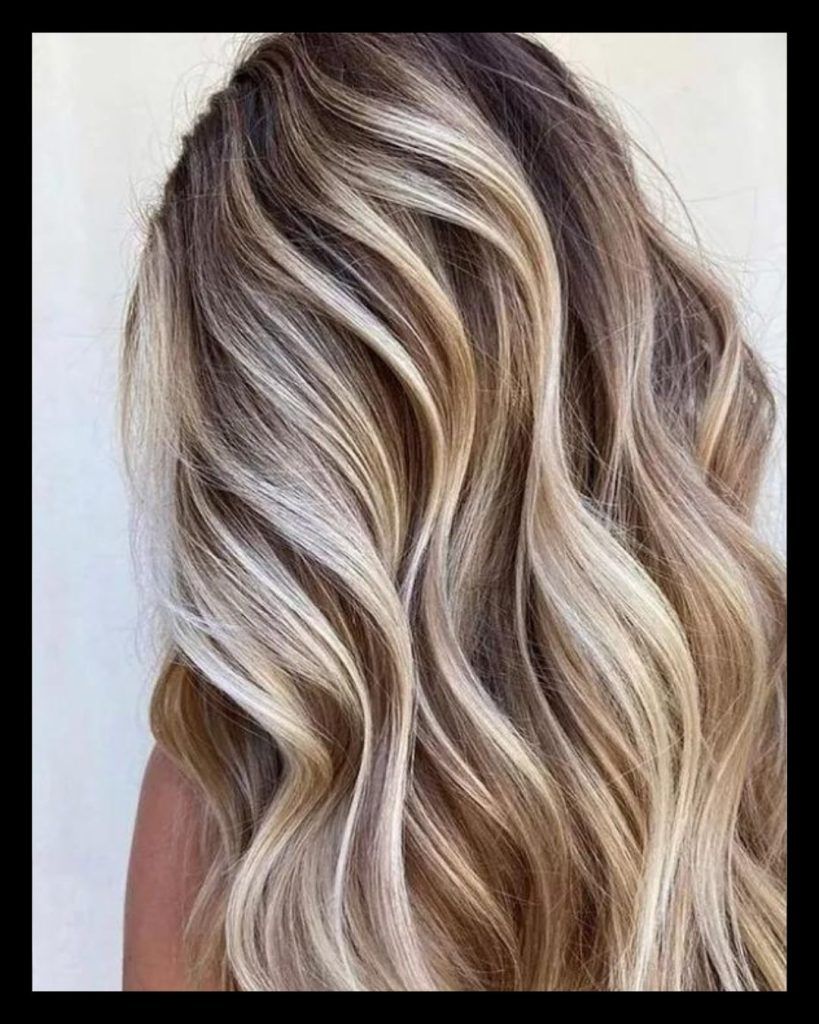
Dark base with blonde highlights and lowlights sounds simple until you try to keep the two from fighting. On mid-back wavy hair with medium density, the contrast is the whole point: the dark roots give the blonde somewhere to sit, and the lowlights stop it from going brassy. I’ve learned that this is a salon job, not a box-dye Sunday. The technique needs a steady hand to place each lowlight close to the root, then blend downward so the wave doesn’t create a hard line. The honest downside is upkeep: the dark base shows regrowth fast, and the lighter pieces fade into a muddy mess if you skip a toning visit.
Final Thoughts
After writing all 32 of these, I am booking the ash blonde bob with subtle lowlights next. Not because it is the most dramatic, but because it is the one that still looks good at week eight. That is the whole point of lowlights: they buy you time, not trouble.