

33 Elegant Cornrows Hairstyles 2027 with Geometric Patterns
Elegant Cornrows Hairstyles 2027 featuring geometric patterns and high bun options for a sophisticated look. See 33 styles and save your favorites.
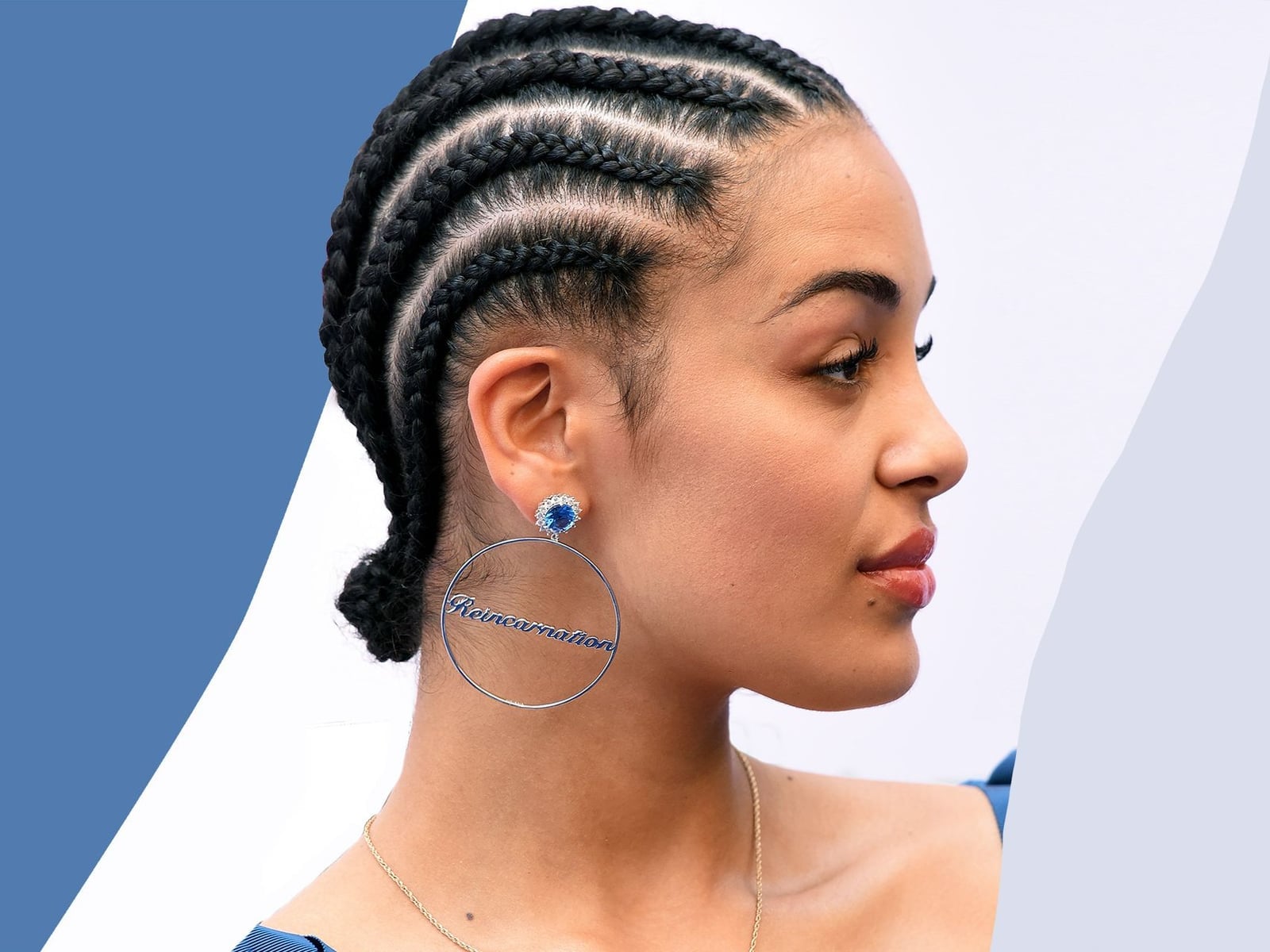
You are scrolling through braid inspo again, looking for something that reads neat without reading complicated. That is the sweet spot this year: cornrows that hold for two weeks, photograph well for dinner plans, and still look intentional at day ten.
Which is why Elegant Cornrows Hairstyles 2027 fill so many saved boards. 33 ideas here, from five-minute scalp patterns to full-head geometric work that takes an afternoon. For straight or coily texture, fine or dense, a ponytail or a bun or loose ends. The hard part is not finding a style you like. It is picking one.
Sleek cornrows into a thick braided ponytail
Middle part rows run straight back before merging into a single thick braided ponytail. You need coily, thick hair that reaches the scalp, fine hair lets the part lines blur. Ask your stylist for: neat cornrows into a thick braided ponytail. A light-hold gel at the hairline each morning keeps the sleek look intact through a workday. Skip it if you prefer styles with no added extensions or a less structured finish.
Long, thick cornrows with a middle part
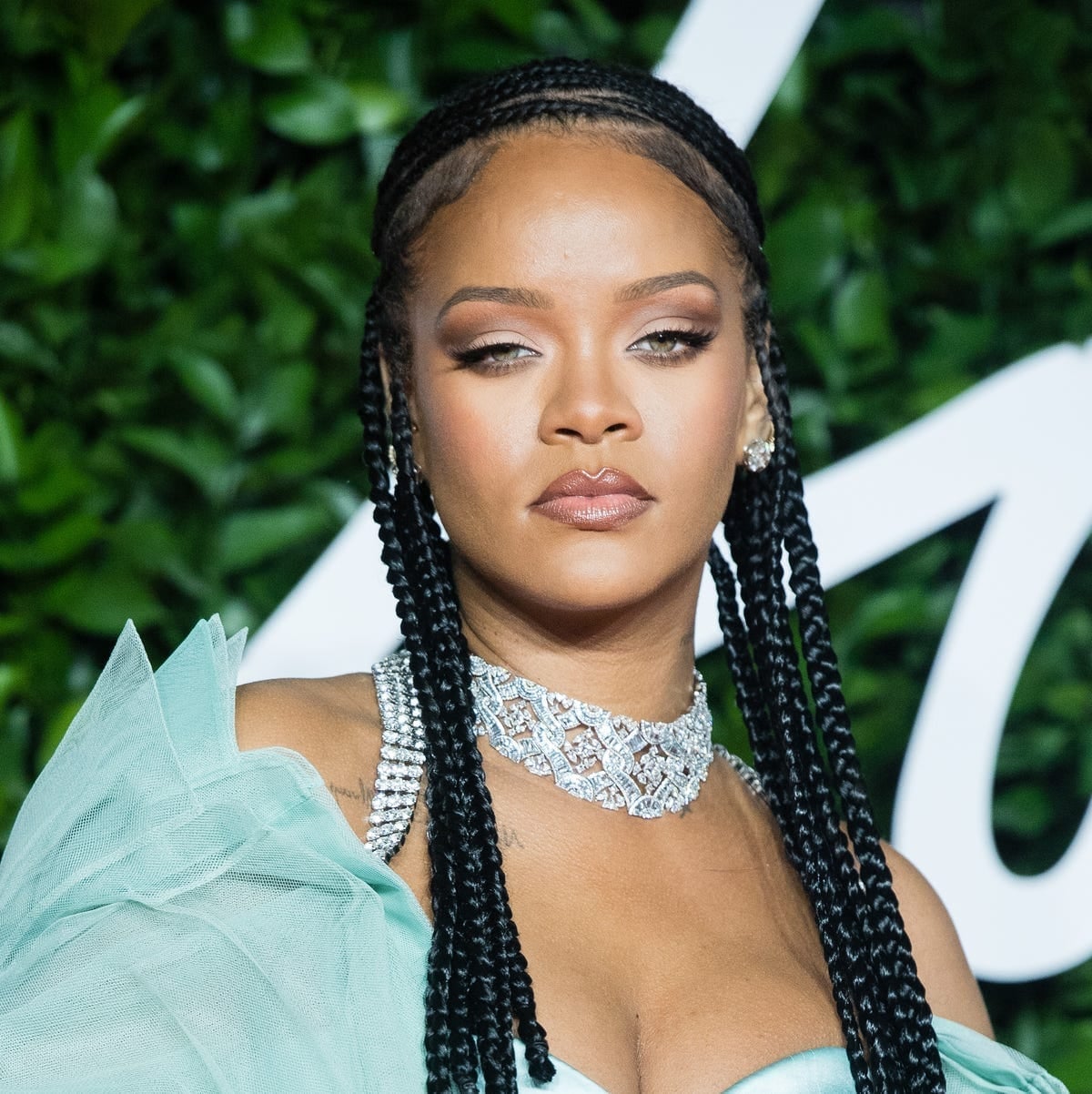
Straight, thick braids fall past the shoulders from a clean middle part. The weight of a long set pulls at the roots, so the part needs precise tension to stay crisp for weeks. A weekly scalp oiling keeps the skin underneath from tightness. The catch: fine hair or a tendency to tangle makes this length more maintenance than it looks.
Geometric cornrows with straight black braids
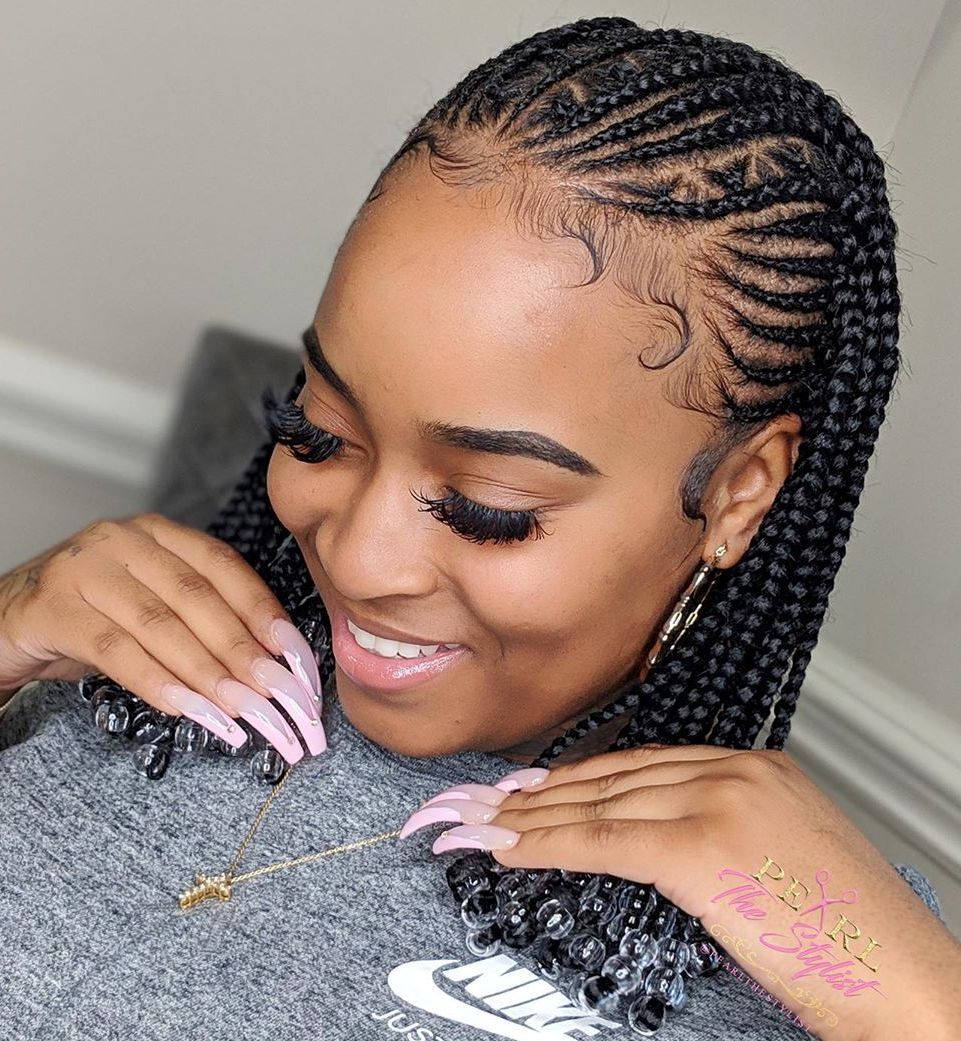
A standard cornrow set runs straight back; this one adds angled sections near the hairline that change direction. The difference is in the prep: a salon maps the pattern before braiding starts, so a DIY attempt will lose the symmetry by row three. Request from your stylist: cornrows with geometric patterns near the hairline, cascading straight braids. Pass when you prefer softer, less defined hairline details.
Geometric cornrow pattern to mid-back braids
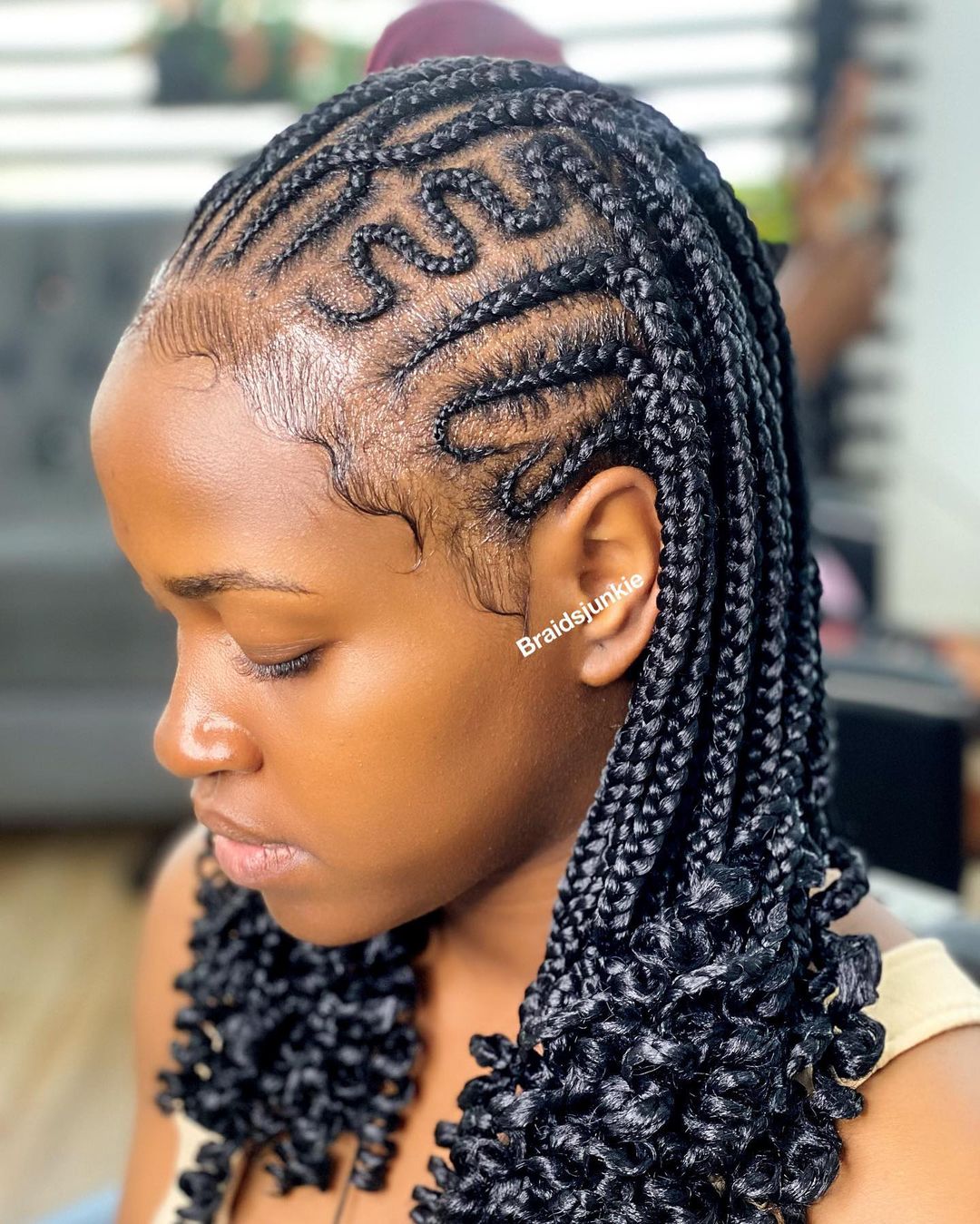
A centered parting opens the crown, where braids switch direction in a grid-like pattern, then drop into thick coily falls that reach mid-back. Two textures in one set: the scalp section stays flat and precise, the length gets volume from the coily extension. Book it as: cornrows with geometric pattern at the crown transitioning to coily braids. Not for anyone who wants uniform braid texture from root to tip.
Cornrows in a high bun with dark red highlights
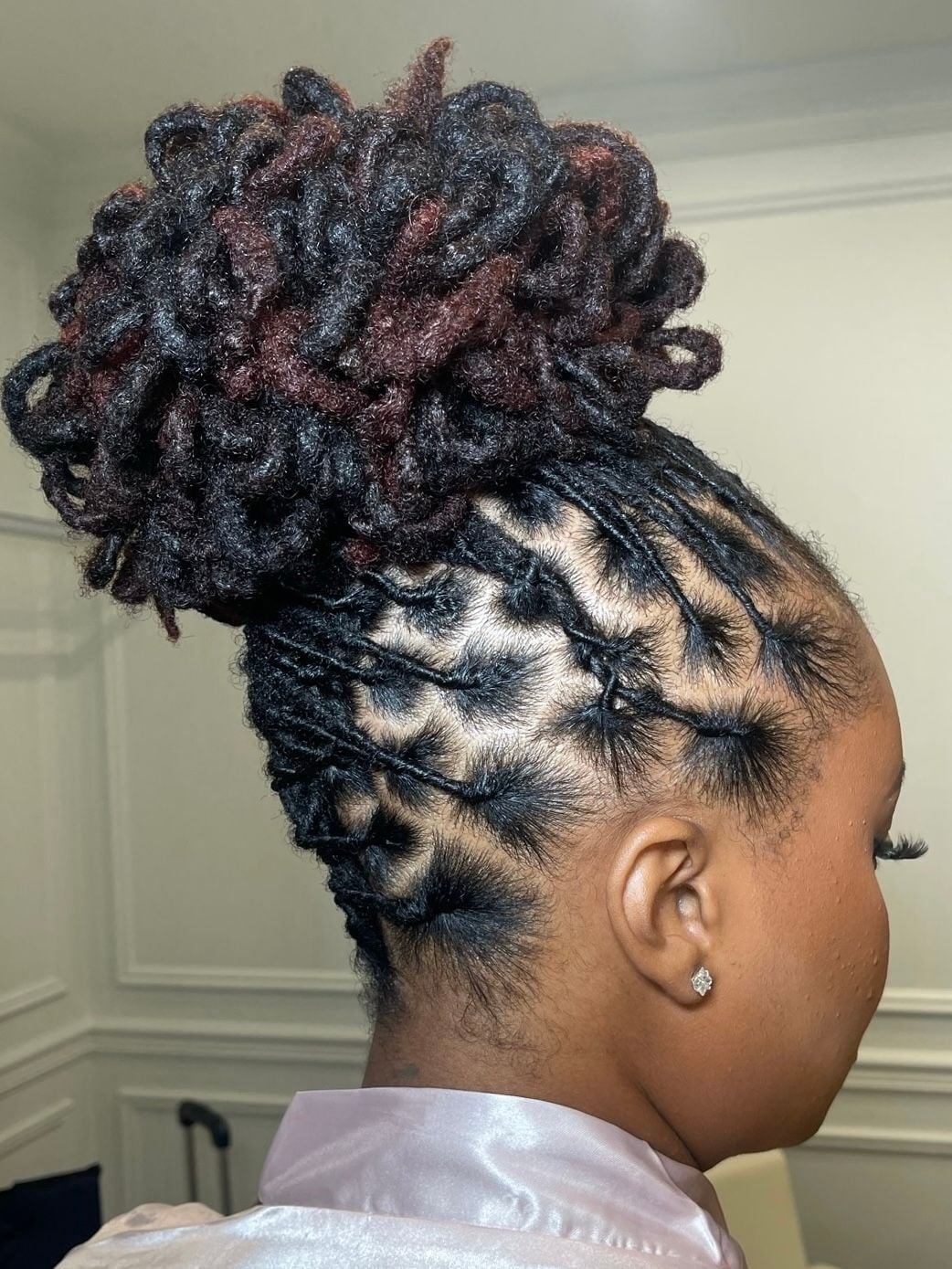
Black cornrows sweep into a high bun, with thin dark red strands woven through the coily base. The geometric pattern at the crown stays visible even with the bun pulled up. Ask your colorist for: subtle dark red highlights through the cornrows. The drawback: the bun sits heavy, so fine hair or a sensitive scalp will feel the pull by evening.
Geometric cornrows into a high ponytail
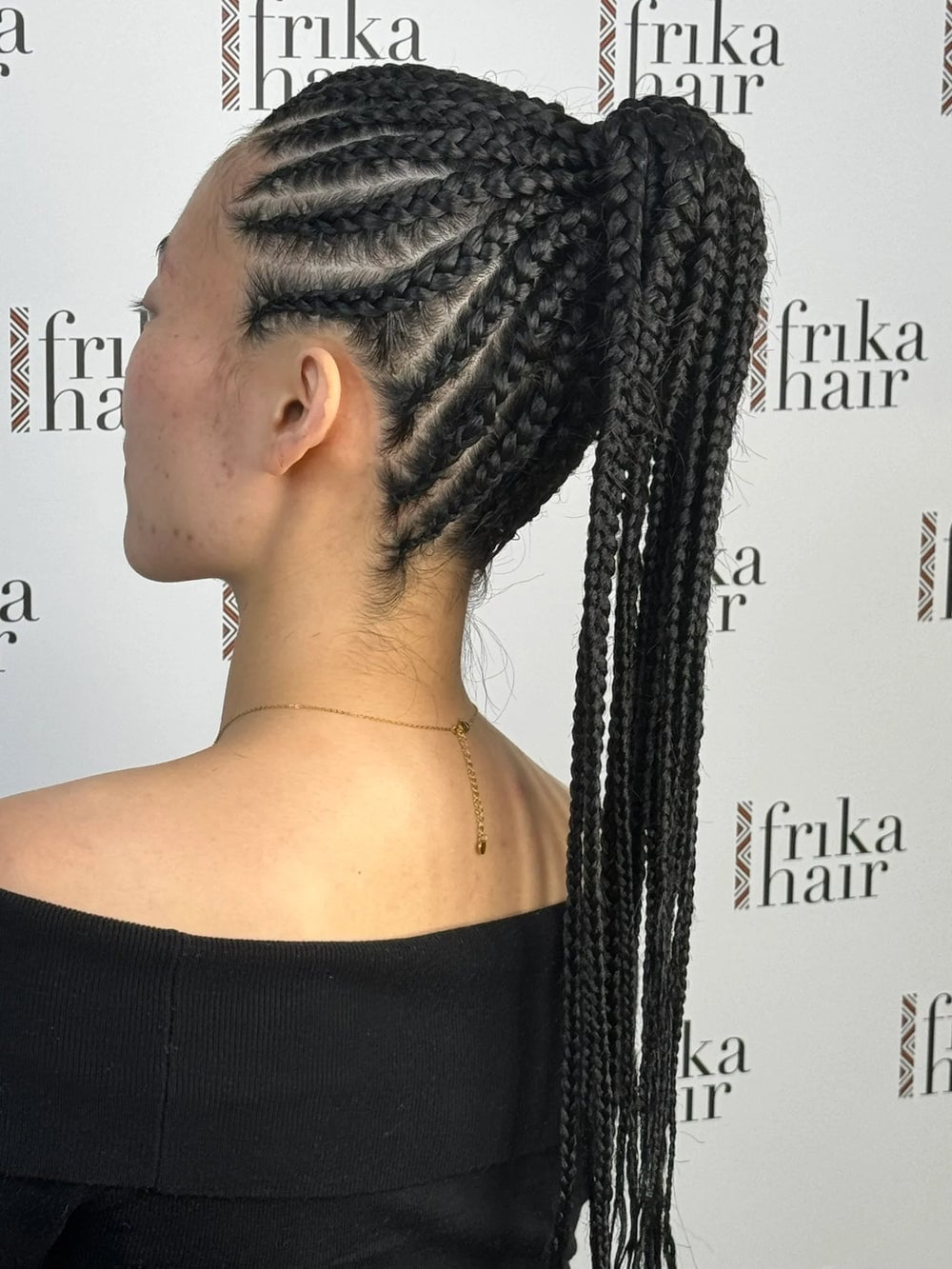
Does a geometric pattern work with a ponytail, or does the shape get lost when the hair is pulled back? The straight, thick cornrows here keep every angle visible from the side. A middle part splits the scalp into clean halves, and the high ponytail clears the neck completely. It works best with straight, thick hair that can hold a defined shape. A strong-hold hairspray keeps the pattern sharp and the ponytail smooth between washes.
Intricate scalp braids into a ponytail
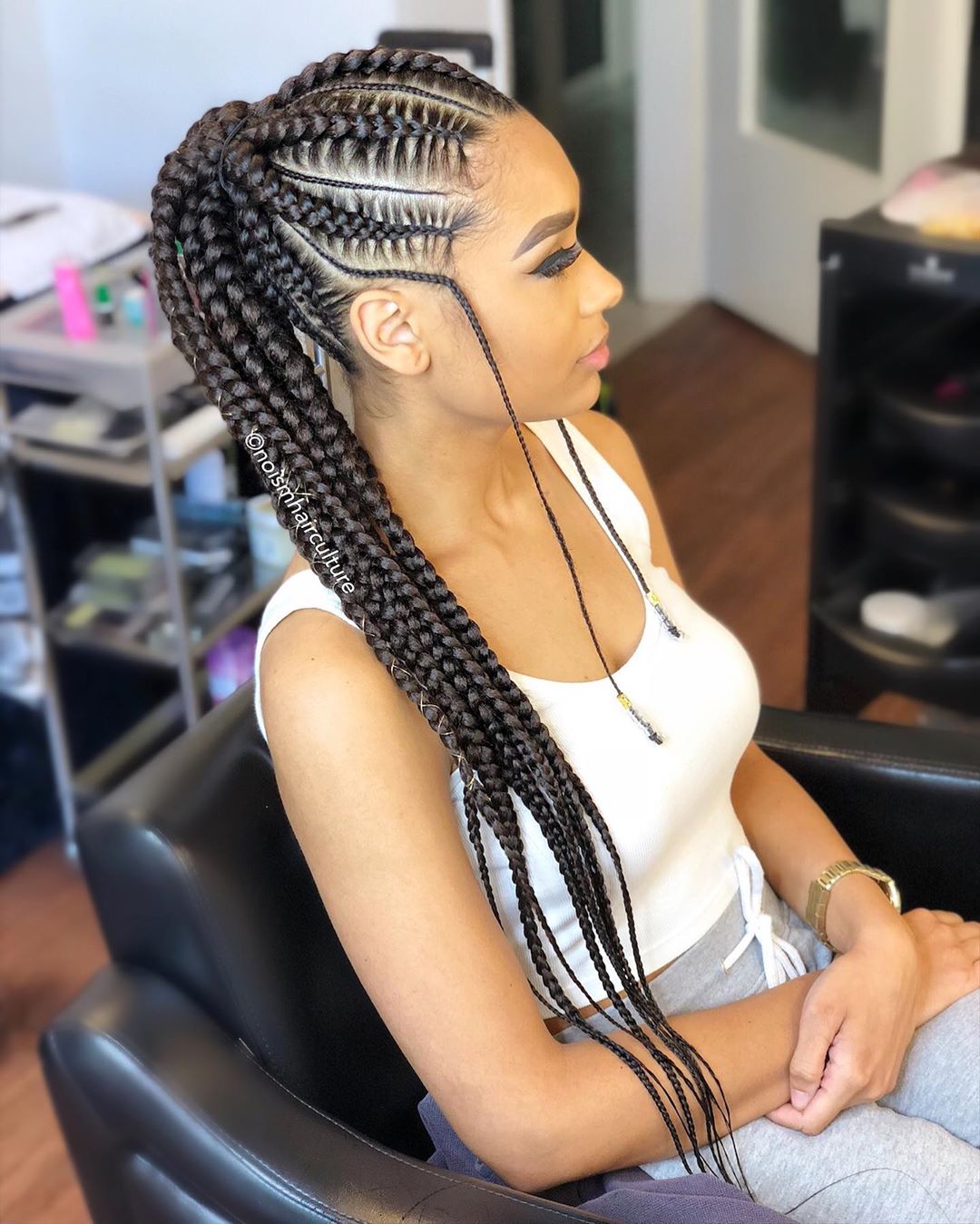
The design starts at the hairline and builds a precise geometric pattern across the whole scalp. Every braid is straight, thick, and slicked back toward a high ponytail. That close-to-the-skin construction means the pattern stays readable for weeks. Request from your stylist: cornrows with intricate geometric pattern into a high ponytail. A light serum brushed over the braids keeps them shiny and cuts down on flyaways around the part. The hold is firm from day one.
This is a salon-leaning style, not a weekend project. The scalp tension is consistent, so there is no loose section to re-braid on your own. Toning the black base at week 33 keeps the color uniform.
Neatly braided cornrows into a high ponytail
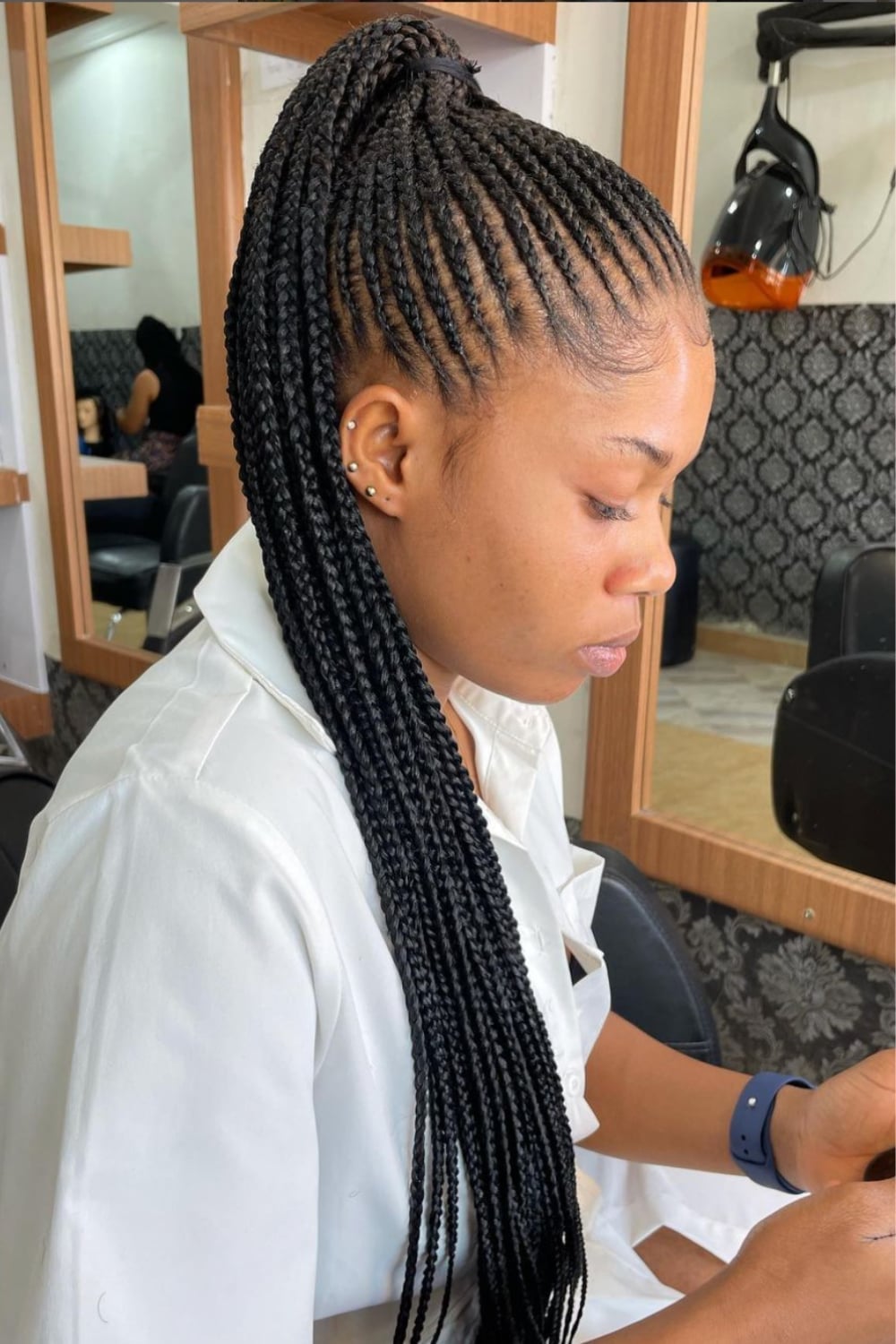
Sleek black cornrows start at a middle part and run straight back into a high ponytail that reaches mid-back. The neat, straight braids create an elongated silhouette from the scalp to the ends. The texture is straight and thick, so the braids hold their shape without much fuss. A silk scarf over the ponytail at night keeps the finish smooth. The hold is solid for a full work week.
Thick braids flow into a braided ponytail, close-up take
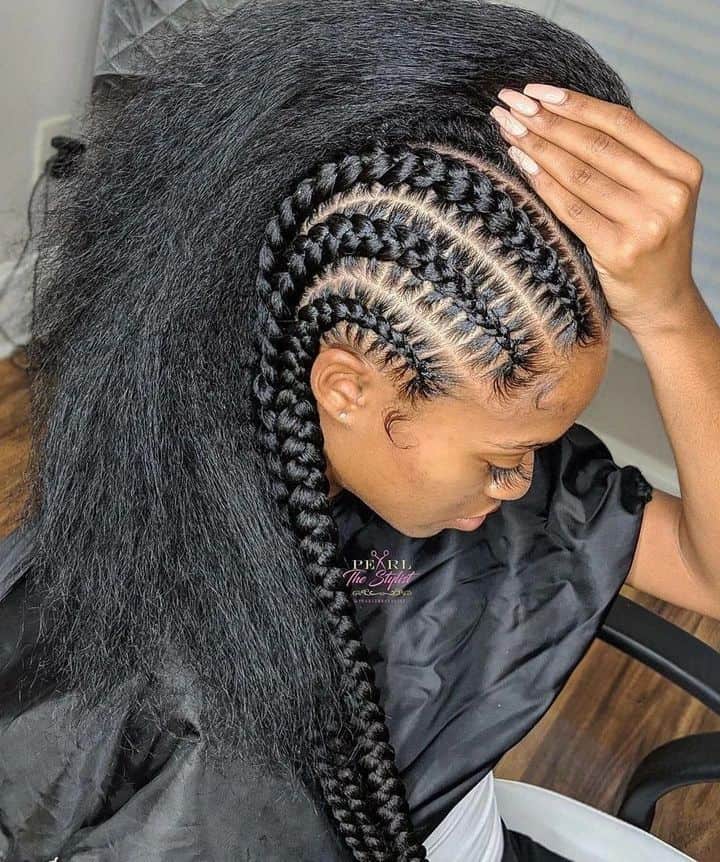
A middle-part cornrow set usually ends in loose braids or a gathered ponytail. Here, the thick cornrows themselves keep braiding all the way down, merging into a single thick braided ponytail that carries the same straight, deep black texture from scalp to tip. The difference is weight: a continuous braid pulls heavier than separate rows, so the tension at the nape needs to be even from the start. Skip it if you prefer styles that show off natural texture or volume, since this one is sleek and uniform throughout. Thick, straight hair starting at the scalp holds the shape best; finer textures let the part lines blur by week two.
The catch is a practical one. A braided ponytail this thick takes longer to dry after washing, and the weight at the nape can cause tension headaches in the first few days. A light serum on the braids keeps the shine consistent, but the real work is in the initial install. Request from your stylist: thick cornrows into a braided ponytail.
Medium brown cornrows styled down the back
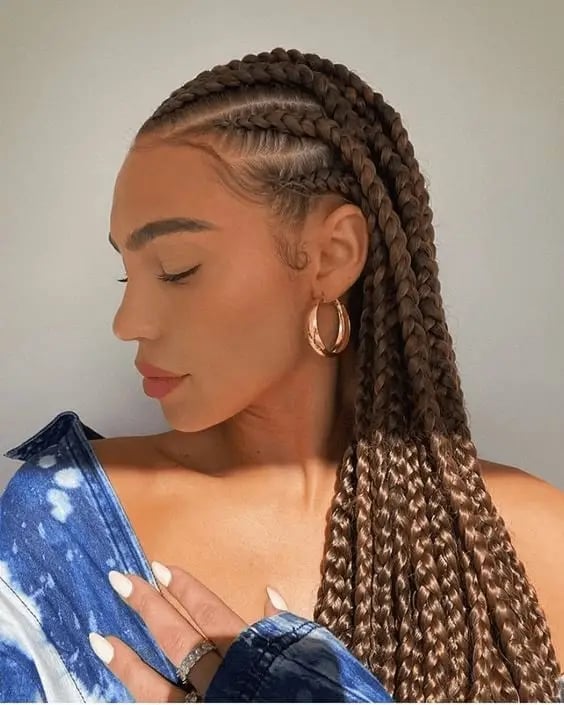
Medium brown cornrows are a color choice, not a default. The neat parting and thick, straight braids fall down the back, with subtle waves visible at the ends. That softer brown base looks more casual than a true black. A gentle brush detangles the wavy ends without pulling the braids loose. Expect salon maintenance every six to eight weeks to keep the color even and the part lines crisp.
Dark brown cornrows with copper highlights and heart design
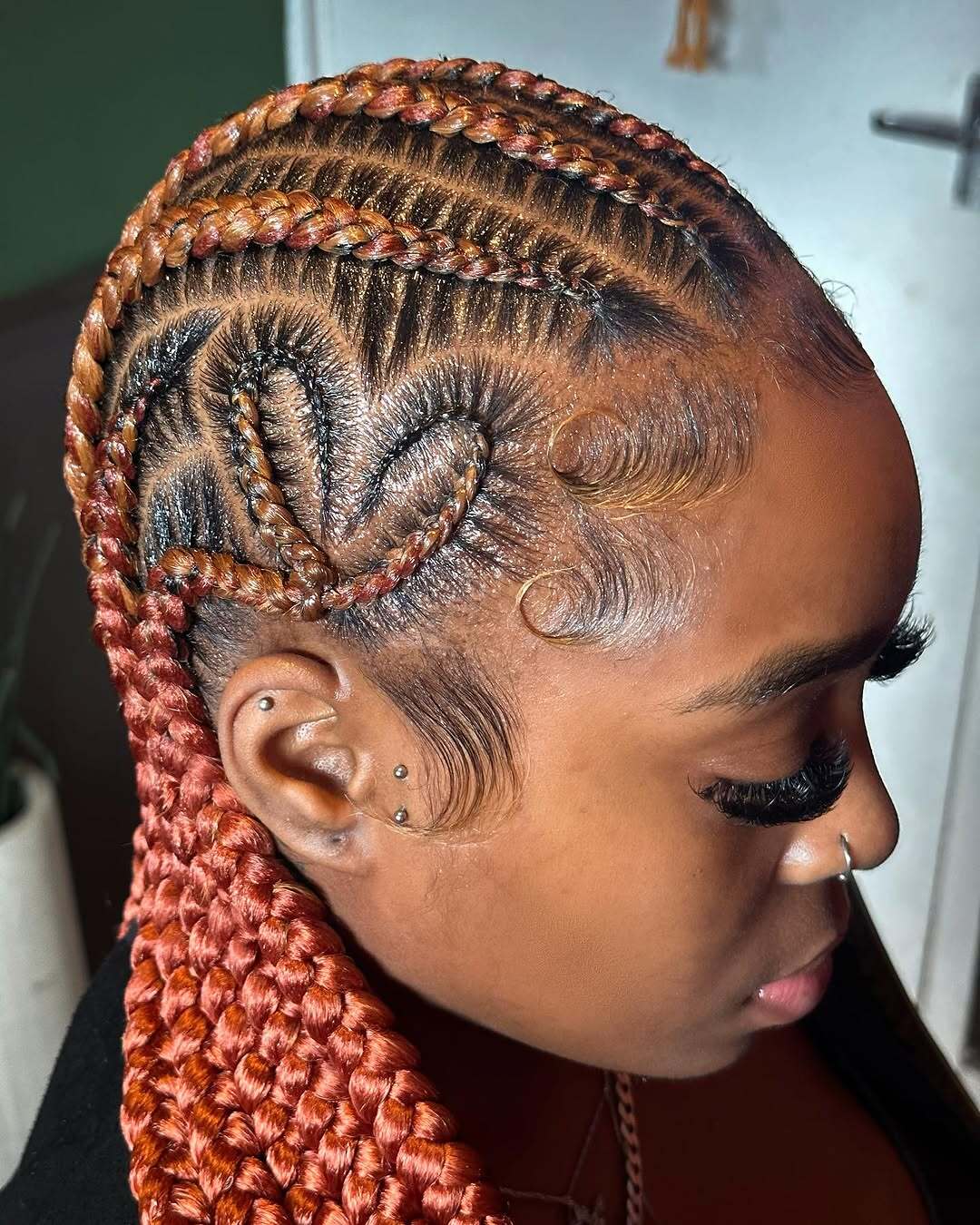
A heart-shaped cornrow design takes about two hours longer than standard rows. The dark brown base with copper highlights makes the shape read clearly from across the room. Thick, straight hair gives the braided extensions a clean foundation. Book it as: dark brown cornrows with copper highlights and a heart design. A single-tone color or a less intricate pattern is an alternative. A DIY approach will not get the heart shape sharp enough. This one needs a salon chair and a stylist who works with geometric braiding regularly.
Dark brown cornrows with blonde highlights in a v-shape
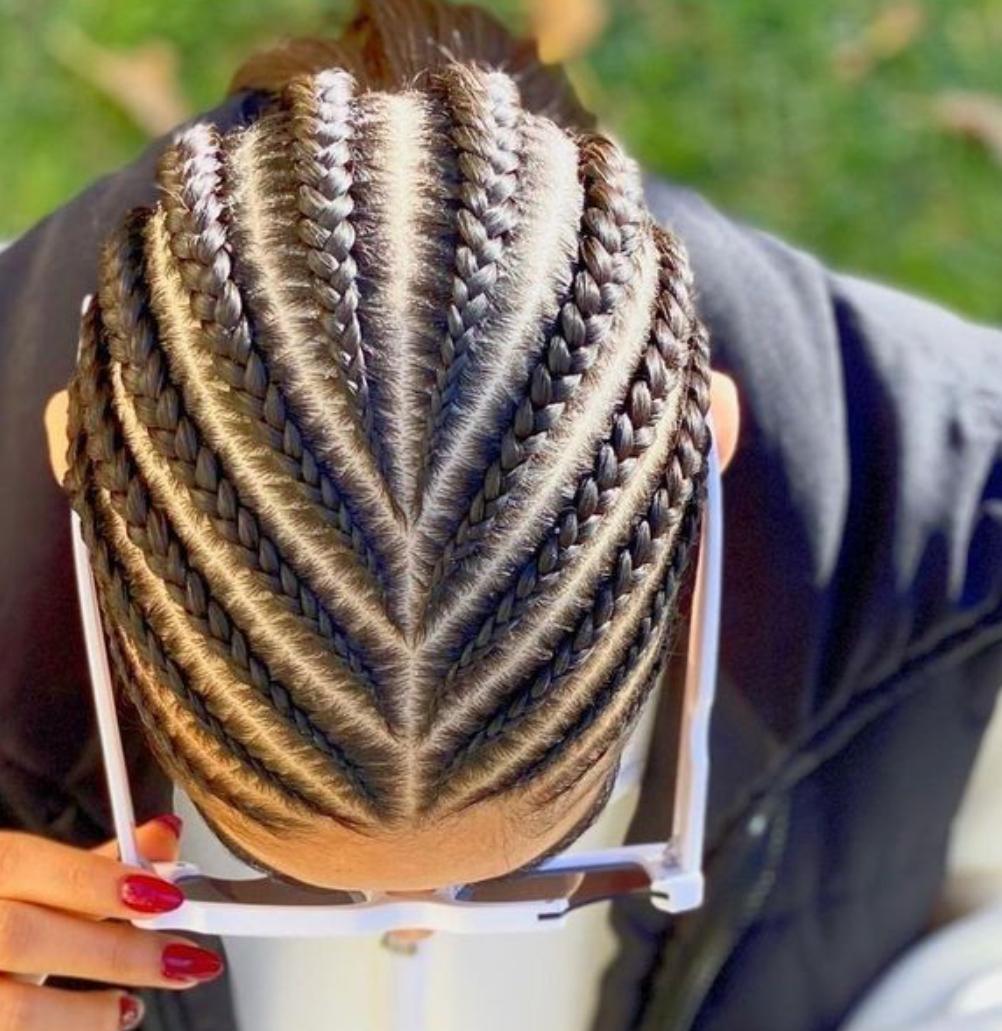
Wondering if a graphic parting works on your head shape? The v-shaped pattern needs thick, straight hair to hold the angle. Dark brown cornrows get subtle blonde highlights threaded through the v, which keeps the design visible without full contrast. Tell your stylist: dark brown cornrows with blonde highlights in a v-shape pattern. It suits those who want a bold, angular look. The middle part keeps everything symmetrical.
Along hairline dark brown blonde highlights
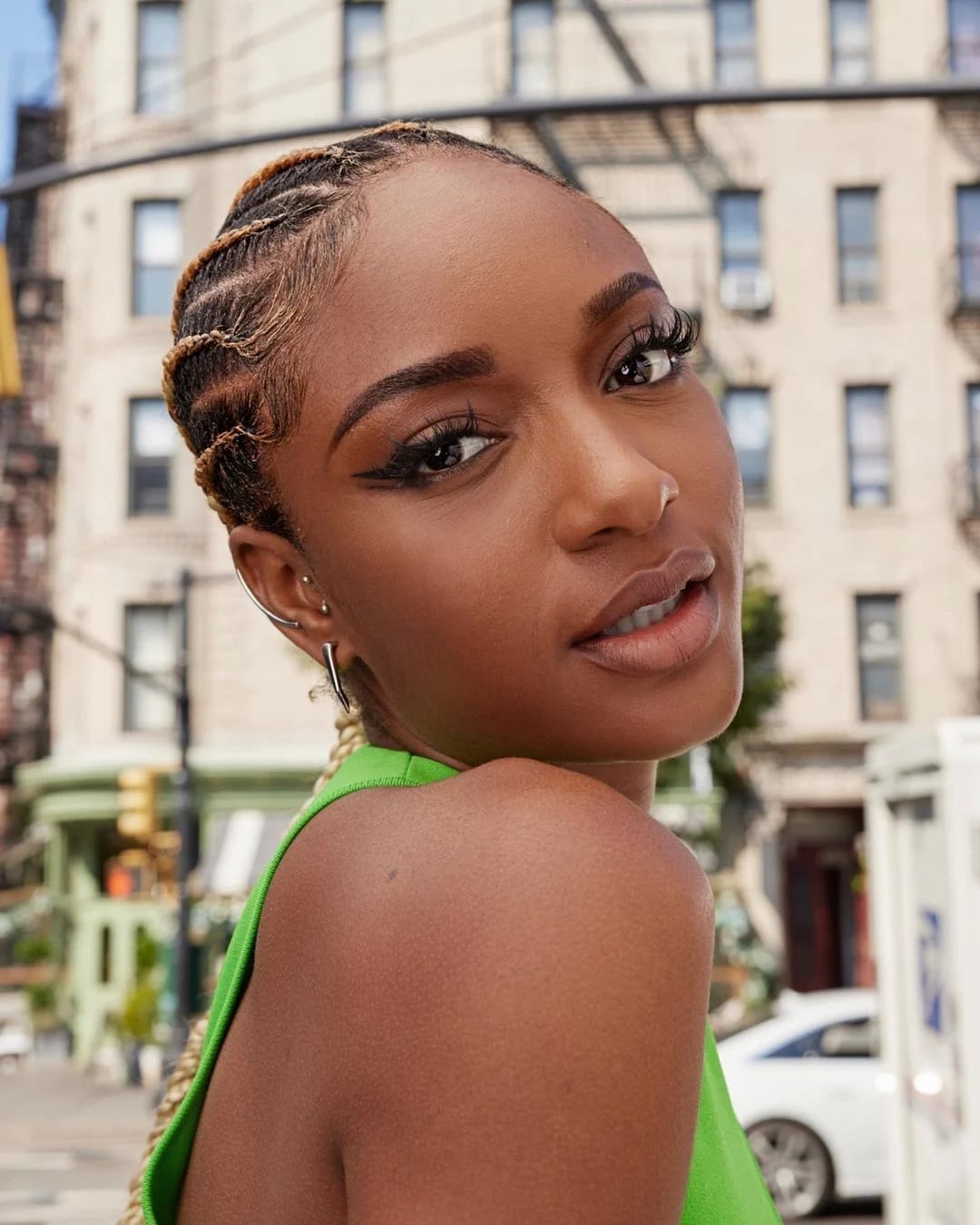
Cornrows that trace the hairline put the intricate braiding front and center. The dark brown base gets subtle blonde highlights along the edges, which makes the pattern pop against the scalp. Coily, thick texture holds the neat rows well. Upkeep means a trim at the hairline every three to four weeks, new growth blurs the detail faster here than on the rest of the head. A middle part keeps the framing even on both sides. Moisturize the scalp regularly.
Geometric cornrows with coiled ends and auburn highlights
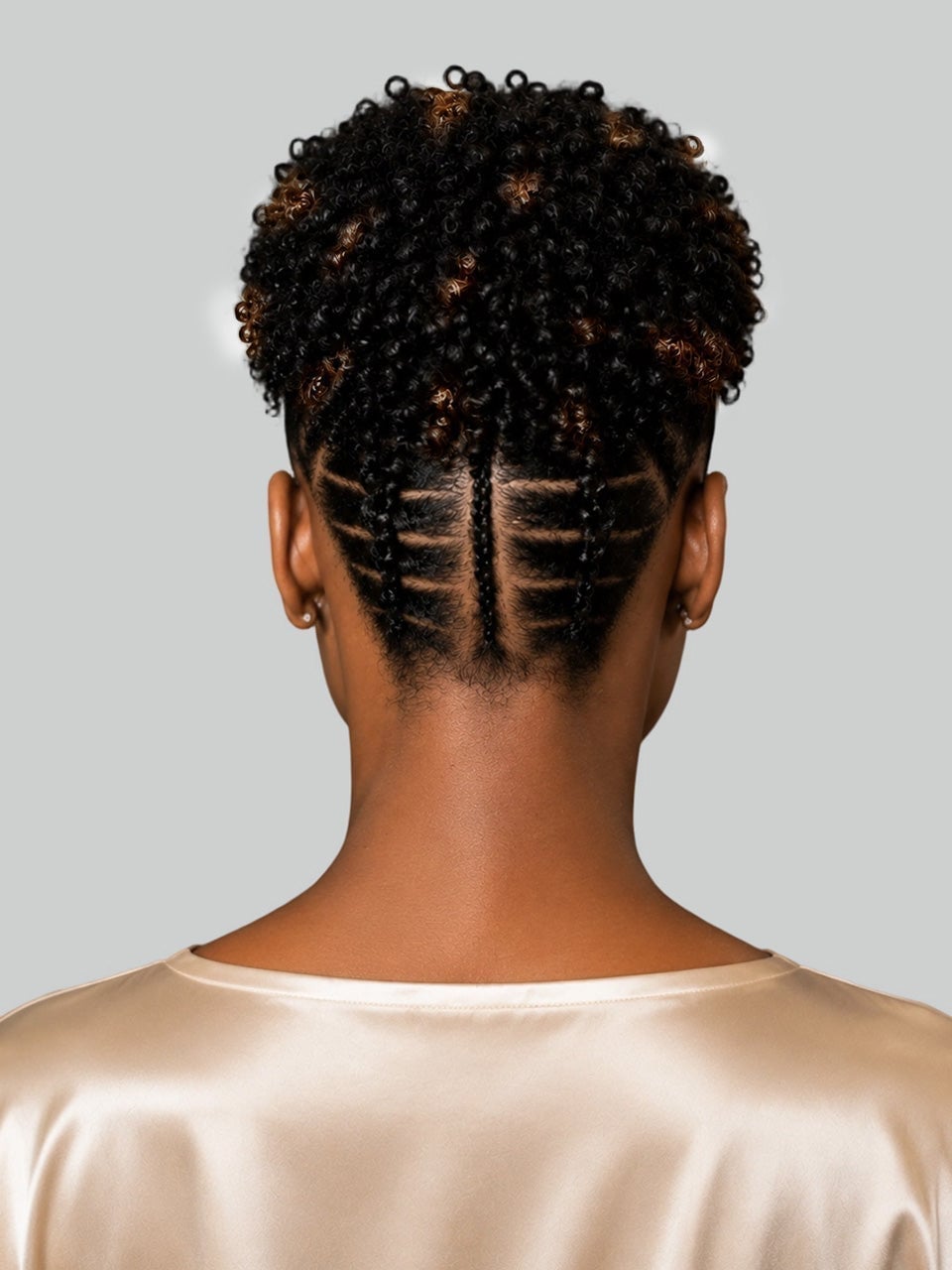
Geometric cornrows at the back transition into naturally coiled ends, which gives a structure-to-texture shift. The black base gets subtle auburn highlights at the crown. Thick, coily hair starting at the scalp works best for the pattern to read clearly. Tell your stylist: geometric cornrows with coiled ends and auburn highlights. The styling sequence matters here, cornrows go in first, then the coiled ends are shaped to match the part lines. Moisturize the ends regularly to keep the coils defined.
Dark brown cornrows into two braided buns
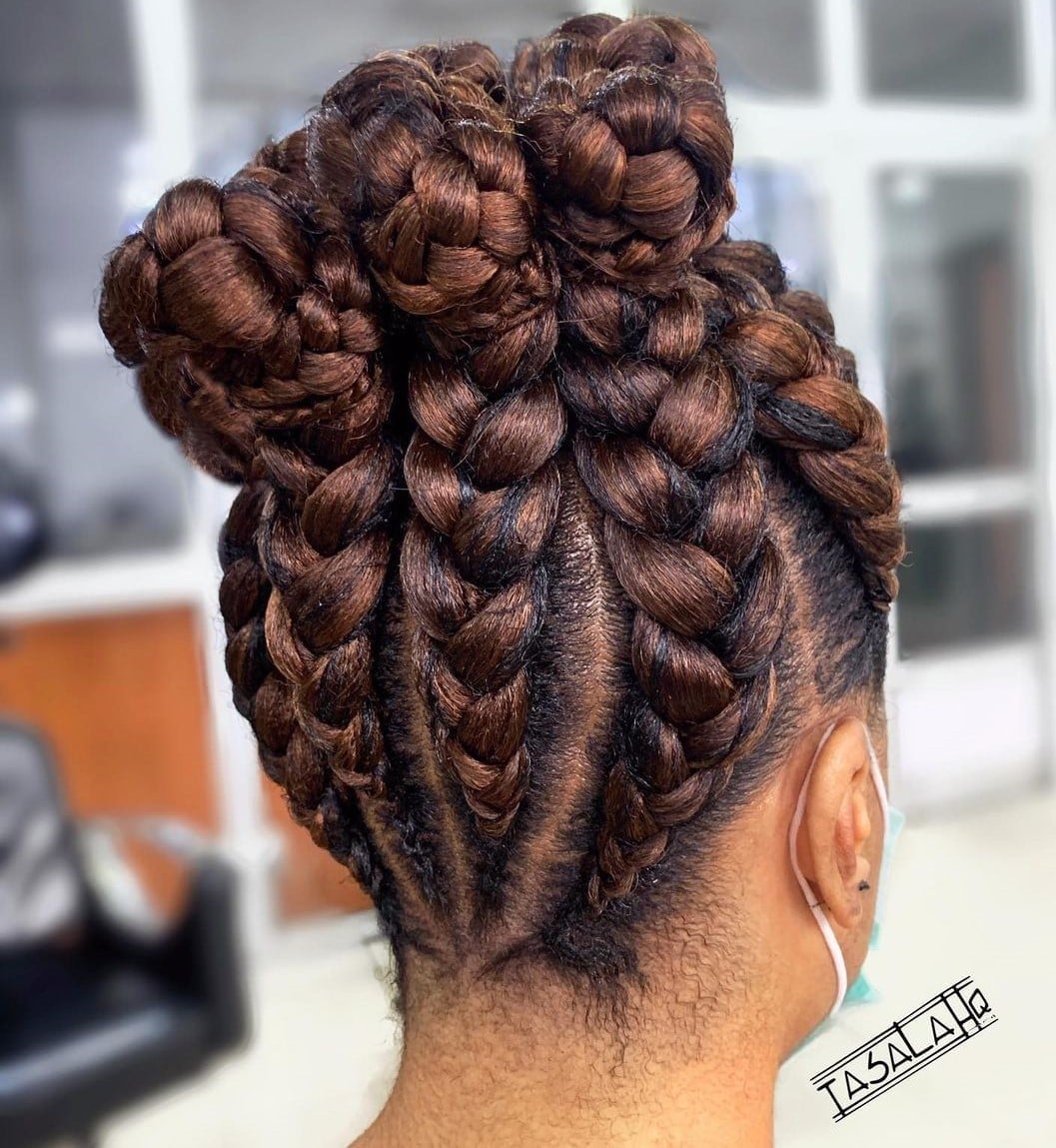
Two braided buns look symmetrical and deliberate. The dark brown base has subtle auburn undertones. Thick, coily hair provides the volume needed. The catch: the buns pull weight evenly, but they do not last as long as a single bun, the part between them strains after week two. For a single bun or hair worn down, try a different style. Secure buns tightly with pins.
Black rows to a sleek bun nape
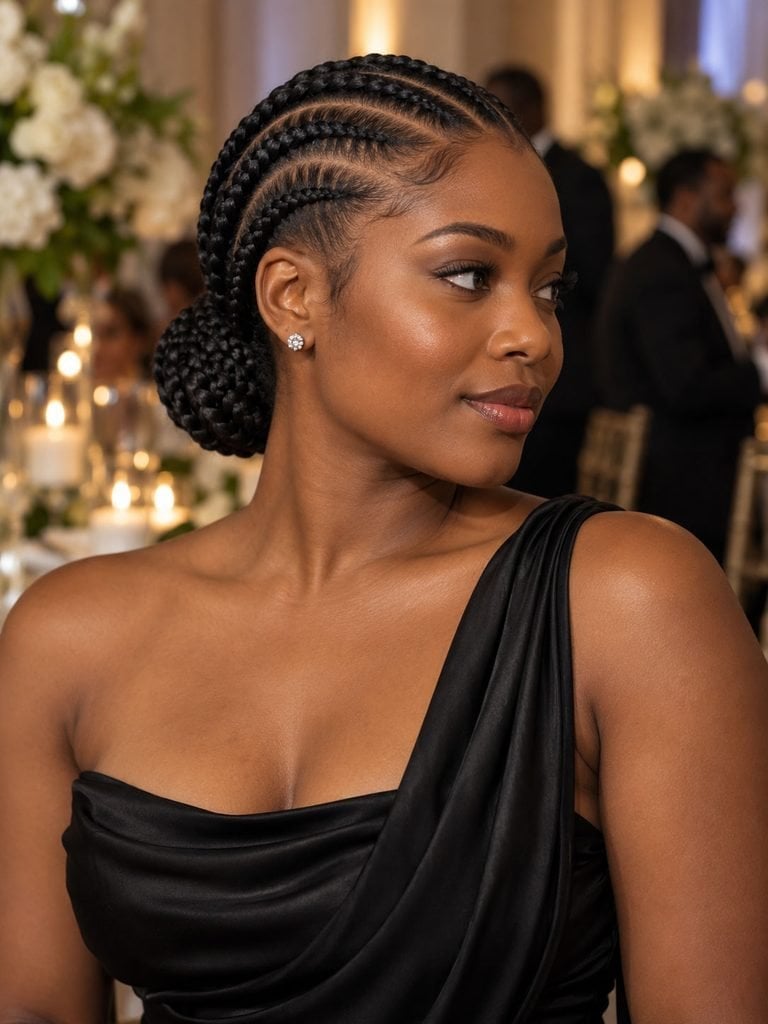
Middle part and thick, coily texture set the foundation here. Each row travels from the hairline straight back into a sleek bun at the nape. Request from your stylist: cornrows into a sleek bun at the nape. Skip it if you prefer a more voluminous bun or hair worn down. A firm-hold hairspray keeps the bun in place and the cornrows sleek through the day.
Black cornrows into a low bun with baby hairs
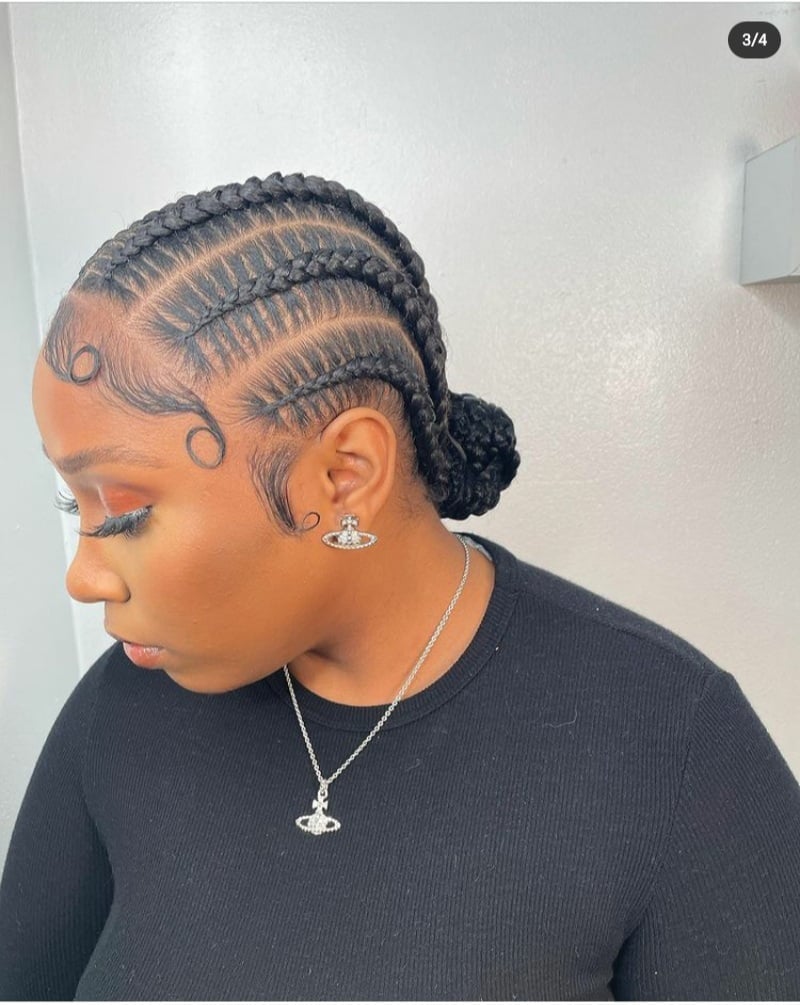
Centered parting meets defined baby hairs, and the difference from a standard low bun is the frame. Those soft curls at the temples keep the look from looking severe. This is a salon finish. Baby hairs require styling, and the look keeps hair off the face only at the temples.
Thick coily black cornrows
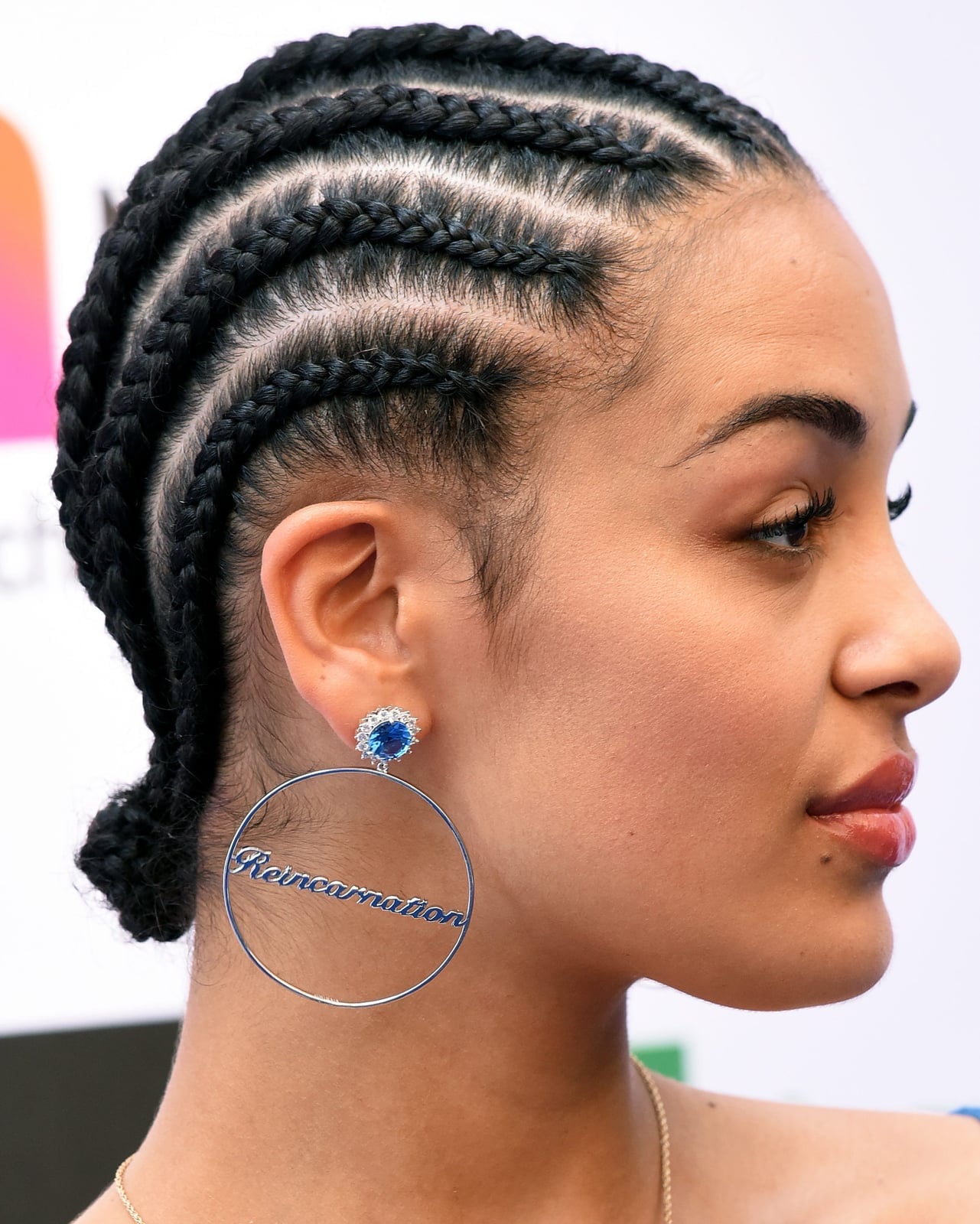
Thick, coily hair braided tightly against the scalp holds its shape for weeks. The middle part keeps the geometry clean. Request from your stylist: thick, tightly braided coily cornrows.
Skip it if you have fine hair that may not hold tight braids well. This style showcases natural texture in a structured way, but it demands a professional hand. Expect the scalp to need moisturizing every few days to prevent dryness.
Neat thick cornrows extend down back
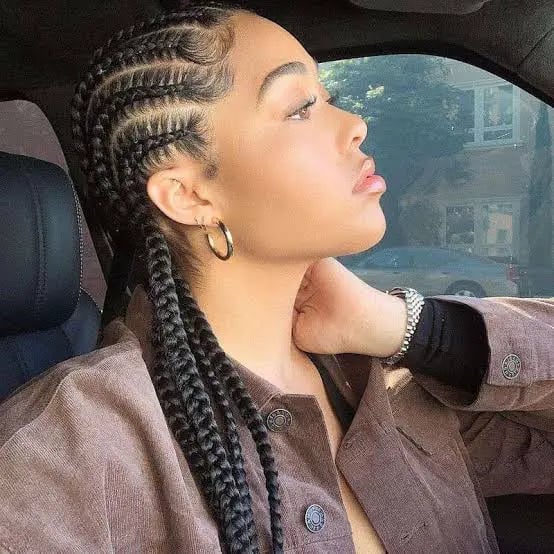
Thick, coily cornrows that travel straight down the back rely on even tension from root to tip. The coily texture gives each row a defined, almost rope-like finish.
A leave-in conditioner on the ends keeps them hydrated and prevents frizz between washes. The style holds its shape well for a few weeks, but the edges may need a light touch-up with gel around week three.
Forehead curve back middle parting thick
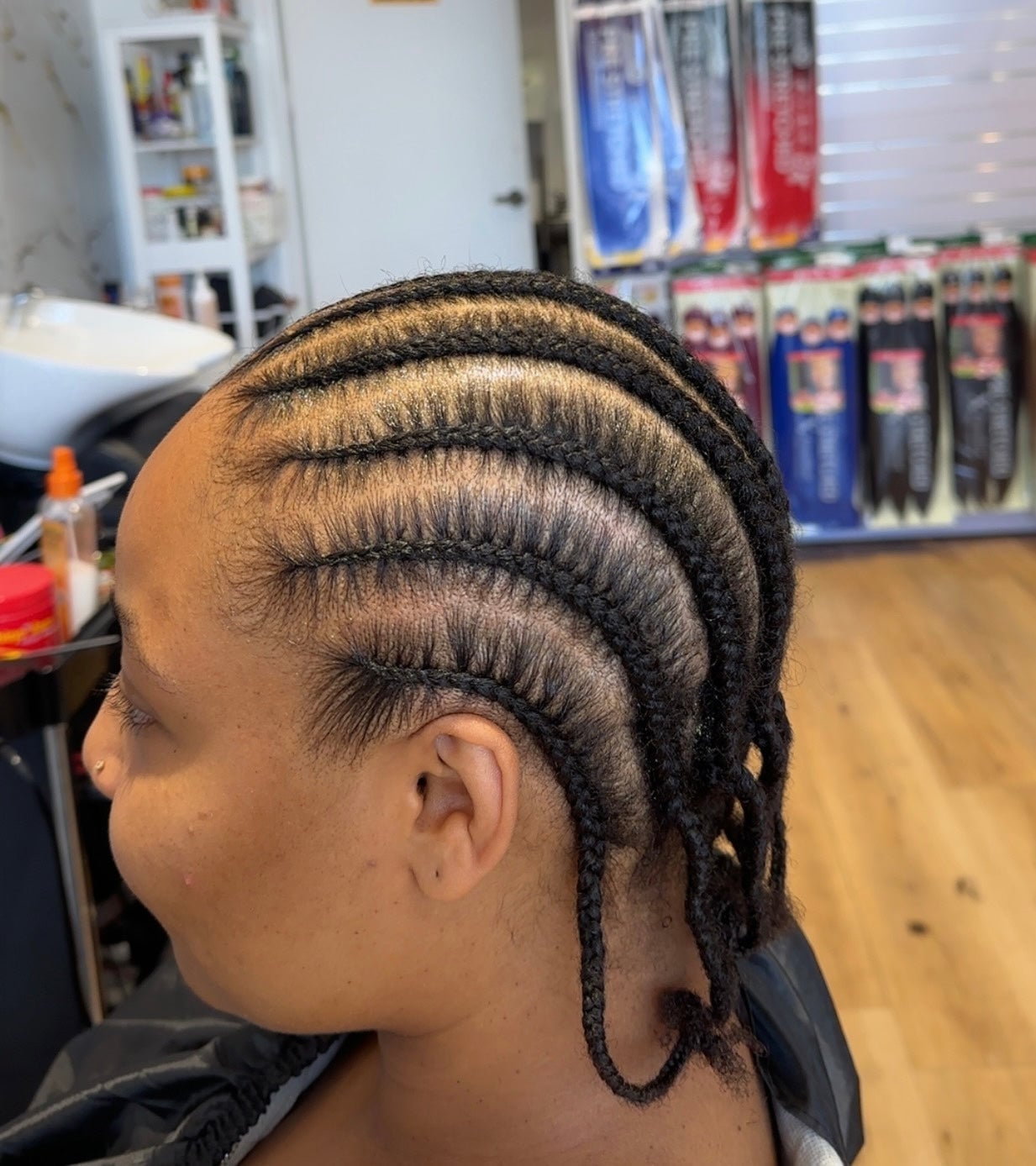
Neatly parted thick cornrows that curve back from the forehead follow the natural hairline rather than cutting straight across. The middle parting and coily texture make the scalp detail the focal point. Request from your stylist: neatly parted thick cornrows curving back from the forehead. Skip it if you prefer very sleek, straight braids or styles that don’t emphasize scalp detail. The sharp parting requires a precise hand, so book someone who specializes in geometric work.
Dark brown coily hair with intricate braiding
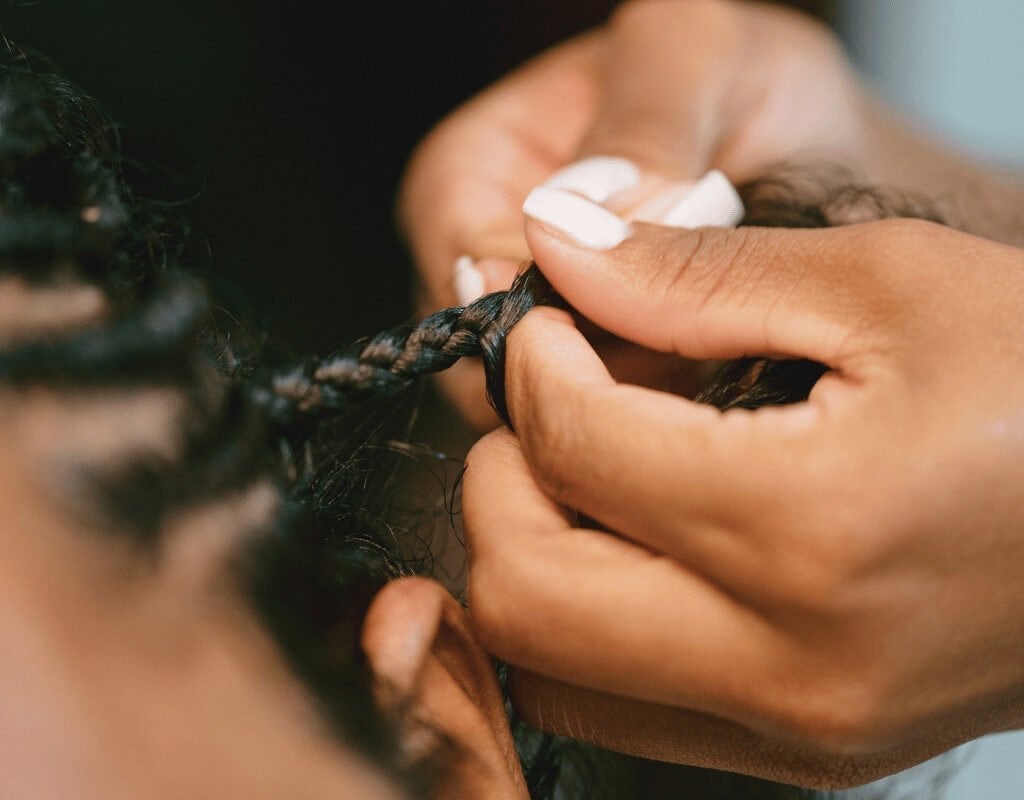
Where a standard cornrow pattern keeps things straightforward, this one makes you stop and look. Dark brown, thick coily hair forms a close-up map of braiding detail that looks deliberate craftsmanship. It suits anyone with coily hair starting at the scalp and enough patience for a salon session that takes time. The catch: if you prefer simpler patterns or braids that do not ask for inspection, this is not the one. The dark brown color lets the texture and the braiding hold the focus without distraction. A trim every eight weeks keeps the intricate braiding detail sharp.
Middle part baby hairs frame face
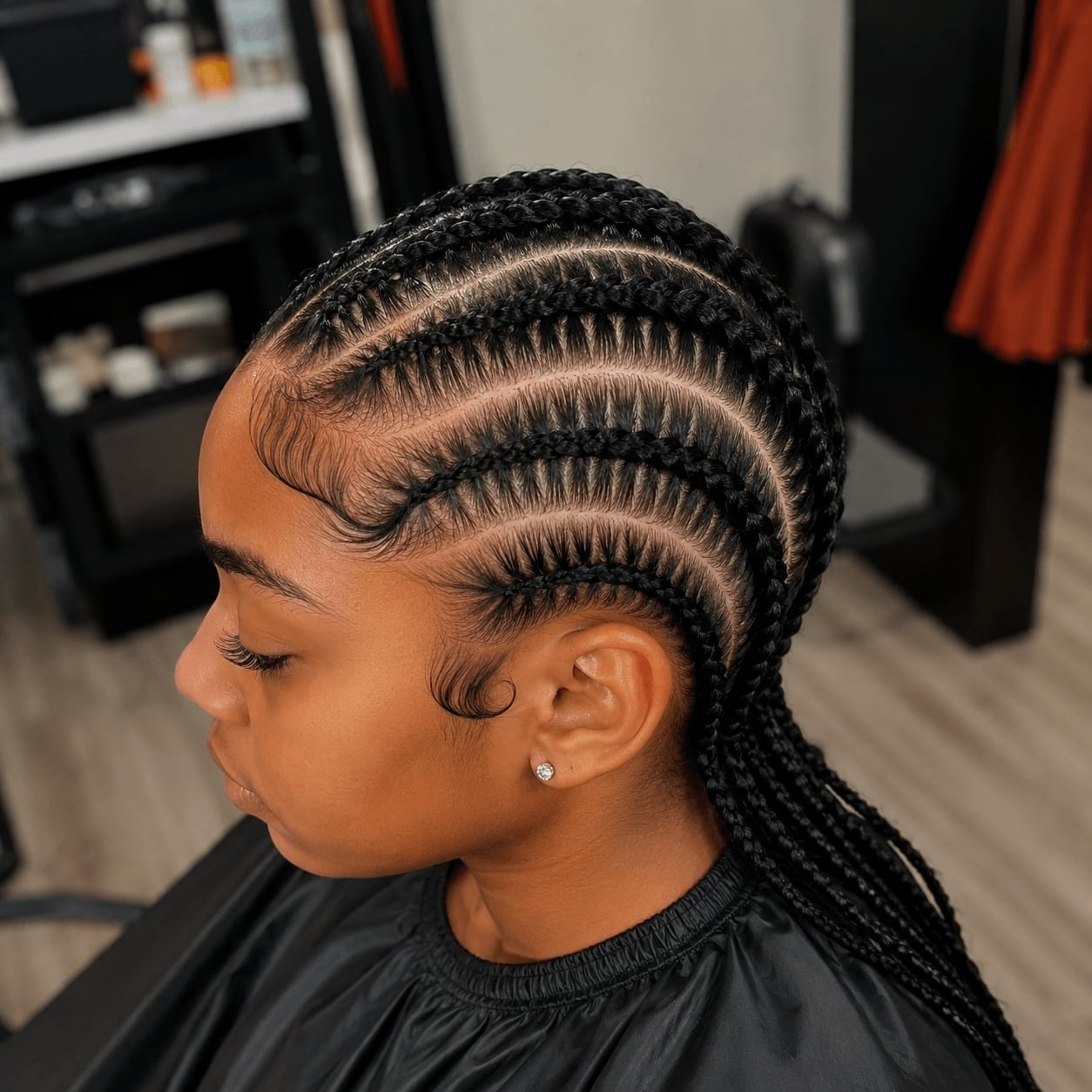
Neat cornrows with a middle part on thick coily black hair. The braids lie clean, and the precisely laid baby hairs along the hairline give the whole look a finished edge. A soft brush and a touch of gel each morning keep those baby hairs smooth. The hold lasts the day if you set them right. Request from your stylist: cornrows with a middle part and precisely laid baby hairs.
Updo with loose tendrils baby hairs
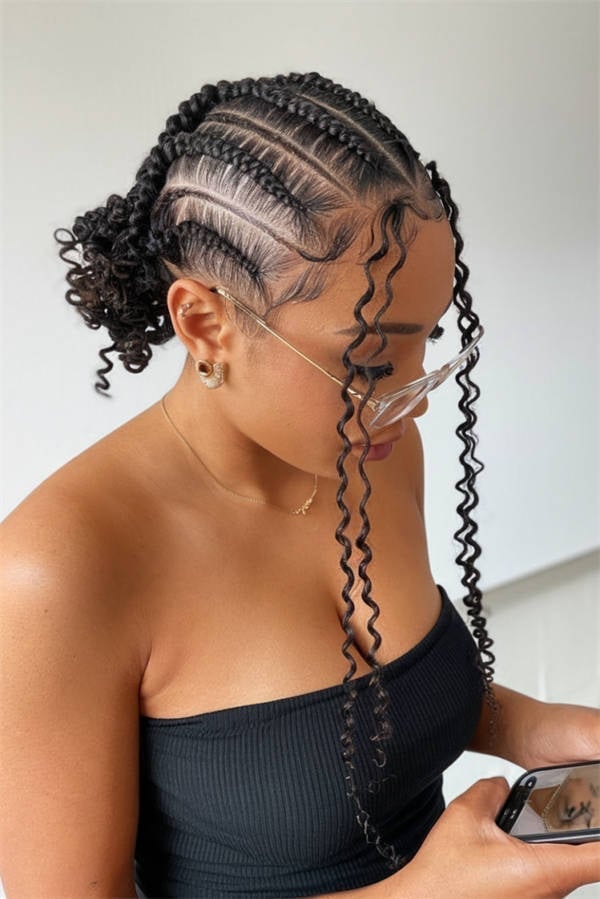
A braided updo looks formal. Loose coily tendrils and intricately styled baby hairs make it romantic instead. The neat cornrows lead into the updo while the tendrils soften the line around the face. This one needs a salon for the braiding up top. A light serum on the tendrils and baby hairs keeps the soft hold without stiffness. Choose a sleek updo if you prefer nothing loose or wispy.
Crown transition loose coily curls
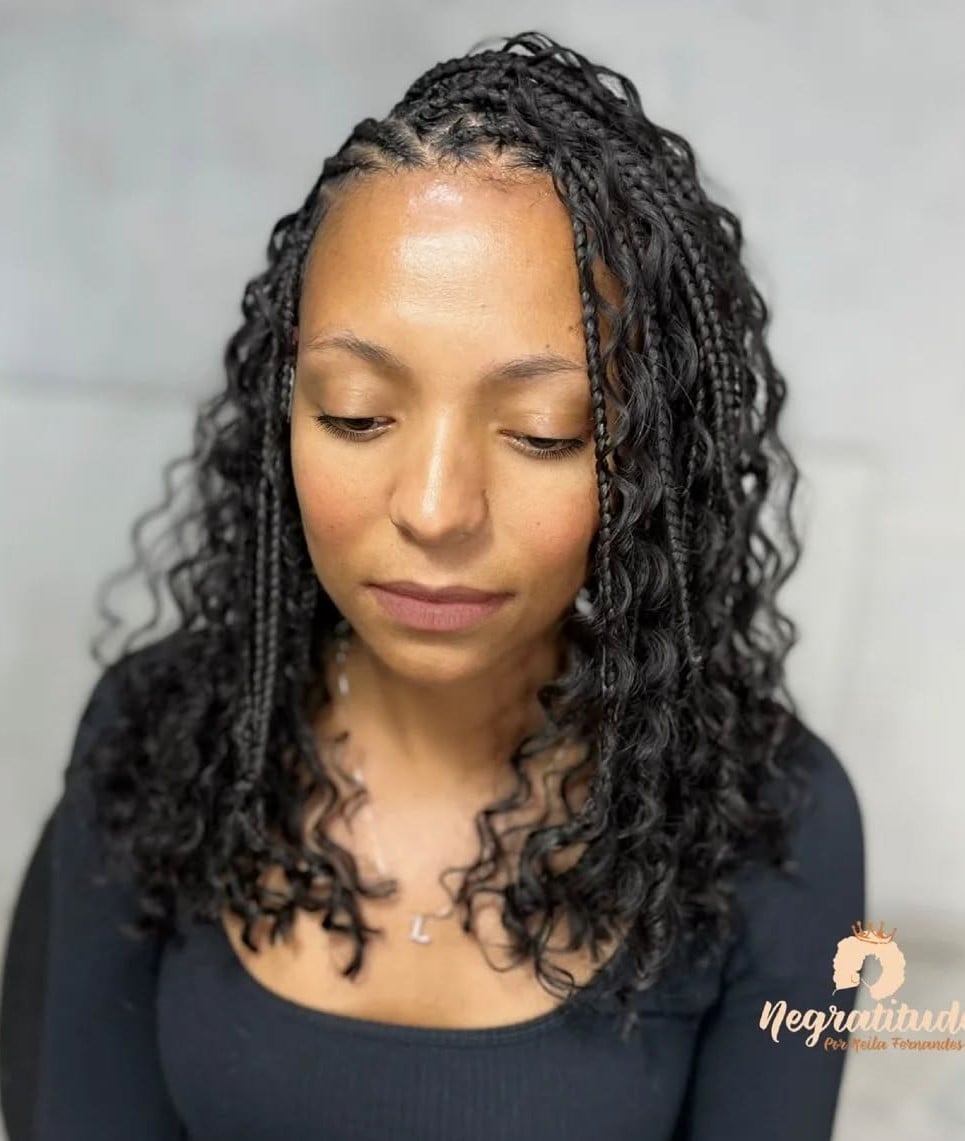
Intricate cornrows at the crown transition into loose coily curls everywhere else. Two textures in one style. The middle part on black hair balances the transition between the structured braids and the natural curl pattern.
This style works for anyone with thick coily hair who wants the best of both worlds. The braids hold the shape at the top while the curls move freely below. Request from your tech: a uniform braided look or hair that stays straight. Moisturize the coily curls regularly to keep them defined and hydrated.
Centered parting long voluminous coily extensions
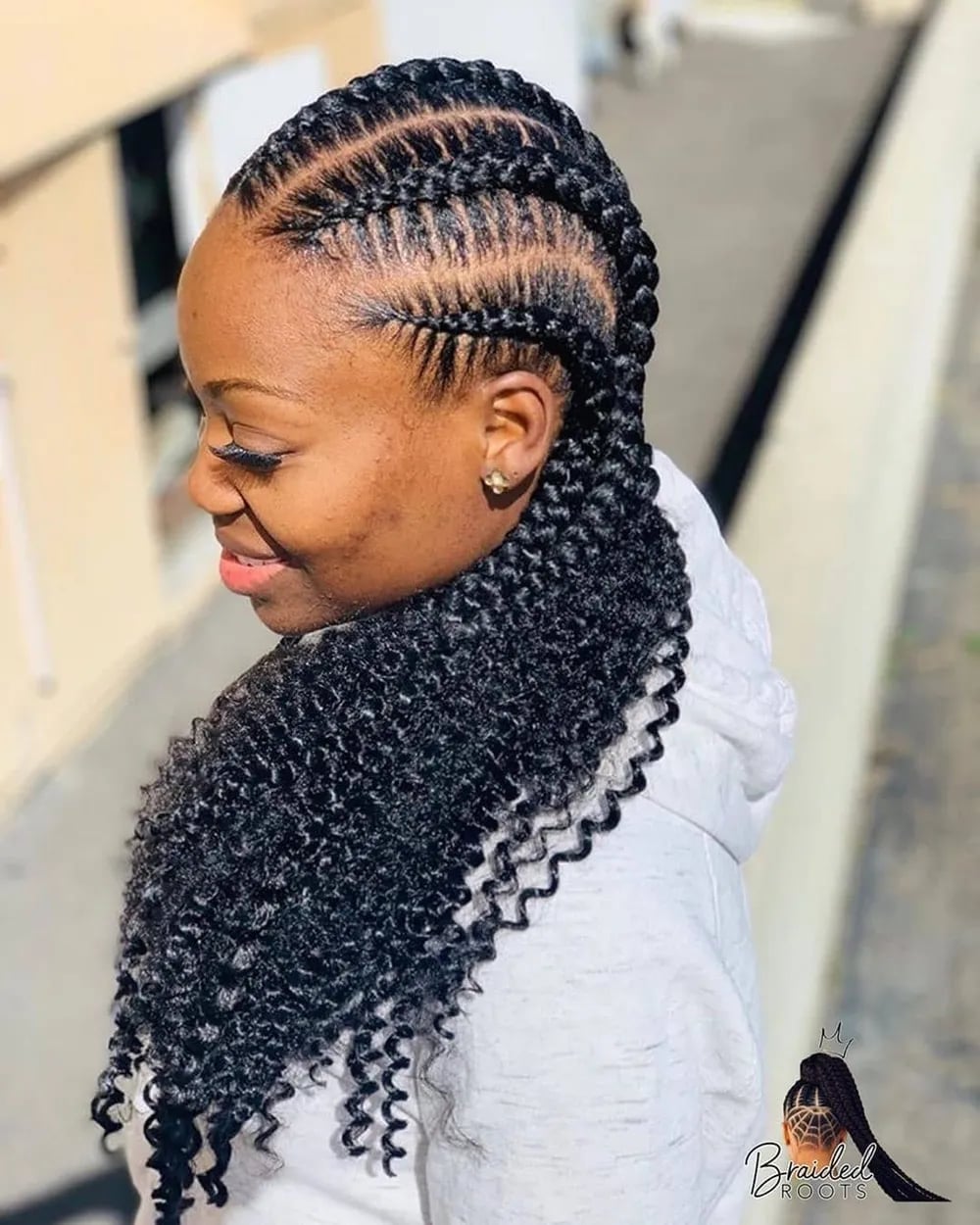
A centered parting leads into long, voluminous coily black extensions. The intricate braiding pattern at the scalp gives the whole look a structured start, and the extensions do the rest. This style wears well for a week or more with proper care at night.
Care for the extensions as you would natural hair, using moisturizing products to keep the coily texture defined. The volume holds without product buildup if you refresh the curls with water and a light cream.
Scalp geometric patterns to long straight
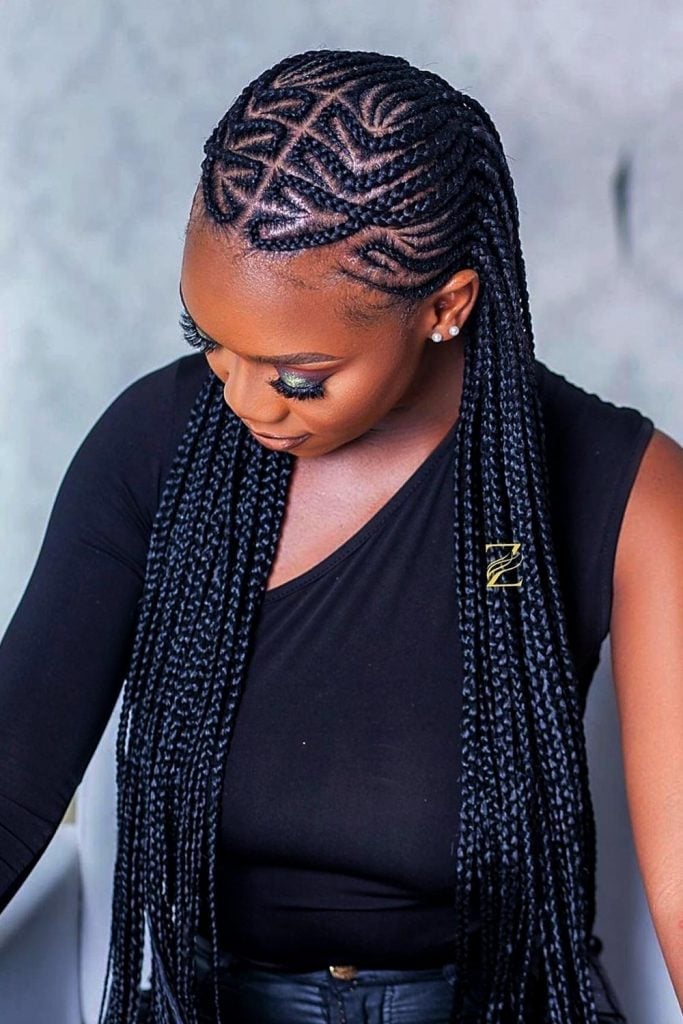
Geometric scalp patterns are a deliberate choice, not a casual braid appointment. You need thick, straight hair that starts at the scalp and a stylist who treats cornrows like drafting. Request from your stylist: cornrows with geometric scalp patterns and long straight braids. The intricate pattern sits close to the skin while the braids fall thick and black past the shoulders.
Patterns incorporate curly extensions texture
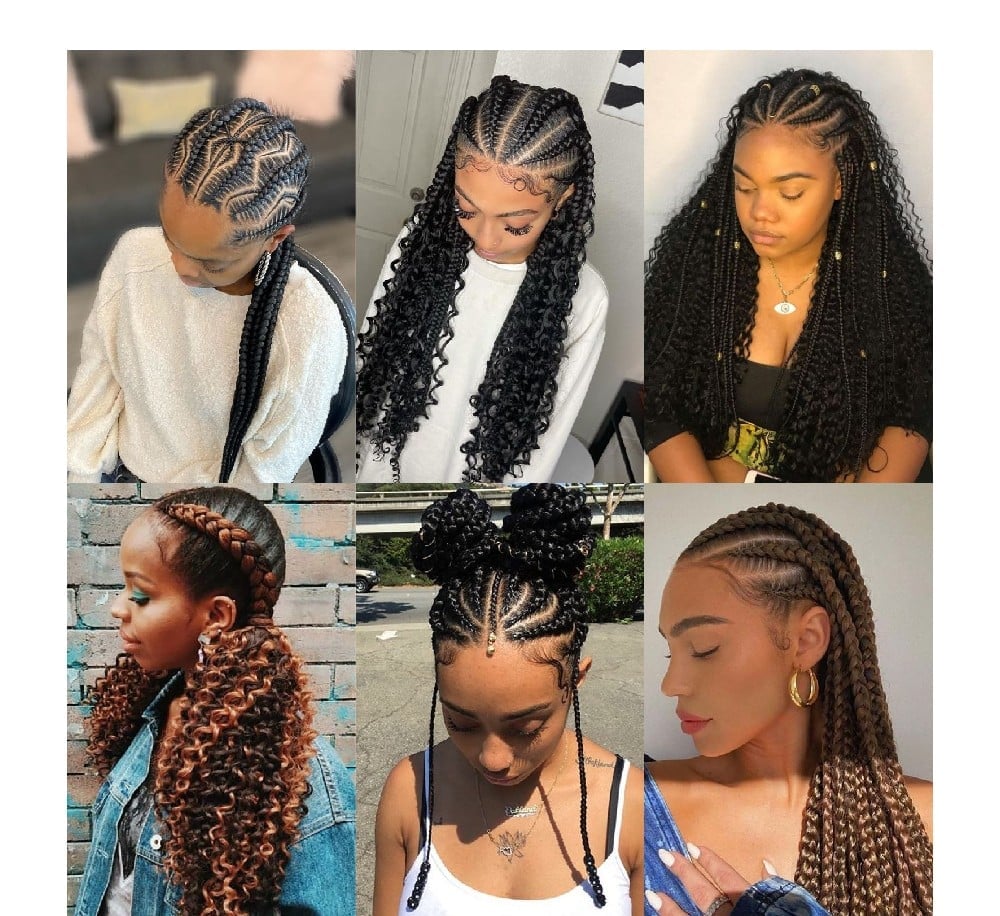
Intricate cornrow patterns with curly extensions demand a practical rule: the more texture you add, the more moisture you owe. Thick hair at the scalp provides the foundation for zig-zag designs and geometric sections, while the curly extensions create volume and length. The trade-off is visible: extensions tangle faster than straight braids. Not for anyone who prefers a uniform, simple braided look. A leave-in conditioner applied lightly every few days keeps the curls defined.
Geometric pattern cornrows on thick coily hair
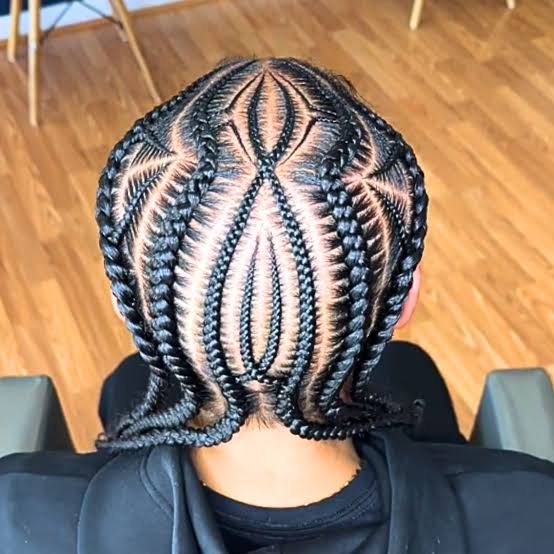
Contrast a straight-braid geometric style with this version on thick coily hair. The pattern sits tighter against the scalp because the texture holds the braid close. Thick black coily hair is the ideal canvas for intricate geometric patterns.
Maintaining the pattern requires a professional touch for re-braiding. A moisturizer applied to the scalp every two or three days prevents dryness. The braids hold their shape for up to six weeks before the pattern starts to soften. Expect the initial installation to take several hours.
Geometric parting pattern on sleek cornrows
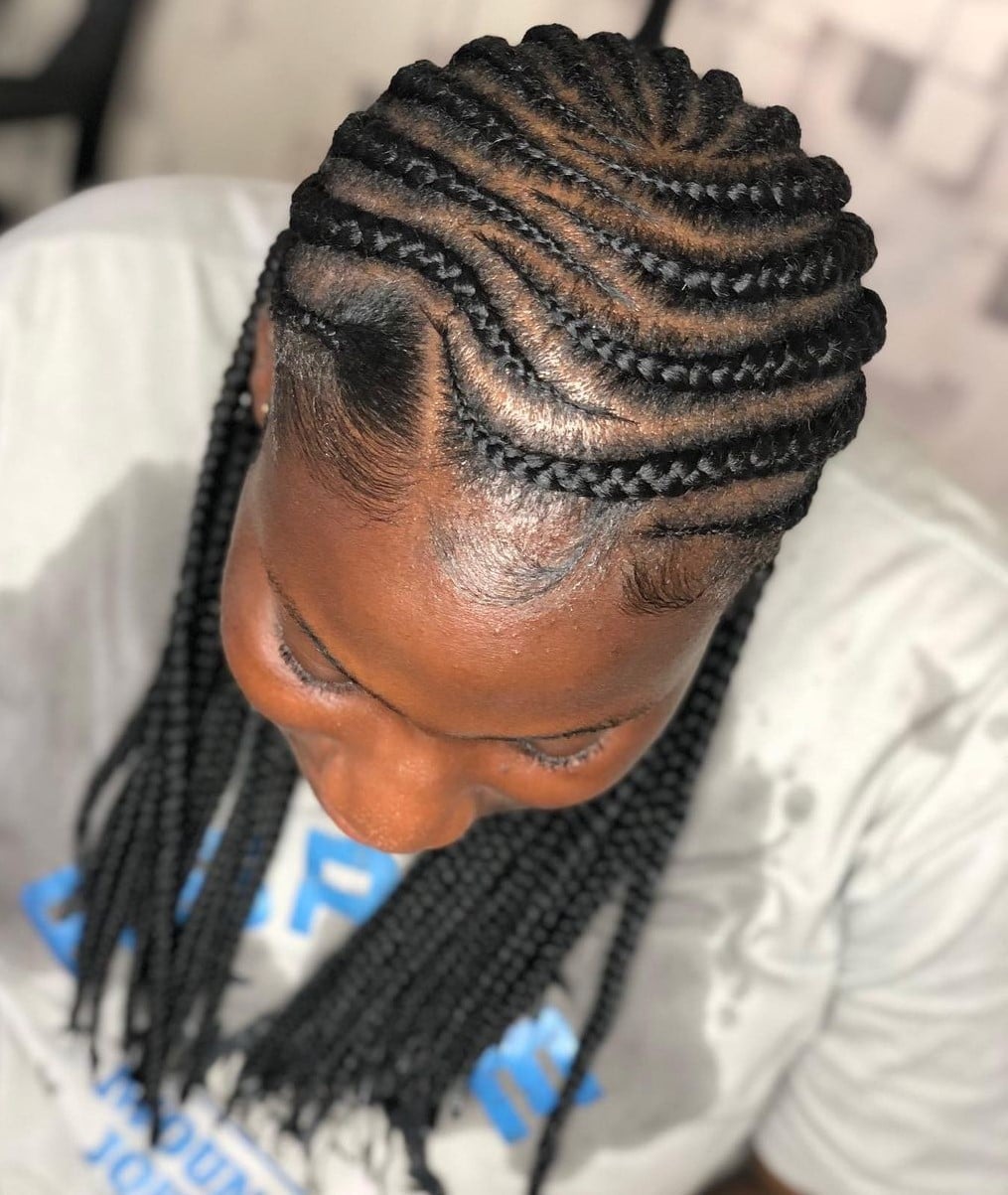
Sleek thick black cornrows with a precise geometric parting pattern offer a graphic look that looks modern. The intricate parting is the focal point, not the braid length. This is a salon-leaning style: the smooth finish and exact lines require a skilled hand. Request from your stylist: sleek cornrows with a geometric parting pattern. Pass when you prefer natural textures or a less defined part. The pattern stays sharp for about four weeks before the edges soften.
Deep black pigtails into thick braids
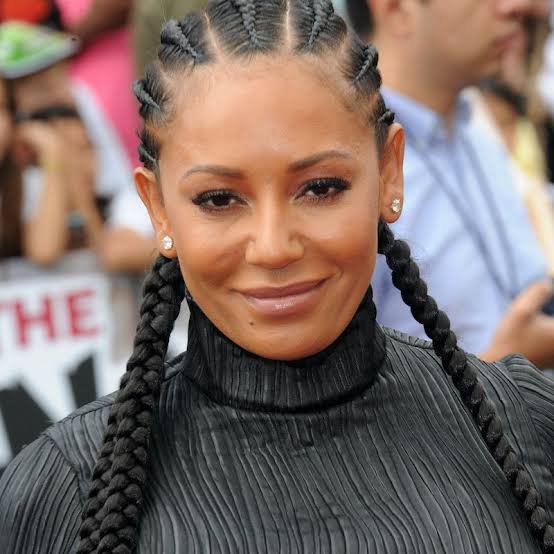
A deep black hue and a middle part create the foundation for two thick braids that fall past the shoulders. This is a playful yet neat look suited for thick, straight hair that can hold a sleek finish. Skip it if you prefer a single braid or a less structured style. A light serum applied to the braids keeps them smooth between washes.
Neatly parted straight cornrows
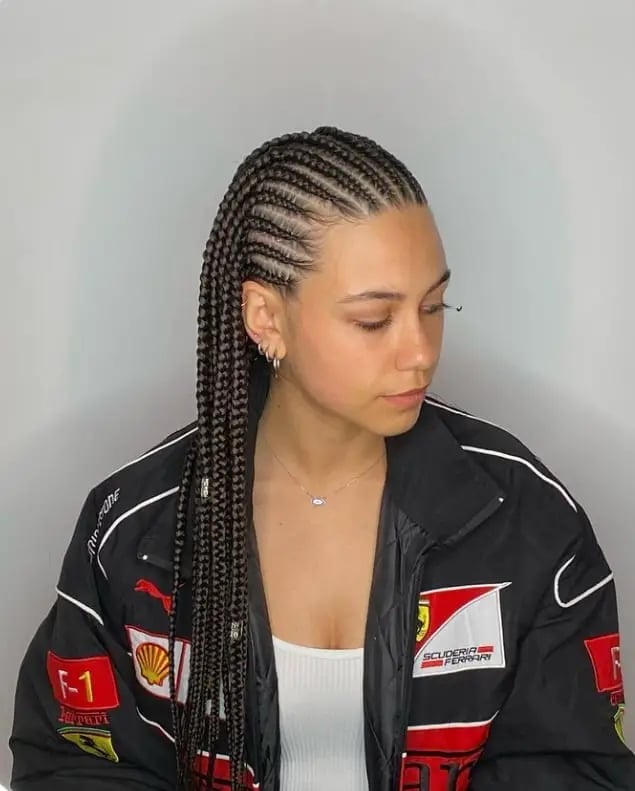
Tell your stylist: cornrows with a middle part, straight and neat. The finish relies on even tension from start to finish, which takes time. A light-hold gel along the hairline each morning keeps flyaways from blurring the lines. The sleek finish lasts about a week before the roots need attention.
Side part sweeps across head baby hairs
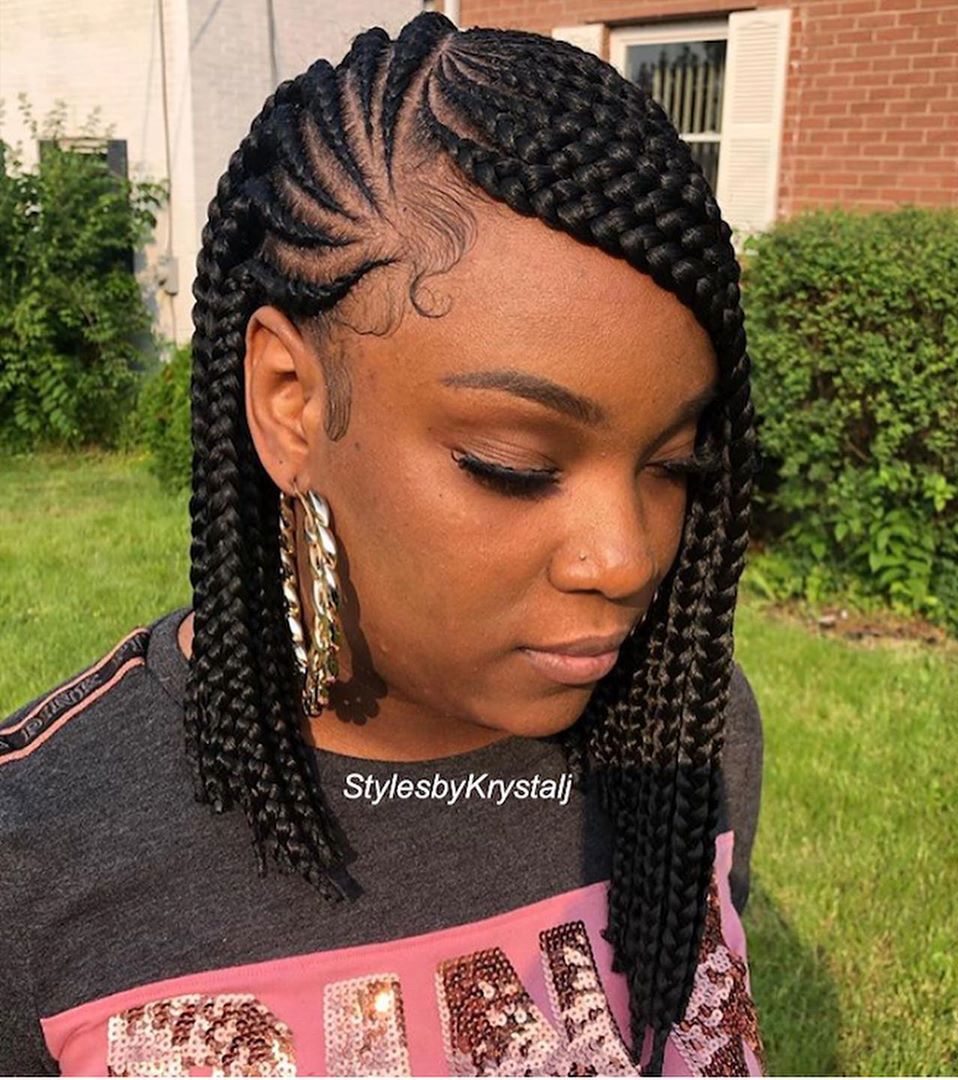
A deep side part changes the whole silhouette. Instead of symmetrical rows, the braids sweep across the head, following the part line. The hair stays straight and thick, so the sweep holds its shape without shifting. Delicate baby hairs at the front soften the look without needing bangs.
Book it as: cornrows with a deep side part and sweeping braids. The stylist sections the hair to follow the part, then braids each row in the direction of the sweep. The baby hairs are styled separately with a soft brush and gel, then left to set. It works best when the baby hairs are part of the design.
Blonde base brown blue highlights cascade
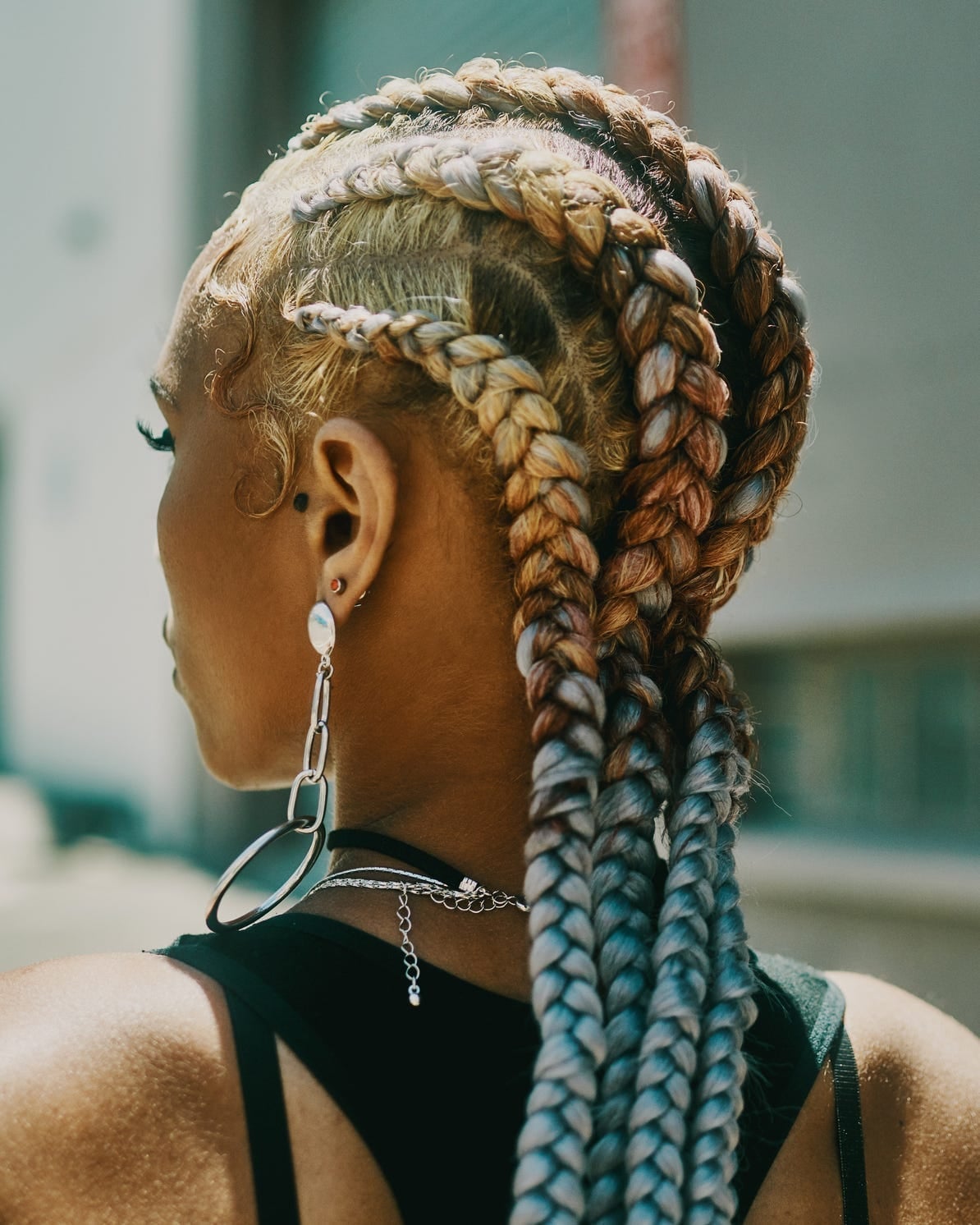
Three colors in one style means three times the upkeep. The blonde base runs from root to tip, with warm brown and cool blue woven through thick, straight braids. The middle part keeps the rows symmetrical, so the color does the work of adding visual weight. The cascade down the back shows every shade clearly.
Those blue tones fade faster than the brown. A color-safe shampoo helps, but expect to refresh the blue every few washes. It suits someone who enjoys multi-dimensional color and regular maintenance. The blonde base also needs toning to stay cool, so budget for a toning appointment around week four. The payoff is a braided style with deliberate contrast between the three shades.
Final Thoughts
Every braid here works. The question is which one fits your week.
- Fine hair: stick with straight, sleek cornrows and avoid heavy extensions at the ends.
- Ten minutes in the morning: a high ponytail or low bun, no loose ends to retwist.
- Scalp sensitivity: geometric patterns with wider partings reduce tension on the hairline.
- Night routine: a silk bonnet keeps baby hairs neat and frizz down.
Choose the elegant cornrows style that best fits your lifestyle and aesthetic.
