

23 Winter Hiking Outfits for 2027: Layers That Keep You Warm on Cold Trails
Winter Hiking Outfits for 2027: purple rain shell, olive technical jacket, pink quilted vest and 20 more trail-ready looks. Save your favorites.
Cold trails feel far more manageable when every layer has a clear purpose, and this 2027 roundup shows exactly how that works. Across 23 complete looks, you’ll see how jackets, vests, base layers, trousers, boots and accessories fit together for winter hiking.
Expect practical notes on insulation, weather protection, visibility and freedom of movement, plus color and proportion ideas you can carry onto the trail. Whether your taste leans toward quiet olive, bright pink or classic black, each outfit is built from pieces you can likely pull from your own closet and wear out the door.
Dark Red Hooded Jacket and Matching Pants
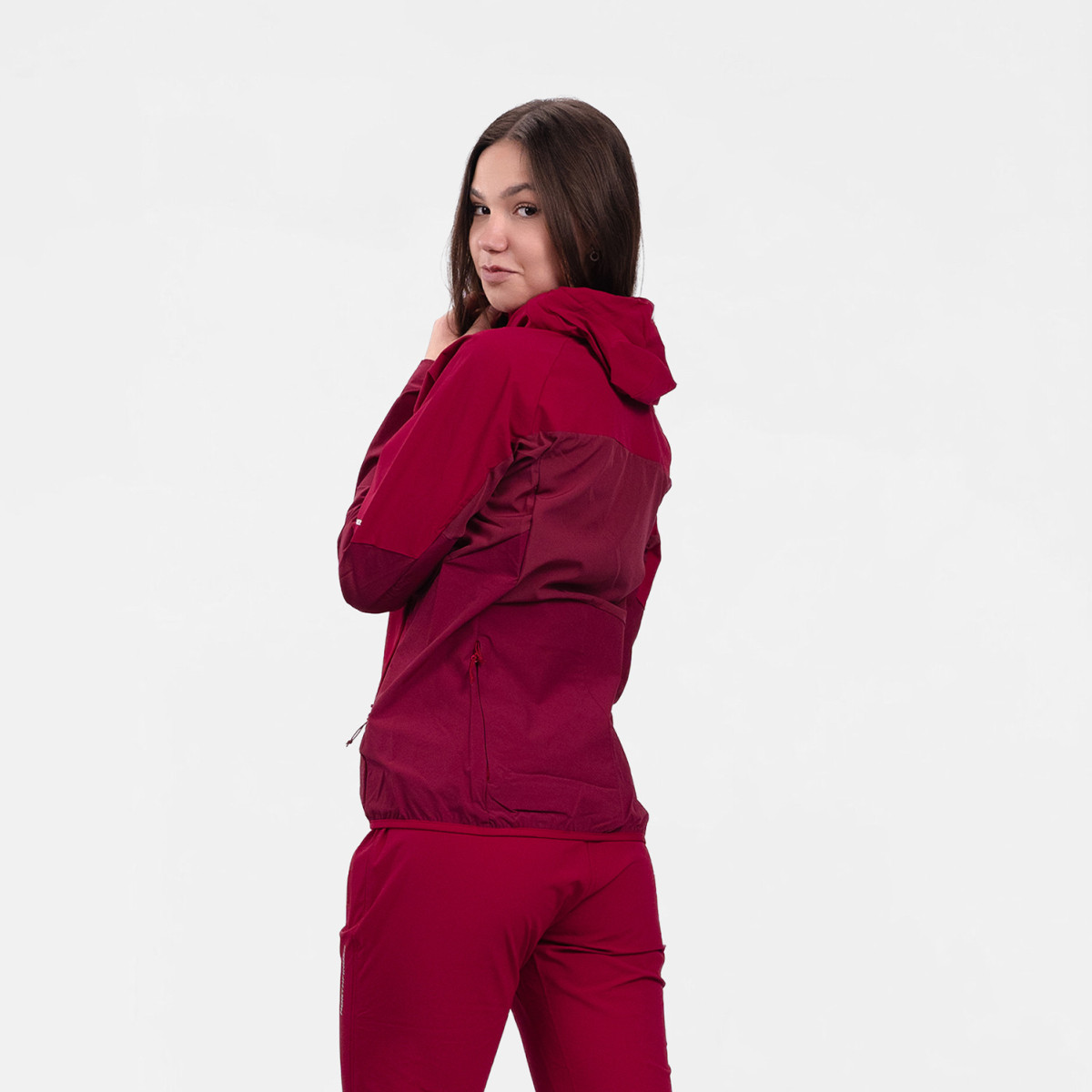
A single-color kit is one of the most underrated hiking moves, and a dark red hooded jacket with matching pants shows why. Top and bottom sit in the same burgundy family, so the eye lands on what is actually there: smooth panels set against textured ones, a tailored line, and a hood that shapes the shoulder. Nothing else competes for attention, and that is exactly the point. Build a set like this and let the tonal match do the work, keeping zips, trims and hardware understated so the color carries the entire outfit. It is the simplest way to look pulled together on the trail without adding a single extra piece to your pack.
Turquoise Quilted Vest Over Layered Blue Tops
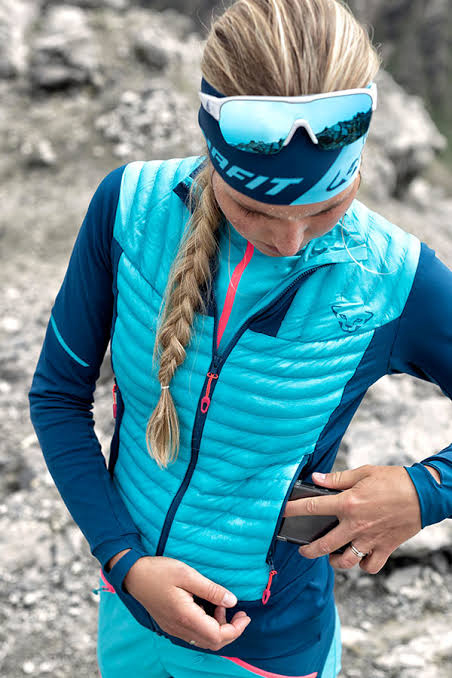
A quilted turquoise vest over two blue long-sleeve layers shows how a monochrome stack can look intentional rather than accidental. The base layer and mid layer share a blue family but not a surface: one is technical, the other deeper. The vest lands over them in bright quilted synthetic fill, which breaks up the run of blue. A headband and goggles complete the kit, and a touch of pink in the palette keeps the blues from looking clinical. The lesson worth copying: when you layer within a single color, change the texture at every step, and let the outermost piece be the loudest. That way a fitted, functional stack still looks styled.
Dark Grey Fleece Jacket Over Yellow T-Shirt
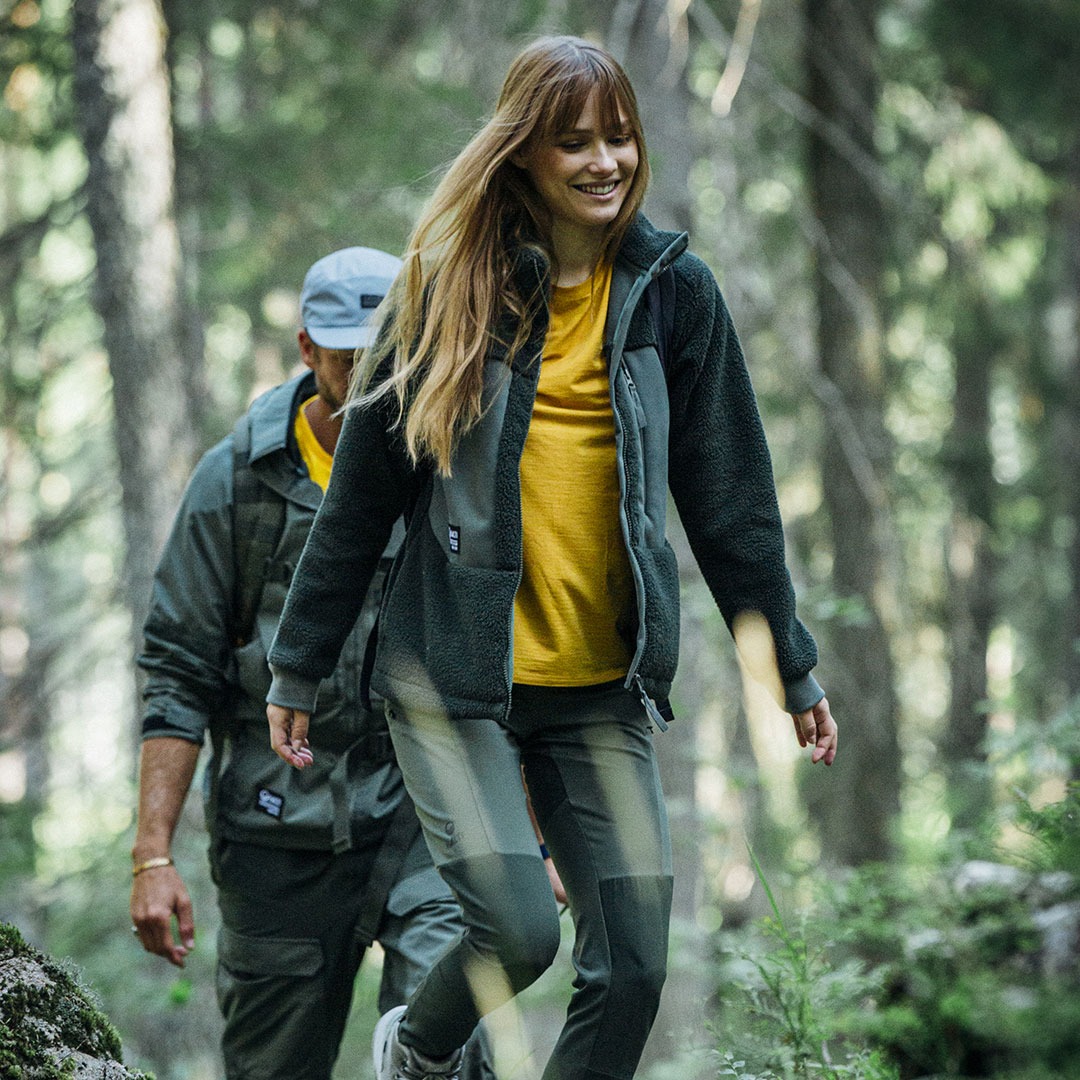
A dark grey fleece is the least glamorous hero piece in any winter hiking lineup, and it is still the one you will probably wear most. This one sits relaxed through the body over a yellow t-shirt, with white sneakers below. Yellow, dark grey and green do more work here than the simple shapes suggest. The fleece and synthetic knit offer texture without shine, and the yellow at the neckline gives a grey outfit some energy. Remember that fleece is insulation, not protection. It layers best as the warm middle under a shell, and it earns its place on flat trails and errands alike, where nothing is testing it. Pair a bright base layer with a neutral outer piece, and you can remove one item without the whole look falling apart.
Black Fitted Hiking Pants and Trekking Shoes
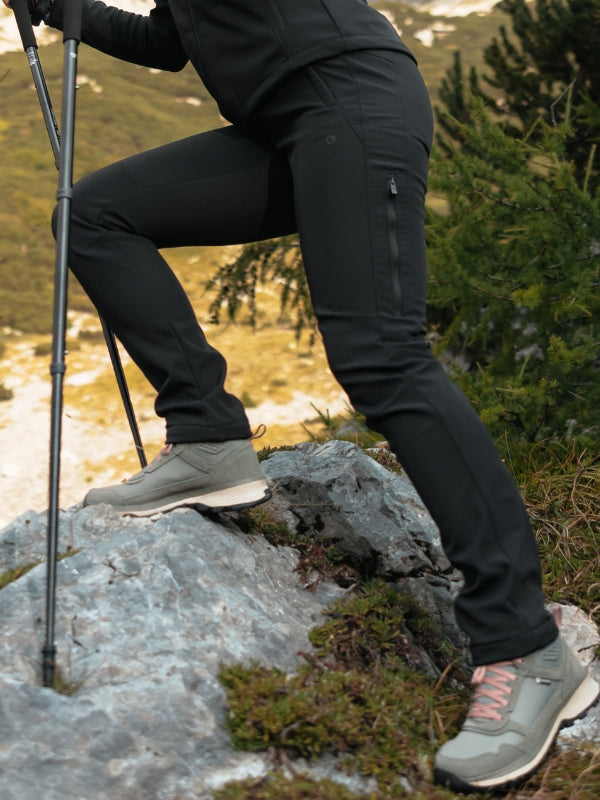
Fitted hiking pants have one job that matters more than any hangtag claim: staying out of the way. These are black, slim through the leg, and made from a technical fabric with a matte finish instead of a shine. They let grey and pink hiking shoes take center stage. Hiking poles in hand point to a longer day, which is exactly when a tapered leg beats a baggy one, since there is no loose fabric to catch on a boot cuff or snag on undergrowth. The palette of black, grey, pink and green stays calm, and the pants do their job by blending in. The styling rule is to let the shoes set the color story and keep everything else quiet, so the footwear looks chosen rather than accidental. Grey and pink beside black hold their own.
Vibrant Red Jacket Over Black Bib Overlays
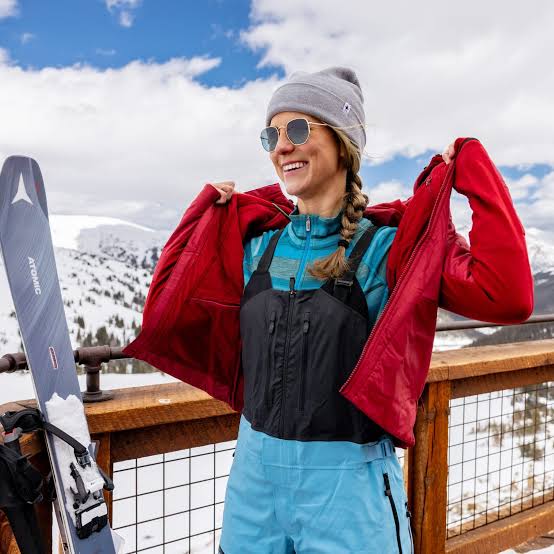
Red over black is the loudest quiet formula in snow country, and this one gets the balance right. A fitted red jacket sits over black bib overalls, with a blue striped long-sleeve shirt peeking out at the collar. A grey beanie and sunglasses finish the look, all in nylon and synthetic fabrics made for a full day on the slopes. Black anchors the outfit, red carries it, and the light blue stripe is the third note that keeps everything from going flat. Bib overalls under a jacket give you a clean waistline and close off one more gap where snow can find its way in. If you want pattern in a skiing kit, keep it small and place it where it shows, since a collar stripe does more for an outfit than a patterned jacket ever could.
Taupe and Blue Hiking Boots with Blue Laces
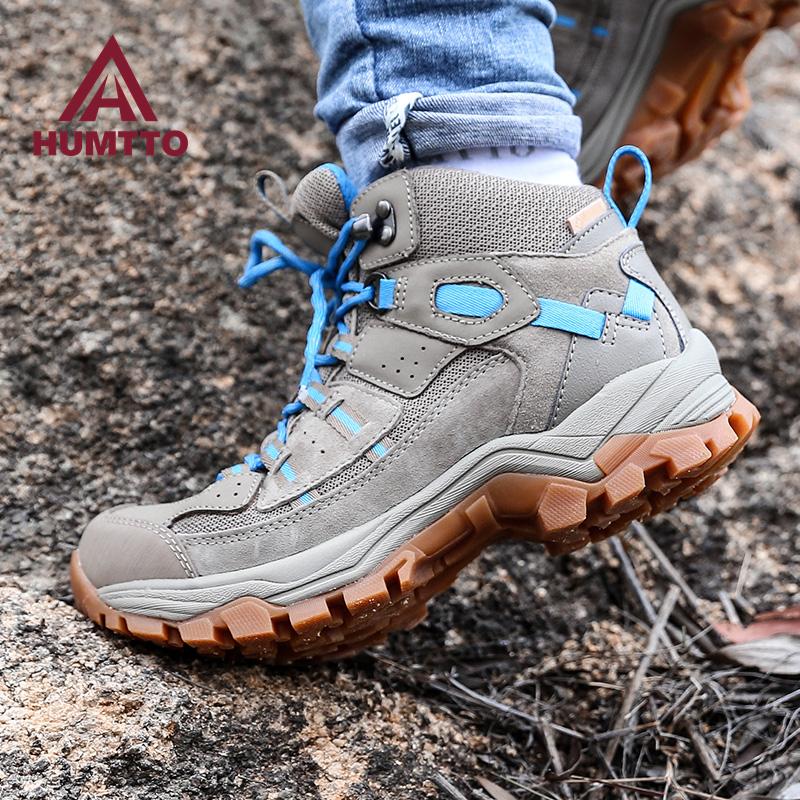
Blue laces on a taupe and blue mid-top boot are a small decision with an outsized effect. The boots mix suede and mesh over brown rubber soles, and the blue laces tie neatly into the blue denim jeans and white cotton socks above. A hint of grey in the palette keeps the blues from matching too perfectly, which is usually what makes a color story look accidental in the best way.
Styling principle: let a sliver of sock show between the hem and the boot collar. That line of white separates denim from boot instead of letting two blues run together, and it gives the ankle some breathing room. Match your laces to something you are already wearing, and the boots will look chosen rather than borrowed. If your winter hiking outfits tend to stall at the footwear, this is the cheapest fix there is.
Purple Hooded Waterproof Rain Jacket
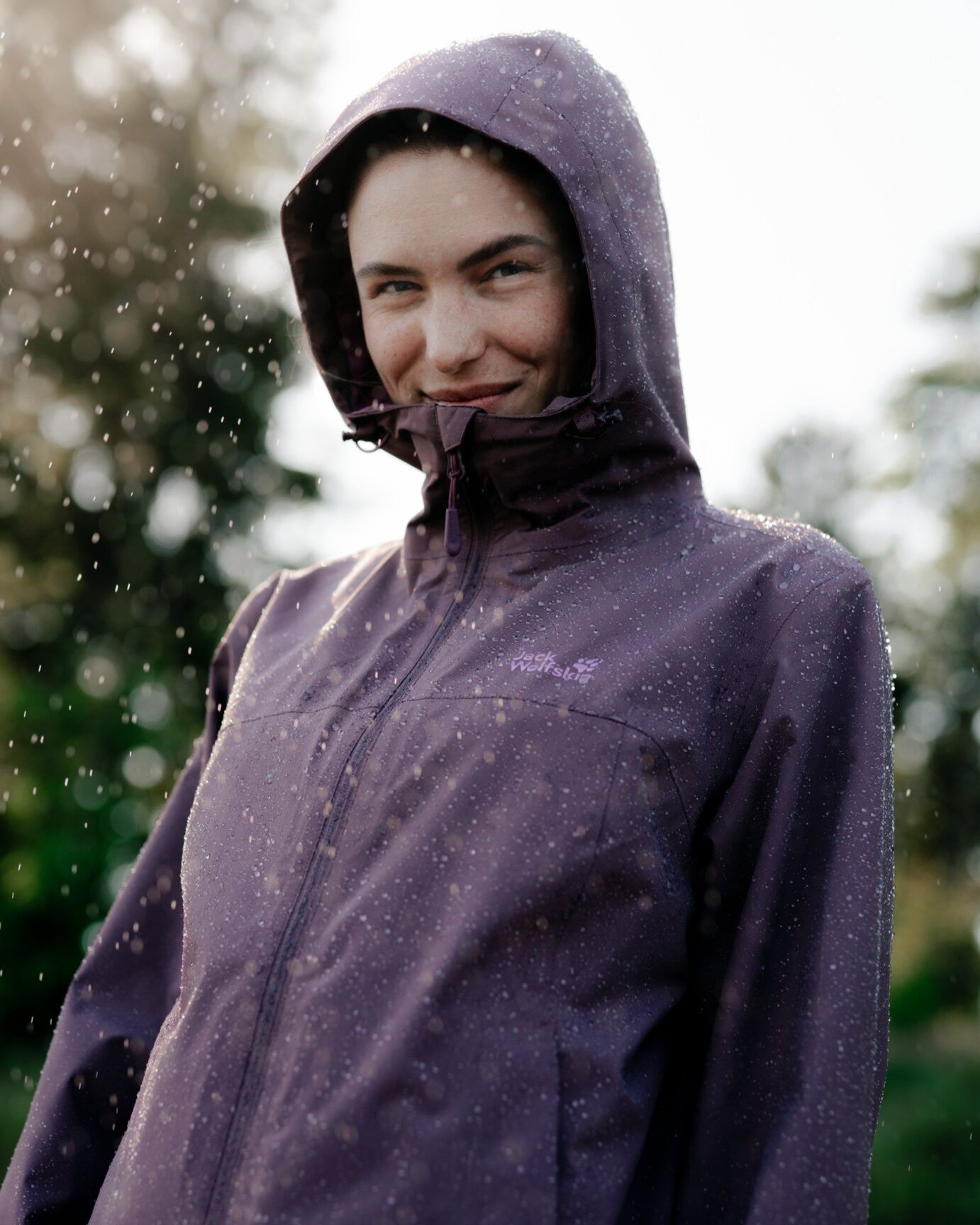
When rain is the forecast rather than a remote possibility, the hood stops being a design detail and becomes the entire reason for the jacket. This purple waterproof jacket has its hood up with water already beading on the fabric. The cut is simple, and the surface has a real texture that matters more than people expect, since a rain shell that looks papery usually feels that way too. There is a zip to work with and a logo small enough that the purple does all the talking. Pull the hood over a thin beanie or cap instead of straight onto bare hair so it stays put in the wind, keeps drips off your neck and frees your hands from holding fabric against your face. Let the jacket be the loudest thing you wear, and keep everything underneath dark and simple.
Blue and White Color-Blocked Puffer Jacket
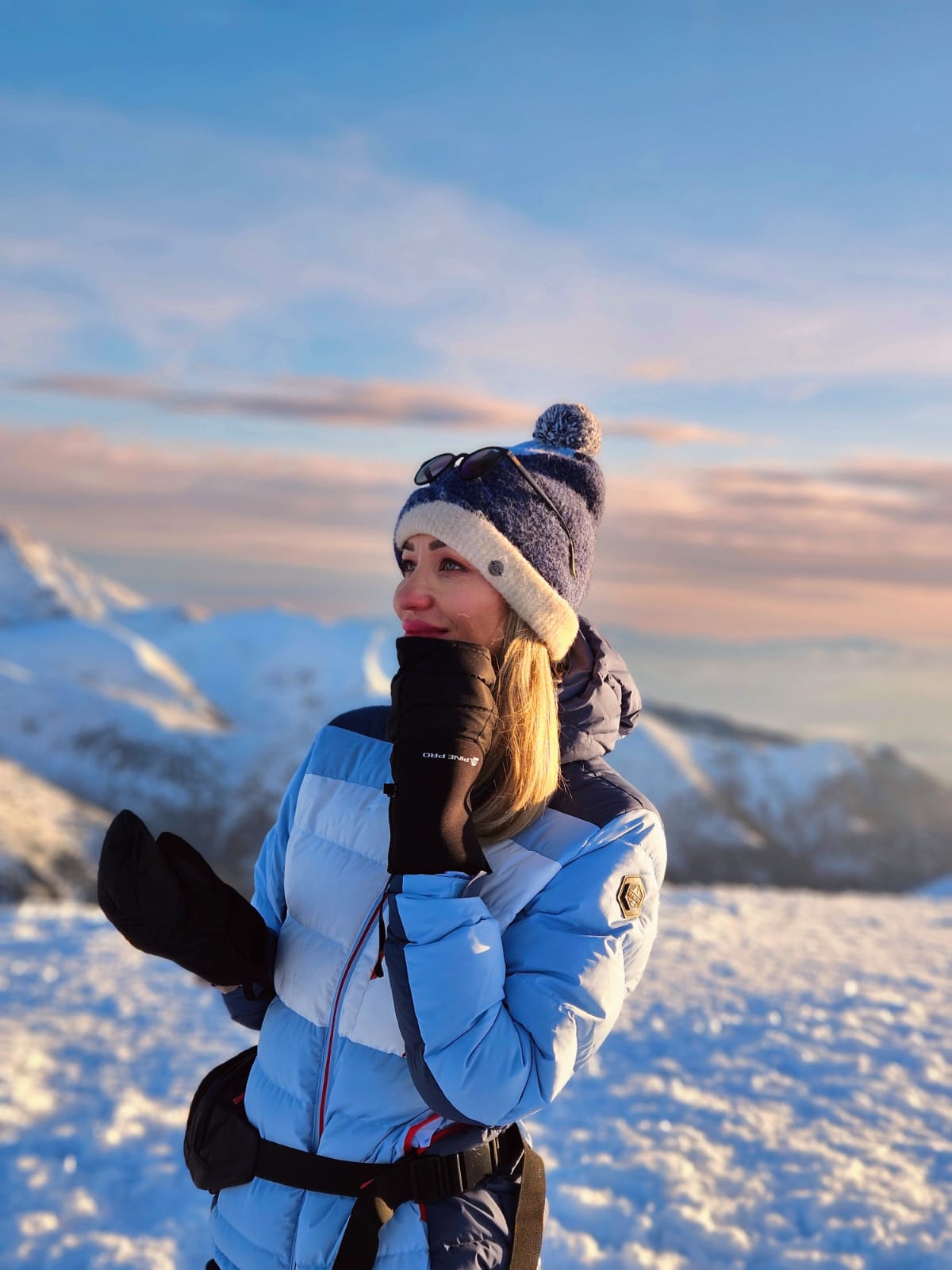
A color-blocked puffer in shades of blue and white is the kind of outer layer that makes a beanie look intentional rather than like an afterthought. This one is fitted and technical, made from quilted nylon, and it is worn with a blue knit beanie, black gloves and sunglasses parked on the hat, a full cold-weather setup for hiking and mountaineering. The styling rule is simple: when a jacket already splits into two colors, repeat one of them up top. The blue hat answers the blue panels, while the white keeps the outfit from flattening out. Black gloves and black pants stay neutral, so the color blocks are the only pattern you need. Buy the jacket first, then match the hat to it, never the other way around.
Brown Chunky Knit Sweater and Green Hiking Boots
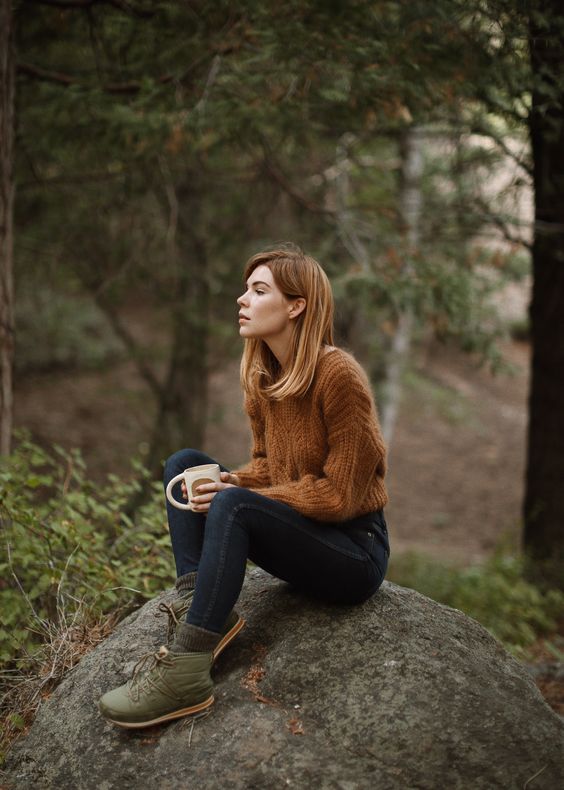
A chunky knit sweater does the job of a down jacket’s friendlier cousin: it is the piece you grab before you have decided anything else. This brown one sits over dark wash jeans and green fleece-lined socks, with green hiking boots echoing the socks while grey threads through the mix so the brown does not turn muddy. Wool this thick needs a slim leg beneath it, and the denim here provides exactly that.
Styling principle: pair one high-volume layer with one close-fitting layer, never two bulky ones. If the knit is chunky, keep the pants slim; if you prefer a wider leg, choose a thinner merino and let the pants carry the shape. Green and brown is an old, forgiving combination that works on a real trail and at the coffee stop afterward. The fleece-lined socks are the quiet reason the whole outfit holds up when the temperature drops.
Teal and Mint Green Ski Suit with Backpack
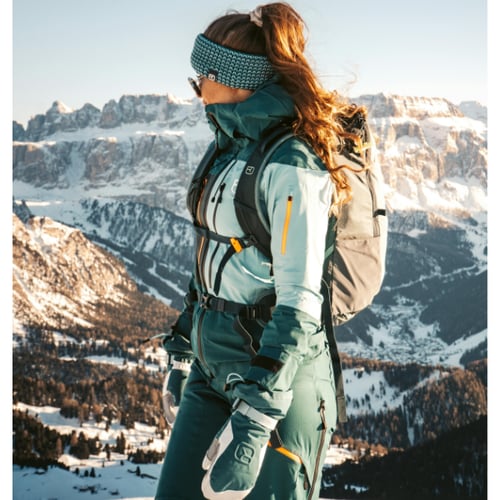
A ski suit is the laziest smart decision in winter sportswear, and I mean that as a compliment. Teal and mint green run through a fitted one-piece cut, with black separating the blocks and small orange accents stopping the outfit from becoming one flat color field. A suit removes the gap at the waist that separate jackets and pants leave behind, which matters when you are bending, riding and standing around in the cold. Gloves and a headband share the same technical fabric language, and the backpack stays quiet so the suit can carry the look. The styling rule worth borrowing: when one piece owns the color, keep everything around it dark and simple.
Bright Pink Quilted Vest Over Long-Sleeve Base Layer
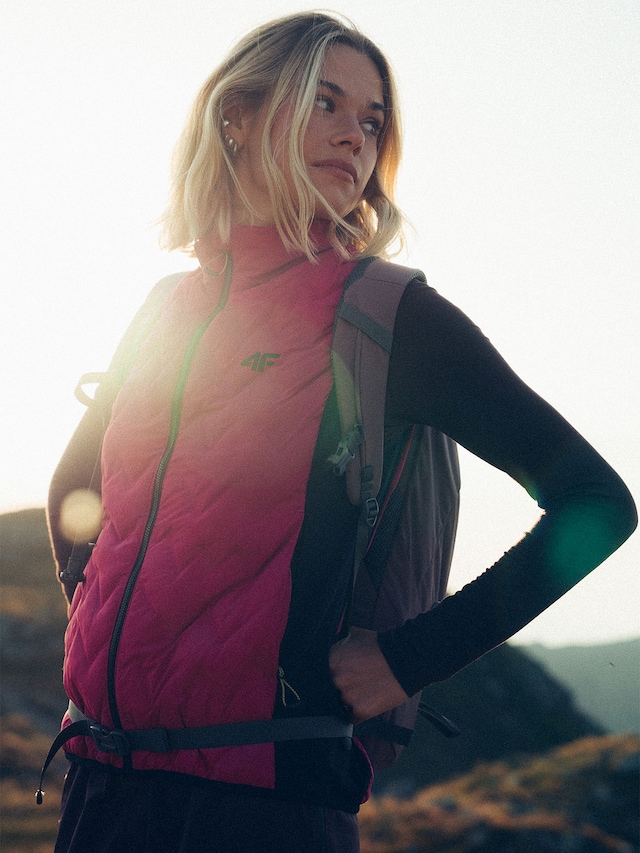
A quilted vest is the most underrated piece in a winter hiking wardrobe. It keeps your core warm while your arms stay free to swing, reach and vent heat when the climb gets steep. This version has a bright pink quilted finish over a matching pink long-sleeve base layer, and a grey backpack tones down all that sweetness. The vest sits close to a fitted base for a clean silhouette rather than a puffy one. Matching the vest to the layer beneath it is the quickest way to make a bold color look deliberate, because the eye reads one column of pink instead of two clashing tops. The grey pack handles most of the balancing, and a soft brown near the bottom of the outfit, in pants or boots, keeps the pink from tipping into candy territory. If you start to overheat on the way up, the vest is the first piece to take off and tie at your waist.
Color-Blocked Ski Jacket with Black Pants and Helmet
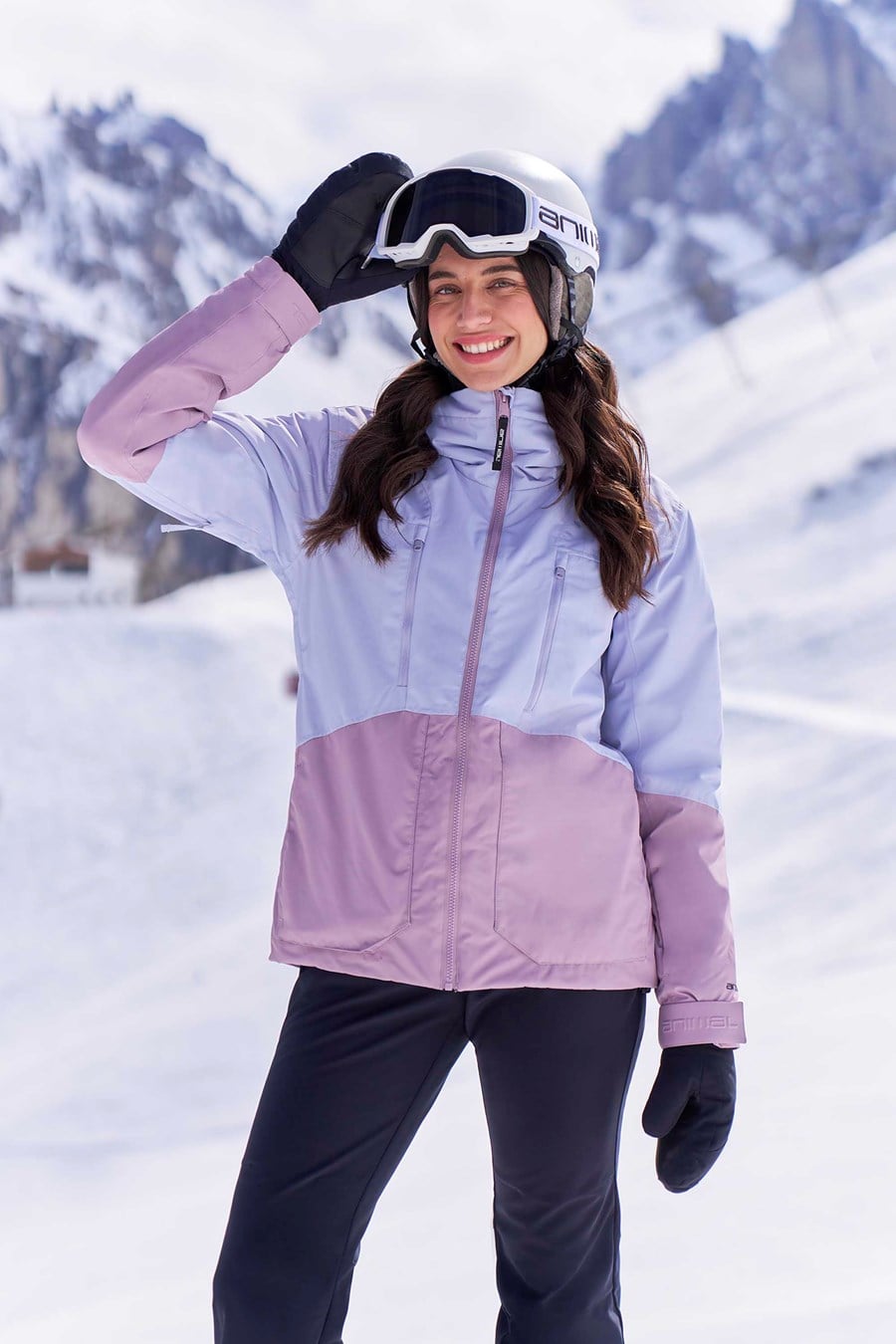
On a slope, color-blocking is not vanity; it is about being easy to spot. That is why a light purple and pink ski jacket over black pants makes more sense than yet another grey shell. The jacket is fitted, with a nylon shell and a fleece lining, and it stops at the hips above straight-cut black pants. A white ski helmet, goggles and black gloves complete the kit. Let one piece carry the color and keep everything else neutral, because a helmet or goggles with their own palette will fight the jacket instead of framing it. The white helmet is the right choice here, since it reads clean against the purple and pink without introducing a third color story. The fitted cut also helps with layering, because a ski jacket that is already roomy will not sit well under a pack or over a mid layer once the chairlift wind picks up.
Orange Fleece Jacket Over Dark Brown Pants
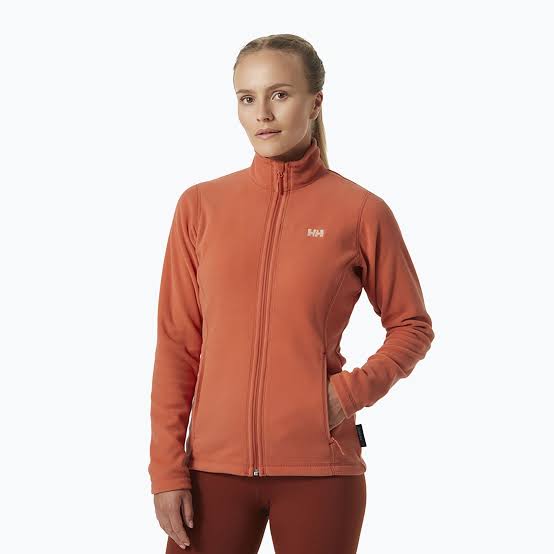
An orange fleece jacket over dark brown pants is a loud piece handled with a calm hand, and that balance is what makes it work. The fleece is fitted rather than boxy, so the saturated color never swallows the wearer, and the brown below grounds it in trail territory instead of turning the whole look into safety gear. The styling principle to take away: choose one high-color garment, wear it on the layer people will actually see, and keep every other piece earthy and quiet. On a winter hike, being visible is practical rather than vain, and this is also the easier look to assemble on a dark morning.
Cream Puffer Vest Over Tan V-Neck Sweater
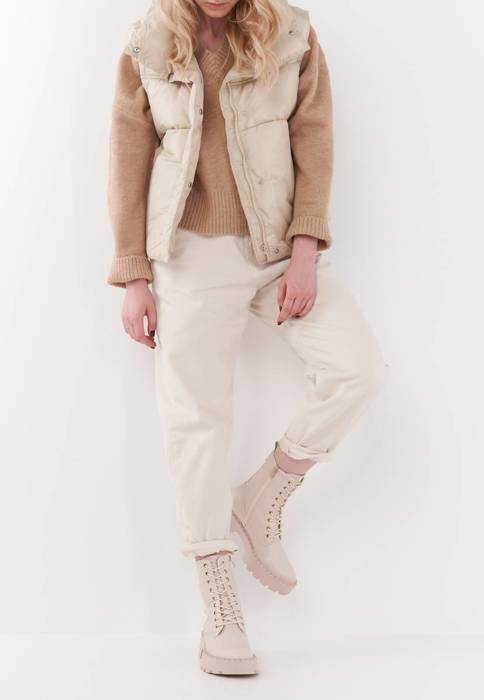
Cold-weather dressing does not have to look like a rescue mission, and this outfit proves it. A beige puffer vest over a tan v-neck sweater keeps everything in one warm family, with interest coming from texture rather than color. A smooth quilted shell contrasts with a soft knit. The vest is fitted while the pants stay relaxed, a good balance for a casual winter outing rather than a summit push, because your arms stay free for carrying bags, driving or holding a warm cup. Beige lace-up combat boots finish the tonal run and keep the look grounded. When you commit to neutrals, contrast the surfaces rather than the shades, or the outfit flattens into one beige blur.
Mauve Puffer Jacket and Neck Gaiter
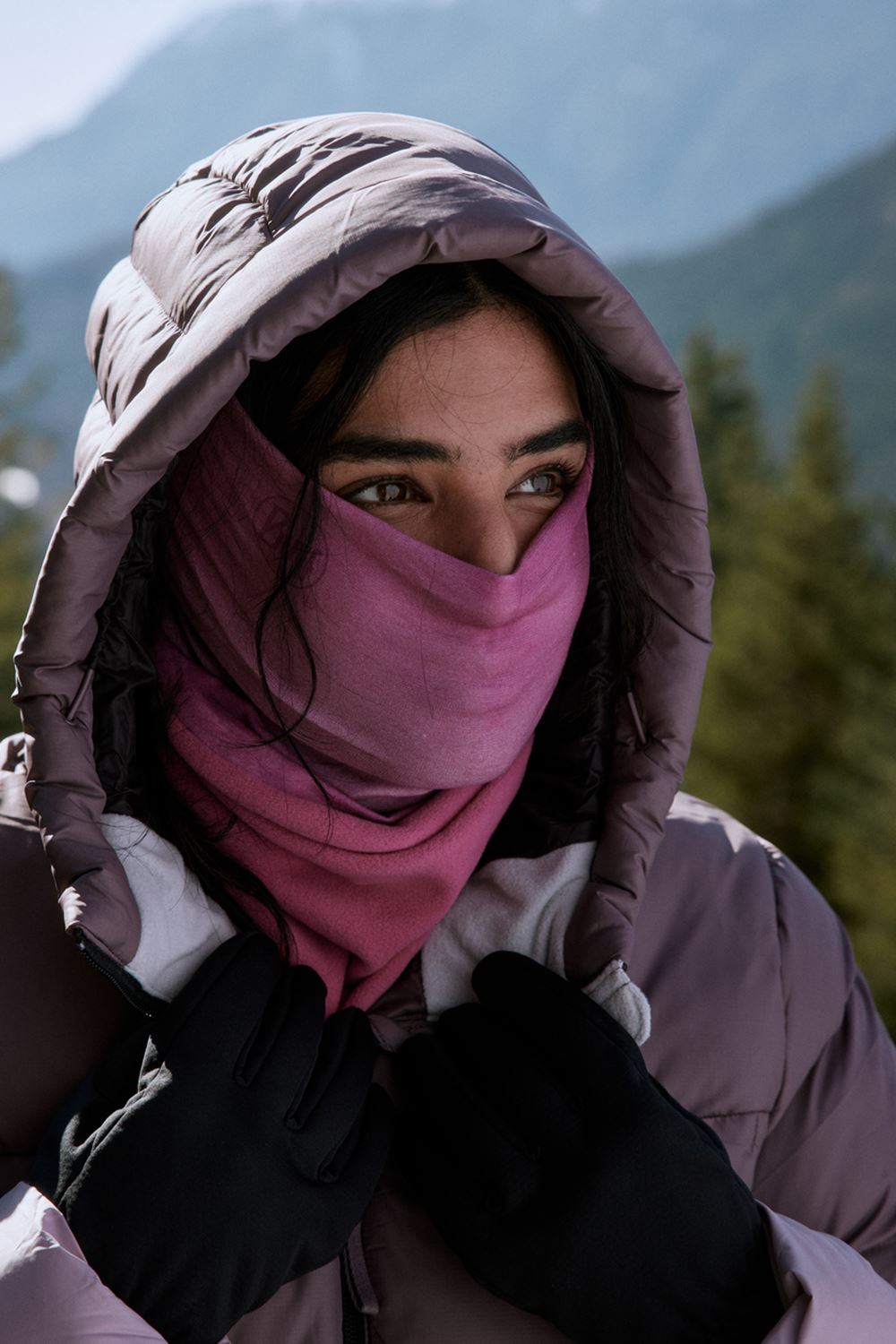
A neck gaiter turns a sensible winter layer into a clever one. Here it covers the lower half of the face while gloves handle the hands. The puffer jacket is mauve and cut fitted rather than boxy, with black hiking boots grounding the look and pink and grey running through the palette. Puffer, fleece and knit appear together in the same frame, which is the right order: knit against the skin, fleece in the middle, puffer on the outside. A fitted puffer layers under a shell with far less bulk than a marshmallow one, and a gaiter beats a scarf because there are no loose ends to tuck in or lose on a windy ridge. Mauve reads warm without shouting, which makes it an easy color to repeat season after season.
Pink Hooded Jacket with Burgundy Pants
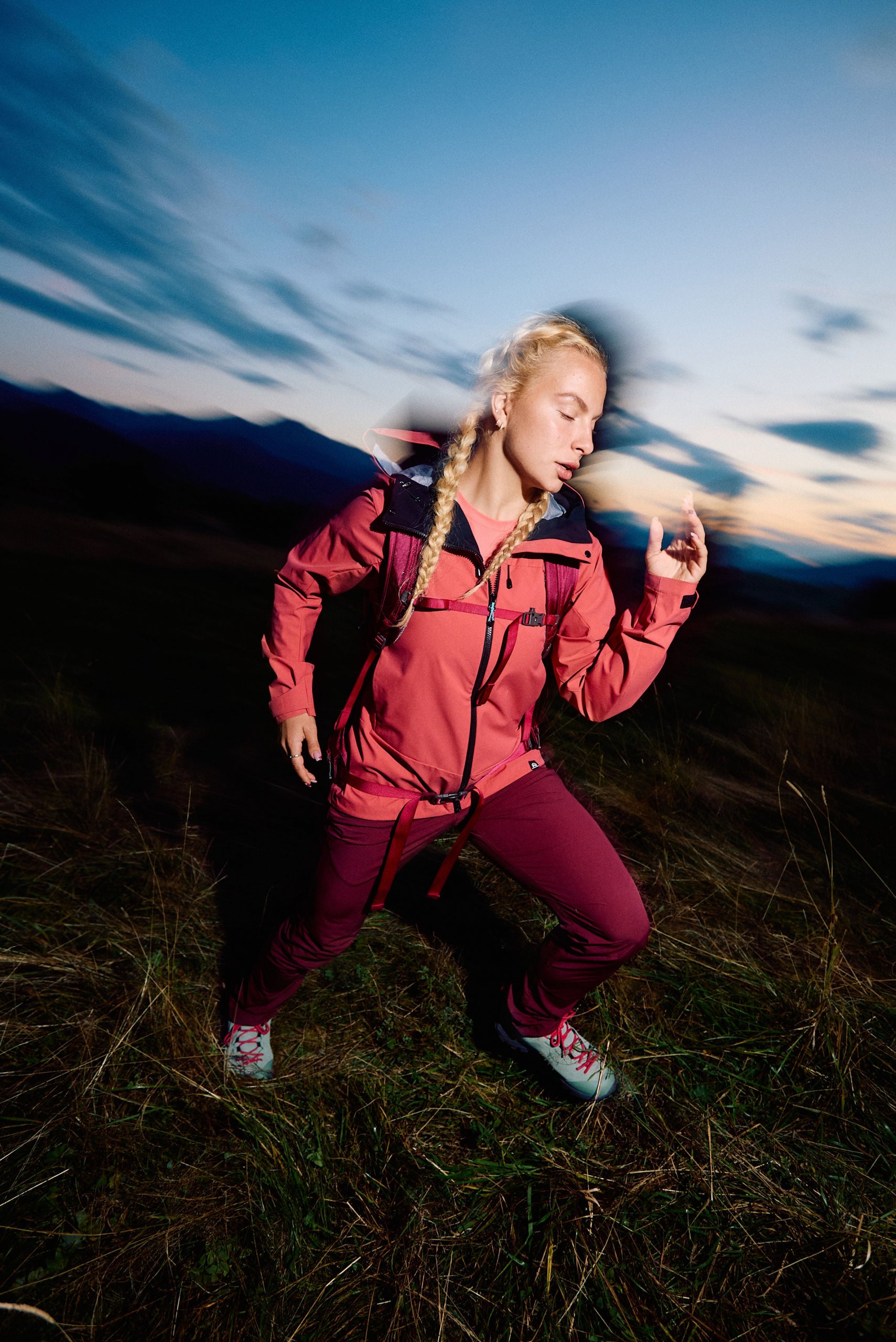
Pink and burgundy should not work as well together as they do, but here they are, looking natural side by side. The pink hooded jacket is fitted and sits close over slim burgundy pants, so the two warm tones read as one continuous column instead of two competing blocks. Grey athletic shoes and a backpack quietly hold the outfit down; without them, the look drifts toward costume. The nylon and polyester fabrics are the practical kind for a day outdoors, easy to brush clean and hard to ruin. The styling rule: pair two analogous warm tones, add exactly one cool neutral, and stop there. The pink does the talking while the grey keeps things balanced.
Dark Grey Puffer Jacket and Green Hiking Pants
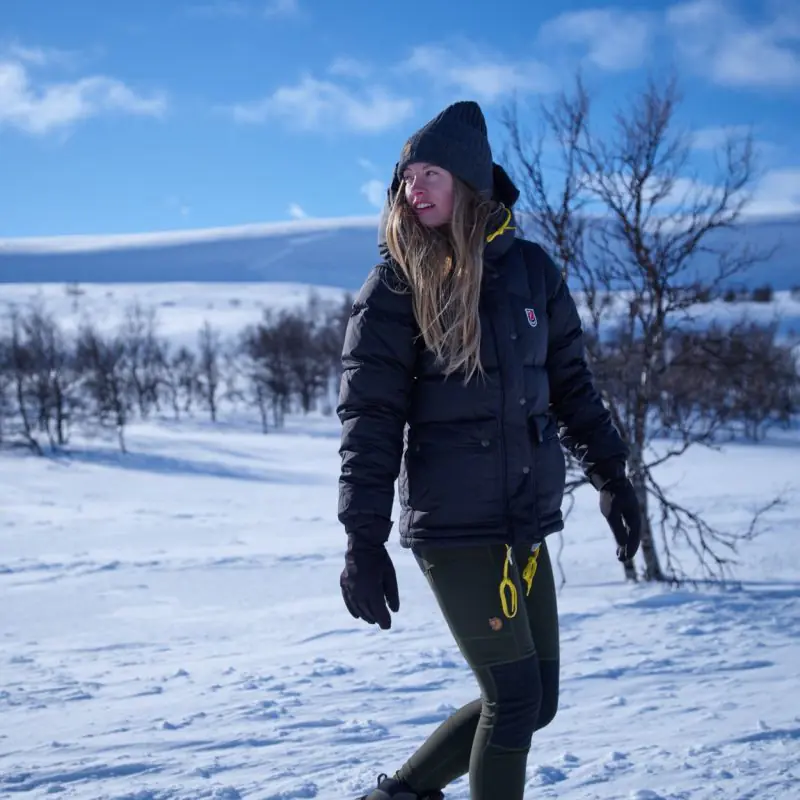
Yellow zipper pulls on a dark grey puffer are the kind of small decision that quietly rescues an entire outfit, and more cold-weather gear should bother with details like this. The jacket is fitted rather than bulky and sits over slim dark green hiking pants with black boots, a grey beanie and black gloves completing the look. Dark grey against dark green is one of the most forgiving pairings in winter hiking. It is low in contrast and easy to live with when you are layering up before sunrise. The styling rule worth borrowing is to let hardware be your accent. Zipper pulls, toggles and cord locks can carry a touch of color, so you can skip an extra scarf or layer and give your eye somewhere to rest among all that grey. It also makes a plain jacket look considered rather than default.
Pink Suede Hiking Boots and Knit Sweater
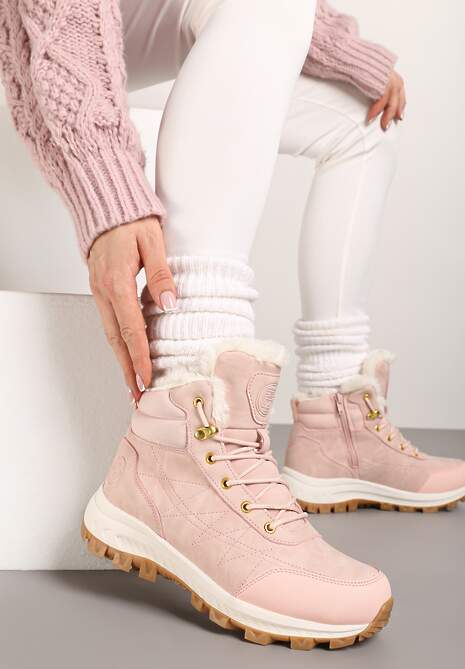
Pink suede hiking boots are a real commitment, and I mean that as praise for anyone willing to let them lead a winter hiking outfit. The rest of the look follows their lead: a pink knit sweater, white leggings and white socks, with white leg warmers bridging the gap at the ankle. The sweater and leggings are fitted, so the boots stay the boldest thing in the frame. The gum soles and terry cloth texture do the grounding, which keeps the pink feeling warm rather than precious.
Styling principle: when one piece is this saturated, keep everything else tonal. A single pink family running from sweater to boots looks deliberate, while a second bright color would split the attention. Suede responds well to a brush and a water repellent before slush season, and white leg warmers call for the same tolerance for dirt that white sneakers always do. It is worth it if you like being easy to spot on a grey trail.
Olive Green Hooded Technical Jacket and Dark Trousers
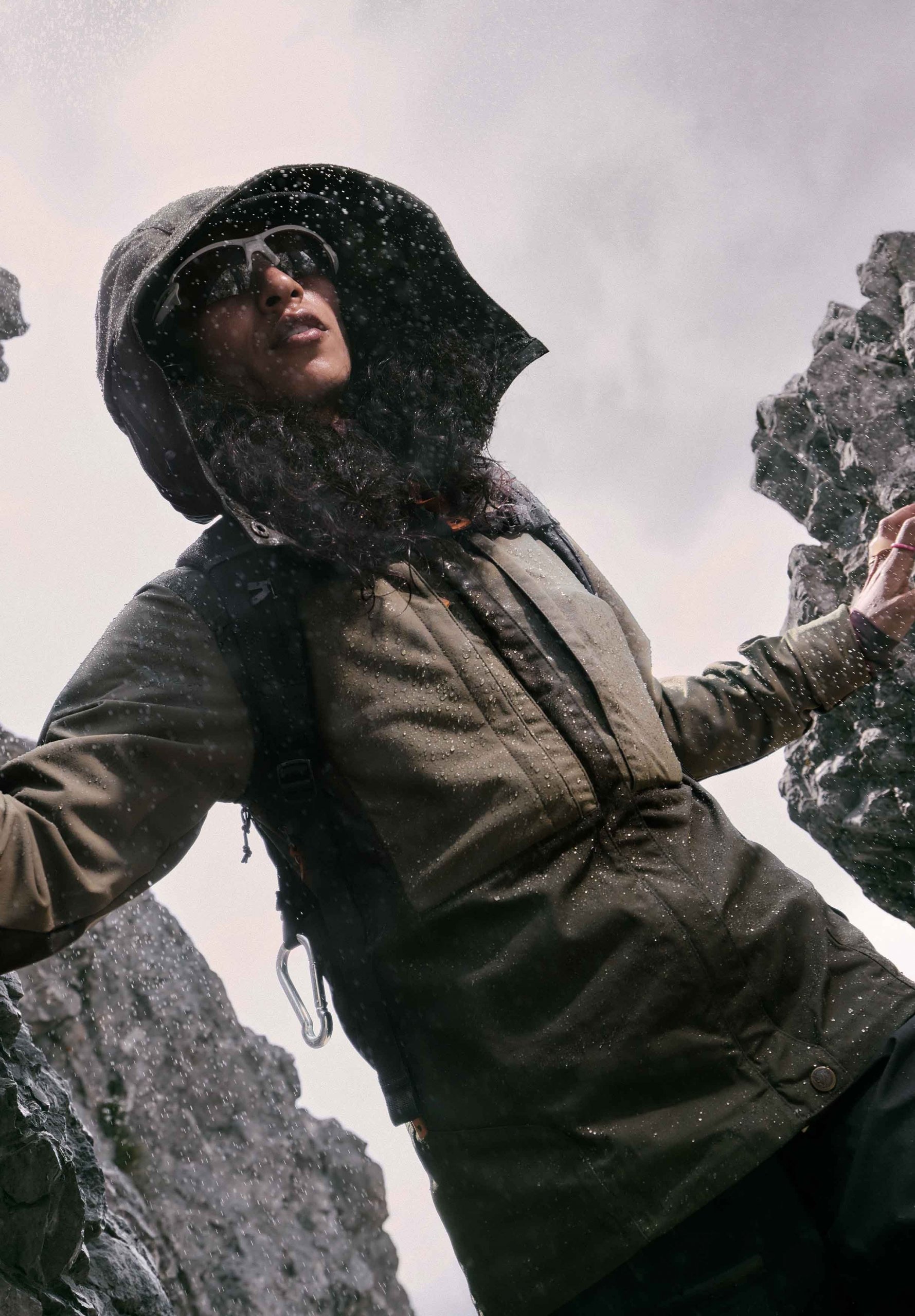
An olive shell is the least glamorous purchase you will make this winter, yet it is the piece that decides whether your day on the trail goes well, so start with the hood and only then pick the shade. This jacket is fitted and technical, made from a weatherproof fabric that actually handles bad weather. It layers over thin inner pieces instead of a bulky sweater, and it is paired with dark trousers and a black backpack that carries a carabiner on the outside. The oversized hood is the feature worth paying for: it is roomy enough to cover your face with a beanie underneath, and it is stiff enough with water that it keeps its shape instead of folding in on you. The styling rule here is to keep everything under a fitted shell close to the body, since a technical cut only looks intentional when the layers beneath it stay thin. Clip gloves or a water bottle to that carabiner so you never have to take off the pack in the wind.
Light Green Fleece Jacket and Black Pants
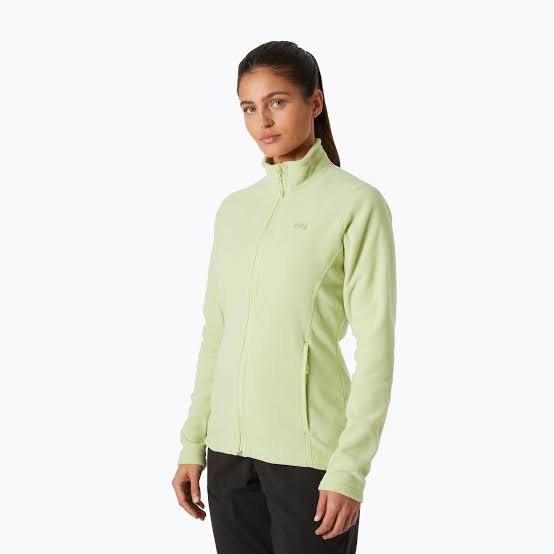
Pastel fleece is the piece people buy and then rarely wear, usually because they style it as outerwear when it really works best as a layer. This light green jacket has a fitted cut, which lets it slide under a shell later without adding bulk. The black pants underneath give the pale green something solid to sit against. Pale green over more pale green would wash out, but pale green over black looks deliberate. On its own, on a dry, mild day, it can be the entire outfit. Under a waterproof jacket, it disappears into the warmth where it belongs. The principle: match the fleece’s cut to its job, then let the bright piece be the only bright thing in the look.
Coordinated Dark Olive Jacket and Cargo Trousers
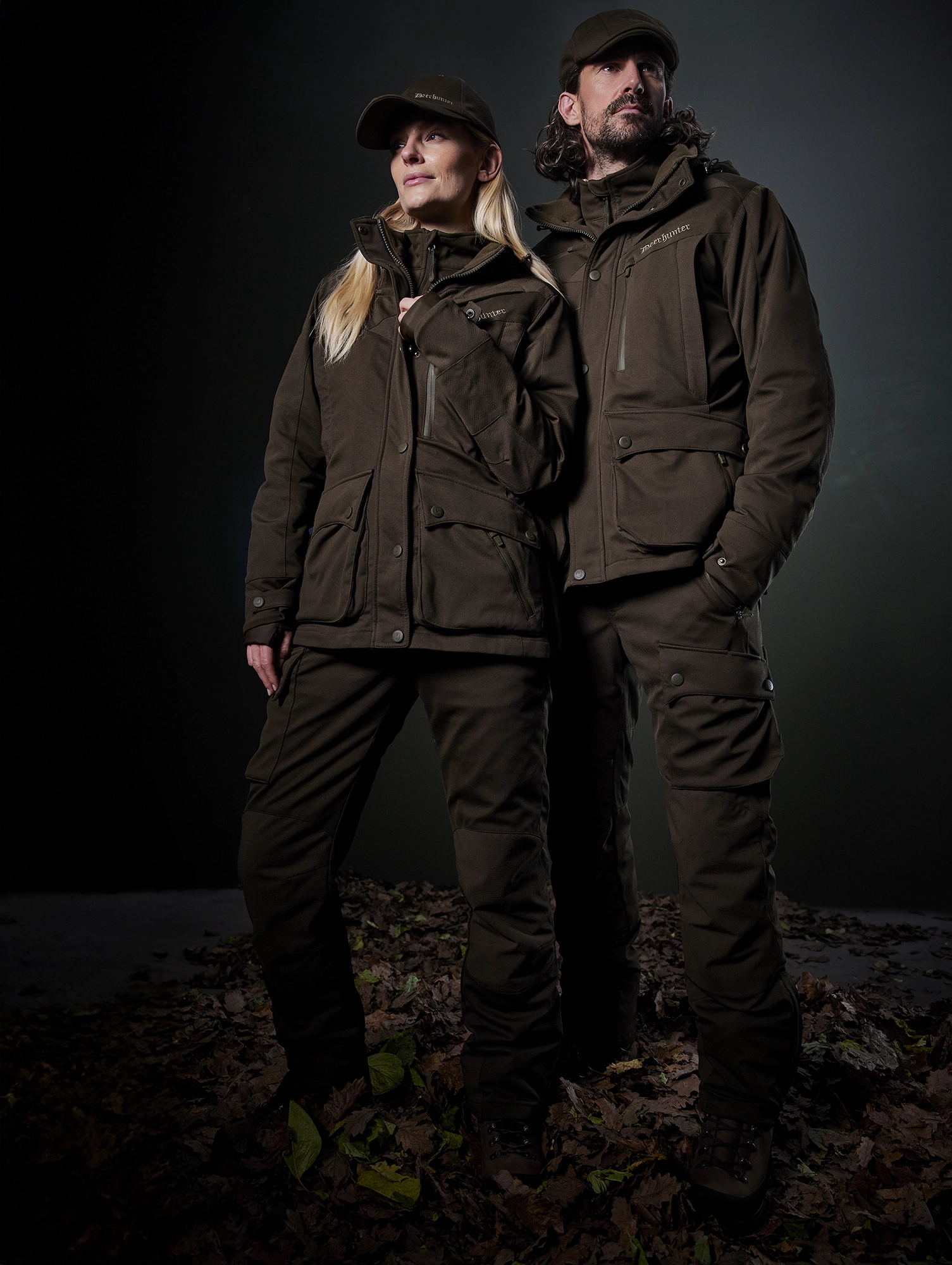
A matching jacket and trouser set in the same deep olive is the understated move of winter hiking. It looks considered rather than rushed, and it takes the guesswork out of a cold, early start. This pairing is made from durable, weather-resistant canvas and twill: an insulated jacket with several utility pockets over straight-cut cargo trousers, finished with dark brown hiking boots and a matching olive baseball cap. When you commit to one color from head to toe, choose footwear one or two shades darker so the monochrome has a base to stand on. The straight, utilitarian cut is the honest part of the look. It is roomy enough to move and layer without billowing, and the pockets only look useful when the silhouette around them stays clean. This is an outfit for cold exploration where warmth matters more than photos, though it manages to deliver both.
Shearling-Lined Black Suede Hiking Boots
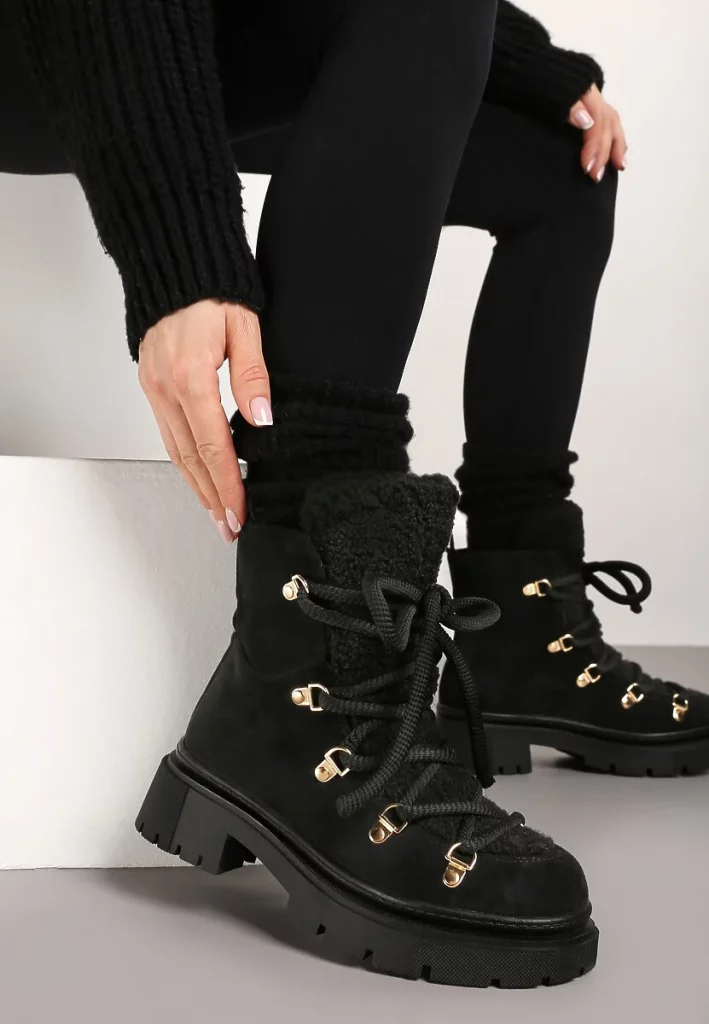
The quickest way to make a winter hiking outfit look considered is to let one piece carry the texture, and a black suede lace-up with a shearling lining does exactly that. Gold eyelets are the only glint in an otherwise all-black kit of knit socks, leggings and sweater, so the suede stays matte and the hardware becomes the accent. Chunky boots need a slim leg to balance them, which is why fitted leggings and a sock tucked neatly at the shaft keep the proportions sharp instead of heavy. Lace, suede and lining are all you need to see here. Keep the rest of the outfit matte and dark, and the boots will look premium rather than sporty.
Grey Hooded Waterproof Jacket Over Striped Top
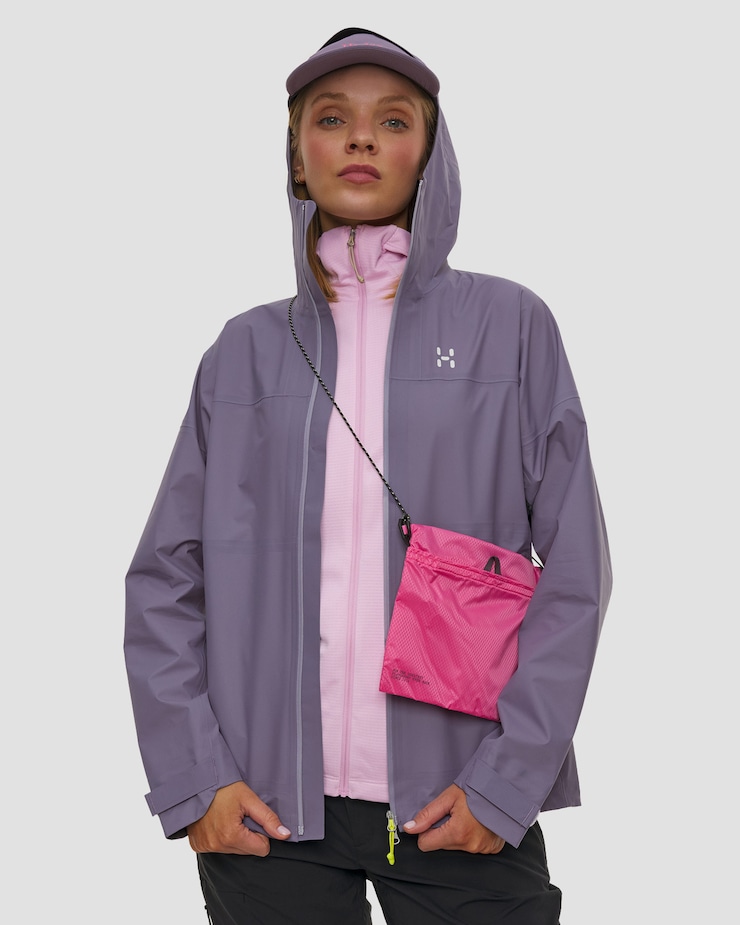
If you want one trick that keeps a plain grey shell from looking default, borrow this one: repeat a bright accent in two small places. The grey hooded jacket does the heavy lifting, smooth and waterproof with a relaxed cut. It sits over a pink striped long-sleeve top that could easily have made the whole outfit look muddy. It does not, because the pink stays in the base layer, where the stripe reads as subtle, and then a bright pink crossbody bag and a pink striped cap pick it up at the edges. A relaxed jacket over a fitted top keeps the line clean without making you look like you borrowed someone else’s coat. The rule is simple: one accent color, two small spots, and no more.
Final Thoughts
The strongest winter hiking outfits start with layers you can adjust as your pace and the weather change. A weather-resistant outer layer, an insulating mid layer and trousers or hiking pants form a reliable foundation, while boots, a neck gaiter, a backpack or a helmet finish the look for specific conditions. Color can keep you visible and break up dark gear, and coordinated sets make packing easier. Choose pieces that let you move freely, then repeat the combinations that work on your own trails. The takeaway: build your winter hiking outfit around adaptable layers and dependable footwear, not a rigid head-to-toe formula.
