24 Winter Hairstyles with Scarf Ideas Featuring Silk Wraps and Braid Accents

Three of the last five clients in the chairs near mine left with a scarf tied into their hair. Not around the neck: woven through a braid, wrapped over a bun, knotted at the nape. Pastel silks, bold prints, houndstooth. I think it is the fastest way to change a hairstyle without touching the cut.
So I rounded up 24: Winter Hairstyles with Scarf, from a headband wrap you can do half asleep to a woven braid that needs a mirror and a plan. Short, long, fine, coily. My own hair is fine and straight, flat by 4 pm, so I leaned toward the low-effort end while writing these. None of it needs a cut to grow out.
Elegant Low Bun with White Scarf
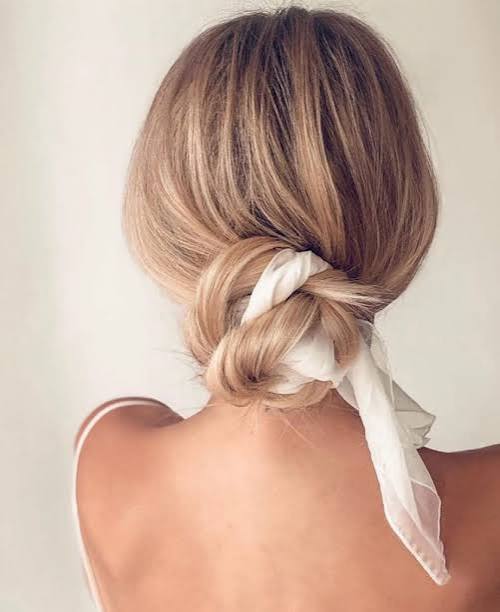
The low bun with scarf only reads formal when the knot sits below the crown and something covers the elastic. This one lands there. A collarbone long bob gives the wrap just enough length to fold twice, and wavy ash blonde with highlights does the gripping: soft texture holds pins far longer than a fresh blowout. The side parting matters more than the scarf. Push it too deep and it widens a long face; a shallow side parting over a rounder face is where this style earns its keep. No bangs, no stray pieces to re-tuck. Wear it to a winter wedding or a holiday dinner, then plan on two minutes the next morning to re-pin whatever slid out overnight. The white scarf around the base is what keeps it intact past dessert.
Blonde Bob with Silk Headwrap
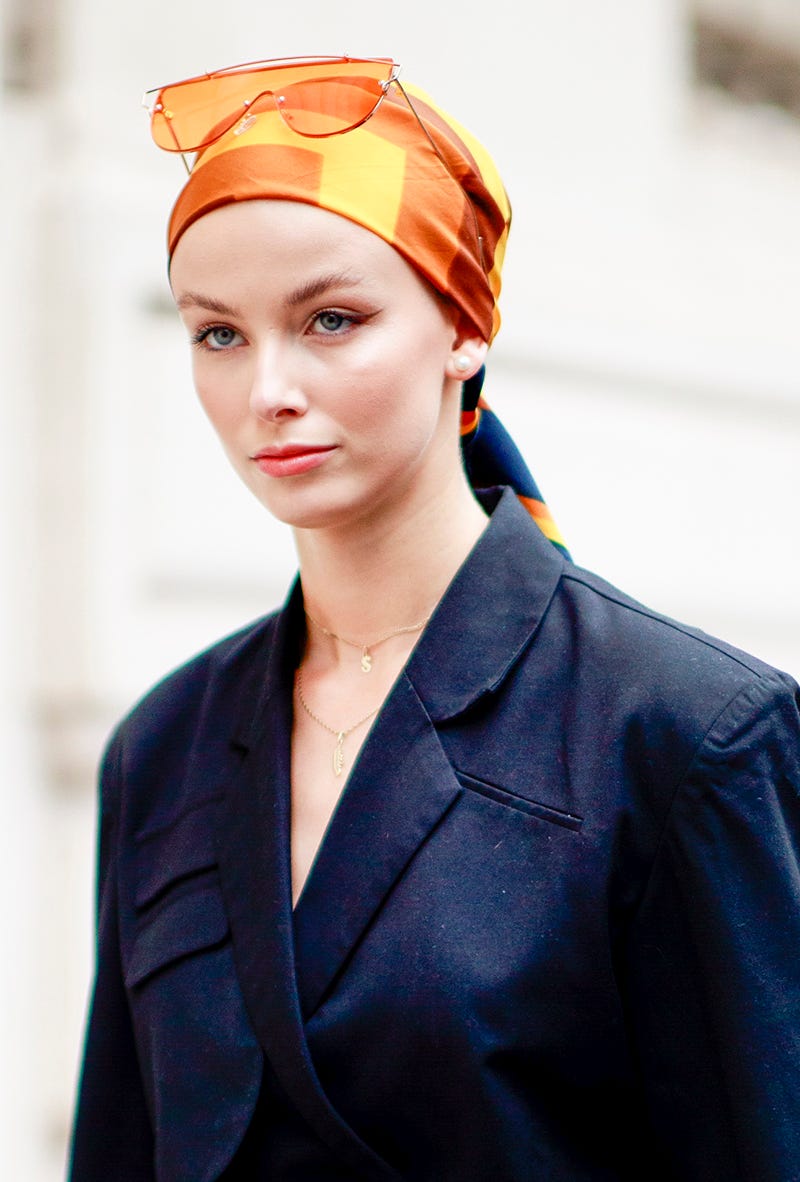
Ever tried a silk scarf headwrap and ended up with a knot the size of a fist? Order is the whole trick. Smooth the chin-length blonde bob straight with a flat iron first so the middle parting stays crisp. Fold the scarf into a band, center it at the nape, cross the ends above the forehead, tuck them under. Fifteen minutes, and it holds until you take it down. This is a bathroom-mirror job, not a salon booking. Straight texture does most of the work here.
Dark Brown Ponytail with Green Scarf
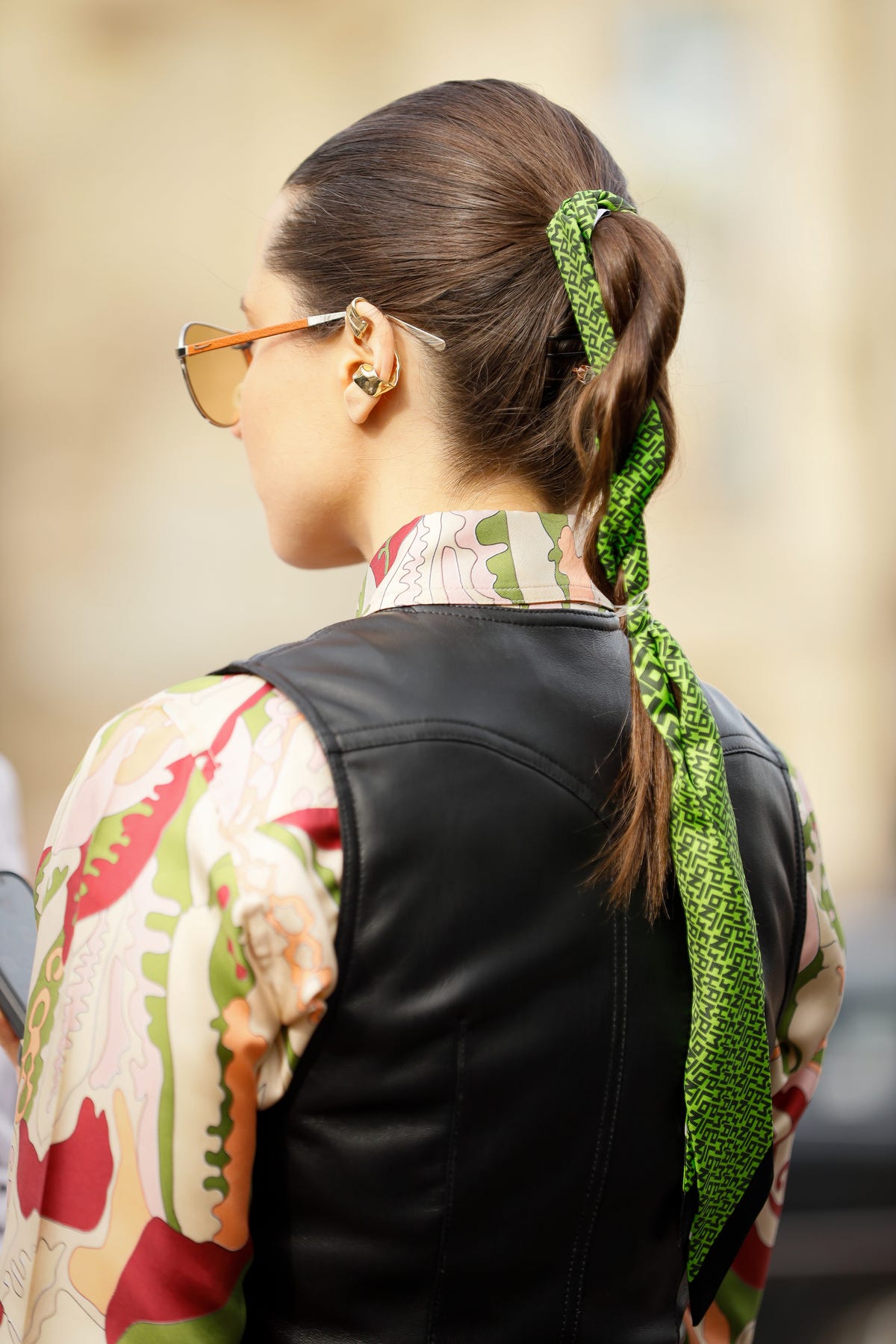
The twisted ponytail with scarf is the best trick I know for hair that is too thick to wrap neatly. Two sections, not one. Split mid-back hair into an upper and lower half, twist each one away from the middle parting, then cross them at the base and let the tails merge. Straight, thick texture is what makes it work: the twist keeps its edge because there is weight behind it. Fine hair drops it by mid-morning.
Then the scarf. Wrap it around the ponytail base twice, knot underneath, and let the ends hang with the tail. Dark brown is the easiest color to pair here, since the green shows up as a stripe instead of competing with a highlight. Hold is the payoff. The base stays smooth for a full evening, and the twist reads deliberate from the side, which is the angle most people see. Sit down for this one; the tension has to be even on both sides or the whole thing leans.
Dark Brown Hair with Turban
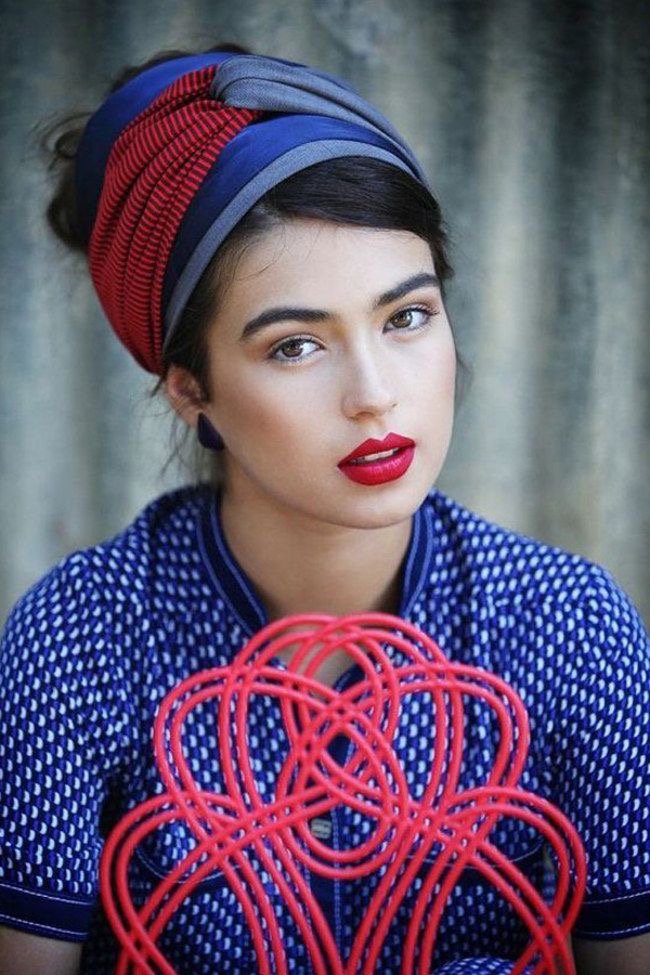
A turban covers the hairline entirely, and that is the whole reason it outranks a loose scarf knot for winter. Dark brown, thick, straight hair slicked back into a low bun keeps the head flat under the wrap, no bangs to tuck, no parting to chase. This is the season for the hair turban style, a cold-weather dinner or a party where you stand the whole night. Hold runs until you take it down. Nothing about it moves.
Blonde Balayage Braid with Scarf
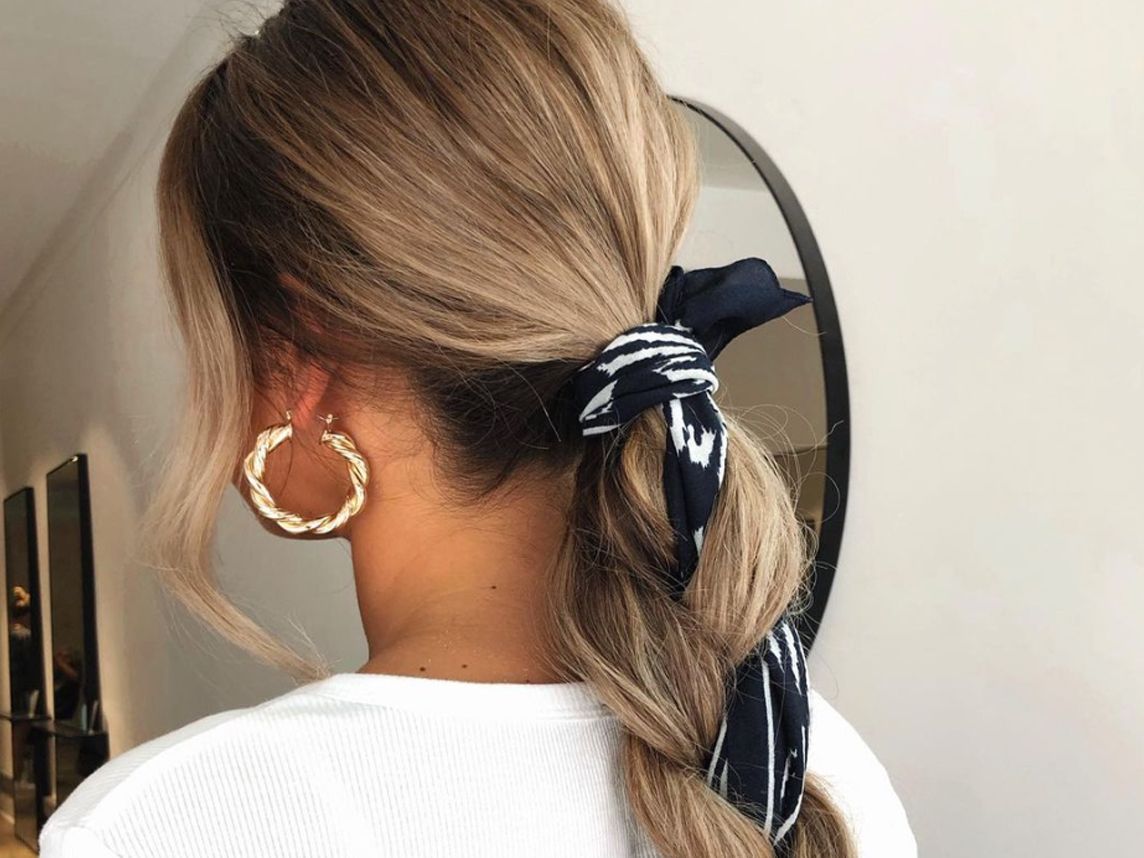
I have never once walked out with the braid I pictured in my head. Blonde balayage through mid-back layers, middle parted, no bangs, wavy thick hair. That is the version that holds. A braid with scarf takes me about 20 minutes, most of it sectioning, and the scarf is doing the real work here. It keeps the tail from rubbing against a collar all day, which is where a loose braid usually gives up first. Loosen the plaits after tying and the braid sits softer across the crown. The honest downside: wavy thick hair shreds at the nape by day two, and fine hair will not hold the shape past noon. Trim every eight weeks or the ends tangle into the scarf.
Blonde Braid with Pink Ribbon
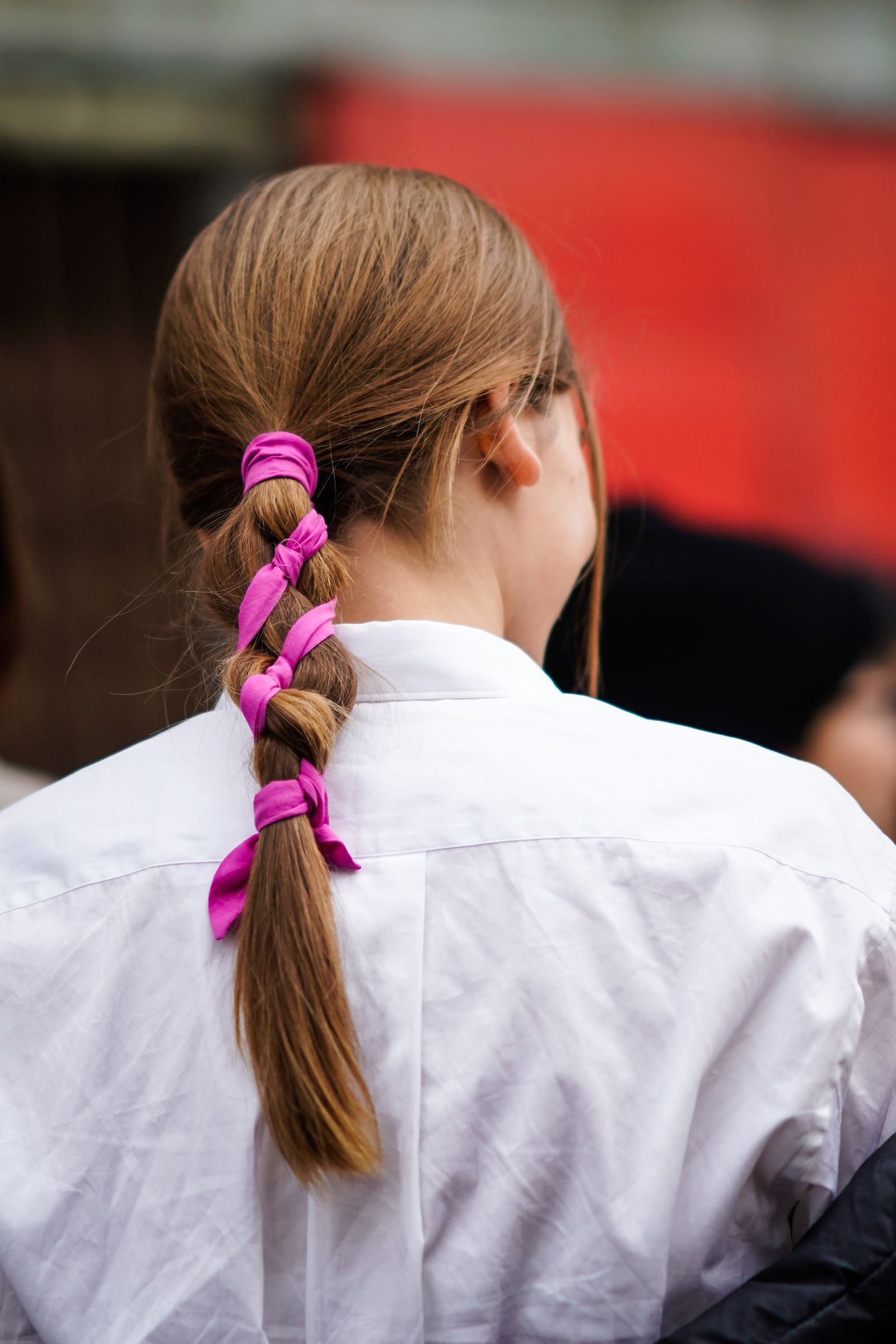
Eleven minutes before I had to leave, I found a length of pink ribbon in a drawer of odds and ends and wove it straight into a three-strand braid. My blonde hair is straight, hangs to mid-back, and had blunt bangs and a middle part to keep tidy while I worked. The ribbon ran through the middle strand so it showed on both sides, then tied off at the tail.
What surprised me was the hold. A plain braid on straight hair loosens by early evening, and the ribbon acts like an extra pin, so the plait stayed exactly where I built it. Weaving a braid with ribbon cleanly is the hard part: about 30 minutes, and the ribbon has to follow the strand rather than sit on top of it. Halfway through I understood why the first attempt looked lumpy. The second attempt sat flatter. Blunt bangs and a middle part leave no room to hide a crooked weave, which is why I now set the ribbon before I start braiding instead of racing it at the end.
Dark Brown Tight Braid with Scarf
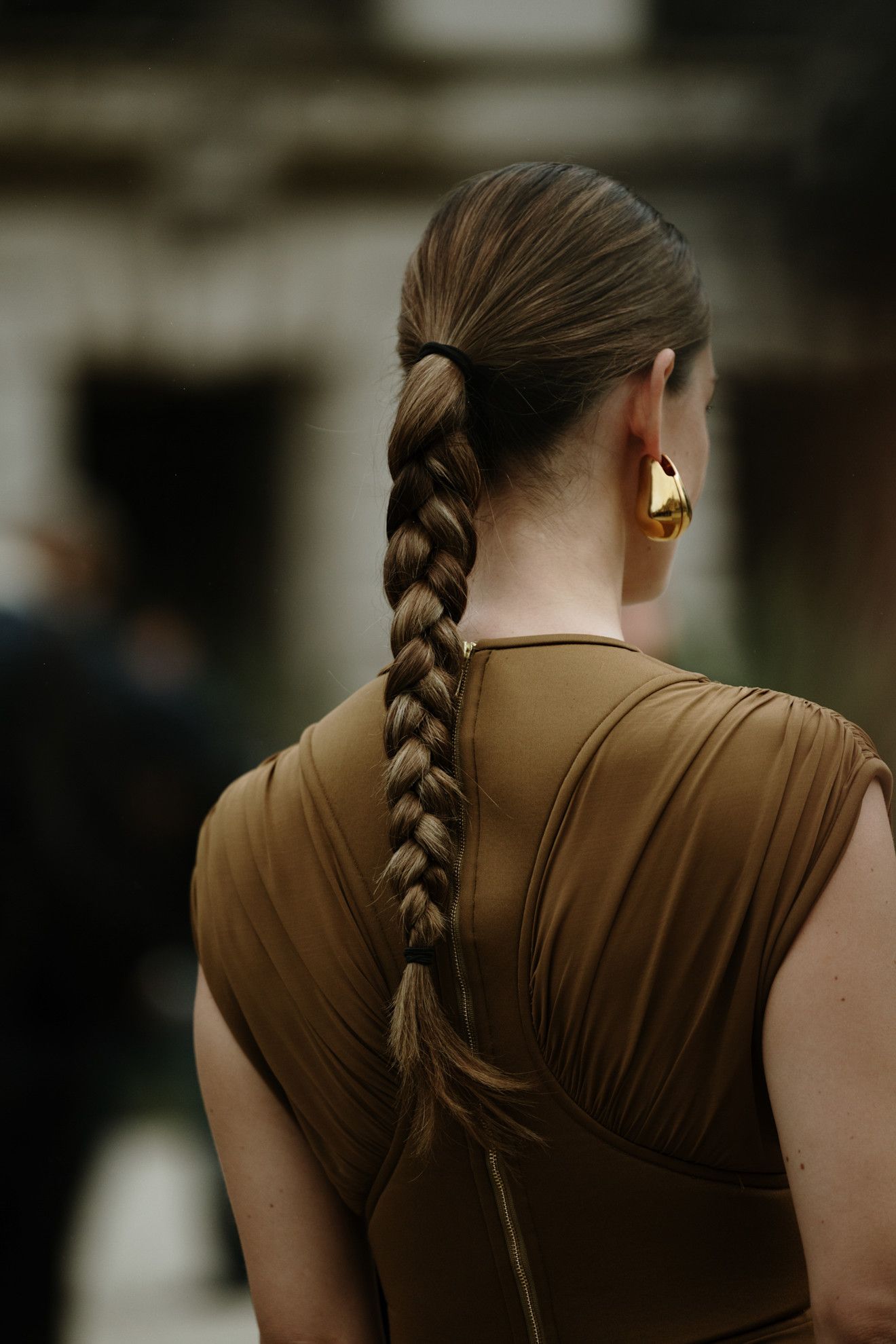
Ever wonder why some braids look carved and others go fuzzy by hour two? Texture is the answer. A tight braid hairstyle starts with thick, straight, mid-back dark brown hair, and it works because nothing fights the crossing pattern. Straight strands lie flat and reflect light, so a middle part and a long-layer cut give the plait a sharp, architectural line with no wave pushing strands out. The scarf tied around the base covers the join, holds the tension, and keeps the first three inches from loosening. Hold runs long here. Six to eight hours, more on a dry day. Fine, slippery hair should pass: the sections thin out and the neatness goes soft by lunch. For a winter dinner or a holiday party, though, thick hair keeps its discipline.
Dark Brown Ponytail with Houndstooth
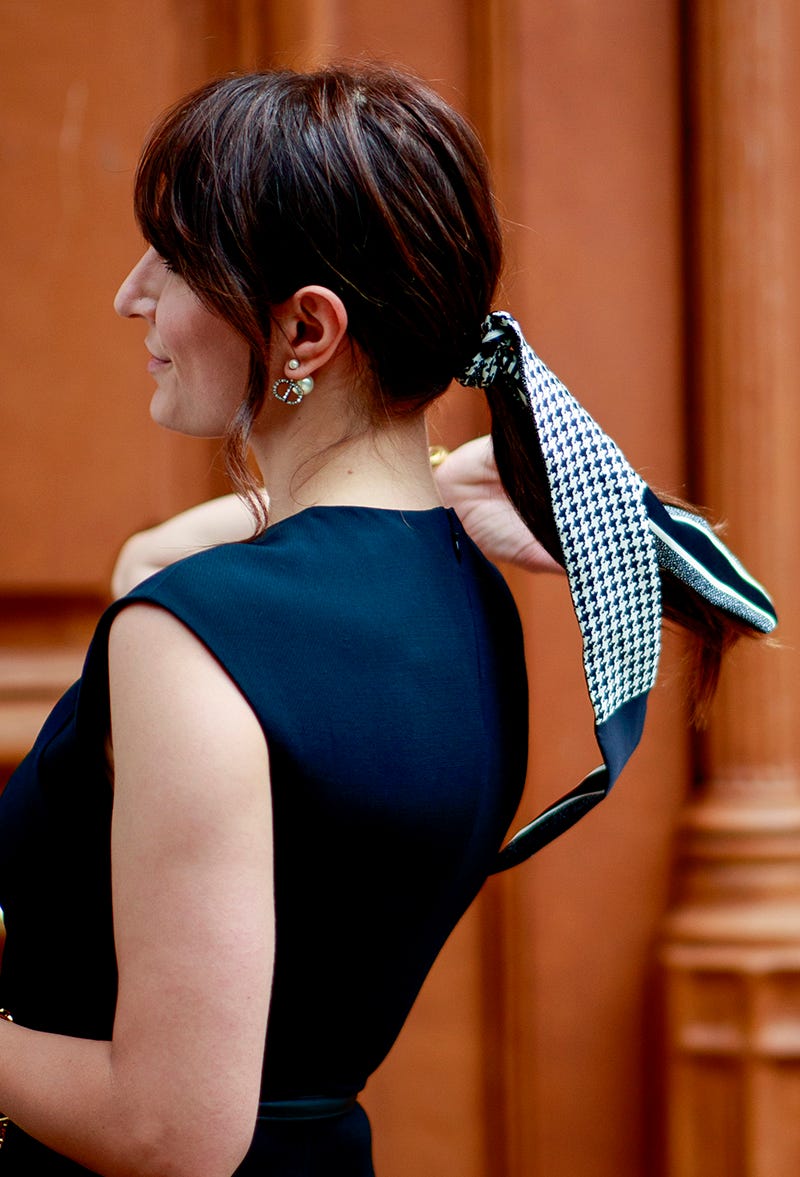
Confession: a low ponytail swallows side bangs faster than any other style. On straight, thick, shoulder-length dark brown hair, the fix is in the ask. Tell the stylist you want the bangs cut to skim the cheekbone, the shortest piece starting at the outer brow, and the ends left heavy enough to curve. Skip a wispy choppy edge; it vanishes the moment the ponytail sits low. Honest downside: grow-out. Side bangs need a trim every eight weeks, and a five-week-old edge will not hold its shape inside the scarf.
Wavy Blonde Hair with Headband Scarf
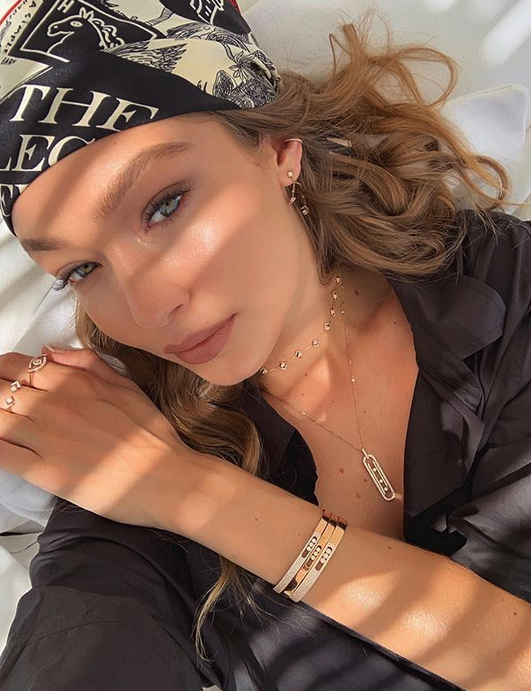
The difference between a scarf that stays put all day and one that slides by noon is tension at the crown, not knot technique. A scarf as headband over air-dried waves takes five minutes, and that is the whole point. Blonde balayage, mid-back, thick and wavy: fold the scarf to a three-inch band, part the hair down the middle, tie at the nape, tuck the knot under. Air-dried texture holds a rough bend better than flat-ironed hair, so a round brush stays in the drawer. The color helps. Balayage keeps a soft root, so no line shows when the band sits forward one day and back the next. This one is genuinely DIY, no chair time needed. A trim every eight weeks stops the long layers from weighing the wave down.
Light Brown Waves with Silk Scarf
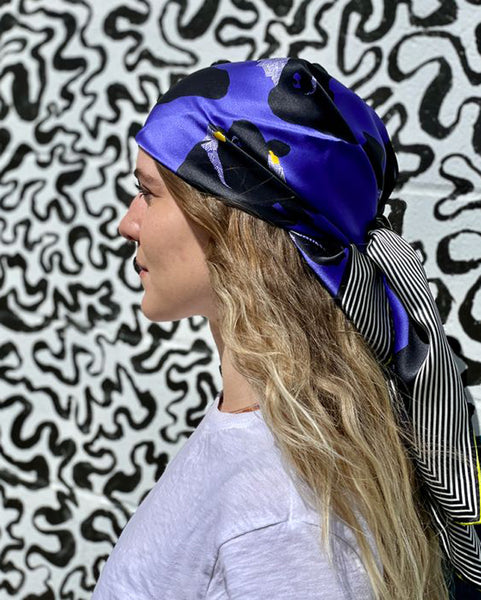
Snow on the windshield and twenty minutes to get the waves in before I leave the house. Mid-back hair with long layers takes a silk scarf hair wrap better than anything else I have worn this winter: the scarf sits above the ears, the waves fall below it, and a middle part keeps the shape level from the side. Thick wavy hair is doing the heavy lifting here. Fine hair slides straight out of a silk knot, while a dense wave pattern gives the fabric something to grip. Light brown with blonde highlights stops the ends from disappearing against the scarf.
Across a real week the hold front-loads: day one is the full loose wave, day three the pattern drops into bends and the scarf moves to a lower tie. Re-tie once, mist a texture spray at the root, and it survives a commute. Upkeep is a trim every eight weeks, because long layers on thick hair lose their shape at the ends well before the length goes. Cold air outside and dry indoor heat soften the wave faster than anything else. This is the one I would wear to a winter dinner.
Fine Blonde Hair Messy Bun with Scarf
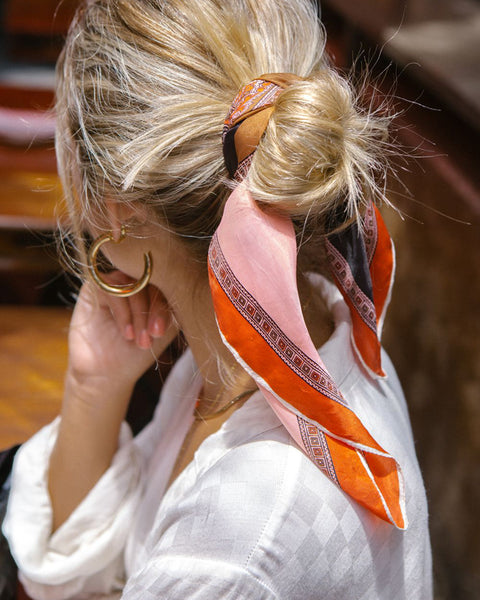
Who does a messy bun with scarf genuinely flatter? Fine, straight blonde hair with long layers, mostly, because the scarf brings the volume that the hair will not. Tease the crown, twist, pin, tie. A middle part and mid-back length pulled high give a longer face the height it wants. Thick, high-density hair is the opposite case: it swallows the scarf whole and the bun stops reading as undone. The honest catch is the dent. Fine hair left in a knot all day holds the crease long after you take it down.
Blonde Updo with Colorful Scarf
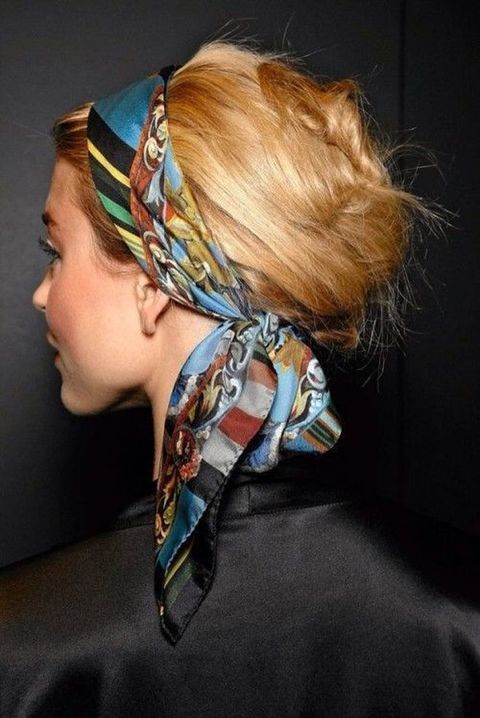
Sectioning, not luck, is what makes an updo with scarf hold. Layered blonde hair at mid-back gets split into four or five panels: the back is backcombed at the root and pinned into a soft twist, the sides sweep up loose over a middle part, and a few wavy pieces stay out at the temples so the shape never reads as a helmet. The scarf goes on last, tied around the head and tucked into the pinned base rather than laid over the top of it. Order matters more than tension. Scarf first and the pins have nothing to bite. Wavy texture keeps the twist longer than straight strands would, and because no section is pulled tight, re-pinning through the day is part of the technique. Thirty minutes in the chair, minimum.
Curly Hair Messy Bun with Scarf
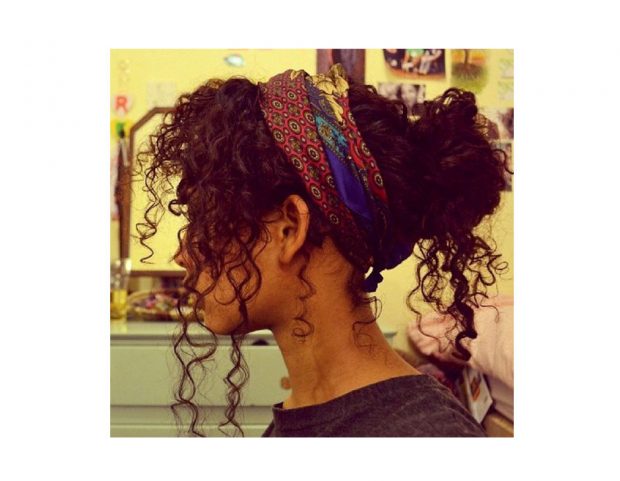
I once spent eleven minutes on a messy bun that looked exactly like the four second version. Curly hair is forgiving: the texture does the work. Gather mid-back curls loose, pin at the crown, let two escape at the temples, then wrap the scarf at the base and knot it off-center. No chair booking required. Subtle highlights through dark brown keep the shape readable from the side, and the bun holds until you take it down, because curls grip pins on their own. A curly hair scarf bun is a five minute job.
Beige Blonde Hair with Headwrap
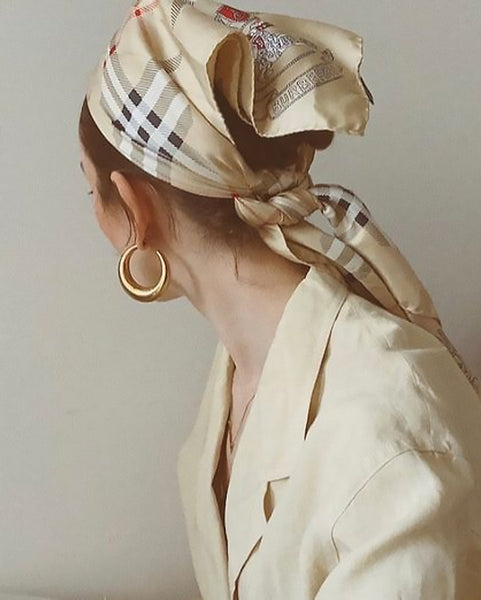
By the fourth morning the wrap has delivered its verdict: beige blonde shows every regrowth inch, and a headwrap covers them all at once. Straight mid-back hair takes the knot cleanly because nothing fights the fold, and a patterned silk scarf headwrap sits flat instead of sliding off at noon. The color wants toning every six or seven weeks so the beige stops drifting yellow at the ends, plus a trim every eight. Through a wet January it holds from the car to the office, and the fabric shields the mid-lengths from wind and the static that rides with it. A middle parting keeps the front section smooth, which matters when your hair reports every bump. The first tie is the tidiest one. After that the knot settles and stops looking arranged.
Medium Brown Hair with Scarf Wrap
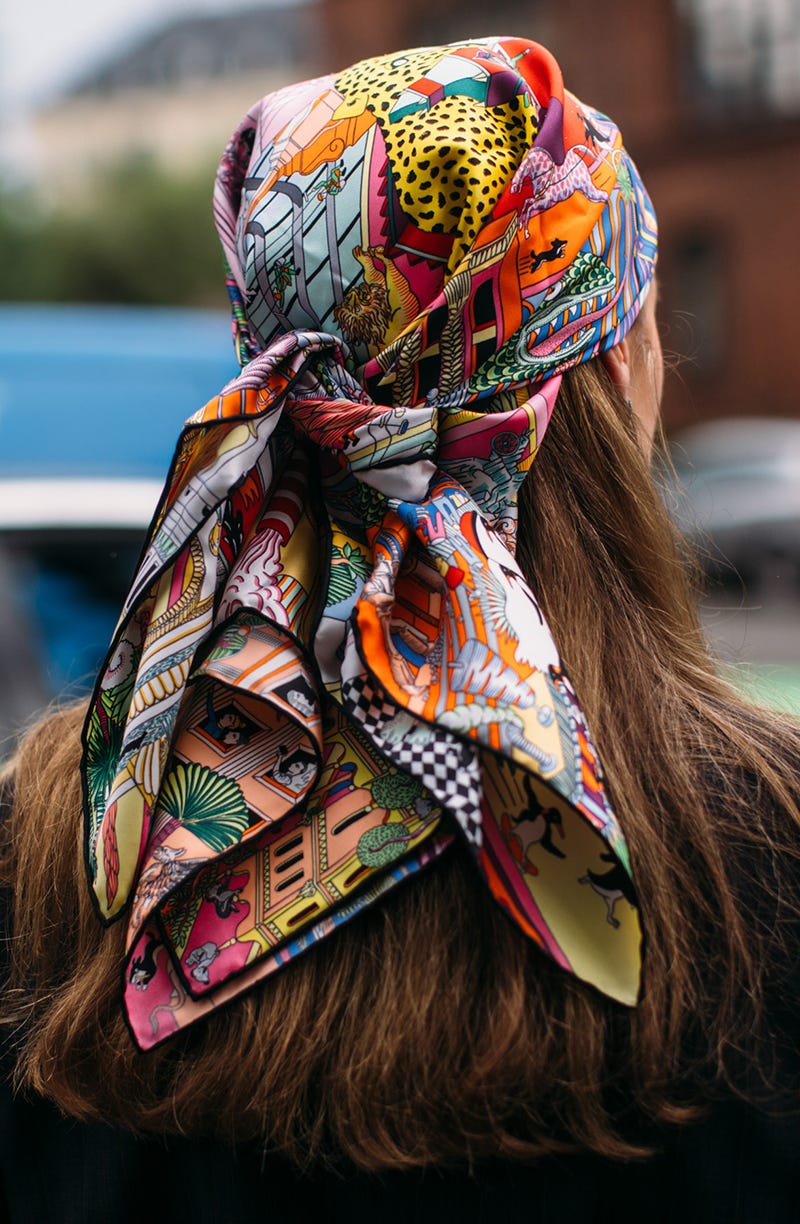
Ever watched a headband climb out of thick hair by lunchtime? That is the whole argument for a full headwrap hairstyle on straight, heavy mid-back hair. A band sits on top of thick strands and loses the fight. A wrap crosses them, tucks the ends, and has nowhere to slide. Fifteen minutes of smoothing gets you there, since the fabric does the holding and your only job is flatness underneath. Medium brown helps too: the shade matches the shadow at the roots, so any gap under the fold disappears instead of glowing.
The honest downside is patience. Thick hair has to be flat before you tie anything, and a rushed blow-dry leaves a bump that shows all day, no matter how good the knot looks going on. Bulky ends also stack at the nape, which is why I gather them low and flat rather than high. A headband wins at minute one. By hour six the wrap is ahead, and it usually takes the day.
Dark Brown Hair with Printed Scarf
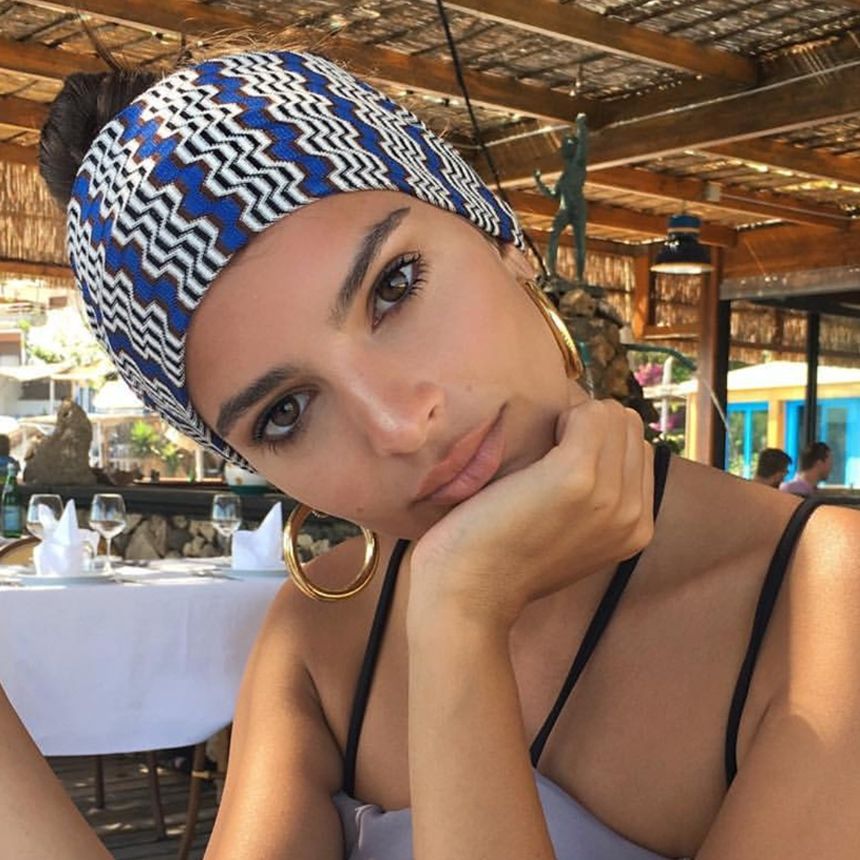
Verdict first: slicked back hair scarf is a long-face style, and nothing about it is forgiving. Long faces only. Straight, fine-to-medium dark brown hair pulled off the face with a printed silk scarf tied around the head does two things at once: it shows off cheekbones, and it hides nothing. Chest-length hair gives the slick something to taper into at the nape, so the shape reads deliberate rather than unfinished, and the middle parting keeps it symmetrical. Straight strands also hold a slick all day; waves fight it by noon. On an oval or heart face, this is the cleanest shape of the season. Round faces should pass, because a scarf adds width up top that you did not order.
Wavy Dark Brown Hair with Silk Scarf
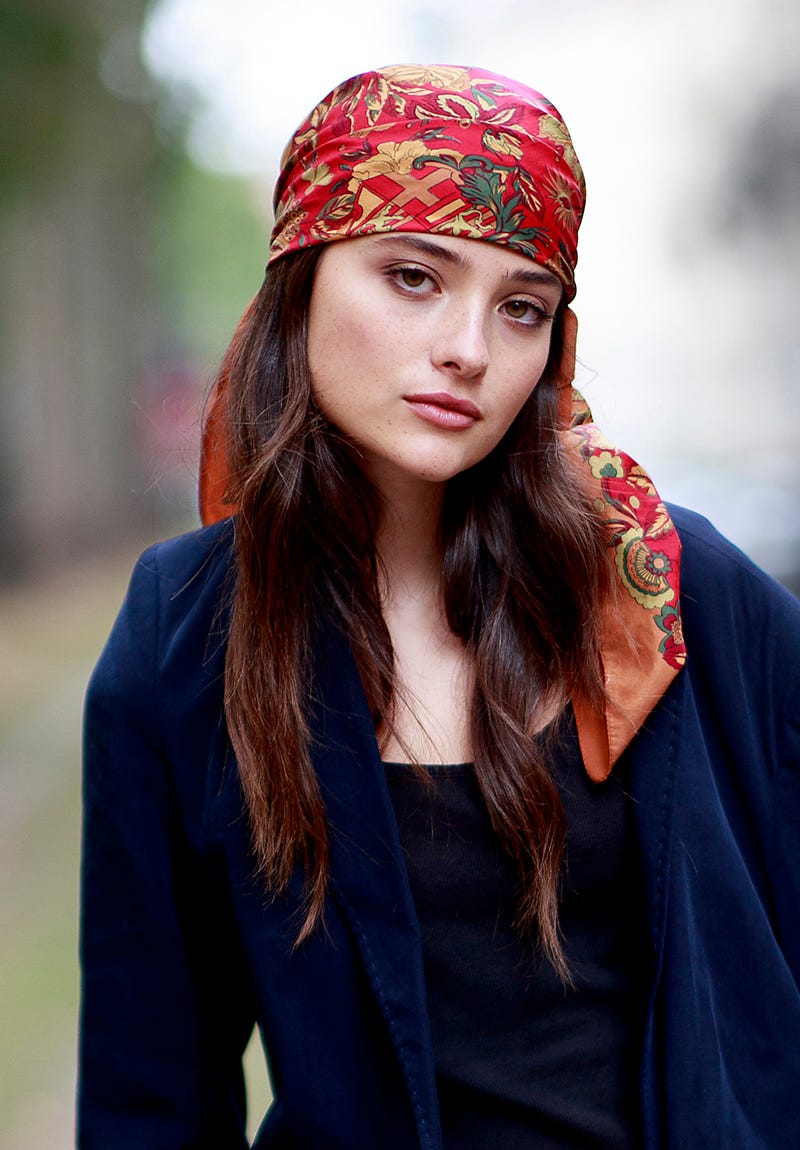
Seven in the morning, scarf tied twice, waves still where they were last night. Thick, wavy, mid-back dark brown hair holds a set through a full winter day because the pattern supports itself: crush it under a hat at noon and it falls back into shape indoors. A vibrant patterned scarf tied around the head is a five minute job at home, no round brush, no salon chair, middle part, no bangs, hair loose underneath. It holds. That is why DIY types keep this one in rotation from November through February.
Dark Brown Updo with Wispy Bangs
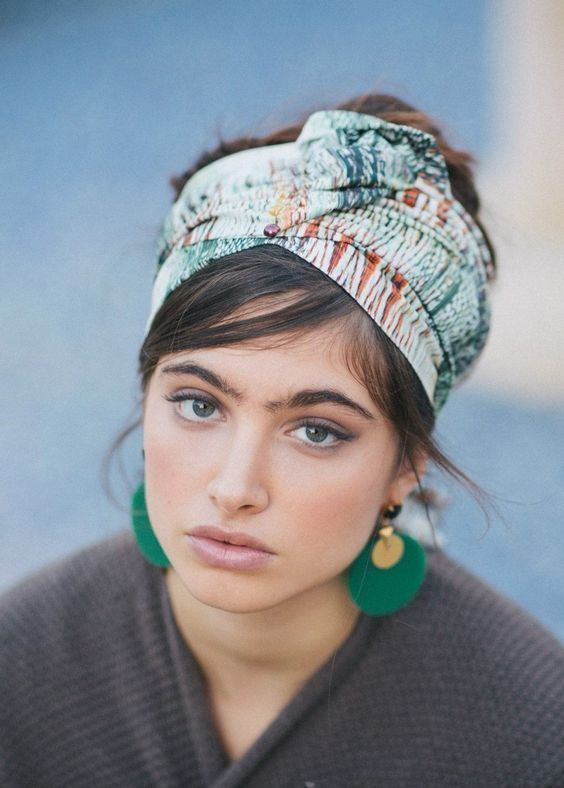
An updo with wispy bangs is a technical argument, and on wavy hair the bangs win. The trick is layering. Long layers through mid-back dark brown hair give you something to gather without pulling a lump at the crown, and the bang section is cut soft so it can move independently of the pinned mass behind it. Tie the scarf as a headband first, then pin up into it.
- Long layers through mid-back, nothing shorter than collarbone
- Wispy bangs that skim the brow, soft edge, no blunt line
- Movement cut into the bang so it sits without heavy product
- A scarf worn as a headband, not a full wrap
- Book the shaping, then plan on about thirty minutes daily
Wear and upkeep: about thirty minutes to build, and daily pinning is normal, because wispy bangs and a gathered crown do not stay married overnight. Two or three pins along the bang line keep the front from collapsing into the headband. Trim the bang every three weeks if you want the softness to last, and keep the lengths on an eight week schedule.
Dark Brown Bob with Scarf Headband
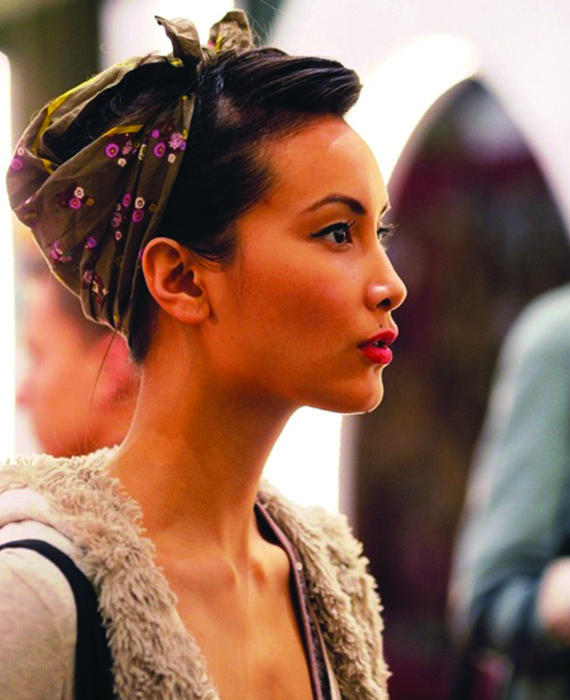
Is there a cut that flatters almost any face shape once a scarf is tied into it? A bob with scarf headband comes close. Dark brown, straight, blunt to the chin with a side parting, it sits heavy enough that the knot stays flat instead of riding up by lunch, and the bangs soften a round face while the blunt line gives a long jaw something horizontal. My caveat is for fine, low-density hair: the knot slips and the chin-length ends flick out with nothing to weigh them down. Density decides.
Wavy Dark Brown Hair with Neck Scarf — Partially Covering The Chest
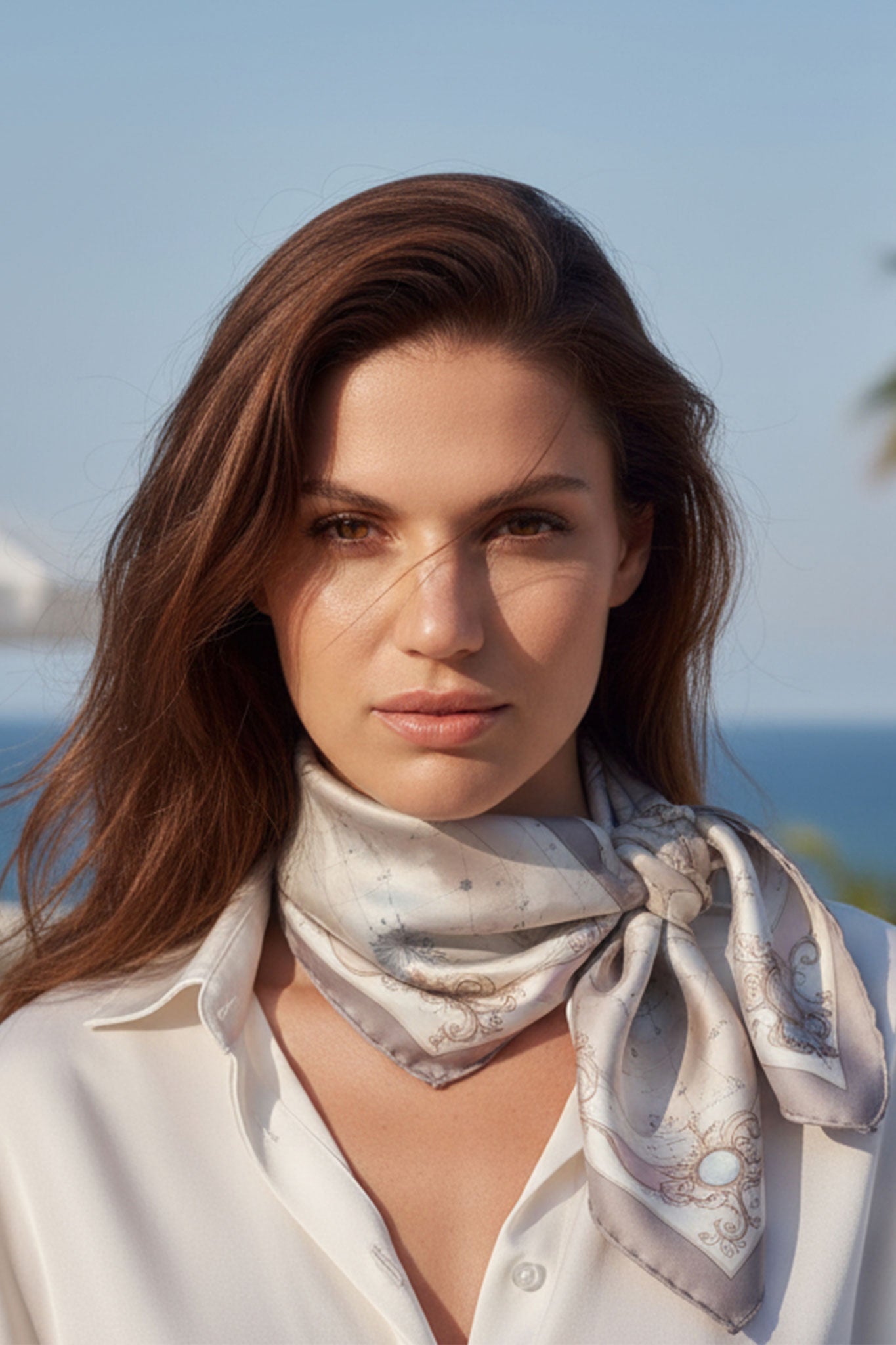
Confession: I judge a hairstyle on day four, not on the morning I built it. Worn down, dark brown, wavy, with long layers and a patterned silk scarf tied at the neck, it holds better than I expected. Day one the loose waves still carry their shape from a curl cream; day two they soften into something I like more; by day three the crown flattens and the scarf is doing the heavy lifting. Winter is where it earns its keep, since the scarf blocks wind at the throat and the hair stays down all day instead of squashed into something smaller. A neck scarf hairstyle is really a warmth decision, and the kind that survives a commute, a full morning at a desk and the walk home in the dark.
Dark Brown Bun with Polka Dot Scarf
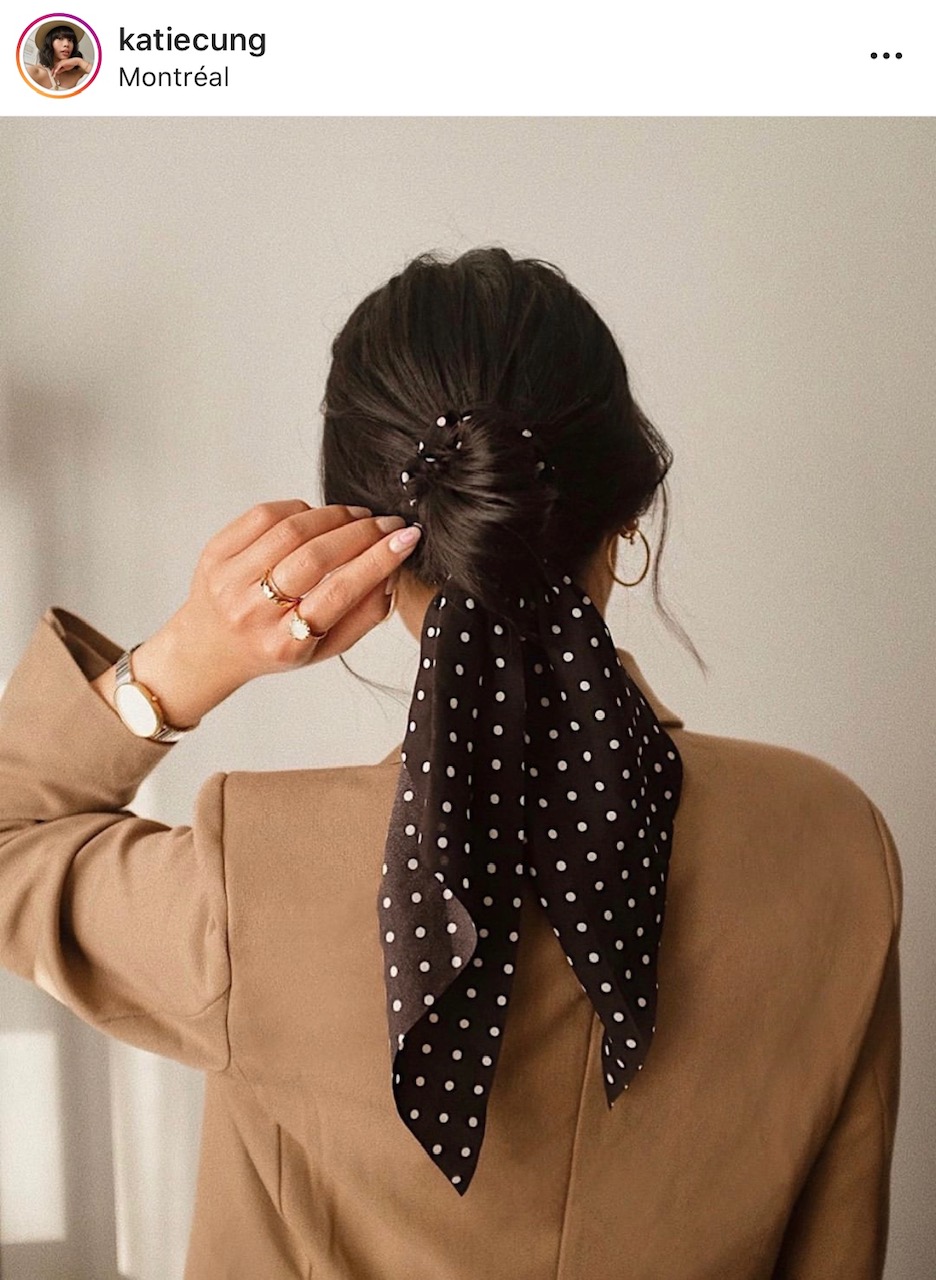
Verdict: a polka dot scarf bun is the one style here that never moves. Comb the dark brown hair back with a little styling cream so the straight texture lies flat, gather it at the nape, twist once, then pin the coil in a cross so it cannot sag. Needs length enough to wrap twice. The scarf goes around the base, not around the bun, and that is the whole trick. Tied at the front with the ends draped, it grips the hair and holds for a full day. Thick hair holds best.
Dark Brown Ponytail with Red Bow
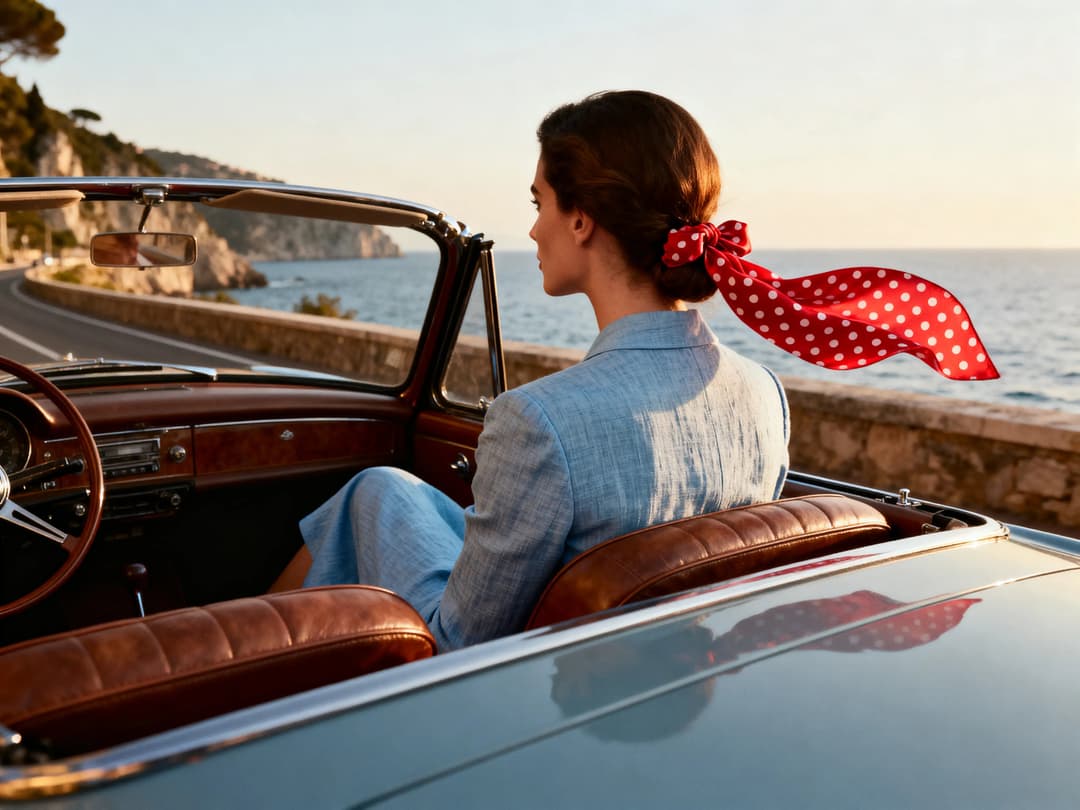
Ever tied a scarf into a bow, felt smug, then watched it slide down your ponytail before you reached the car? This works on straight, mid-back dark brown hair because there is no volume fighting the knot. Brush everything smooth first, gather at the middle of the crown, and tie the band snug so the base will not shift. Fold a red polka dot scarf into a strip, wrap it once over the band, and tie the bow just off centre. Home version: fifteen minutes. Salon version: blended layers that keep the tail wide at mid-back instead of tapering. The honest downside is slip. Slick hair plus a slick scarf, and that bow sits at your nape by afternoon.
Crown Bun with Headband Scarf
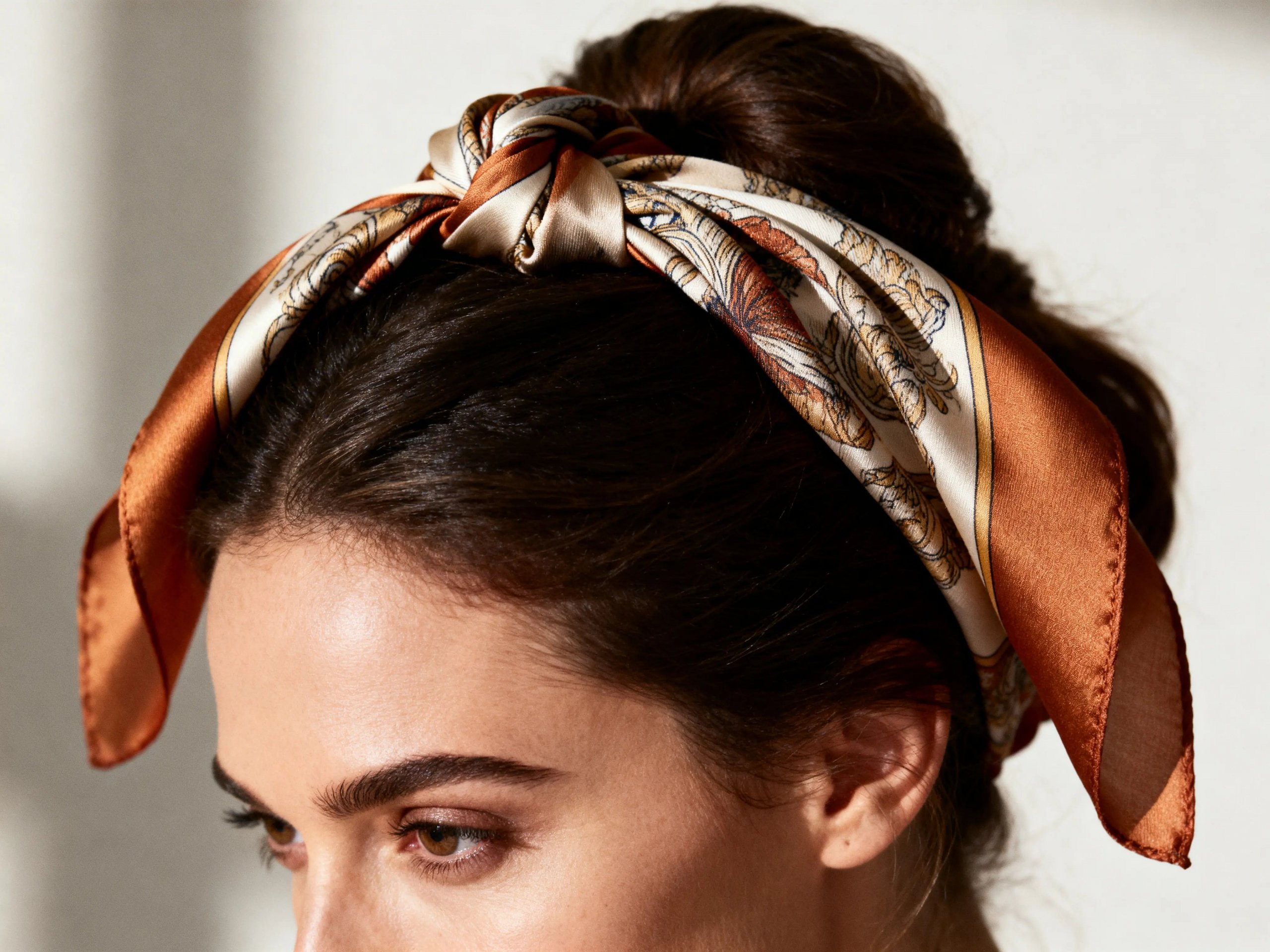
The knot sits at the front, a touch off centre, and that placement does most of the work. Thick, straight dark brown hair, long enough to wind into a bun at the crown, then the patterned silk tied around the head and knotted at the forehead. Ten minutes. It holds through a winter day better than pins do, because the scarf presses the bun flat to the scalp. Retie the knot if it drifts, and keep the ends trimmed every eight weeks.
Dark Brown Braids with Woven Scarf
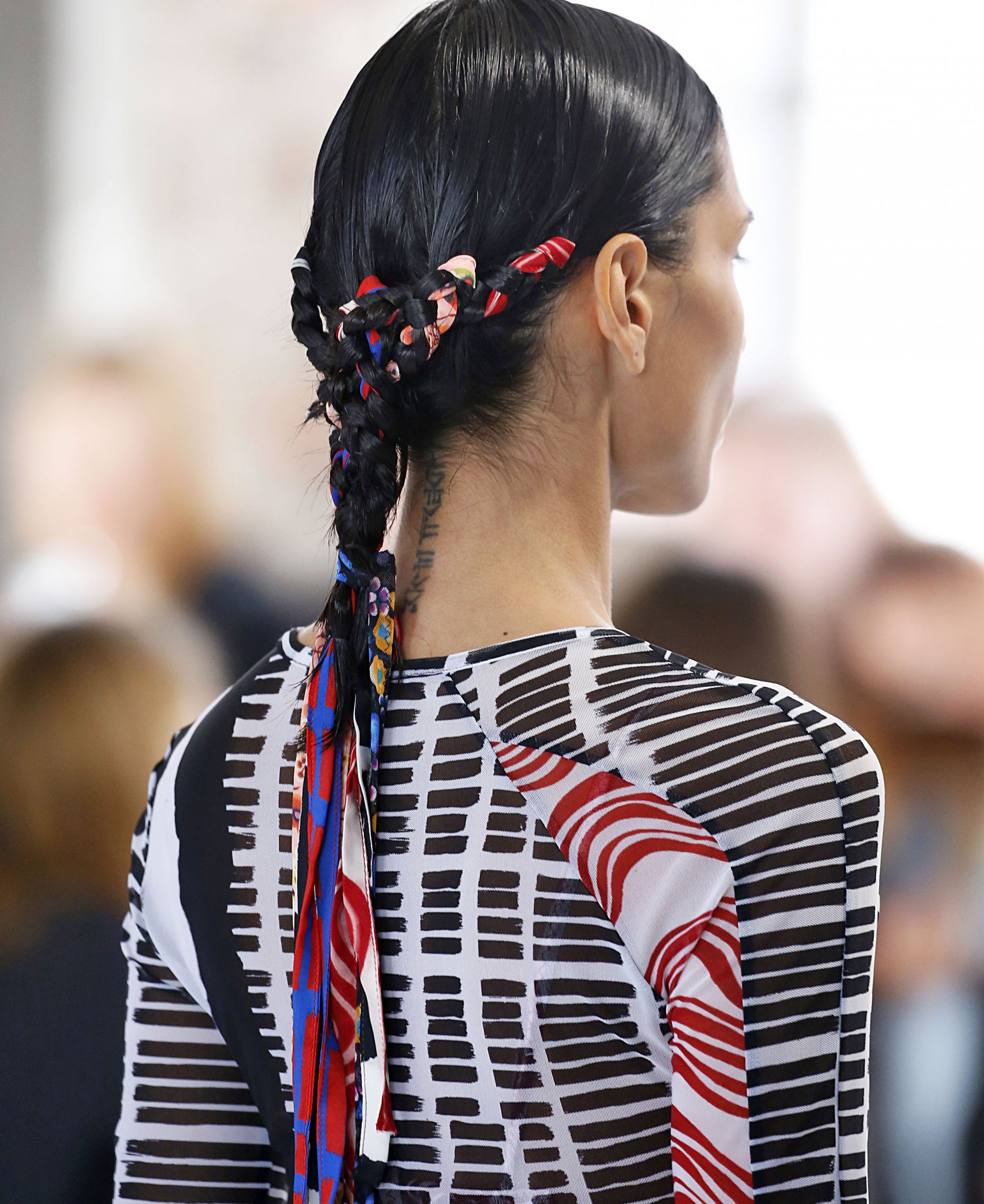
Snow on the window, party in an hour, two dark braids down the back with color running through them. That is the appeal of braids with woven scarf, and the mechanics are simpler than they look and fussier than they sound. You start a normal three-strand at the crown, and once you have two crosses you fold the scarf into a strip, lay it along one section, and braid it in as if it were hair. Now the color spirals instead of sitting in blocks. Tension stays even because the braid is what holds, not an elastic. Long layers and mid-back length give the pattern room to travel; anything shorter and the weave bunches at the nape.
This is a festive look, built for the cold months when dark brown hair wants something bright against it. Straight hair takes the weave cleanly; curls grab the scarf and hide the pattern. The weaving runs forty-five minutes in the chair, and the person doing it needs to know how to lose the scarf inside the braid rather than looping it over the top like a ribbon.
Final Thoughts
After all 24, the one I am actually booking is the low bun with the white scarf. No scissors involved. A knot and a square of silk, which covers the fact that I am three weeks past a trim. My roots will show at week five regardless. A scarf gives me a little time back, and that is the whole trick.